Aminas
As aminas são um conjunto de moléculas que contêm um grupo funcional amino (derivado da amônia). Esta categoria inclui aminas em qualquer nível de substituição: primárias, secundárias, terciárias e sais de amônio. As aminas são fundamentais na síntese orgânica e são amplamente utilizadas em produtos farmacêuticos, agroquímicos e ciência dos materiais. Na CymitQuimica, oferecemos uma seleção abrangente de aminas para atender às suas necessidades de pesquisa e industriais. Nossa gama garante acesso a várias aminas para diversos processos químicos e pesquisas inovadoras.
Subcategorías de "Aminas"
- Nitrosaminas(2.605 productos)
- Aminas primárias(30.947 productos)
- Catiões Quaternários de Amónio(1.100 productos)
- Aminas secundárias(20.886 productos)
- Aminas terciárias(17.193 productos)
Se han encontrado 8780 productos de "Aminas"
Ordenar por
Pureza (%)
0
100
|
0
|
50
|
90
|
95
|
100
Dimethylammonium dichlorotri(mu-chloro)bis[(R)-(+)-5,5'-bis(diphenylphosphino)-4,4'-bi-1,3-benzodioxole]diruthenate(II)
CAS:Producto controladoPlease enquire for more information about Dimethylammonium dichlorotri(mu-chloro)bis[(R)-(+)-5,5'-bis(diphenylphosphino)-4,4'-bi-1,3-benzodioxole]diruthenate(II) including the price, delivery time and more detailed product information at the technical inquiry form on this pageFórmula:C78H64Cl5O8P4Ru2NPureza:Min. 95%Peso molecular:1,646.64 g/mol1-(4-(Aminomethyl)phenyl)pyridin-1-ium chloride
CAS:1-(4-(Aminomethyl)phenyl)pyridin-1-ium chloride is a chemical compound that belongs to the class of pyridines and has pinpoint as its molecular weight. It is an ionic liquid that can be used in analytical methods, such as liquid chromatography and ionization techniques, for the identification of unsaturated fatty acids. This compound can be analyzed by gas chromatography with either electron capture detection or chemical ionization. The GC separation column used for this analysis would have to be a phase column with an unsaturated fatty acid stationary phase. GC-EID and GC-CI are two common ionization techniques that could be used in conjunction with this analytical method. The lower limit of detection for this technique is about 0.1 ppm, which makes it a sensitive analytical tool for use in food production and quality control laboratories. The yield of 1-(4-(Aminomethyl)phenyl)pyridin-1-Pureza:Min. 95%2-(Benzofuran-3-yl)ethanamine
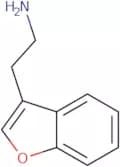
CAS:Producto controlado<p>2-(Benzofuran-3-yl)ethanamine (ZBFEA) is a novel synthetic derivative of the natural product 2-(benzofuran-2-yl)ethanamine. It has been shown to be effective against multiresistant bacteria such as Staphylococcus aureus, including methicillin resistant strains. ZBFEA inhibits bacterial growth by binding to the ribosomal protein S12 and preventing protein synthesis. This compound has also been shown to have fluorescent properties, which may be useful for its use as a diagnostic agent in live bacterial cultures.</p>Fórmula:C10H11NOPureza:Min. 95%Forma y color:Clear LiquidPeso molecular:161.2 g/molFmoc-S-trityl-D-penicillamine
CAS:<p>Please enquire for more information about Fmoc-S-trityl-D-penicillamine including the price, delivery time and more detailed product information at the technical inquiry form on this page</p>Fórmula:C39H35NO4SPureza:Min. 95%Peso molecular:613.77 g/mol4-(Aminomethyl)benzoate hydrochloride
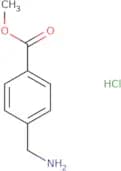
CAS:<p>4-(Aminomethyl)benzoate hydrochloride is a peroxidase-like enzyme that has been shown to inhibit cancer cell proliferation in vitro and in vivo. This enzyme inhibits HDACs, which are enzymes that regulate the expression of genes by removing acetyl groups from histones. 4-(Aminomethyl)benzoate hydrochloride has been shown to have anti-cancer properties and may be used for the prevention and treatment of colon cancer. 4-(Aminomethyl)benzoate hydrochloride also has anti-inflammatory properties, which may be due to its inhibition of prostaglandin synthesis.</p>Fórmula:C9H11NO2·ClHPureza:Min. 95%Forma y color:PowderPeso molecular:201.65 g/mol3-Methoxyphenethylamine
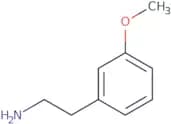
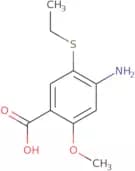
CAS:Producto controlado<p>3-Methoxyphenethylamine is a naturally occurring phenethylamine that is found in the human body. It is produced by the enzyme phenylethanolamine N-methyltransferase from dopamine and 3-methoxytyramine. 3-Methoxyphenethylamine can be found in the saliva, but also in the brain, muscle and kidneys. Its presence has been detected in women's breast milk. This compound has been shown to have a significant effect on chloride ion absorption and renal blood flow, as well as on 5-hydroxyindoleacetic acid levels in the urine of patients with Parkinson's disease. The predominant metabolite of 3-methoxyphenethylamine is 3-hydroxymethylphenethylamine (3HMPEA).</p>Fórmula:C9H13NOPureza:Min. 95%Forma y color:Colorless Clear LiquidPeso molecular:151.21 g/mol2-Methoxy-4-amino-5-ethylthiobenzoic acid
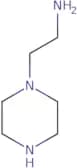
CAS:<p>Please enquire for more information about 2-Methoxy-4-amino-5-ethylthiobenzoic acid including the price, delivery time and more detailed product information at the technical inquiry form on this page</p>Fórmula:C10H13NO3SPureza:Min. 95%Peso molecular:227.28 g/molN-(2-Aminoethyl)piperazine
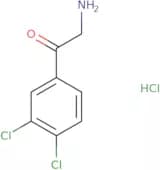
CAS:N-(2-Aminoethyl)piperazine (NAPE) is a chemical compound that can be used as an environmentally friendly catalyst for the degradation of ethylene diamine and other amines. NAPE has been shown to be stable under alkaline conditions, and its fluorescence probe has been used to monitor the progress of the reaction. This compound is a coordination complex with nitrogen atoms at the corners of a square and two amines at opposite corners of the square. The amine groups are coordinated to metal ions in a geometry that is determined by the atomic number of the metal ion. Disulfide bonds form between two cysteine residues on adjacent chains. Glycol ethers can also form disulfide bonds with NAPE, forming glycol ether-NAPE complexes. Antibodies have been shown to bind to glycol ether-NAPE complexes, suggesting that these complexes may play a role in antibody response, although experimental solubility data have not yet confirmed thisFórmula:C6H15N3Pureza:Min. 95%Peso molecular:129.2 g/mol2-(3,4-Dichlorophenyl)-2-oxoethylamineHydrochloride
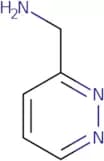
CAS:Producto controlado<p>Please enquire for more information about 2-(3,4-Dichlorophenyl)-2-oxoethylamineHydrochloride including the price, delivery time and more detailed product information at the technical inquiry form on this page</p>Fórmula:C8H8Cl3NOPureza:Min. 95%Peso molecular:240.51 g/mol3-Pyridazinemethanamine
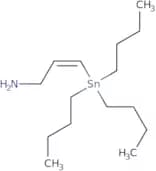
CAS:3-Pyridazinemethanamine is an amide that binds to the vasopressin V2 receptor. It is a selective agonist of the vasopressin V2 receptor and has a high affinity for this receptor. 3-Pyridazinemethanamine has been shown to be a functional antagonist at the vasopressin V1A receptors, which may be due to its chemical structure. 3-Pyridazinemethanamine is not metabolized by cytochrome P450 and does not inhibit other cytochrome P450 enzymes, making it an attractive drug candidate for use in humans.Fórmula:C5H7N3Pureza:Min. 95%Peso molecular:109.13 g/molZ-3-(Tributylstannyl)-2-propen-1-amine
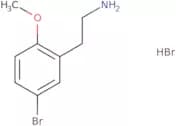
CAS:Producto controladoPlease enquire for more information about Z-3-(Tributylstannyl)-2-propen-1-amine including the price, delivery time and more detailed product information at the technical inquiry form on this pageFórmula:C15H33NSnPureza:Min. 95%Peso molecular:346.14 g/mol5-Bromo-2-methoxyphenethylamine hydrobromide
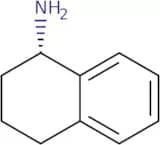
CAS:Producto controlado<p>Please enquire for more information about 5-Bromo-2-methoxyphenethylamine hydrobromide including the price, delivery time and more detailed product information at the technical inquiry form on this page</p>Fórmula:C9H13Br2NOPureza:Min. 95%Peso molecular:311.01 g/molS-(+)-1-Aminotetrahydronaphthalene
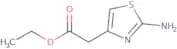
CAS:<p>S-(+)-1-Aminotetrahydronaphthalene is an amido derivative that is the enantiomer of S-(-)-1-amino-N,N'-diphenylformamide. It has been shown to have anti-obesity effects in mice by increasing energy expenditure and reducing food intake. S-(+)-1-Aminotetrahydronaphthalene also inhibits the release of fatty acids from adipose tissue, which may be due to its ability to suppress lipolysis. The molecular mechanism for these effects is not yet known, but it is thought that the amide group on this compound interacts with certain protein surfaces and steric interactions are involved in its activity.</p>Fórmula:C10H13NPureza:Min. 95%Peso molecular:147.22 g/molEthyl 2-amino-4-thiazoleacetate
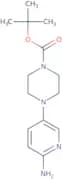
CAS:Ethyl 2-amino-4-thiazoleacetate is a supramolecular molecule that has the potential to be an anticancer agent. It inhibits the growth of tumor cells by binding to tyrosinase and hydrogen-bonding with chloride ions in solution. Ethyl 2-amino-4-thiazoleacetate also binds to a metal ion, such as zinc, which is important for biological functions. When it binds to these metals, it inhibits the enzyme hepg2 cell, which is involved in the synthesis of protein from RNA. Inhibition of this enzyme leads to decreased production of cytokines, which are molecules that regulate immune responses. This drug also has inhibitory activities against oral cephalosporins when used in combination with other drugs.Fórmula:C7H10N2O2SPureza:Min. 95%Peso molecular:186.23 g/moltert-Butyl 4-(6-aminopyridin-3-yl)piperazine-1-carboxylate
CAS:<p>tert-Butyl 4-(6-aminopyridin-3-yl)piperazine-1-carboxylate is an organic compound that can be synthesized by the reduction of 5-bromo-2-nitro pyridine with a palladium catalyst. It has been shown to inhibit the growth of cancer cells in vitro and in vivo, and is being investigated as a potential treatment for breast cancer.</p>Fórmula:C14H22N4O2Pureza:Min. 95%Peso molecular:278.35 g/mol2-Imidazo[1,2-a]pyridin-2-yl-ethylamine
CAS:Please enquire for more information about 2-Imidazo[1,2-a]pyridin-2-yl-ethylamine including the price, delivery time and more detailed product information at the technical inquiry form on this pageFórmula:C9H11N3Pureza:Min. 95%Peso molecular:161.2 g/molDodecyl-N,N-dimethyl-N-ethylammonium bromide
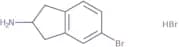
CAS:Dodecyl-N,N-dimethyl-N-ethylammonium bromide is a cationic surfactant that can be used to treat microbial infections. It has been shown to be effective against influenza virus, tuberculosis, and other bacterial infections. Dodecyl-N,N-dimethyl-N-ethylammonium bromide is a reaction product of dodecanol and dimethyldodecylamine with silver ions. This surfactant has a benzyl group which provides biocompatibility. The surfactant also has a high affinity for water vapor, which means it will not react with the water in the human body. Dodecyl-N,N-dimethyl-N-ethylammonium bromide is used in titration calorimetry experiments to determine activation energies for reactions involving enzymes and catalysts.Fórmula:C16H36NBrPureza:Min. 95%Peso molecular:322.37 g/mol5-Bromo-2,3-dihydro-1H-inden-2-amine hydrobromide
CAS:Producto controlado<p>Please enquire for more information about 5-Bromo-2,3-dihydro-1H-inden-2-amine hydrobromide including the price, delivery time and more detailed product information at the technical inquiry form on this page</p>Fórmula:C9H10BrN·HBrPureza:Min. 95%Peso molecular:293 g/molBis[(S)-1-phenylethyl]amine
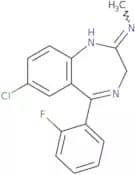
CAS:<p>Bis[(S)-1-phenylethyl]amine (BPEA) is an amide that is used as a synthetic intermediate in the process of alkylating and halogenating amines. BPEA is prepared by reacting phenethylamine with chloroacetic acid and phosphorous trichloride. It has been shown to have high efficiency in this reaction, with little impurities and a high yield. The product of this reaction can be purified using recrystallization or preparative thin-layer chromatography. BPEA is a ligand that contains a stereogenic center, which allows for the preparation of chiral compounds with great stereoselectivity. This synthetic intermediate can be used to prepare organometallic compounds in the presence of a phosphite ligand.</p>Fórmula:C16H19NPureza:Min. 95%Peso molecular:225.33 g/mol7-Chloro-5-(2-fluorophenyl)-2-methylamino-3H-1,4-benzodiazepine
CAS:Producto controlado<p>Please enquire for more information about 7-Chloro-5-(2-fluorophenyl)-2-methylamino-3H-1,4-benzodiazepine including the price, delivery time and more detailed product information at the technical inquiry form on this page</p>Fórmula:C16H13ClFN3Pureza:Min. 95%Peso molecular:301.75 g/mol



![2-Imidazo[1,2-a]pyridin-2-yl-ethylamine](/_next/image/?url=https%3A%2Fstatic.cymitquimica.com%2Fproducts%2F3D%2Fthumb-webp%2FFI51200.webp&w=3840&q=75)

![Bis[(S)-1-phenylethyl]amine](/_next/image/?url=https%3A%2Fstatic.cymitquimica.com%2Fproducts%2F3D%2Fthumb-webp%2FFB168367.webp&w=3840&q=75)