Aminas
Las aminas son un conjunto de moléculas que contienen un grupo funcional amino (derivado del amoníaco). Esta categoría incluye aminas en cualquier nivel de sustitución: primarias, secundarias, terciarias y sales de amonio. Las aminas son fundamentales en la síntesis orgánica y se utilizan ampliamente en productos farmacéuticos, agroquímicos y ciencias de los materiales. En CymitQuimica, ofrecemos una selección completa de aminas para satisfacer sus necesidades de investigación e industriales. Nuestra gama asegura el acceso a diversas aminas para diferentes procesos químicos e investigaciones innovadoras.
Subcategorías de "Aminas"
- Nitrosaminas(2.605 productos)
- Aminas primarias(30.947 productos)
- Cationes y sales de amonio cuaternario(1.100 productos)
- Aminas secundarias(20.886 productos)
- Aminas terciarias(17.193 productos)
Se han encontrado 8780 productos de "Aminas"
Ordenar por
Pureza (%)
0
100
|
0
|
50
|
90
|
95
|
100
3-Amino-2-methylpropan-1-ol
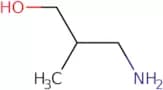
CAS:<p>3-Amino-2-methylpropan-1-ol is a reactive chemical that can be used as a reactant in the synthesis of other chemicals. It is an alkanolamine and can be found in small amounts in water vapor. 3-Amino-2-methylpropan-1-ol has been shown to have low energy and it reacts with water vapor to form 3,4-dihydroxybutanal, which is a product that can be converted into other useful chemicals. 3-Amino-2-methylpropan-1-ol also reacts with high energy photons to form new substances, such as 3,4,5,6 tetrahydroxymethylbenzaldehyde. 3Amino - 2 - methylpropan - 1 - ol has been shown to have many uses including the production of low molecular weight polymers and resins for paints and coatings.</p>Fórmula:C4H11NOPureza:Min. 95%Peso molecular:89.14 g/molZ-alpha-aminoisobutyric acid
CAS:<p>Z-alpha-aminoisobutyric acid is an amide with a conformational pattern that resembles the alpha-helix. It has been shown to inhibit the formation of oligomers, which are aggregates of peptides and proteins, in the gas phase. Z-alpha-aminoisobutyric acid also stabilizes peptides and proteins in aqueous solution by preventing them from forming intramolecular hydrogen bonds. The infrared spectroscopy shows that z-alpha-aminoisobutyric acid is a conformer with a dihedral angle of about 120 degrees.</p>Fórmula:C12H15NO4Pureza:Min. 95%Peso molecular:237.25 g/mol2-Amino-3,7,8-trimethyl-3H-imidazo[4,5-f]quinoxaline
CAS:<p>2-Amino-3,7,8-trimethyl-3H-imidazo[4,5-f]quinoxaline is a synthetic compound that is used as an analytical reagent. It has been shown to inhibit the growth of cancer cells by reacting with amines in the cell nucleus and forming the corresponding quinone. This reaction products then react with alkoxy radical to form reactive oxygen species that induce apoptosis. The use of 2-amino-3,7,8-trimethyl-3H-imidazo[4,5-f]quinoxaline as an analytical reagent has been shown to be effective in the determination of creatine and creatinine levels.</p>Fórmula:C12H13N5Pureza:Min. 95%Peso molecular:227.27 g/mol6-Amino-1-methyl-5-nitrosouracil
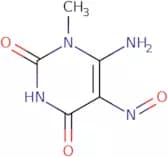
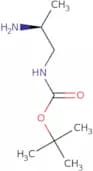
CAS:<p>6-Amino-1-methyl-5-nitrosouracil is a neutral form of the molecule that has both protonated and unprotonated forms. It is a bidentate ligand that can bind to a metal ion. The nitrogen atom in the molecule is an important part of its structure, as it contains two nitro groups and one amino group. 6-Amino-1-methyl-5-nitrosouracil has been used in techniques such as spectroscopies and dinitroso analysis. The neutral form of the molecule can be converted into its ionic form by adding either chlorine or nitrate ions to it, which causes the nitrogen atoms to be more electronegative. This conversion changes the nature of the compound, making it more acidic. Dehydration also occurs when water molecules are removed from 6-amino 1 methyl 5 nitrosourea, which causes a change in shape and shifts its properties to</p>Fórmula:C5H6N4O3Pureza:Min. 95%Peso molecular:170.13 g/mol(S)-1-N-Boc-Propane-1,2-diamine hydrochloride
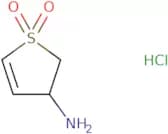
CAS:Please enquire for more information about (S)-1-N-Boc-Propane-1,2-diamine hydrochloride including the price, delivery time and more detailed product information at the technical inquiry form on this pageFórmula:C8H19ClN2O2Pureza:Min. 95%Peso molecular:210.7 g/mol3-Amino-2,3-dihydro-1λ6-thiophene-1,1-dione hydrochloride
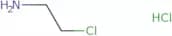
CAS:<p>Please enquire for more information about 3-Amino-2,3-dihydro-1λ6-thiophene-1,1-dione hydrochloride including the price, delivery time and more detailed product information at the technical inquiry form on this page</p>Fórmula:C4H7NO2S•HClPureza:Min. 95%Peso molecular:169.63 g/mol2-Chloroethylamine hydrochloride
CAS:<p>2-Chloroethylamine hydrochloride is a chemical compound that has a hydroxyl group, which is an epoxide. It reacts with itself to form aziridine and amines, which are genotoxic compounds. 2-Chloroethylamine hydrochloride is used as an analytical method for the determination of the concentration of epoxides in air samples and can be produced by reacting chlorine with ethylamine. The reaction mechanism for this process is not well understood but it may involve coordination geometry and particle formation. This chemical compound can also be found in pharmaceutical drugs designed to treat cancer or heart disease.</p>Fórmula:C2H6ClN•HClPureza:Min. 95%Forma y color:PowderPeso molecular:115.99 g/mol3,4-Diaminobenzotrifluoride
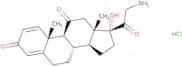
CAS:3,4-Diaminobenzotrifluoride is a photophysical agent that emits light of a specific wavelength when irradiated with ultraviolet light. It has been shown to inhibit the growth of human cervical carcinoma cells in vitro and to cause apoptosis in these cells. 3,4-Diaminobenzotrifluoride also inhibits the proliferation of human liver and lung cancer cells in vitro. The mechanism by which this agent causes cell death is unknown. 3,4-Diaminobenzotrifluoride is an acid catalyst and stabilizes the chloride ion. This agent may inhibit DNA synthesis or affect proteins that are involved in signal transduction pathways for cell proliferation.Fórmula:C7H7F3N2Pureza:Min. 95%Forma y color:PowderPeso molecular:176.14 g/mol21-Amino-17-hydroxypregna-1,4-diene-3,11,20-trioneHydrochloride
CAS:Producto controladoPlease enquire for more information about 21-Amino-17-hydroxypregna-1,4-diene-3,11,20-trioneHydrochloride including the price, delivery time and more detailed product information at the technical inquiry form on this pageFórmula:C21H28ClNO4Pureza:Min. 95%Peso molecular:393.9 g/mol[2-(1-Isobutyl-1H-benzimidazol-2-yl)ethyl]amine dihydrochloride
CAS:Producto controlado<p>Please enquire for more information about [2-(1-Isobutyl-1H-benzimidazol-2-yl)ethyl]amine dihydrochloride including the price, delivery time and more detailed product information at the technical inquiry form on this page</p>Fórmula:C13H19N3Pureza:Min. 95%Peso molecular:217.31 g/mol1-(2-Aminopyrimidin-5-yl)ethanone
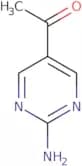
CAS:Please enquire for more information about 1-(2-Aminopyrimidin-5-yl)ethanone including the price, delivery time and more detailed product information at the technical inquiry form on this pageFórmula:C6H7N3OPureza:Min. 95%Peso molecular:137.14 g/mol(2S,6S)-2-Amino-2-(2-chlorophenyl)-6-hydroxycyclohexan-1-one HCl
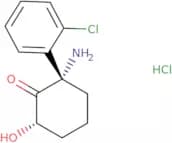
CAS:Producto controlado<p>Please enquire for more information about (2S,6S)-2-Amino-2-(2-chlorophenyl)-6-hydroxycyclohexan-1-one HCl including the price, delivery time and more detailed product information at the technical inquiry form on this page</p>Fórmula:C12H15CI2NO2Pureza:Min. 95%Forma y color:PowderPeso molecular:471.07 g/molLycopsamine N-oxide
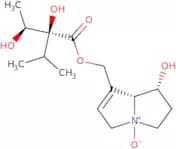
CAS:<p>Lycopsamine N-oxide is a pyrrolizidine alkaloid derivative, which is a naturally occurring compound found in certain plant species, particularly within the Boraginaceae family. This compound is typically produced as a secondary metabolite in these plants. Its mode of action involves metabolic activation in the liver, where enzymes convert it into reactive intermediates capable of binding to cellular macromolecules, ultimately leading to toxic effects.</p>Fórmula:C15H25NO6Pureza:Min. 95%Peso molecular:315.36 g/molN-[(1S)-1-(Aminocarbonyl)propyl]-4-chlorobutanamide
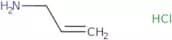
CAS:Please enquire for more information about N-[(1S)-1-(Aminocarbonyl)propyl]-4-chlorobutanamide including the price, delivery time and more detailed product information at the technical inquiry form on this pageFórmula:C8H15ClN2O2Pureza:Min. 95%Forma y color:PowderPeso molecular:206.67 g/molPoly(allylamine hydrochloride) - MW 15000
CAS:<p>Allylamine HCl content - max 7%</p>Fórmula:(C3H7N)x•(HCl)xForma y color:Clear Liquid1,4-Dichloro 6-carboxytetramethylrhodamine
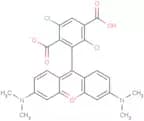
CAS:1,4-Dichloro 6-carboxytetramethylrhodamine is a rhodamine-class fluorescent dye with excitation/emission wavelengths of 541/568 nm.Fórmula:C25H20Cl2N2O5Pureza:99.99%Forma y color:SolidPeso molecular:499.34Methyltetrazine amine
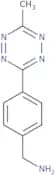
CAS:<p>A building block used for derivatization of carboxylic acids or activated esters with methytetrazine moiety. The stability of Methyltetrazine Amine is substantially improved compared to hydrogen substituted tetrazine-tmine. Superior stability of methyltetrazine-amine allows this reagent to be used in wider range of chemical transformations. Long-term storage of methyltetrazine-amine, especially in aqueous buffer, is also greatly improved compared to Tetrazine Amine.Supplied as the HCl salt</p>Fórmula:C10H11N5Pureza:Min. 95%Forma y color:PowderPeso molecular:201.23 g/molN-Methyl-2-fluoro-4-aminobenzamide
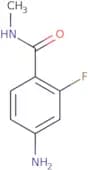
CAS:N-Methyl-2-fluoro-4-aminobenzamide is a toxic compound that is commonly used as a reagent in chemical synthesis and research. It has been studied for its potential use in medicine, particularly in the treatment of castration-resistant prostate cancer. N-Methyl-2-fluoro-4-aminobenzamide acts as a nucleophilic agent, participating in reactions that involve the addition of an acyl group to a target molecule. Its stable formyl group allows for efficient reaction yields and reliable results. However, due to its toxic nature, caution must be exercised when handling this compound.Fórmula:C8H9FN2OPureza:Min. 95%Peso molecular:168.17 g/mol(Deamino-Cys1,b-(3-pyridyl)-D-Ala2,Arg8)-Vasopressin trifluoroacetate salt
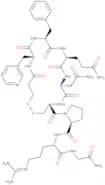
CAS:<p>DDAVP is an analogue of vasopressin, which belongs to the class of inositol phosphates. It is a potent agonist for the V1 receptor and has a higher affinity for this receptor than vasopressin. DDAVP also has antagonist properties at the V2 receptor. The biological activity of DDAVP is mediated by its ability to increase phospholipase A2 activity and cause the release of arachidonic acid from membrane phospholipids. This activation causes an increase in prostaglandin synthesis, leading to increased vascular permeability and hypotension. DDAVP may also have antidiuretic effects due to its antagonism of oxytocin receptors.</p>Fórmula:C45H63N15O11S2Pureza:Min. 95%Peso molecular:1,054.21 g/molN-Des(2-diethylamino) metoclopramide acetic acid
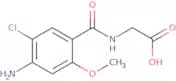
CAS:<p>N-Des(2-diethylamino) metoclopramide acetic acid is a benzyl ester of metoclopramide, a prodrug that is metabolized to the active form in the body. It has been shown to be effective against healthy human subjects and hplc analyses of biological samples have shown it to be a metabolite of metoclopramide. N-Des(2-diethylamino) metoclopramide acetic acid is used as a catalyst for catalytic hydrogenation reactions, such as the conversion of methyl esters into ethyl or butyl esters. It can also be used for catalytic hydrogenation reactions with diazomethane, such as those required for the synthesis of quinolones.</p>Fórmula:C10H11ClN2O4Pureza:Min. 95%Peso molecular:258.66 g/mol


![2-Amino-3,7,8-trimethyl-3H-imidazo[4,5-f]quinoxaline](/_next/image/?url=https%3A%2Fstatic.cymitquimica.com%2Fproducts%2F3D%2Fthumb-webp%2FFA17506.webp&w=3840&q=75)

![[2-(1-Isobutyl-1H-benzimidazol-2-yl)ethyl]amine dihydrochloride](/_next/image/?url=https%3A%2Fstatic.cymitquimica.com%2Fproducts%2F3D%2Fthumb-webp%2FFI135795.webp&w=3840&q=75)
![N-[(1S)-1-(Aminocarbonyl)propyl]-4-chlorobutanamide](/_next/image/?url=https%3A%2Fstatic.cymitquimica.com%2Fproducts%2F3D%2Fthumb-webp%2FFA171302.webp&w=3840&q=75)