Ciano-, nitrilo-
Los compuestos ciano y nitrilo son moléculas orgánicas que contienen grupos ciano (C≡N) o nitrilo en su estructura, caracterizadas por la presencia de nitrógeno. Estos grupos desempeñan roles importantes en diversas reacciones químicas y aplicaciones industriales. En esta categoría, encontrará una amplia gama de compuestos ciano y nitrilo, que van desde estructuras simples hasta complejas. En CymitQuimica, ofrecemos compuestos ciano y nitrilo de alta calidad adaptados para satisfacer las necesidades de investigación e industriales. Nuestros compuestos son adecuados para una variedad de aplicaciones de síntesis y análisis.
Se han encontrado 9618 productos de "Ciano-, nitrilo-"
Ordenar por
Pureza (%)
0
100
|
0
|
50
|
90
|
95
|
100
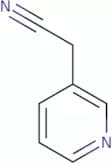
Pyridine-3-acetonitrile
CAS:<p>Pyridine-3-acetonitrile is a coordination complex that can be used for the treatment of diabetes. It has been shown to have a high affinity for plasma glucose and to be selective for biological samples containing amino acids, such as proteins. The molecule is able to bind with carbon disulphide in order to form the active methylene, which has been shown to be an effective bifunctional ligand. The compound has also been shown to have a ph optimum of 9.8 - 10.2 and exhibits an atomic orbital with a molecular electrostatic potential of 0.5 eV. Pyridine-3-acetonitrile binds strongly to nucleophilic groups, such as amines and hydroxyls, making it suitable for use as a ligand in metal complexes. This compound may also have some interesting properties related to its morphology, which can be further investigated using functional theory and molecular electrostatic potential.br>br> br>br></p>Fórmula:C7H6N2Pureza:Min. 95%Forma y color:Clear LiquidPeso molecular:118.14 g/mol2-Hydroxy-4-nitrobenzonitrile
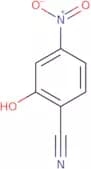
CAS:<p>2-Hydroxy-4-nitrobenzonitrile is a nitrile derivative that has an antibacterial activity. This compound interacts with the pyochelin, a siderophore in Pseudomonas aeruginosa. The antibiotic inhibits the uptake of pyochelin by the bacteria and causes cell death by inhibiting the synthesis of proteins necessary for bacterial growth. 2-Hydroxy-4-nitrobenzonitrile can be used as a potential stabilizer for materials such as polystyrene and polyurethane which are susceptible to degradation by hydrolysis or oxidation. In addition, this compound is also useful in gram-negative bacterium due to its ability to inhibit their growth by binding to their ribosomes. The conformational studies have been shown to be important for understanding the biological properties of this molecule.</p>Fórmula:C7H4N2O3Pureza:Min. 95%Forma y color:PowderPeso molecular:164.12 g/mol4-Hydroxyphenylacetonitrile
CAS:<p>4-Hydroxyphenylacetonitrile (HPA) is a chemical compound that belongs to the group of nitriles. It is a precursor to the pigment sinalbin, which is found in corynebacterium and related bacteria. HPA has been shown to have an apoptotic effect on human cells, which may be due to its ability to inhibit protein synthesis and induce DNA fragmentation. The synthetic pathway for HPA starts with the conversion of L-phenylalanine into 4-hydroxyphenylpyruvic acid by a wild-type strain or bacterial strain. The 4-hydroxyphenylpyruvic acid is then converted into 4-hydroxybenzaldehyde through polymerase chain reactions or expression plasmids in corynebacterium glutamicum. This molecule can then be transformed into HPA by hydrolysis with hydrochloric acid or enzymatic activity. HPA has also been shown to stimulate</p>Fórmula:C8H7NOPureza:Min. 95%Forma y color:PowderPeso molecular:133.15 g/mol3-Ethoxy-4-hydroxyphenylacetonitrile
CAS:<p>3-Ethoxy-4-hydroxyphenylacetonitrile is a versatile building block and reagent that is used in the manufacturing of pharmaceuticals, agricultural chemicals, and other chemical products. It has been shown to be an excellent starting material for the synthesis of complex compounds. 3-Ethoxy-4-hydroxyphenylacetonitrile can be used as a high quality research chemical or useful scaffold for organic synthesis. CAS No. 205748-01-2</p>Fórmula:C10H11NO2Pureza:Min. 95%Forma y color:PowderPeso molecular:177.2 g/mol2-Amino-4-fluorobenzylamine dihydrochloride
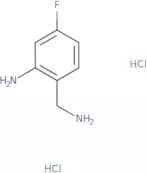
CAS:<p>2-Amino-4-fluorobenzylamine dihydrochloride is a research chemical that is used as a reactant in organic synthesis. 2-Amino-4-fluorobenzylamine dihydrochloride is an intermediate for the preparation of other chemicals and can also be used as a building block for more complex compounds. This chemical has been shown to have good quality and can be used in many different types of research.<br>2-Amino-4-fluorobenzylamine dihydrochloride has CAS number 606139-20-2.</p>Fórmula:C7H9FN2·2HClPureza:Min. 95 Area-%Forma y color:PowderPeso molecular:213.08 g/mol4-Fluoropiperidine-4-carbonitrile hydrochloride
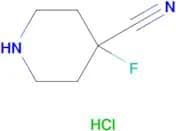
CAS:Fórmula:C6H10ClFN2Pureza:97%Peso molecular:164.61Methyl 3-Amino-5-cyanobenzoate
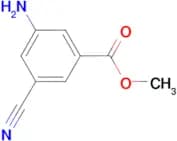
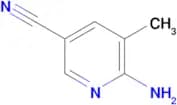
CAS:Fórmula:C9H8N2O2Pureza:95%Forma y color:Brown powderPeso molecular:176.1756-Amino-5-methylnicotinonitrile
CAS:Fórmula:C7H7N3Pureza:97%Forma y color:SolidPeso molecular:133.1542,5,6-Trichloro-4-methyl-3-pyridinecarbonitrile
CAS:Fórmula:C7H3Cl3N2Pureza:95%Forma y color:SolidPeso molecular:221.475-(4,4,5,5-TETRAMETHYL-1,3,2-DIOXABOROLAN-2-YL)-1H-PYRROLO[2,3-B]PYRIDINE-3-CARBONITRILE
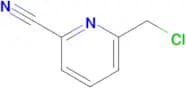
CAS:Fórmula:C14H16BN3O2Pureza:97%Peso molecular:269.116-Chloromethyl-2-cyanopyridine
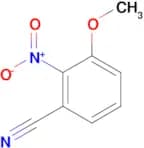
CAS:Fórmula:C7H5ClN2Pureza:97%Forma y color:SolidPeso molecular:152.583-Methoxy-2-nitrobenzonitrile
CAS:Fórmula:C8H6N2O3Pureza:97%Forma y color:Liquid, No data available.Peso molecular:178.1472-Amino-5-methyl-nicotinonitrile
CAS:Fórmula:C7H7N3Pureza:98%Forma y color:SolidPeso molecular:133.154






![5-(4,4,5,5-TETRAMETHYL-1,3,2-DIOXABOROLAN-2-YL)-1H-PYRROLO[2,3-B]PYRIDINE-3-CARBONITRILE](/_next/image/?url=https%3A%2Fstatic.cymitquimica.com%2Fproducts%2F10%2Fthumb-webp%2FF534299.webp&w=3840&q=75)
![Benzo[c][1,2,5]oxadiazole-4-carbonitrile](/_next/image/?url=https%3A%2Fstatic.cymitquimica.com%2Fproducts%2F10%2Fthumb-webp%2FF616073.webp&w=3840&q=75)