Ciano-, nitrilo-
Los compuestos ciano y nitrilo son moléculas orgánicas que contienen grupos ciano (C≡N) o nitrilo en su estructura, caracterizadas por la presencia de nitrógeno. Estos grupos desempeñan roles importantes en diversas reacciones químicas y aplicaciones industriales. En esta categoría, encontrará una amplia gama de compuestos ciano y nitrilo, que van desde estructuras simples hasta complejas. En CymitQuimica, ofrecemos compuestos ciano y nitrilo de alta calidad adaptados para satisfacer las necesidades de investigación e industriales. Nuestros compuestos son adecuados para una variedad de aplicaciones de síntesis y análisis.
Se han encontrado 9618 productos de "Ciano-, nitrilo-"
Ordenar por
Pureza (%)
0
100
|
0
|
50
|
90
|
95
|
100
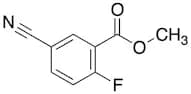
Methyl 5-cyano-2-fluorobenzoate
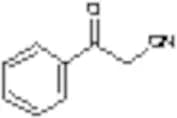
CAS:Producto controlado<p>Applications Methyl 5-cyano-2-fluorobenzoate<br></p>Fórmula:C9H6FNO2Forma y color:NeatPeso molecular:179.15Benzoylacetonitrile
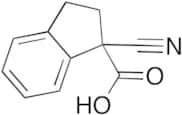
CAS:Producto controlado<p>Applications Used as a building block for the preparation of 4H-pyrans, 2-pyridones, furans and carbocyclics.<br>References Herschhorn, A., et al.: J. Med. Chem., 50, 3402 (2007),<br></p>Fórmula:C9H7NOForma y color:NeatPeso molecular:145.161-Cyano-2,3-dihydro-1H-indene-1-carboxylic Acid
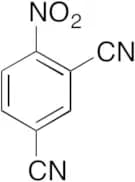
CAS:Producto controladoFórmula:C11H9NO2Forma y color:NeatPeso molecular:187.192,4-Dicyanonitrobenzene
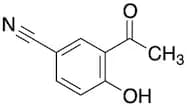
CAS:Producto controladoFórmula:C8H3N3O2Forma y color:NeatPeso molecular:173.1282-Acetyl-4-cyanophenol
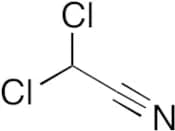
CAS:Producto controlado<p>Applications 2-Acetyl-4-cyanophenol<br></p>Fórmula:C9H7NO2Forma y color:NeatPeso molecular:161.16Dichloroacetonitrile
CAS:Producto controlado<p>Applications Dichloroacetonitrile is commonly used with gas chromatography-mass spectrometry instrument to evaluate and quantify the common halogenated disinfection by products using the headspace technique.<br> Not a dangerous good if item is equal to or less than 1g/ml and there is less than 100g/ml in the package<br>References Montesinos, I., et al.: J. Chromatogr. A., 1310 113 (2013)<br></p>Fórmula:C2HCl2NForma y color:NeatPeso molecular:109.94(3,5-Dimethoxyphenyl)acetonitrile
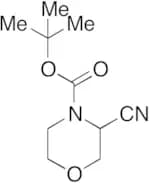
CAS:Producto controlado<p>Applications (3,5-Dimethoxyphenyl)acetonitrile (cas# 13388-75-5) is a compound useful in organic synthesis.<br></p>Fórmula:C10H11NO2Forma y color:NeatPeso molecular:177.2tert-Butyl 3-Cyanomorpholine-4-carboxylate
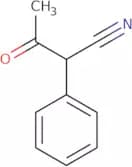
CAS:Producto controlado<p>Applications tert-Butyl 3-Cyanomorpholine-4-carboxylate is used as a reactant for the synthesis of HIV integrase inhibitors.<br>References Gardelli, C., et. al.: J. Med. Chem., 50, 4953 (2007); Pace, P., et. al.: J. Med. Chem., 50, 2225 (2007); Summa, V., et. al.: J. Med. Chem., 49, 6646 (2006)<br></p>Fórmula:C10H16N2O3Forma y color:NeatPeso molecular:212.246α-Acetylphenylacetonitrile
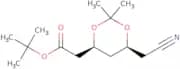
CAS:Producto controlado<p>Alpha-acetylphenylacetonitrile is a synthetic chemical compound that is used as a reagent in the analytical methods of wastewater. It has been shown to be an effective bifunctional agent for the treatment of wastewater, with fluorescence properties that can be used for detection and quantification of cyanide. Alpha-acetylphenylacetonitrile can also be used as a reagent in analytical chemistry techniques, such as gas chromatography and high performance liquid chromatography. This chemical compound has been shown to react with naphthalene to form alpha-naphthol by heating at 190 °C, which can then be used to synthesize phenacyl acetate. The acid catalyst may be either sulfuric acid or hydrochloric acid.</p>Fórmula:C10H9NOPureza:Min. 95%Peso molecular:159.18 g/mol(4S,6S)-6-(Cyanomethyl)-2,2-dimethyl-1,3-dioxane-4-acetic acid tert-butyl ester
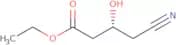
CAS:<p>Please enquire for more information about (4S,6S)-6-(Cyanomethyl)-2,2-dimethyl-1,3-dioxane-4-acetic acid tert-butyl ester including the price, delivery time and more detailed product information at the technical inquiry form on this page</p>Fórmula:C14H23NO4Pureza:Min. 95%Peso molecular:269.34 g/molEthyl (R)-(-)-4-cyano-3-hydroxybutyrate
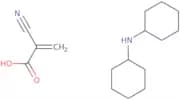
CAS:<p>Ethyl (R)-(-)-4-cyano-3-hydroxybutyrate is an asymmetric synthesis of D-(+)-glyceraldehyde. This compound is an acidic, high cholesterol substrate that binds to disaccharides and has hydroxyl groups. It has been shown to reduce low density lipoprotein levels in the blood by inhibiting the production of cholesterol in the liver. The reaction solution is immobilized on a solid support and is used for kinetic studies. Kinetic measurements were performed at different concentrations of hydrochloric acid and immobilized cells as a function of time. The reaction yield was determined using UV absorbance at 275 nm, which was plotted against time.</p>Pureza:Min. 95%Dicyclohexylamine 2-cyanoacrylate
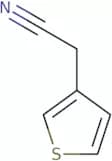
CAS:Producto controlado<p>Please enquire for more information about Dicyclohexylamine 2-cyanoacrylate including the price, delivery time and more detailed product information at the technical inquiry form on this page</p>Fórmula:C16H26N2O2Pureza:Min. 95%Peso molecular:278.39 g/molThiophene-3-acetonitrile
CAS:<p>Thiophene-3-acetonitrile is a reactive intermediate that is used in the synthesis of active enzymes. It has been shown to be an efficient method for the synthesis of antitubercular agents, such as rifamycins and other drugs. Thiophene-3-acetonitrile is an electron acceptor and can be used to generate active enzymes, such as those involved in DNA replication and transcription. This compound also has a variety of functional groups, which can be used for a number of techniques, including coordination geometry studies.</p>Fórmula:C6H5NSPureza:Min. 95%Forma y color:Clear LiquidPeso molecular:123.18 g/mol2,4,6-Trimethylbenzonitrile
CAS:<p>2,4,6-Trimethylbenzonitrile (TMBN) is a reactive unsaturated ketone that reacts with phosphorus pentachloride to form the corresponding chloroform. It is used in nucleophilic substitution reactions and can be hydrolyzed by hydrochloric acid to form an n-oxide. The reaction mechanism of TMBN with phosphorus pentachloride has been studied using molecular modeling and NMR spectroscopy. TMBN can be converted into an oxide, which can react with hydrogen chloride to form the corresponding chloroform. Reaction products include the 2,4,6-trichlorobenzonitrile (TCBN), which is a carcinogen.</p>Fórmula:C10H11NPureza:Min. 95%Forma y color:PowderPeso molecular:145.2 g/mol3-Cyanothiophene-4-boronic acid pinacol ester
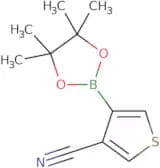
CAS:<p>Please enquire for more information about 3-Cyanothiophene-4-boronic acid pinacol ester including the price, delivery time and more detailed product information at the technical inquiry form on this page</p>Fórmula:C11H14BNO2SPureza:Min. 95%Peso molecular:235.11 g/mol5-Cyanopyridine-2-carboxylic acid
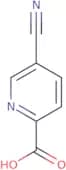
CAS:<p>5-Cyanopyridine-2-carboxylic acid is a small molecule that has been found to have significant biological activity in a number of different areas, including neurotherapeutics. It is the result of a scalable synthesis and is soluble in water. The molecule has two chiral centers and can exist as four different stereoisomers (enantiomers). In vitro studies show that 5-cyanopyridine-2-carboxylic acid inhibits fatty acid uptake by blocking the proton pump, which transports lipids into cells. This compound also binds to the cytosolic protein pyrazine 2-carboxylic acid receptor 1 (PYZR1), which may provide an explanation for its effects on fatty acid uptake.</p>Fórmula:C7H4N2O2Pureza:Min. 95%Peso molecular:148.12 g/mol(Triphenylphosphoranylidene)acetonitrile
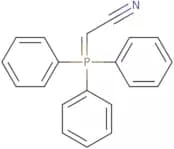
CAS:<p>(Triphenylphosphoranylidene)acetonitrile is a phosphorane that has been shown to have an inhibitory effect on the inflammatory response in animal models of bowel disease. It also has been shown to be effective in treating inflammatory diseases such as arthritis and multiple sclerosis. This drug binds to leukotriene D4, an inflammatory mediator, and inhibits its production by blocking the enzyme 5-lipoxygenase. The compound also has been shown to possess anti-inflammatory properties due to its inhibition of prostaglandin synthesis. (Triphenylphosphoranylidene)acetonitrile is used as a pharmaceutical preparation for the treatment of bowel disease, inflammatory diseases, and other conditions.</p>Fórmula:C20H16NPPureza:Min. 95%Peso molecular:301.32 g/mol2,5-Difluoro-7,7,8,8-tetracyanoquinodimethane
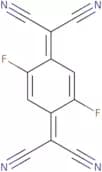
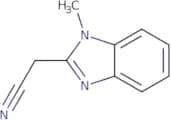
CAS:<p>2,5-Difluoro-7,7,8,8-tetracyanoquinodimethane is a donor molecule that has an acceptor property. It can be used in the fabrication of organic light emitting devices. 2,5-Difluoro-7,7,8,8-tetracyanoquinodimethane is a molecule with a molecular structure that consists of two benzene rings and two quinonediimide groups. The molecule has a fluorine atom at position 5 and another fluorine atom at position 8. This molecule has been shown to have good transport properties and to emit light when irradiated with UV radiation.</p>Fórmula:C12H2F2N4Pureza:Min. 95%Forma y color:PowderPeso molecular:240.17 g/mol(1-Methyl-1H-benzoimidazol-2-yl)-acetonitrile
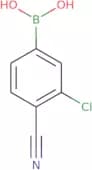
CAS:Producto controlado<p>(1-Methyl-1H-benzoimidazol-2-yl)-acetonitrile is a nucleophilic compound that reacts with carbanions to form alkyl benzoates. It can also act as an electrophile in the formation of nitroalkenes and amides, as well as an intermediate in the synthesis of phenazines. The potassium salt of this compound is used as a reagent in organic synthesis. (1-Methyl-1H-benzoimidazol-2-yl)-acetonitrile has been shown to react with methylene and aromatize to produce ethyl cyanoacetate, which can be used for the production of malononitrile. This reaction is catalyzed by potassium carbonate and esters.</p>Fórmula:C10H9N3Pureza:Min. 95%Peso molecular:171.2 g/mol3-Chloro-4-cyanophenylboronic acid
CAS:Producto controlado<p>Please enquire for more information about 3-Chloro-4-cyanophenylboronic acid including the price, delivery time and more detailed product information at the technical inquiry form on this page</p>Fórmula:C7H5BClNO2Pureza:Min. 95%Peso molecular:181.38 g/mol