Ciano-, nitrilo-
Los compuestos ciano y nitrilo son moléculas orgánicas que contienen grupos ciano (C≡N) o nitrilo en su estructura, caracterizadas por la presencia de nitrógeno. Estos grupos desempeñan roles importantes en diversas reacciones químicas y aplicaciones industriales. En esta categoría, encontrará una amplia gama de compuestos ciano y nitrilo, que van desde estructuras simples hasta complejas. En CymitQuimica, ofrecemos compuestos ciano y nitrilo de alta calidad adaptados para satisfacer las necesidades de investigación e industriales. Nuestros compuestos son adecuados para una variedad de aplicaciones de síntesis y análisis.
Se han encontrado 9618 productos de "Ciano-, nitrilo-"
Ordenar por
Pureza (%)
0
100
|
0
|
50
|
90
|
95
|
100
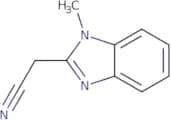
(1-Methyl-1H-benzoimidazol-2-yl)-acetonitrile
CAS:Producto controlado<p>(1-Methyl-1H-benzoimidazol-2-yl)-acetonitrile is a nucleophilic compound that reacts with carbanions to form alkyl benzoates. It can also act as an electrophile in the formation of nitroalkenes and amides, as well as an intermediate in the synthesis of phenazines. The potassium salt of this compound is used as a reagent in organic synthesis. (1-Methyl-1H-benzoimidazol-2-yl)-acetonitrile has been shown to react with methylene and aromatize to produce ethyl cyanoacetate, which can be used for the production of malononitrile. This reaction is catalyzed by potassium carbonate and esters.</p>Fórmula:C10H9N3Pureza:Min. 95%Peso molecular:171.2 g/mol(4-Fluoro-3-Nitrophenyl)Acetonitrile
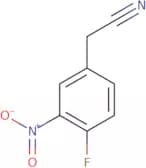
CAS:<p>4-Fluoro-3-nitrophenylacetonitrile is a monomer that can be synthesised from the reaction of carbamic acid and diphenyl ether. It is chiral, stereoselective and nucleophilic. 4-Fluoro-3-nitrophenylacetonitrile can also be synthesised by reacting fluoroacetamide with sodium cyanide in water, forming the corresponding amide, which reacts with acetonitrile to form the nitro compound. The anti-cancer properties of 4-fluoro-3 nitrophenylacetonitrile have been studied in vitro and in vivo. This substance has been shown to inhibit growth of cancer cells and induce apoptosis. In addition, this substance has been used as a synthetic strategy for dihydroisoquinolines, which are important for their anti-cancer properties.</p>Fórmula:C8H5FN2O2Pureza:Min. 95%Peso molecular:180.14 g/molCyanomethylenetributylphosphorane
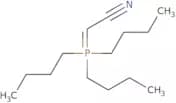
CAS:<p>Cyanomethylenetributylphosphorane (CMTP) is an agent used for the diagnosis of body formation. It is a chemical compound that can be used to produce images of tissue and organs by detecting apoptosis, or programmed cell death. CMTP binds to the glucose-dependent insulinotropic polypeptide receptor (GIPR), stimulating the release of insulin in the pancreas. CMTP also has therapeutic potential for metabolic disorders, as it has been shown to reduce triglycerides and increase HDL cholesterol levels in human serum. CMTP is synthesized from trifluoroacetic acid, which is then reacted with a cyclic peptide containing an amino acid derivative and 1-methyl-2-pyrrolidinone. This reaction produces a molecule with one free amino group at one end and two free carboxylic acid groups at the other end. The molecule can be reacted with epidermal growth factor (EGF) or insulin to</p>Fórmula:C14H28NPPureza:Min. 95%Forma y color:Yellow To Dark Brown Clear LiquidPeso molecular:241.35 g/mola,a-Dimethyl-1-piperidineacetonitrile
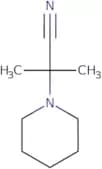
CAS:Producto controlado<p>Dimethylcyanamide is an organic compound that can be synthesized from cyanide or cyanic acid. Dimethylcyanamide is a colorless liquid with a strong odor. It has been used in the past as a precursor to other compounds, but it has since been replaced by cheaper and more convenient methods. Dimethylcyanamide reacts with primary amines to form nitriles, which are useful intermediates in organic synthesis. In addition, the reaction of dimethylcyanamide with secondary amines leads to the formation of primary amines. The transamination of dimethylamine-N-oxide yields a-dimethylaminopropionitrile as an intermediate product. The elimination reaction mechanism for this process involves the conversion of ammonia into hydroxide ions and hydrogen gas. This reaction produces high yields for both products and does not require high temperatures or pressures.</p>Fórmula:C9H16N2Pureza:Min. 95%Peso molecular:152.24 g/mol1-Methylindole-3-acetonitrile
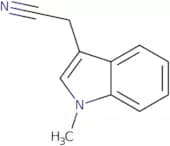
CAS:Producto controlado<p>Please enquire for more information about 1-Methylindole-3-acetonitrile including the price, delivery time and more detailed product information at the technical inquiry form on this page</p>Fórmula:C11H10N2Pureza:Min. 95%Peso molecular:170.21 g/mol2-Chloro-N-(3-cyano-4,5-dimethylthien-2-yl)acetamide
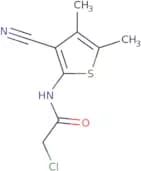
CAS:<p>Please enquire for more information about 2-Chloro-N-(3-cyano-4,5-dimethylthien-2-yl)acetamide including the price, delivery time and more detailed product information at the technical inquiry form on this page</p>Fórmula:C9H9ClN2OSPureza:Min. 95%Peso molecular:228.7 g/molDicyclohexylamine 2-cyanoacrylate
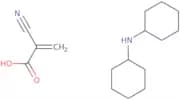
CAS:Producto controlado<p>Please enquire for more information about Dicyclohexylamine 2-cyanoacrylate including the price, delivery time and more detailed product information at the technical inquiry form on this page</p>Fórmula:C16H26N2O2Pureza:Min. 95%Peso molecular:278.39 g/mol3-Chloro-4-cyanophenylboronic acid
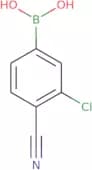
CAS:Producto controlado<p>Please enquire for more information about 3-Chloro-4-cyanophenylboronic acid including the price, delivery time and more detailed product information at the technical inquiry form on this page</p>Fórmula:C7H5BClNO2Pureza:Min. 95%Peso molecular:181.38 g/molDiethyl cyanophosphonate
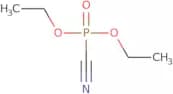
CAS:<p>Diethyl cyanophosphonate is a compound that is used as a fluorescence probe for amides and pyrazole rings. It binds to the ester form of the amide, which can then be detected with a fluorescence detector. The chemical reaction between diethyl cyanophosphonate and the ester form is reversible, so it can be used as a hypoglycemic agent. Diethyl cyanophosphonate has potent antitumor activity and binds to nerve cells, causing them to become electrically active.</p>Fórmula:C5H10NO3PPureza:Min. 95%Forma y color:PowderPeso molecular:163.11 g/molN-Cyano-N',S-dimethylisothiourea
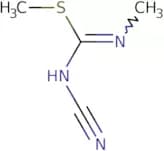
CAS:<p>Please enquire for more information about N-Cyano-N',S-dimethylisothiourea including the price, delivery time and more detailed product information at the technical inquiry form on this page</p>Fórmula:C4H7N3SPureza:Min. 95%Peso molecular:129.18 g/molBromodichloroacetonitrile
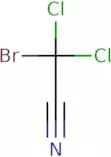
CAS:<p>Bromodichloroacetonitrile (BCN) is a chemical with disinfectant properties. It is used in wastewater treatment, as it is able to destroy bacteria and viruses. BCN also has been shown to be effective against the Covid-19 pandemic. BCN can be used as an analytical reagent for the analysis of chloride ions in deionized water. The carcinogenic potential of BCN in humans is unknown, but it has been shown to cause bladder cancer in rats.</p>Fórmula:C2BrCl2NPureza:Min. 95%Forma y color:Colorless PowderPeso molecular:188.84 g/mol4-Cyano-2-fluorobenzyl bromide
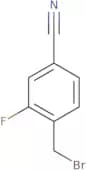
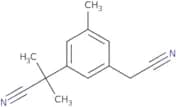
CAS:<p>4-Cyano-2-fluorobenzyl bromide is a methyl ester that can be used as a reagent for the synthesis of chiral α-amino acids. It can also be used as an enantioselective methylating agent for the synthesis of γ-secretase inhibitors. The methodology for the convergent synthesis of this compound includes alkylation with glycine followed by an enantioselective hydrolysis, which results in optically pure 4-cyano-2-fluorobenzyl bromide.</p>Fórmula:C8H5BrFNPureza:Min. 95%Forma y color:PowderPeso molecular:214.03 g/mola1,a1,5-Trimethyl-1,3-benzenediacetonitrile
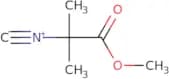
CAS:<p>Please enquire for more information about a1,a1,5-Trimethyl-1,3-benzenediacetonitrile including the price, delivery time and more detailed product information at the technical inquiry form on this page</p>Fórmula:C13H14N2Pureza:Min. 95%Peso molecular:198.26 g/molMethyl-2-isocyanoisobutyrate
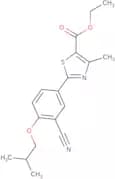
CAS:<p>Please enquire for more information about Methyl-2-isocyanoisobutyrate including the price, delivery time and more detailed product information at the technical inquiry form on this page</p>Fórmula:C9H9NO2Pureza:Min. 95%Peso molecular:127.14 g/molEthyl 2-(3-cyano-4-isobutoxyphenyl)-4-methyl-5-thiazolecarboxylate
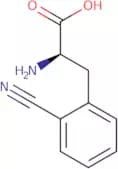
CAS:<p>Ethyl 2-(3-cyano-4-isobutoxyphenyl)-4-methyl-5-thiazolecarboxylate (ECIT) is a derivative of formyl that has been used as a solvent for industrial and laboratory purposes. ECIT is an amorphous substance with the chemical formula CH3COC6H2CH2COCH=N(C=O)C6H4CN. The compound has been quantified in various solvents, such as n-butyl alcohol and acetonitrile. ECIT is a colorless liquid that boils at 140° C. It has a formyl group and an alkynyl group, which are both reactive groups that can be used to synthesize other compounds. ECIT also contains two stereoisomers: the erythro isomer and the threo isomer. The erythro isomer has the structural formula of CH3COC6H2CH</p>Pureza:Min. 95%D-2-Cyanophenylalanine
CAS:<p>Please enquire for more information about D-2-Cyanophenylalanine including the price, delivery time and more detailed product information at the technical inquiry form on this page</p>Fórmula:C10H10N2O2Pureza:Min. 95%Peso molecular:190.2 g/mol3-Cyanothiophene-4-boronic acid pinacol ester
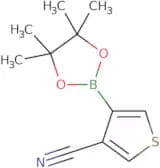
CAS:<p>Please enquire for more information about 3-Cyanothiophene-4-boronic acid pinacol ester including the price, delivery time and more detailed product information at the technical inquiry form on this page</p>Fórmula:C11H14BNO2SPureza:Min. 95%Peso molecular:235.11 g/molN-(2-Cyano-4-oxo-4H-1-benzopyran-8-yl)-4-(4-phenylbutoxy)benzamide
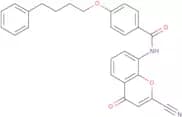
CAS:<p>Please enquire for more information about N-(2-Cyano-4-oxo-4H-1-benzopyran-8-yl)-4-(4-phenylbutoxy)benzamide including the price, delivery time and more detailed product information at the technical inquiry form on this page</p>Fórmula:C27H22N2O4Pureza:Min. 95%Peso molecular:438.47 g/mol2-Fluoro-4-iodobenzonitrile
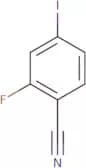
CAS:<p>2-fluoro-4-iodobenzonitrile is a potent inhibitor of the functions of VEGFR receptors. It inhibits the proliferation and migration of cancer cells by binding to VEGFR receptors, which are tyrosine kinases that regulate cell growth and differentiation. 2-Fluoro-4-iodobenzonitrile has been shown to inhibit angiogenesis, or the formation of new blood vessels, in vitro. This drug also has potent inhibitory activity against tumor growth in vivo. Clinical trials have shown that 2-fluoro-4-iodobenzonitrile can be used to treat various types of cancers, including breast cancer and colon cancer.</p>Fórmula:C7H3FINPureza:Min. 95%Forma y color:PowderPeso molecular:247.01 g/molBoc-2-cyano-D-phenylalanine
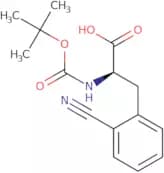
CAS:<p>Please enquire for more information about Boc-2-cyano-D-phenylalanine including the price, delivery time and more detailed product information at the technical inquiry form on this page</p>Fórmula:C15H18N2O4Pureza:Min. 95%Peso molecular:290.31 g/mol