Ciano-, nitrilo-
Los compuestos ciano y nitrilo son moléculas orgánicas que contienen grupos ciano (C≡N) o nitrilo en su estructura, caracterizadas por la presencia de nitrógeno. Estos grupos desempeñan roles importantes en diversas reacciones químicas y aplicaciones industriales. En esta categoría, encontrará una amplia gama de compuestos ciano y nitrilo, que van desde estructuras simples hasta complejas. En CymitQuimica, ofrecemos compuestos ciano y nitrilo de alta calidad adaptados para satisfacer las necesidades de investigación e industriales. Nuestros compuestos son adecuados para una variedad de aplicaciones de síntesis y análisis.
Se han encontrado 9618 productos de "Ciano-, nitrilo-"
Ordenar por
Pureza (%)
0
100
|
0
|
50
|
90
|
95
|
100
N-Cyanopiperidine
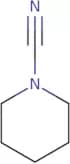
CAS:<p>N-Cyanopiperidine is a cyclohexane ring with a trifluoroacetic acid group. It is used in the synthesis of pharmaceutical preparations and has been shown to be stable in low-energy environments, such as when mixed with glycol ethers or chlorides. N-Cyanopiperidine is also used as an intermediate for the preparation of other compounds, such as metal carbonyl complexes and derivatives. N-Cyanopiperidine can be synthesized by reacting anhydrous hydrogen cyanide with piperidinium chloride in the presence of metal hydroxides. This reaction mechanism is known to produce two products: 1) a stable complex with a metal ion, and 2) a reaction product that contains the desired product and hydrogen cyanide.</p>Fórmula:C6H10N2Pureza:Min. 95%Forma y color:PowderPeso molecular:110.16 g/mol4-Bromobenzylamine
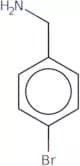
CAS:<p>4-Bromobenzylamine is a chemical compound that has been used to study the process optimization of sephadex g-100. It is also used as a chemotherapeutic treatment for cancer. 4-Bromobenzylamine binds to intracellular targets, such as nitrogen atoms and cell lysis, with physiological levels found in fetal bovine serum. The nitrogen atom is an essential structural component of 4-bromobenzylamine that is necessary for its biological activity and may be involved in binding to DNA polymerase. This drug has been shown to inhibit the growth of metastatic colorectal cancer cells by inhibiting cellular proliferation. Structural analysis has revealed that 4-bromobenzylamine interacts with the polymerase chain reaction (PCR) enzyme and inhibits the ability of DNA polymerases to add nucleotides to the growing strand of DNA.</p>Fórmula:C7H8BrNPureza:Min. 95%Forma y color:PowderPeso molecular:186.05 g/mol4-Cyano-2-hydroxybenzaldehyde
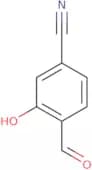
CAS:<p>4-Cyano-2-hydroxybenzaldehyde is a high quality chemical that can be used as a reagent and intermediate in the synthesis of complex compounds. It is also an important building block in the synthesis of fine chemicals. 4-Cyano-2-hydroxybenzaldehyde has been used as a versatile building block in the synthesis of organic compounds, useful scaffolds in medicinal chemistry, and reactive intermediates. It has also been shown to have anti-inflammatory properties and may be a potential treatment for inflammatory bowel disease.</p>Fórmula:C8H5NO2Pureza:Min. 95%Peso molecular:147.13 g/molPyridine-3-acetonitrile
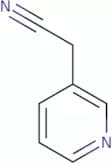
CAS:<p>Pyridine-3-acetonitrile is a coordination complex that can be used for the treatment of diabetes. It has been shown to have a high affinity for plasma glucose and to be selective for biological samples containing amino acids, such as proteins. The molecule is able to bind with carbon disulphide in order to form the active methylene, which has been shown to be an effective bifunctional ligand. The compound has also been shown to have a ph optimum of 9.8 - 10.2 and exhibits an atomic orbital with a molecular electrostatic potential of 0.5 eV. Pyridine-3-acetonitrile binds strongly to nucleophilic groups, such as amines and hydroxyls, making it suitable for use as a ligand in metal complexes. This compound may also have some interesting properties related to its morphology, which can be further investigated using functional theory and molecular electrostatic potential.br>br> br>br></p>Fórmula:C7H6N2Pureza:Min. 95%Forma y color:Clear LiquidPeso molecular:118.14 g/mol2-Hydroxy-4-nitrobenzonitrile
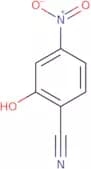
CAS:<p>2-Hydroxy-4-nitrobenzonitrile is a nitrile derivative that has an antibacterial activity. This compound interacts with the pyochelin, a siderophore in Pseudomonas aeruginosa. The antibiotic inhibits the uptake of pyochelin by the bacteria and causes cell death by inhibiting the synthesis of proteins necessary for bacterial growth. 2-Hydroxy-4-nitrobenzonitrile can be used as a potential stabilizer for materials such as polystyrene and polyurethane which are susceptible to degradation by hydrolysis or oxidation. In addition, this compound is also useful in gram-negative bacterium due to its ability to inhibit their growth by binding to their ribosomes. The conformational studies have been shown to be important for understanding the biological properties of this molecule.</p>Fórmula:C7H4N2O3Pureza:Min. 95%Forma y color:PowderPeso molecular:164.12 g/mol3-(Cyanomethyl)benzoic acid
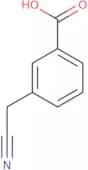
CAS:<p>3-(Cyanomethyl)benzoic acid is a useful building block that is used as a reagent in the production of pharmaceuticals and research chemicals. It is also used as a speciality chemical and as a high-quality fine chemical. This compound has versatile uses, including reactions with other chemicals to form complex compounds, and can be used as a reaction component or an intermediate in the synthesis of other chemicals. 3-(Cyanomethyl)benzoic acid has no known toxicity and its CAS number is 5689-33-8.</p>Fórmula:C9H7NO2Pureza:Min. 95%Forma y color:PowderPeso molecular:161.16 g/mol4-(Benzyloxy)-3-methoxyphenylacetonitrile
CAS:<p>4-(Benzyloxy)-3-methoxyphenylacetonitrile is an anti-cancer drug that belongs to the class of dihydroisoquinolines. It is used as a monomer in the synthesis of other drugs and it has been shown to be an effective inhibitor of cancer cells when used with carbamic acid. 4-(Benzyloxy)-3-methoxyphenylacetonitrile is synthesised through the reaction of 2,4-dichloroisonicotinic acid and 3-fluoroacetamide in the presence of a strong acid catalyst. This compound has been shown to have a high level of stereoselectivity, which makes it useful for synthesising other compounds.</p>Fórmula:C16H15NO2Pureza:Min. 95%Forma y color:PowderPeso molecular:253.3 g/mol4-Hydroxyphenylacetonitrile
CAS:<p>4-Hydroxyphenylacetonitrile (HPA) is a chemical compound that belongs to the group of nitriles. It is a precursor to the pigment sinalbin, which is found in corynebacterium and related bacteria. HPA has been shown to have an apoptotic effect on human cells, which may be due to its ability to inhibit protein synthesis and induce DNA fragmentation. The synthetic pathway for HPA starts with the conversion of L-phenylalanine into 4-hydroxyphenylpyruvic acid by a wild-type strain or bacterial strain. The 4-hydroxyphenylpyruvic acid is then converted into 4-hydroxybenzaldehyde through polymerase chain reactions or expression plasmids in corynebacterium glutamicum. This molecule can then be transformed into HPA by hydrolysis with hydrochloric acid or enzymatic activity. HPA has also been shown to stimulate</p>Fórmula:C8H7NOPureza:Min. 95%Forma y color:PowderPeso molecular:133.15 g/mol4-Cyanobiphenyl
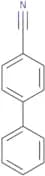
CAS:<p>4-Cyanobiphenyl is a contaminant of the environment. It is a reactive substance that can be found in the air, soil, and water. 4-Cyanobiphenyl is an active substance that can be used as an intermediate for the production of other chemicals. The chemical structure of 4-cyanobiphenyl has been elucidated by using a number of spectroscopic techniques including Raman spectroscopy. 4-Cyanobiphenyl is unstable in acidic conditions and reacts with chloride ions to form crotonic acid and benzoate. This reaction also occurs under basic conditions with biphenyl to form benzoate and low energy products such as benzene or phenol.</p>Fórmula:C13H9NPureza:Min. 95%Forma y color:Off-White PowderPeso molecular:179.22 g/mol(Cyanomethyl)urea
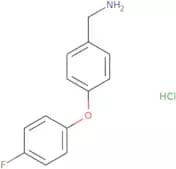
CAS:<p>Cyanomethyl)urea is a fine chemical that belongs to a class of compounds known as ureas. It is used as a versatile building block in the synthesis of more complex compounds, as a research chemical and as an intermediate. It can be used to synthesize pharmaceuticals, pesticides, and other chemicals. Cyanomethyl)urea is used in the production of polyurethane foams, which are commonly found in mattresses, furniture upholstery and insulation.</p>Fórmula:C3H5N3OPureza:Min. 95%Forma y color:Brown PowderPeso molecular:99.09 g/mol4-(4-Fluorophenoxy)benzylamine hydrochloride
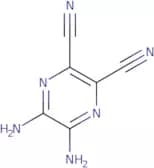
CAS:<p>4-(4-Fluorophenoxy)benzylamine hydrochloride is a metabolic agent that inhibits the metabolism of phenylpropionic acid and butanoic acid. It is used industrially as an oxime to protect other organic compounds from damage by peroxides, such as in polymerization reactions. 4-(4-Fluorophenoxy)benzylamine hydrochloride has been shown to be effective in treating metabolic diseases, such as phenylketonuria and urea cycle disorders.</p>Fórmula:C13H12FNO·HClPureza:Min. 95%Forma y color:PowderPeso molecular:253.7 g/mol5,6-Diamino-2,3-dicyanopyrazine
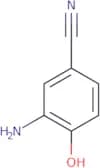
CAS:<p>5,6-Diamino-2,3-dicyanopyrazine (5,6-DDA) is a synthetic compound that has been shown to emit in the visible region. The emission spectrum of 5,6-DDA shows three peaks at 599 nm, 614 nm, and 637 nm. The molecular orbitals of 5,6-DDA are calculated to be sp2 hybridized with a singlet ground state. This molecule has been shown to form imines with aniline and pyrrole in the presence of chloride ions. It also forms a zn complex with zinc chloride and nitrate ions. The thermolysis of furyl derivatives produces the corresponding anions. 5,6-DDA can also undergo a photochemical reaction with chlorine gas to form its molecular ion at 637 nm.</p>Fórmula:C6N4N6Pureza:(%) Min. 98%Forma y color:PowderPeso molecular:160.14 g/mol2-Amino-4-cyano-phenol
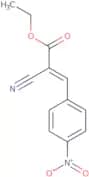
CAS:<p>2-Amino-4-cyano-phenol is a compound that has been shown to have antitubercular activity. It modulates the activity of cromakalim, which is a drug used for the treatment of tuberculosis. 2-Amino-4-cyano-phenol is also an antibacterial agent and has been shown to activate bacterial DNA replication and protein synthesis. The mechanism of action of this compound is thought to be due in part to its ability to bind with the ribosomes on the outside surface of cells and inhibit their function. 2-Amino-4-cyano-phenol has also been shown to have structural similarities with phenylephrine, which inhibits bacterial growth by binding to DNA gyrase, thereby preventing transcription and replication.</p>Fórmula:C7H6N2OPureza:Min. 95%Forma y color:PowderPeso molecular:134.14 g/molethyl 2-cyano-3-(4-nitrophenyl)prop-2-enoate
CAS:<p>Ethyl 2-cyano-3-(4-nitrophenyl)prop-2-enoate is a functionalized molecule that contains a dipole. It has high selectivity for 1,3-dipolar cycloadditions because the electron density of the methylene group is greater than that of the aldehyde group. The mechanistic theory for this reaction is that the electron density on the methylene group in ethyl 2-cyano-3-(4-nitrophenyl)prop-2-enoate will cause it to become more reactive than the aldehyde group. The dipoles in this molecule are oriented such that they can react with each other to form an intermediate and then an adduct. This isomerization occurs through either dipolarophilic or electrocyclic mechanisms.</p>Pureza:Min. 95%2'-Cyano-4-(dibromomethyl)biphenyl
CAS:<p>2'-Cyano-4-(dibromomethyl)biphenyl is a reactive component that belongs to the group of speciality chemicals. It can be used as a building block in organic synthesis and as an intermediate in the production of fine chemicals. 2'-Cyano-4-(dibromomethyl)biphenyl has been used for the synthesis of various complex compounds, such as an anti-inflammatory drug, an anti-diabetic drug, and a chemotherapeutic agent.</p>Fórmula:C14H9Br2NPureza:Min. 97 Area-%Forma y color:Off-White PowderPeso molecular:351.04 g/mol2,4,6-Trichlorobenzonitrile
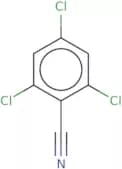
CAS:<p>2,4,6-Trichlorobenzonitrile is a chlorine-containing chemical that has been used as a pesticide. It is a highly toxic substance and can be fatal if ingested. 2,4,6-Trichlorobenzonitrile is converted to chloride in soil and water by microbial action. This chemical can be activated by light or temperature changes and is used in the production of pesticides that are phytotoxic. It also has been shown to have thermodynamic properties that allow it to act as an environmental pollutant. 2,4,6-Trichlorobenzonitrile can react with sulfoxides to form chloromethylation products such as 2,3,5-trichloroethanol. These reactions are catalyzed by metal ions such as Fe(II) and Mn(II).</p>Fórmula:C7H2Cl3NPureza:Min. 95%Forma y color:PowderPeso molecular:206.46 g/mol4-Cyanophenol
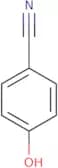
CAS:<p>4-Cyclohexyphenol is a natural compound that belongs to the class of compounds known as phenols. It has a hydroxyl group and an intramolecular hydrogen bond. The thermal expansion of 4-cyanophenol is approximately 6.6 × 10⁻⁶/°C, which is greater than the thermal expansion of p-hydroxybenzoic acid (approximately 1.8 × 10⁻⁶/°C). The reaction mechanism for 4-cyanophenol involves intramolecular hydrogen bonding, which leads to its rapid degradation. 4-Cyanophenol reacts with trifluoroacetic acid in the presence of sodium carbonate to form p-hydroxybenzoic acid, which can be determined by measuring its absorbance at 290 nm. Hydrogen bonding interactions with the surface are responsible for the high sensitivity and selectivity of this analytical method.<br>4-Cyanophenol may also be detected using plasma mass spect</p>Fórmula:C7H5NOPureza:Min. 95%Forma y color:PowderPeso molecular:119.12 g/mol(S,E)-3-(6-Bromopyridin-2-yl)-2-cyano-N-(1-phenylethyl)acrylamide
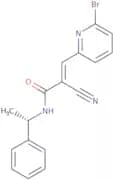
CAS:<p>(S,E)-3-(6-Bromopyridin-2-yl)-2-cyano-N-(1-phenylethyl)acrylamide (MBI-23) is a potential antineoplastic agent that has been shown to induce regression of bladder cancer in mice. MBI-23 induces apoptosis by inhibiting the proliferation of cancer cells and inducing differentiation of cancer stem cells. It is also shown to inhibit tumor growth and progression in glioma and prostate cancer models. MBI-23 binds to the KDR receptor subtype, which is activated by organic acids and inhibited by inorganic compounds. This binding leads to constitutive activation of the KDR receptor, thereby inducing apoptosis. The tautomers and stereoisomers of MBI-23 have not been fully elucidated yet.</p>Fórmula:C17H14ON3BrPureza:Min. 98 Area-%Forma y color:White PowderPeso molecular:356.22 g/molDodeca 2E,4E,8Z,10E,Z-tetraenoic acid isobutylamide - ca. 10 mg/ml acetonitrile solution
CAS:<p>Dodeca 2E,4E,8Z,10E,Z-tetraenoic acid isobutylamide (DETBA) is a versatile building block that is used in the synthesis of natural products and pharmaceuticals. DETBA can be used as a reaction component in organic synthesis to form complex compounds such as polyesters, polyamides, polyurethanes, and polyimides. It also has high quality and can be used in research or speciality chemical applications.</p>Fórmula:C16H25NOPureza:Min. 96 Area-%Forma y color:Clear LiquidPeso molecular:247.38 g/mol(5-Bromo-2-methoxyphenyl)acetonitrile
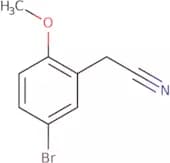
CAS:<p>5-Bromo-2-methoxyphenyl)acetonitrile is a chemical building block that can be used in the synthesis of complex compounds. It is a versatile intermediate that can be used as a reagent in organic reactions. This compound has been shown to be useful as a reaction component and is a high quality product. 5-Bromo-2-methoxyphenyl)acetonitrile has CAS number 7062-40-0 and is listed on the Chemical Abstracts Service (CAS).</p>Fórmula:C9H8BrNOPureza:Min. 95%Peso molecular:226.07 g/mol