Ciano-, nitrilo-
Los compuestos ciano y nitrilo son moléculas orgánicas que contienen grupos ciano (C≡N) o nitrilo en su estructura, caracterizadas por la presencia de nitrógeno. Estos grupos desempeñan roles importantes en diversas reacciones químicas y aplicaciones industriales. En esta categoría, encontrará una amplia gama de compuestos ciano y nitrilo, que van desde estructuras simples hasta complejas. En CymitQuimica, ofrecemos compuestos ciano y nitrilo de alta calidad adaptados para satisfacer las necesidades de investigación e industriales. Nuestros compuestos son adecuados para una variedad de aplicaciones de síntesis y análisis.
Se han encontrado 9618 productos de "Ciano-, nitrilo-"
Ordenar por
Pureza (%)
0
100
|
0
|
50
|
90
|
95
|
100
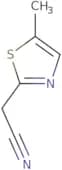
(5-Methyl-1,3-thiazol-2-yl)acetonitrile
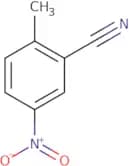
CAS:<p>5-Methyl-1,3-thiazol-2-yl)acetonitrile is a chemical that is used as a building block in organic synthesis. It has been shown to be an intermediate in the preparation of other compounds and has been used as a research chemical. This chemical has also been shown to have useful properties, such as high quality and versatility. 5-Methyl-1,3-thiazol-2-yl)acetonitrile can be used as a reaction component or a reagent for synthesizing other chemicals.</p>Fórmula:C6H6N2SPureza:Min. 95%Forma y color:Clear LiquidPeso molecular:138.19 g/mol3-Cyano-4-methylnitrobenzene
CAS:<p>3-Cyano-4-methylnitrobenzene is a nitro compound that can be prepared by the reaction of nitric acid with aniline. It has been shown to have a strong affinity for oxygen, which may be due to its pyran ring. 3-Cyano-4-methylnitrobenzene has been found to react with acetonitrile in an electrochemical experiment, leading to the formation of nitronium ion and nitrate ion. The mechanism for this reaction is not well understood, but it offers a convenient way of preparing 3-cyano-4-methylnitrobenzene from nitric acid and aniline.</p>Fórmula:C8H6N2O2Pureza:Min. 95%Forma y color:PowderPeso molecular:162.15 g/molBarium tetracyanoplatinate(II) hydrate
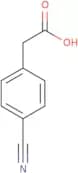
CAS:Producto controlado<p>Please enquire for more information about Barium tetracyanoplatinate(II) hydrate including the price, delivery time and more detailed product information at the technical inquiry form on this page</p>Fórmula:C4H2BaN4OPtPureza:Min. 95%Peso molecular:454.5 g/mol4-Cyanophenylacetic acid
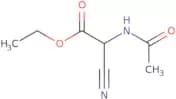
CAS:<p>4-Cyanophenylacetic acid is a thiolated organic compound that can act as a framework for the attachment of other functional groups. The synthesis of this compound has been developed in various ways, such as through the use of photoluminescence or coordination chemistry.</p>Fórmula:C9H7NO2Pureza:Min. 95%Forma y color:PowderPeso molecular:161.16 g/molEthyl acetamidocyanoacetate
CAS:<p>Ethyl acetamidocyanoacetate is an amide which inhibits the enzyme thrombin. It inhibits the conversion of fibrinogen to fibrin, and thus prevents blood clot formation. Ethyl acetamidocyanoacetate has been shown to inhibit serine protease, one of the most abundant enzymes in the human body. This inhibition causes a decrease in inflammatory diseases caused by these enzymes. Ethyl acetamidocyanoacetate also has analog properties that can be used for solid-phase synthesis.</p>Fórmula:C7H10N2O3Pureza:Min. 98 Area-%Peso molecular:170.17 g/mol3-Ethoxy-4-hydroxyphenylacetonitrile
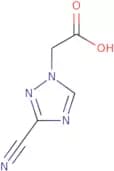
CAS:<p>3-Ethoxy-4-hydroxyphenylacetonitrile is a versatile building block and reagent that is used in the manufacturing of pharmaceuticals, agricultural chemicals, and other chemical products. It has been shown to be an excellent starting material for the synthesis of complex compounds. 3-Ethoxy-4-hydroxyphenylacetonitrile can be used as a high quality research chemical or useful scaffold for organic synthesis. CAS No. 205748-01-2</p>Fórmula:C10H11NO2Pureza:Min. 95%Forma y color:PowderPeso molecular:177.2 g/mol2-(3-Cyano-1H-1,2,4-triazol-1-yl)acetic acid
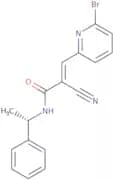
CAS:<p>Please enquire for more information about 2-(3-Cyano-1H-1,2,4-triazol-1-yl)acetic acid including the price, delivery time and more detailed product information at the technical inquiry form on this page</p>Fórmula:C5H4N4O2Pureza:Min. 95%Forma y color:PowderPeso molecular:152.11 g/mol(S,E)-3-(6-Bromopyridin-2-yl)-2-cyano-N-(1-phenylethyl)acrylamide
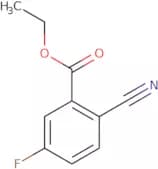
CAS:<p>(S,E)-3-(6-Bromopyridin-2-yl)-2-cyano-N-(1-phenylethyl)acrylamide (MBI-23) is a potential antineoplastic agent that has been shown to induce regression of bladder cancer in mice. MBI-23 induces apoptosis by inhibiting the proliferation of cancer cells and inducing differentiation of cancer stem cells. It is also shown to inhibit tumor growth and progression in glioma and prostate cancer models. MBI-23 binds to the KDR receptor subtype, which is activated by organic acids and inhibited by inorganic compounds. This binding leads to constitutive activation of the KDR receptor, thereby inducing apoptosis. The tautomers and stereoisomers of MBI-23 have not been fully elucidated yet.</p>Fórmula:C17H14ON3BrPureza:Min. 98 Area-%Forma y color:White PowderPeso molecular:356.22 g/mol2-Cyano-5-fluorobenzoic acid ethyl ester
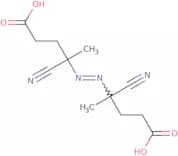
CAS:<p>2-Cyano-5-fluorobenzoic acid ethyl ester is a chemical compound with the formula C6H4(COOCH2)2FO. The compound is an intermediate in the synthesis of other chemicals, such as pharmaceuticals. It is also used as a building block in other syntheses. 2-Cyano-5-fluorobenzoic acid ethyl ester has been assigned CAS No. 1260751-65-2 and is useful in organic synthesis because it is a versatile building block, complex compound, and fine chemical.</p>Fórmula:C10H8FNO2Pureza:Min. 95%Peso molecular:193.17 g/mol4,4'-Azobis(4-cyanovaleric acid)
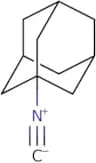
CAS:<p>Azobis(4-cyanovaleric acid) is a chemical compound that has reactive functional groups. It is a particle that is soluble in acetate extract and hydrochloric acid. The synthesis of Azobis(4-cyanovaleric acid) involves the reaction of 4-cyanoacrylic acid with 2,2'-azobis(2-methylpropionitrile). It is used as an intermediate in the preparation of polymers. Azobis(4-cyanovaleric acid) is used for the treatment of infectious diseases such as tuberculosis and malaria. The production of chain reactions with other molecules makes this chemical reactive and unstable. Azobis(4-cyanovaleric acid) also reacts with nucleophilic groups, such as hydroxyl groups, to form a covalent bond. This process can be reversed by adding a strong base or oxidant.</p>Fórmula:C12H16N4O4Pureza:Min. 95 Area-%Forma y color:PowderPeso molecular:280.28 g/mol1-Isocyanoadamantane
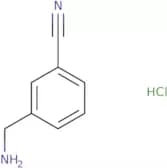
CAS:<p>1-Isocyanoadamantane is a compound that exhibits anti-influenza drug activity. It has been shown to inhibit virus replication by interacting with the active site of the influenza virus ribonucleoprotein (RNP) and inhibiting the synthesis of viral proteins. 1-Isocyanoadamantane binds to the RNP through coordination chemistry, which is mediated by nitrogen atoms on the amides and amines in its structure. The reaction mechanism for 1-isocyanoadamantane consists of two steps: reductive elimination followed by functional group activation. In this process, an amide or an amine is eliminated as a hydrogen atom, while a functional group reacts with it to form a new bond.</p>Fórmula:C11H15NPureza:Min. 95%Forma y color:White PowderPeso molecular:161.24 g/mol3-Cyanobenzylamine HCl
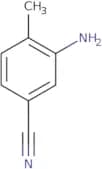
CAS:<p>3-Cyanobenzylamine HCl is a high quality chemical that is used as a reagent, intermediate, or building block in the synthesis of complex compounds. It is a fine chemical and speciality chemical that may be used as a research chemical and versatile building block for the synthesis of organic compounds. 3-Cyanobenzylamine HCl has been shown to react with other chemicals to form useful scaffolds and building blocks, such as amides, amino acid esters, and ureas.</p>Fórmula:C8H9ClN2Pureza:Min. 95%Forma y color:PowderPeso molecular:168.62 g/mol3-Amino-4-methylbenzonitrile
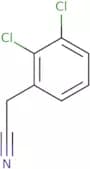
CAS:<p>3-Amino-4-methylbenzonitrile is an organic compound that is produced by the oxidative dehydrogenation of 3,4-dimethylaniline. It has been shown to undergo a number of reactions, including hydrochloric acid transfer hydrogenation and diazotization. This reaction yields 3-amino-4-methylbenzonitrile, dimethylamine and anilines. The transfer hydrogenation of nitroarenes with 3-amino-4-methylbenzonitrile gives 3-(3,4)-diaminobenzonitrile and 2,6-dinitrotoluene. The optimization of this reaction has led to the discovery of new nitrite derivatives as a result of the addition of nitrite in the presence of 3-amino-4-methylbenzonitrile.</p>Fórmula:C8H8N2Pureza:Min. 95%Forma y color:PowderPeso molecular:132.16 g/mol(2,3-Dichlorophenyl)acetonitrile
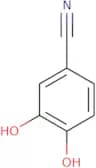
CAS:<p>(2,3-Dichlorophenyl)acetonitrile is a fine chemical that is useful as a building block in the synthesis of more complex compounds. It has been used in research as a reagent and as a speciality chemical. (2,3-Dichlorophenyl)acetonitrile reacts with many different types of compounds to form new molecules. This intermediate can be used in the synthesis of many different types of compounds and also serves as an important scaffold for larger molecules.</p>Fórmula:C8H5Cl2NPureza:Min. 95%Forma y color:PowderPeso molecular:186.04 g/mol3,4-Dihydroxybenzonitrile
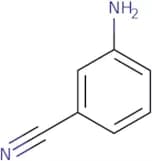
CAS:<p>3,4-Dihydroxybenzonitrile is a chemical compound that is found in soybean lipoxygenase. The molecule has been shown to be an excellent Michaelis-Menten substrate and hydrogen bonding partner. It also reacts with chlorine to form chlorinating agents such as 3,4-dichlorobenzonitrile and 3,4-dibromobenzonitrile. 3,4-Dihydroxybenzonitrile can act as a nucleophile and forms stable complexes when reacted with hydroxyl group compounds such as protocatechuic acid or reaction solution. This chemical is reactive and can be activated by redox cycling or light.<br>3,4-Dihydroxybenzonitrile has been used to treat protocatechuic acid levels in the blood of patients with chronic liver disease who are being treated for alcoholism.</p>Fórmula:C7H5NO2Pureza:Min. 95%Forma y color:PowderPeso molecular:135.12 g/mol3-Aminobenzonitrile
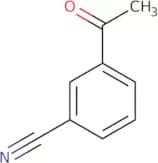
CAS:<p>3-Aminobenzonitrile is an amine that has been shown to inhibit the growth of bacteria. It was synthesized by the reaction of nitrobenzene with benzamide in the presence of acetic acid. The chemical structure of 3-aminobenzonitrile is similar to that of a group of natural amino acids, including cysteine and tryptophan, which are known inhibitors of bacterial growth. This compound is soluble in organic solvents and can be used as an injection solution. 3-Aminobenzonitrile has been evaluated by kinetic studies and found to have a high affinity for bacterial cells, with an inhibition constant (Ki) value of 0.37 mM. It is also active against other microorganisms such as yeast or mold fungi, but not against plant or animal cells. 3-Aminobenzonitrile inhibits the synthesis of proteins by binding to a number of different sites on the ribosomes where</p>Pureza:Min. 95%Forma y color:Yellow PowderPeso molecular:118.14 g/mol3-Acetylbenzonitrile
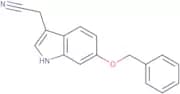
CAS:<p>3-Acetylbenzonitrile is an isomeric, asymmetric synthesis that has been synthesised in the presence of copper complex and salicylic acid. The reaction was carried out with a gaseous phase, where the chalcone was formed. The experimental techniques used were cross-coupling reactions and molecular modeling techniques. 3-Acetylbenzonitrile has been synthesised by a rationalized enthalpic approach that includes alcohol dehydrogenases and molecular modeling techniques.</p>Fórmula:C9H7NOPureza:Min. 95%Forma y color:PowderPeso molecular:145.16 g/mol2-(6-Benzyloxyindolyl)acetonitrile
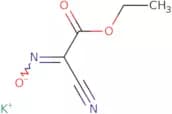
CAS:<p>Please enquire for more information about 2-(6-Benzyloxyindolyl)acetonitrile including the price, delivery time and more detailed product information at the technical inquiry form on this page</p>Fórmula:C17H14N2OPureza:Min. 95%Peso molecular:262.31 g/molEthyl cyanoglyxylate-2-oxyme potassium salt
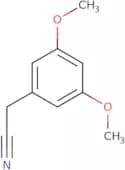
CAS:<p>Ethyl cyanoglyxylate-2-oxyme potassium salt is a high quality reagent for the production of complex compounds that can be used in fine chemicals, pharmaceuticals, and other speciality chemicals. It has been shown to be an intermediate for the synthesis of useful scaffolds and building blocks. The CAS number is 158014-03-0. This compound is a versatile building block that can be used in research chemicals, as well as reaction components for more complex syntheses.</p>Fórmula:C5H6N2O3KPureza:Min. 95%Forma y color:PowderPeso molecular:181.21 g/mol(3,5-Dimethoxyphenyl)acetonitrile
CAS:<p>3,5-Dimethoxyphenylacetonitrile is a synthetic compound that has been shown to be an inhibitor of the demethylation reaction. It is postulated to have anticancer activity and inhibits the biosynthesis of octaketides in vitro. This compound has also been shown to have antibacterial activity and is structurally related to cannabinoids. The mechanism by which 3,5-dimethoxyphenylacetonitrile inhibits cancer cells is not known. However, it may be due to its ability to bind cannabinoid receptors.</p>Fórmula:C10H11NO2Pureza:Min. 95%Forma y color:PowderPeso molecular:177.2 g/mol