Ciano-, nitrilo-
Los compuestos ciano y nitrilo son moléculas orgánicas que contienen grupos ciano (C≡N) o nitrilo en su estructura, caracterizadas por la presencia de nitrógeno. Estos grupos desempeñan roles importantes en diversas reacciones químicas y aplicaciones industriales. En esta categoría, encontrará una amplia gama de compuestos ciano y nitrilo, que van desde estructuras simples hasta complejas. En CymitQuimica, ofrecemos compuestos ciano y nitrilo de alta calidad adaptados para satisfacer las necesidades de investigación e industriales. Nuestros compuestos son adecuados para una variedad de aplicaciones de síntesis y análisis.
Se han encontrado 9618 productos de "Ciano-, nitrilo-"
Ordenar por
Pureza (%)
0
100
|
0
|
50
|
90
|
95
|
100
2-Cyanobenzamide
CAS:<p>2-Cyanobenzamide is a corrosion inhibitor that is used in the electrochemical industry to protect metals from corrosion. It has been shown to be suitable for use as a corrosion inhibitor in salt water and other corrosive environments. 2-Cyanobenzamide has been shown to have light sensitive properties, which is why it should not be exposed to direct light or stored in dark containers. It also inhibits enzymes that are involved in the production of reactive oxygen species (ROS) such as superoxide anion and hydrogen peroxide. The reaction of 2-cyanobenzamide with aluminium, sodium sulfide, and polymeric matrices has also been studied extensively.<br>2-Cyanobenzamide can be synthesized by reacting benzoyl chloride with ammonia and cyanogen bromide. This reaction produces a mixture of mono-, di-, tri-, and tetramers of 2-cyanobenzamide. These products can then be separated using analytical methods such as</p>Fórmula:C8H6N2OPureza:Min. 95%Peso molecular:146.15 g/mol4-Cyanobenzoic acid ethyl ester
CAS:<p>4-Cyanobenzoic acid ethyl ester is a hydrogen-bonding acceptor that is also able to form exciplexes with styrene. It has a conformation that is similar to that of aminobenzoate, which is a hydrogen-bonding donor. 4-Cyanobenzoic acid ethyl ester reacts with solvents such as benzene and chloroform, undergoing hydration reactions to form the corresponding 4-cyanophenol derivatives. It undergoes cyclization when heated in the presence of ruthenium(II) chloride to produce 1,4-dihydropyridine derivatives. The reaction mechanism for this reaction consists of two steps: an intramolecular nucleophilic attack followed by an intramolecular electrophilic substitution. The deionized water used in this synthetic process eliminates the need for drying agents and stabilizers, making it easier to carry out the synthesis.</p>Fórmula:C10H9NO2Pureza:Min. 95%Forma y color:PowderPeso molecular:175.18 g/molCyanodibenzylamine
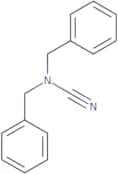
CAS:<p>Cyanodibenzylamine is a synthetic, pharmaceutical preparation. It is an amine that undergoes nucleophilic attack by an amide to form a cyanoguanidine. Cyanodibenzylamine can be used as a stabilizer and additive in pharmaceutical preparations. It also has the ability to bind metal hydroxides, which may be due to the presence of basic fibroblast growth factor and isoquinoline compound. Cyanodibenzylamine is also used as a polymerization initiator in organic chemistry, with hydrocarbon solvents such as benzene or toluene as its solvent.</p>Fórmula:C15H14N2Pureza:Min. 95%Forma y color:PowderPeso molecular:222.29 g/mol5-Cyanoindole
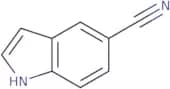
CAS:<p>5-Cyanoindole is a hydrophobic molecule that has been shown to have an inhibitory effect on the trifluoroacetic acid-induced fluorescence in the presence of chloride ions. It is also able to bind peptides and has been used as an antimicrobial peptide. 5-Cyanoindole can be synthesized electrochemically or by electrochemical impedance spectroscopy. The synthesis of 5-cyanoindole can be achieved through a Friedel-Crafts reaction, followed by a hydrolysis with hydrogen peroxide and then a reduction with sodium borohydride.<br>!-- END OF PRODUCT DESCRIPTION --></p>Fórmula:C9H6N2Forma y color:White PowderPeso molecular:142.16 g/mol2-(Diphenylamino)benzoic acid
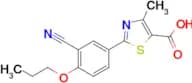
CAS:<p>Please enquire for more information about 2-(Diphenylamino)benzoic acid including the price, delivery time and more detailed product information at the technical inquiry form on this page</p>Fórmula:C19H15NO2Pureza:Min. 95%Peso molecular:289.33 g/mol2-(3-CYANO-4-PROPOXYPHENYL)-4-METHYLTHIAZOLE-5-CARBOXYLIC ACID
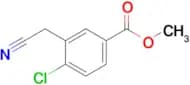
CAS:Pureza:95%Peso molecular:302.3500061Methyl 4-chloro-3-(cyanomethyl)benzoate
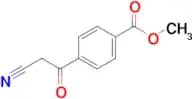
CAS:Fórmula:C10H8ClNO2Pureza:98%Forma y color:SolidPeso molecular:209.63Methyl 4-(cyanoacetyl)benzoate
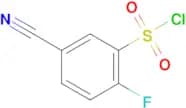
CAS:Fórmula:C11H9NO3Pureza:95%Forma y color:SolidPeso molecular:203.1975-Cyano-2-fluorobenzene-1-sulfonyl chloride
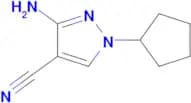
CAS:Fórmula:C7H3ClFNO2SPureza:98%Forma y color:Solid, Yellow powderPeso molecular:219.613-Amino-1-cyclopentyl-1H-pyrazole-4-carbonitrile
CAS:Fórmula:C9H12N4Pureza:98%Forma y color:SolidPeso molecular:176.223(1-methyl-1H-pyrazol-4-yl)acetonitrile
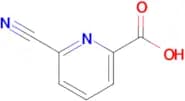
CAS:Fórmula:C6H7N3Pureza:98%Forma y color:OilPeso molecular:121.1436-Cyanopyridine-2-carboxylic acid
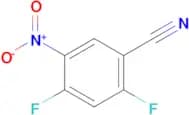
CAS:Fórmula:C7H4N2O2Pureza:95%Forma y color:SolidPeso molecular:148.1212,4-Difluoro-5-nitrobenzonitrile
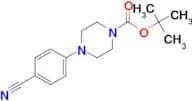
CAS:Fórmula:C7H2F2N2O2Pureza:98%Forma y color:SolidPeso molecular:184.102tert-Butyl 4-(4-cyanophenyl)piperazine-1-carboxylate
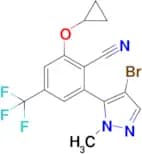
CAS:Fórmula:C16H21N3O2Pureza:97%Peso molecular:287.3632-(4-Bromo-1-methyl-1H-pyrazol-5-yl)-6-cyclopropoxy-4-(trifluoromethyl)benzonitrile
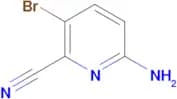
CAS:Pureza:97%Peso molecular:386.1726-AMINO-3-BROMO-2-CYANOPYRIDINE
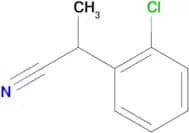
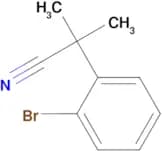
CAS:Fórmula:C6H4BrN3Pureza:97%Forma y color:SolidPeso molecular:198.0232-(2-Bromophenyl)-2-methylpropanenitrile
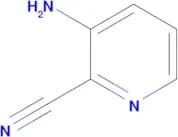
CAS:Fórmula:C10H10BrNPureza:98%Forma y color:LiquidPeso molecular:224.1013-Aminopicolinonitrile
CAS:Fórmula:C6H5N3Pureza:95%Forma y color:Solid, CrystallinePeso molecular:119.1273-(6-OXO-1,6-DIHYDRO-PYRIDAZIN-3-YL)-BENZONITRILE
CAS:Fórmula:C11H7N3OPureza:98%Peso molecular:197.1971-(6-(Trifluoromethyl)benzo[d]thiazol-2-yl)piperidine-4-carbonitrile
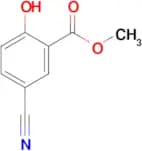
CAS:Pureza:95%Peso molecular:311.33Methyl 5-cyano-2-hydroxy-benzate
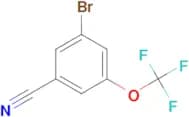
CAS:Fórmula:C9H7NO3Pureza:98%Forma y color:SolidPeso molecular:177.1593-Bromo-5-(trifluoromethoxy)benzonitrile
CAS:Fórmula:C8H3BrF3NOPureza:95%Forma y color:SolidPeso molecular:266.0172,3,5,6-Tetrachloroterephthalonitrile
CAS:Fórmula:C8Cl4N2Pureza:97%Forma y color:SolidPeso molecular:265.9








![2-[(3-CYANOPHENYL)AMINO]ACETIC ACID](/_next/image/?url=https%3A%2Fstatic.cymitquimica.com%2Fproducts%2F10%2Fthumb-webp%2FF849526.webp&w=3840&q=75)



![1-(6-(Trifluoromethyl)benzo[d]thiazol-2-yl)piperidine-4-carbonitrile](/_next/image/?url=https%3A%2Fstatic.cymitquimica.com%2Fproducts%2F10%2Fthumb-webp%2FF983068.webp&w=3840&q=75)