Ciano-, nitrilo-
Se han encontrado 9687 productos de "Ciano-, nitrilo-"
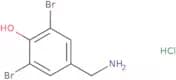
3,5-Dibromo-4-hydroxybenzylamine hydrochloride
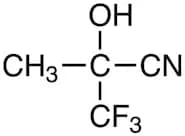
CAS:3,5-Dibromo-4-hydroxybenzylamine hydrochloride is a high quality reagent that can be used as an intermediate in the production of fine chemicals and speciality chemicals. It is also a versatile building block for the synthesis of complex compounds. 3,5-Dibromo-4-hydroxybenzylamine hydrochloride has been shown to be useful in research due to its ability to react with other compounds in a variety of ways. The CAS number for this compound is 1134950-89-2.Fórmula:C7H8Br2ClNOPureza:Min. 95%Forma y color:PowderPeso molecular:317.41 g/mol2-Hydroxy-2-(trifluoromethyl)propionitrile
CAS:Fórmula:C4H4F3NOPureza:>96.0%(GC)Forma y color:White to Almost white clear liquidPeso molecular:139.083-Cyanomethylbenzoic acid methyl ester
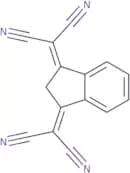
CAS:3-Cyanomethylbenzoic acid methyl ester is a synthetic chemical compound that is used as an intermediate in the production of other chemicals. It is a chlorination agent that reacts with toluene and methanol in the presence of chlorine to produce 3-chloromethylbenzoic acid methyl ester. This reaction also produces a byproduct called sulphone, which can be converted into acylation reagents for use in organic synthesis. The chloride ion can be used for cyanation reactions, which are useful for producing dyes or pharmaceuticals.Fórmula:C10H9NO2Pureza:Min. 95%Forma y color:SolidPeso molecular:175.18 g/mol1,3-Bis(dicyanomethylidene)indan
CAS:1,3-Bis(dicyanomethylidene)indan is a supramolecular dye that has been shown to form complexes with a variety of acceptors. The interaction between the dye and the acceptor is determined by the dipole moment, polarity, and electron affinity of the two molecules. 1,3-Bis(dicyanomethylidene)indan has been shown to interact with viologen and anion donors as well as organic dyes such as methylene blue. 1,3-Bis(dicyanomethylidene)indan has also been used in optical devices such as light emitting diodes (LEDs).
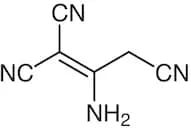
Fórmula:C15H6N4Pureza:Min. 95%Forma y color:PowderPeso molecular:242.24 g/mol2-Amino-1,1,3-tricyano-1-propene
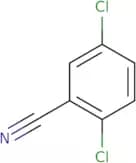
CAS:Fórmula:C6H4N4Pureza:>98.0%(T)Forma y color:White to Gray to Brown powder to crystalPeso molecular:132.132,5-Dichlorobenzonitrile
CAS:2,5-Dichlorobenzonitrile is a chemical compound that contains a nitrile group. It is used as an intermediate in organic synthesis, as well as for the production of various pharmaceuticals and pesticides. 2,5-Dichlorobenzonitrile is oxidized to form 2,5-dichlorophenol which can be further converted to 2,5-dichloroquinone. This redox cycle is reversible and can be used to synthesize other compounds. The reaction time of this process is about one hour at room temperature. Maleate has been shown to inhibit the hepatic metabolism of 2,5-Dichlorobenzonitrile. This may lead to accumulation of 2,5-Dichlorobenzonitrile in the liver and potentially cause hepatitis or even liver cancer. Chloromethylation of 2,5-Dichlorobenzonitrile leads to the formation of chlor
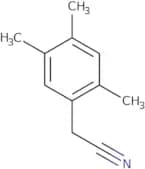
Fórmula:C7H3Cl2NPureza:Min. 95%Forma y color:PowderPeso molecular:172.01 g/mol2-(3,4,5-Trimethylphenyl)acetonitrile
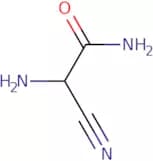
CAS:2-(3,4,5-Trimethylphenyl)acetonitrile (2TMPAN) is a versatile building block that can be used in the synthesis of complex compounds and research chemicals. This chemical is a reagent that can be used to synthesize high-quality and useful intermediates. 2TMPAN has been shown to have a number of applications as a reaction component or scaffold for the synthesis of pharmaceuticals and other organic molecules.Fórmula:C11H13NPureza:Min. 95%Peso molecular:159.23 g/mol2-Amino-2-cyanoacetamide
CAS:2-Amino-2-cyanoacetamide is a chemical compound that has been shown to be reactive in the human liver and animal models. It is a purine derivative with a diatomic molecule, which has been shown to inhibit cancer cells in animals. 2-Amino-2-cyanoacetamide has been shown to inhibit the replication of pestivirus, an RNA virus that causes encephalitis and other diseases in humans. The nitrogen atoms on this molecule are responsible for its transport properties, including uptake by the gut and its ability to cross the blood brain barrier. 2-Amino-2-cyanoacetamide also inhibits the activity of amide hydrolase, which is an enzyme responsible for hydrolyzing peptides into amino acids. This process leads to a decrease in protein synthesis, which can lead to cell death.Fórmula:C3H5N3OPureza:Min. 95%Forma y color:Beige To Tan SolidPeso molecular:99.09 g/mol4-Nitro-2-(trifluoromethyl)benzonitrile
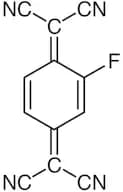
CAS:Fórmula:C8H3F3N2O2Pureza:>98.0%(GC)Forma y color:White to Yellow to Green powder to crystalPeso molecular:216.122-Fluoro-7,7,8,8-tetracyanoquinodimethane
CAS:Fórmula:C12H3FN4Pureza:>98.0%(N)Forma y color:Light yellow to Brown powder to crystalPeso molecular:222.182-Cyanopyridine
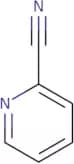
CAS:2-Cyanopyridine is a chelate ligand that is structurally related to picolinic acid. It binds to the active site of IDO1 and prevents the enzyme from converting tryptophan into kynurenine. This leads to an increase in tryptophan levels, which can then be used for protein synthesis. 2-Cyanopyridine has been shown to have antimicrobial activity against Gram-positive bacteria in vitro and in vivo. It also inhibits the growth of Gram-negative bacteria, yeast, and fungi by binding to the iron atom of their heme molecules. 2-Cyanopyridine has shown potential as a pharmacological agent or as a biochemical probe for transfer reactions.
Fórmula:C6H4N2Pureza:Min. 95%Forma y color:PowderPeso molecular:104.11 g/mola-Cyanocinnamic acid
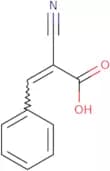
CAS:a-Cyanocinnamic acid is a 3-hydroxycinnamic acid that can be found in coffee. It has been shown to inhibit the growth of colorectal adenocarcinoma cells and other cancer cells by binding to an inhibitor site on fatty acid synthesis enzymes, such as pyruvate carboxylase, hydroxylase, and acetyl-CoA carboxylase. This inhibition leads to decreased levels of fatty acids and increased levels of pyruvate and hydrogen peroxide, which inhibits cell proliferation. In addition, a-cyanocinnamic acid has been shown to have a hypoxic tumor selectivity index of 10.7%, which means it selectively targets tumors with low oxygen levels.Fórmula:C10H7NO2Pureza:Min. 95%Forma y color:White PowderPeso molecular:173.17 g/mol4-Cyanoindole
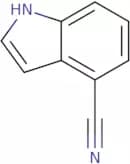
CAS:The 4-cyanoindole is a fluorescent molecule that binds to proteins and affects protein homeostasis. It has been shown to bind to the sodium salt form of proteins, which are typically found in human liver cells. The binding of 4-cyanoindole to these proteins leads to its reduction by borohydride and fluorescence resonance energy transfer (FRET) between the molecule and the protein. This binding can be detected using a fluorescence lifetime spectroscopy technique, which detects changes in the fluorescence's lifetime as well as intensity. The binding of 4-cyanoindole to proteins has been shown to have anti-cancer properties. It has also been used for detection of monoclonal antibodies against cancer cells or for fluorescent labeling of cancer cells for immunofluorescent microscopy.Fórmula:C9H6N2Forma y color:White PowderPeso molecular:142.16 g/mol3,4-Difluorophenylacetonitrile
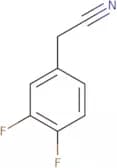
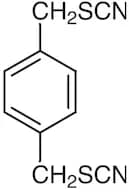
CAS:3,4-Difluorophenylacetonitrile is a fine chemical that is used as a reagent for the synthesis of complex compounds. It can be used as a useful intermediate for the production of fine chemicals and speciality chemicals. 3,4-Difluorophenylacetonitrile has been shown to be useful in the synthesis of versatile building blocks, which are reaction components that can be used in many different reactions. This compound has also been shown to be an excellent scaffold for the development of new drugs that target cancer cells.Fórmula:C8H5F2NPureza:Min. 95%Forma y color:Clear LiquidPeso molecular:153.13 g/molp-Xylylene Dithiocyanate
CAS:Fórmula:C10H8N2S2Pureza:>98.0%(GC)Forma y color:White to Almost white powder to crystalinePeso molecular:220.314-Butoxyphthalonitrile
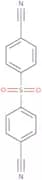
CAS:Fórmula:C12H12N2OPureza:>96.0%(GC)Forma y color:White to Light yellow powder to crystalPeso molecular:200.244,4'-Dicyanodiphenylsulphone
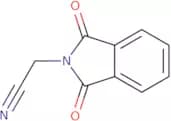
CAS:Dicyanodiphenylsulphone is an inhibitory agent that prevents the HIV-2 virus from entering cells. It binds to the viral envelope, forming a sealant that blocks the virus from entering the cell and infecting it. Dicyanodiphenylsulfone also has immunosuppressive properties, but can be used in conjunction with sulfa drugs and polysulfides to prevent the development of bacterial resistance. The efficacy of dicyanodiphenylsulfone has been demonstrated in cellular assays and in human immunodeficiency virus (HIV) infected patients. This drug is not active against other types of viruses, such as herpes simplex, influenza A, or cytomegalovirus.Fórmula:C14H8N2O2SPureza:Min. 95%Peso molecular:268.29 g/mol(1,3-Dioxo-1,3-dihydro-2H-isoindol-2-yl)acetonitrile
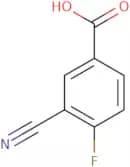
CAS:Acetonitrile is a colorless liquid that is miscible with water and most organic solvents. It is mainly used as a solvent for chemical reactions, including the synthesis of pharmaceuticals. Acetonitrile has been shown to be mutagenic in vitro and in vivo. Acetonitrile was found to induce micronuclei formation, which may be due to its ability to form reactive oxygen species or cause DNA damage by forming adducts with DNA bases. Acetonitrile also induced chromosomal aberrations and micronucleated polychromatic erythrocytes in mice, as well as increased reticulocytes (immature red blood cells) in humans. The dihedral angle between the nitrate group and the benzyl group has been found to be 163°, while the average frequency of acetonitrile is 164 Hz.Fórmula:C10H6N2O2Pureza:Min. 95%Forma y color:PowderPeso molecular:186.17 g/mol3-Cyano-4-fluorobenzoic acid
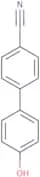
CAS:3-Cyano-4-fluorobenzoic acid is a fluorinated analog of 3-cyano-4-fluorobenzoic acid, which has been shown to be effective in the treatment of prostate cancer. It is a prodrug that is metabolized by activated esterases to release the active form. The 18F radiolabeled form of 3-Cyano-4-fluorobenzoic acid has a high affinity for prostate carcinoma cells and has been used as a diagnostic agent. This drug also has an excellent pharmacokinetic profile and can be used as a nonradioactive tracer for imaging tumor cells in vivo.Fórmula:C8H4FNO2Pureza:Min. 95%Forma y color:White To Off-White SolidPeso molecular:165.12 g/mol4-Cyano-4'-hydroxybiphenyl
CAS:4-Cyano-4'-hydroxybiphenyl is a phenolic compound that belongs to the family of compounds known as polycyclic aromatic hydrocarbons. It has been shown to bind to a variety of receptors and is used in sample pretreatment for assays. 4-Cyano-4'-hydroxybiphenyl also has a number of uses in polymerization reactions, including cationic polymerization, which involves the reaction of an electron donor with an electrophile. The electron donor is typically a Lewis acid, such as trifluoroacetic acid or formyl chloride. 4-Cyano-4'-hydroxybiphenyl can be used as an amide coupling agent, which involves the reaction of an amine with another organic compound to form an amide bond. It also reacts with chlorine gas in iodination reactions to produce hypochlorous acid.
Fórmula:C13H9NOPureza:Min. 96.5 Area-%Forma y color:PowderPeso molecular:195.22 g/mol