Ciano-, nitrilo-
Los compuestos ciano y nitrilo son moléculas orgánicas que contienen grupos ciano (C≡N) o nitrilo en su estructura, caracterizadas por la presencia de nitrógeno. Estos grupos desempeñan roles importantes en diversas reacciones químicas y aplicaciones industriales. En esta categoría, encontrará una amplia gama de compuestos ciano y nitrilo, que van desde estructuras simples hasta complejas. En CymitQuimica, ofrecemos compuestos ciano y nitrilo de alta calidad adaptados para satisfacer las necesidades de investigación e industriales. Nuestros compuestos son adecuados para una variedad de aplicaciones de síntesis y análisis.
Se han encontrado 9687 productos de "Ciano-, nitrilo-"
Ordenar por
Pureza (%)
0
100
|
0
|
50
|
90
|
95
|
100
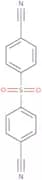
4,4'-Dicyanodiphenylsulphone
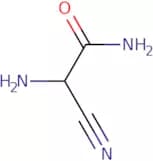
CAS:Dicyanodiphenylsulphone is an inhibitory agent that prevents the HIV-2 virus from entering cells. It binds to the viral envelope, forming a sealant that blocks the virus from entering the cell and infecting it. Dicyanodiphenylsulfone also has immunosuppressive properties, but can be used in conjunction with sulfa drugs and polysulfides to prevent the development of bacterial resistance. The efficacy of dicyanodiphenylsulfone has been demonstrated in cellular assays and in human immunodeficiency virus (HIV) infected patients. This drug is not active against other types of viruses, such as herpes simplex, influenza A, or cytomegalovirus.Fórmula:C14H8N2O2SPureza:Min. 95%Peso molecular:268.29 g/mol2-Amino-2-cyanoacetamide
CAS:2-Amino-2-cyanoacetamide is a chemical compound that has been shown to be reactive in the human liver and animal models. It is a purine derivative with a diatomic molecule, which has been shown to inhibit cancer cells in animals. 2-Amino-2-cyanoacetamide has been shown to inhibit the replication of pestivirus, an RNA virus that causes encephalitis and other diseases in humans. The nitrogen atoms on this molecule are responsible for its transport properties, including uptake by the gut and its ability to cross the blood brain barrier. 2-Amino-2-cyanoacetamide also inhibits the activity of amide hydrolase, which is an enzyme responsible for hydrolyzing peptides into amino acids. This process leads to a decrease in protein synthesis, which can lead to cell death.Fórmula:C3H5N3OPureza:Min. 95%Forma y color:Beige To Tan SolidPeso molecular:99.09 g/mol2-Cyanopyridine
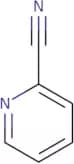
CAS:2-Cyanopyridine is a chelate ligand that is structurally related to picolinic acid. It binds to the active site of IDO1 and prevents the enzyme from converting tryptophan into kynurenine. This leads to an increase in tryptophan levels, which can then be used for protein synthesis. 2-Cyanopyridine has been shown to have antimicrobial activity against Gram-positive bacteria in vitro and in vivo. It also inhibits the growth of Gram-negative bacteria, yeast, and fungi by binding to the iron atom of their heme molecules. 2-Cyanopyridine has shown potential as a pharmacological agent or as a biochemical probe for transfer reactions.
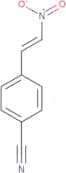
Fórmula:C6H4N2Pureza:Min. 95%Forma y color:PowderPeso molecular:104.11 g/mol1-(4-Cyanophenyl)-2-nitroethene
CAS:1-(4-Cyanophenyl)-2-nitroethene is a reactive intermediate that belongs to the group of carboxylic acids. It is an unsaturated compound with a cinnamic acid derivative. The nitration of 1-(4-cyanophenyl)-2-nitroethene leads to the formation of 1,2-dinitrobenzene, which can be used for the synthesis of other heterocyclic compounds. This intermediate has been shown to have catalytic activity in biomolecules, including carboxylic and phenolic groups, and can be used for the synthesis of other organic compounds.Fórmula:C9H6N2O2Pureza:Min. 95%Peso molecular:174.16 g/mol3-Cyanomethylbenzoic acid methyl ester
CAS:3-Cyanomethylbenzoic acid methyl ester is a synthetic chemical compound that is used as an intermediate in the production of other chemicals. It is a chlorination agent that reacts with toluene and methanol in the presence of chlorine to produce 3-chloromethylbenzoic acid methyl ester. This reaction also produces a byproduct called sulphone, which can be converted into acylation reagents for use in organic synthesis. The chloride ion can be used for cyanation reactions, which are useful for producing dyes or pharmaceuticals.Fórmula:C10H9NO2Pureza:Min. 95%Forma y color:SolidPeso molecular:175.18 g/mola-Cyanocinnamic acid
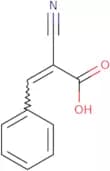
CAS:a-Cyanocinnamic acid is a 3-hydroxycinnamic acid that can be found in coffee. It has been shown to inhibit the growth of colorectal adenocarcinoma cells and other cancer cells by binding to an inhibitor site on fatty acid synthesis enzymes, such as pyruvate carboxylase, hydroxylase, and acetyl-CoA carboxylase. This inhibition leads to decreased levels of fatty acids and increased levels of pyruvate and hydrogen peroxide, which inhibits cell proliferation. In addition, a-cyanocinnamic acid has been shown to have a hypoxic tumor selectivity index of 10.7%, which means it selectively targets tumors with low oxygen levels.Fórmula:C10H7NO2Pureza:Min. 95%Forma y color:White PowderPeso molecular:173.17 g/mol2,3-Dicyanopyrazine
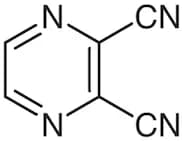
CAS:Fórmula:C6H2N4Pureza:>99.0%(GC)Forma y color:White to Light yellow to Light orange powder to crystalPeso molecular:130.116-[(piperidin-4-yl)methoxy]pyridine-2-carbonitrile hydrochloride
CAS:Fórmula:C12H16ClN3OPureza:95.0%Peso molecular:253.732-(3-Aminophenyl)-2-methylpropanenitrile
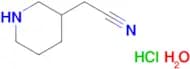
CAS:Fórmula:C10H12N2Pureza:95.0%Forma y color:SolidPeso molecular:160.223-piperidinylacetonitrile hydrochloride hydrate
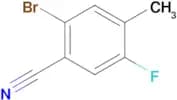
CAS:Fórmula:C7H15ClN2OPureza:95.0%Peso molecular:178.662-Bromo-5-fluoro-4-methylbenzonitrile
CAS:Fórmula:C8H5BrFNPureza:97%Forma y color:Liquid, No data available.Peso molecular:214.0371-cyclopropyl-2,4-dioxo-1,2,3,4-tetrahydropyrimidine-5-carbonitrile
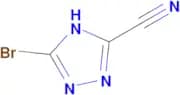
CAS:Fórmula:C8H7N3O2Pureza:95.0%Forma y color:Liquid, No data available.Peso molecular:177.1635-Bromo-1,2,4-triazole-3-carbonitrile
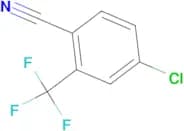
CAS:Fórmula:C3HBrN4Pureza:>95%Forma y color:Liquid, No data available.Peso molecular:172.9734-Chloro-2-trifluoromethylbenzonitrile
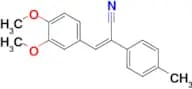
CAS:Fórmula:C8H3ClF3NPureza:96%Forma y color:LiquidPeso molecular:205.56(Z)-3-(3,4-Dimethoxyphenyl)-2-(p-tolyl)acrylonitrile
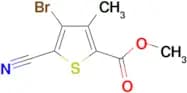
CAS:Fórmula:C18H17NO2Pureza:95.0%Peso molecular:279.339Methyl 4-bromo-5-cyano-3-methylthiophene-2-carboxylate
CAS:Fórmula:C8H6BrNO2SPureza:95%Peso molecular:260.11



![6-[(piperidin-4-yl)methoxy]pyridine-2-carbonitrile hydrochloride](/_next/image/?url=https%3A%2Fstatic.cymitquimica.com%2Fproducts%2F10%2Fthumb-webp%2FF542000.webp&w=3840&q=75)