Ciano-, nitrilo-
Los compuestos ciano y nitrilo son moléculas orgánicas que contienen grupos ciano (C≡N) o nitrilo en su estructura, caracterizadas por la presencia de nitrógeno. Estos grupos desempeñan roles importantes en diversas reacciones químicas y aplicaciones industriales. En esta categoría, encontrará una amplia gama de compuestos ciano y nitrilo, que van desde estructuras simples hasta complejas. En CymitQuimica, ofrecemos compuestos ciano y nitrilo de alta calidad adaptados para satisfacer las necesidades de investigación e industriales. Nuestros compuestos son adecuados para una variedad de aplicaciones de síntesis y análisis.
Se han encontrado 9674 productos de "Ciano-, nitrilo-"
Ordenar por
Pureza (%)
0
100
|
0
|
50
|
90
|
95
|
100
32-Carboxycyanocobalamin
CAS:<p>32-Carboxycyanocobalamin is a fine chemical that is used in the synthesis of complex compounds. It is a versatile building block, which can be used in reactions to synthesize other compounds and as a scaffold for drug discovery. 32-Carboxycyanocobalamin is also a reagent that has been used in organic chemistry and analytical chemistry. CAS No. 121483-62-3</p>Fórmula:C63H87CoN13O15PPureza:Min. 95%Peso molecular:1,356.35 g/molEthyl (2Z)-2-cyano-3-(2-furyl)acrylate
CAS:<p>Please enquire for more information about Ethyl (2Z)-2-cyano-3-(2-furyl)acrylate including the price, delivery time and more detailed product information at the technical inquiry form on this page</p>Fórmula:C10H9NO3Pureza:Min. 95%Peso molecular:191.18 g/mol(4-Hydroxy-3-methoxyphenyl)acetonitrile
CAS:Lobetyolin is a phenolic compound that has been found to be an inhibitor of monoamine oxidase. Lobetyolin is an acetylated derivative of 4-hydroxy-3-methoxyphenylacetonitrile. It has been shown to inhibit bacterial growth in vitro, with the exception of Mycobacterium tuberculosis and Mycobacterium avium complex. The optimal reaction time for lobetyolin is 3 hours at a pH between 7 and 8, with a yield of 66% at room temperature. Lobetyolin reacts rapidly with amines, alkylating them as it undergoes oxidation by hydrogen peroxide. Lobetyolin also reacts slowly with dopamine and aldehydes, but more readily with chlorides, yielding lobetyrine and chloroacetaldehyde respectively.Fórmula:C9H9NO2Pureza:Min. 95%Forma y color:PowderPeso molecular:163.17 g/mol2-Bromo-5-chlorophenylacetonitrile
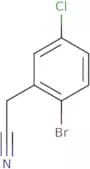
CAS:<p>2-Bromo-5-chlorophenylacetonitrile is an organic compound that is used as a reagent and building block in the synthesis of other chemicals. It is a colourless liquid that can be used to synthesize complex compounds. 2-Bromo-5-chlorophenylacetonitrile has been shown to be useful in the synthesis of pharmaceuticals, pesticides, and herbicides. This chemical can be used as a versatile intermediate or building block for the production of high quality research chemicals and specialty chemicals. 2-Bromo-5-chlorophenylacetonitrile is not on the list of chemical substances classified as hazardous according to EU regulation (EINECS) No. 231-1003.</p>Fórmula:C8H5BrClNPureza:Min. 95%Forma y color:PowderPeso molecular:230.49 g/mol3-Cyanobenzoic acid ethyl ester
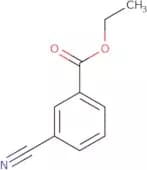
CAS:3-Cyanobenzoic acid ethyl ester is a reaction component that is used in organic synthesis. It is a versatile building block, useful intermediate, and useful building block. 3-Cyanobenzoic acid ethyl ester is a fine chemical that can be used as a reagent for the preparation of other compounds. This compound has been assigned CAS No. 2463-16-3 and has the molecular formula C7H6O2.Fórmula:C10H9NO2Pureza:Min. 95%Forma y color:PowderPeso molecular:175.18 g/mol2-(2,3-Dichlorophenyl)-2-guanidinyliminoacetonitrile
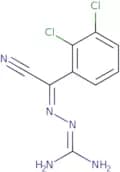
CAS:2-(2,3-Dichlorophenyl)-2-guanidinyliminoacetonitrile (2,3-DCPP) is a high quality reagent that is used in the preparation of complex compounds. It is also an intermediate in the synthesis of fine chemicals and useful scaffold and building block for research chemical. 2,3-DCPP has been shown to react with a variety of functional groups including amines, alcohols, thiols, carboxylic acids, organometallic reagents and many others. It is also a versatile building block for the synthesis of chemical substances such as pharmaceuticals, agrochemicals or dyes.Fórmula:C9H7Cl2N5Pureza:Min. 95%Forma y color:White PowderPeso molecular:256.09 g/molEthyl cyanoglyxylate-2-oxyme potassium salt
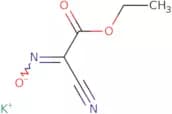
CAS:Ethyl cyanoglyxylate-2-oxyme potassium salt is a high quality reagent for the production of complex compounds that can be used in fine chemicals, pharmaceuticals, and other speciality chemicals. It has been shown to be an intermediate for the synthesis of useful scaffolds and building blocks. The CAS number is 158014-03-0. This compound is a versatile building block that can be used in research chemicals, as well as reaction components for more complex syntheses.Fórmula:C5H6N2O3KPureza:Min. 95%Forma y color:PowderPeso molecular:181.21 g/mol2-Bromo-4-nitrobenzonitrile
CAS:<p>2-Bromo-4-nitrobenzonitrile is a chemical compound that can be used to study the relationship between genetic polymorphism and chromosome structure. This compound has been found to induce polyploidy in Brassica plants, which may have implications for the evolution of these species. 2-Bromo-4-nitrobenzonitrile also has been shown to be a useful marker for phylogenetic and ecological studies of Lepidium species. The compound is diploid in nature, but can be used as a matrix in tetraploid plants.</p>Fórmula:C7H3BrN2O2Pureza:Min. 95%Forma y color:PowderPeso molecular:227.02 g/mol2-Chloro-4-fluorobenzonitrile
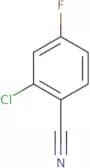
CAS:<p>2-Chloro-4-fluorobenzonitrile is a drug that has been shown to have antitumor effects by binding to the CB2 receptor. It inhibits hydrogenation reduction of the molecule, which may be due to its ability to react with both functional groups. 2-Chloro-4-fluorobenzonitrile has also been shown to inhibit progesterone receptor, which may lead to an increase in progesterone levels and a decrease in estrogen levels. The pharmacokinetic properties of this compound are not yet known.</p>Fórmula:C7H3ClFNPureza:Min. 95%Forma y color:White PowderPeso molecular:155.56 g/mol1,4-Diamino-2,3-dicyanoanthraquinone
CAS:1,4-Diamino-2,3-dicyanoanthraquinone is a chemical compound that belongs to the amines group. It has transcription-polymerase chain activity and inhibits the growth of cancer cells by regulating blood pressure and stimulating the production of growth factors. The effect on cancer cells is due to its ability to inhibit kinases. 1,4-Diamino-2,3-dicyanoanthraquinone has shown an inhibitory effect on glutamate decarboxylase and fatty acid synthase, which are enzymes that regulate cell metabolism. This chemical compound also exhibits quinoline derivatives with a redox potential that can be used as hydrogen chloride in organic synthesis reactions.Fórmula:C16H8N4O2Pureza:Min. 95%Forma y color:Blue PowderPeso molecular:288.26 g/mol2,5-Diaminobenzonitrile
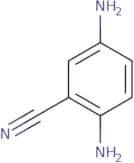
CAS:<p>2,5-Diaminobenzonitrile is a chemical compound with the molecular formula C6H5N3. It is a white crystalline solid that is insoluble in water and soluble in organic solvents such as acetone, chloroform, and ether. 2,5-Diaminobenzonitrile has been shown to be an effective monomer for polymer synthesis due to its stability and high densities. This chemical also has the ability to undergo hydrogen bonding and form hydrogen peroxide when heated to a temperature of 100 °C. The thermal isomerization of 2,5-diaminobenzonitrile can be slowed by adding other amines or nitrites.</p>Fórmula:C7H7N3Pureza:Min. 95%Forma y color:PowderPeso molecular:133.15 g/mol4-Bromo-3-cyanotoluene
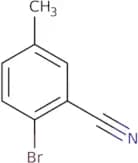
CAS:4-Bromo-3-cyanotoluene is a quinazolinone that can be synthesized by reacting 2-bromotoluene with nitric acid. It is a substrate for the synthesis of other quinazolinones.Fórmula:C8H6BrNPureza:Min. 95%Peso molecular:196.04 g/mol2-Chloro-3-methylbenzylamine HCl - 90%
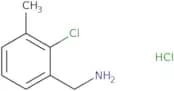
CAS:<p>2-Chloro-3-methylbenzylamine HCl is a fine chemical that is a versatile building block for synthesis of pharmaceuticals and research chemicals. It is also a useful intermediate in the production of other compounds, such as speciality chemicals, complex compounds, and reaction components. 2-Chloro-3-methylbenzylamine HCl has many potential applications in both academia and industry because it is a high quality reagent with many uses.</p>Fórmula:C8H10ClN·HClPureza:Min. 95%Forma y color:PowderPeso molecular:192.09 g/mol4-Amino-2-cyanotoluene
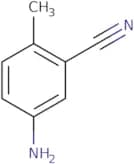
CAS:<p>4-Amino-2-cyanotoluene is a quinazoline compound that inhibits the synthesis of thymine, which is necessary for DNA replication. This compound binds to the enzyme thymidylate synthetase, thereby inhibiting the synthesis of thymine. The inhibitory effect has been shown in a study using calf thymus DNA. 4-Amino-2-cyanotoluene also inhibits the synthesis of other nucleic acids such as adenine and guanine.</p>Fórmula:C8H8N2Pureza:Min. 95%Forma y color:PowderPeso molecular:132.16 g/mol3-Cyanophenylacetic acid
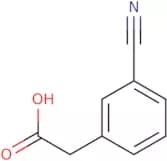
CAS:<p>3-Cyanophenylacetic acid is a versatile building block and useful intermediate that can be used in the synthesis of a wide range of organic compounds. 3-Cyanophenylacetic acid is a fine chemical with CAS No. 1878-71-3 that can be used as a research chemical, reaction component, or speciality chemical. It is an important reagent for making complex organic compounds. 3-Cyanophenylacetic acid is a high quality product with the following characteristics: <br>1) Colorless crystals; <br>2) Soluble in water; <br>3) Soluble in acetone; <br>4) Slightly soluble in ether; <br>5) Reactivity: stable to heat, light, and air; <br>6) pH (1% solution): 2.0 - 4.0; <br>7) Melting point: 129 °C; <br>8) Boiling point: 188 °C at 760 mmH</p>Fórmula:C9H7NO2Pureza:Min. 95%Peso molecular:161.16 g/mol3-Hydroxyphenylacetonitrile
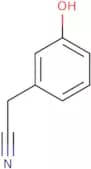
CAS:<p>3-Hydroxyphenylacetonitrile is a molecule that is the precursor for a number of isothiocyanates, which are phytochemicals with antibacterial properties. It has been shown to have inhibitory effects on dopamine hydroxylase, an enzyme that catalyzes the conversion of dopamine to norepinephrine and epinephrine. 3-Hydroxyphenylacetonitrile also inhibits the activity of other active enzymes such as cytochrome P450. The inhibition of these enzymes by 3-hydroxyphenylacetonitrile may be responsible for its antibacterial properties. This molecule is inactivated by cyanides, which leads to its inability to produce any isothiocyanates. Kinetic studies show that 3-hydroxyphenylacetonitrile saturates at high concentrations, leading to decreased production of cyanide.</p>Fórmula:C8H7NOPureza:Min. 95%Forma y color:PowderPeso molecular:133.15 g/mol2,6-Difluorobenzonitrile
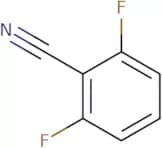
CAS:<p>2,6-Difluorobenzonitrile is a nucleophilic compound that reacts with inorganic acids to form new chemical structures. It has been shown to react with hydrochloric acid, sodium carbonate and phosphotungstic acid. The FT-IR spectroscopy of 2,6-difluorobenzonitrile shows a reaction product with a proton. This means that the molecule is able to transfer a hydrogen ion from one site to another. The reaction between 2,6-difluorobenzonitrile and sodium carbonate produces an insoluble precipitate of sodium phosphate and sodium chloride, which can be analyzed gravimetrically. 2,6-Difluorobenzonitrile has also been shown to have fluorescence properties that are activated by ultraviolet light and naphthalene.</p>Fórmula:C7H3F2NPureza:Min. 95%Forma y color:PowderPeso molecular:139.1 g/mol2'-Cyano-4-(dibromomethyl)biphenyl
CAS:<p>2'-Cyano-4-(dibromomethyl)biphenyl is a reactive component that belongs to the group of speciality chemicals. It can be used as a building block in organic synthesis and as an intermediate in the production of fine chemicals. 2'-Cyano-4-(dibromomethyl)biphenyl has been used for the synthesis of various complex compounds, such as an anti-inflammatory drug, an anti-diabetic drug, and a chemotherapeutic agent.</p>Fórmula:C14H9Br2NPureza:Min. 97 Area-%Forma y color:Off-White PowderPeso molecular:351.04 g/mol2-Cyanocinnamic acid
CAS:<p>2-Cyanocinnamic acid is a fatty acid that has been shown to inhibit the synthesis of proteins. It binds to cytochrome c oxidase, inhibiting mitochondrial respiration and electron transport, leading to decreased ATP production. 2-Cyanocinnamic acid is not easily transported out of mitochondria, which leads to its accumulation in the mitochondrial matrix. This accumulation causes synergistic inhibition with glutamate, leading to a decrease in ATP production and an increase in intracellular levels of reactive oxygen species (ROS). The use of 2-cyanoacrylic acid as a mitochondrial transport inhibitor has been proposed for the treatment of obesity and diabetes.<br>2-Cyanocinnamic acid also inhibits fatty acid uptake by binding to the protein translocase at the outer membrane of cells. This binding prevents monomers from entering the cell, where they are broken down by beta oxidation and converted into acetyl-CoA, which can be used for energy production or stored as triglycer</p>Fórmula:C10H7NO2Pureza:Min. 95%Peso molecular:173.17 g/mol4-Amino-3-nitrobenzonitrile
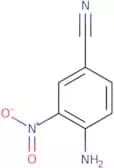
CAS:<p>4-Amino-3-nitrobenzonitrile is an organic compound that is used as a precursor in the synthesis of drugs to treat infectious diseases. 4-Amino-3-nitrobenzonitrile has been shown to have potent activity against Leishmania species, including L. major and L. braziliensis. It binds to sulfoxides by a nitro group and forms a covalent bond with the sulfoxide. This results in the formation of an intramolecular hydrogen bond between the nitro group and the sulfoxide, which prevents it from forming hydrogen bonds with other molecules. Gel permeation chromatography can be used for analytical determination of this drug. 4-Amino-3-nitrobenzonitrile has also been studied using chemosensors and in vivo studies, showing that it can be used to inhibit protozoa such as Giardia lamblia, Entamoeba histolyt</p>Fórmula:C7H5N3O2Pureza:Min. 98%Forma y color:PowderPeso molecular:163.13 g/mol