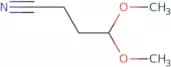
Ciano-, nitrilo-
Se han encontrado 9677 productos de "Ciano-, nitrilo-"
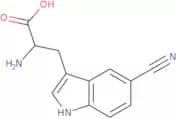
5-Cyano-DL-tryptophan
CAS:5-Cyano-DL-tryptophan is an antimicrobial peptide that exhibits potent antimicrobial activity against Gram-positive and Gram-negative bacteria. It also has a high affinity for the bacterial ribosome, which leads to inhibition of protein synthesis. 5-Cyano-DL-tryptophan can be synthesized by dehydration of tryptophan in a model system. The molecule is an analog of the natural amino acid tryptophan and has fluorescence properties that are sensitive to hydration levels. 5-Cyano-DL-tryptophan binds to the peptide binding site on the ribosome and induces a frequency shift in its fluorescence emission spectrum when bound. This property makes it a useful tool for studying peptide binding sites on the ribosome.Fórmula:C12H11N3O2Pureza:Min. 95%Forma y color:Yellow PowderPeso molecular:229.23 g/mol4-Cyanobenzoic acid ethyl ester
CAS:4-Cyanobenzoic acid ethyl ester is a hydrogen-bonding acceptor that is also able to form exciplexes with styrene. It has a conformation that is similar to that of aminobenzoate, which is a hydrogen-bonding donor. 4-Cyanobenzoic acid ethyl ester reacts with solvents such as benzene and chloroform, undergoing hydration reactions to form the corresponding 4-cyanophenol derivatives. It undergoes cyclization when heated in the presence of ruthenium(II) chloride to produce 1,4-dihydropyridine derivatives. The reaction mechanism for this reaction consists of two steps: an intramolecular nucleophilic attack followed by an intramolecular electrophilic substitution. The deionized water used in this synthetic process eliminates the need for drying agents and stabilizers, making it easier to carry out the synthesis.Fórmula:C10H9NO2Pureza:Min. 95%Forma y color:PowderPeso molecular:175.18 g/mol2-Bromo-4-cyanotoluene
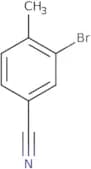
CAS:2-Bromo-4-cyanotoluene is a ligand that is used in cross-coupling reactions. It is used to form complexes with metals, such as palladium and nickel, for the preparation of organometallic reagents. 2-Bromo-4-cyanotoluene has been shown to inhibit secretory phospholipase A2 (sPLA2) and PLA2 activity in a fluorimetric assay. This compound also inhibits the catalytic activity of spla2, which is an enzyme involved in the biosynthesis of arachidonic acid. 2-Bromo-4-cyanotoluene also inhibits piperazine synthesis by reacting with the nitrogen atom on the piperazine ring.
Fórmula:C8H6BrNPureza:Min. 95%Peso molecular:196.04 g/molEthyl (2Z)-2-cyano-3-(2-furyl)acrylate
CAS:Please enquire for more information about Ethyl (2Z)-2-cyano-3-(2-furyl)acrylate including the price, delivery time and more detailed product information at the technical inquiry form on this pageFórmula:C10H9NO3Pureza:Min. 95%Peso molecular:191.18 g/molEthyl cyanoglyxylate-2-oxyme potassium salt
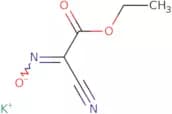
CAS:Ethyl cyanoglyxylate-2-oxyme potassium salt is a high quality reagent for the production of complex compounds that can be used in fine chemicals, pharmaceuticals, and other speciality chemicals. It has been shown to be an intermediate for the synthesis of useful scaffolds and building blocks. The CAS number is 158014-03-0. This compound is a versatile building block that can be used in research chemicals, as well as reaction components for more complex syntheses.Fórmula:C5H6N2O3KPureza:Min. 95%Forma y color:PowderPeso molecular:181.21 g/mol2-(2,3-Dichlorophenyl)-2-guanidinyliminoacetonitrile
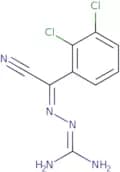
CAS:2-(2,3-Dichlorophenyl)-2-guanidinyliminoacetonitrile (2,3-DCPP) is a high quality reagent that is used in the preparation of complex compounds. It is also an intermediate in the synthesis of fine chemicals and useful scaffold and building block for research chemical. 2,3-DCPP has been shown to react with a variety of functional groups including amines, alcohols, thiols, carboxylic acids, organometallic reagents and many others. It is also a versatile building block for the synthesis of chemical substances such as pharmaceuticals, agrochemicals or dyes.Fórmula:C9H7Cl2N5Pureza:Min. 95%Forma y color:White PowderPeso molecular:256.09 g/molBenzenesulphonylacetonitrile
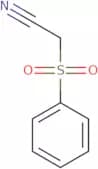
CAS:Benzenesulphonylacetonitrile is an alkanoic acid nucleophile with a benzimidazole derivative. It has shown potential for use as a cancer drug by inhibiting tumor-associated enzymes and inducing apoptosis in cancer cells. Benzenesulphonylacetonitrile is also active against inflammatory diseases such as rheumatoid arthritis, psoriatic arthritis, and Crohn's disease. This drug can be synthesized by the reaction of sodium salts with benzenesulphonylacetone followed by a nucleophilic substitution reaction with methylene chloride. The synthesis of benzenesulphonylacetonitrile requires anhydrous acetonitrile and palladium-catalyzed coupling reactions in the presence of sodium carbonate. Benzenesulphonylacetonitrile has chemical stability in the presence of acids, bases, and heat.br>Fórmula:C8H7NO2SPureza:Min. 95%Forma y color:PowderPeso molecular:181.21 g/mol1,4-Diamino-2,3-dicyanoanthraquinone
CAS:1,4-Diamino-2,3-dicyanoanthraquinone is a chemical compound that belongs to the amines group. It has transcription-polymerase chain activity and inhibits the growth of cancer cells by regulating blood pressure and stimulating the production of growth factors. The effect on cancer cells is due to its ability to inhibit kinases. 1,4-Diamino-2,3-dicyanoanthraquinone has shown an inhibitory effect on glutamate decarboxylase and fatty acid synthase, which are enzymes that regulate cell metabolism. This chemical compound also exhibits quinoline derivatives with a redox potential that can be used as hydrogen chloride in organic synthesis reactions.Fórmula:C16H8N4O2Pureza:Min. 95%Forma y color:Blue PowderPeso molecular:288.26 g/molCyano-3-phenoxybenzyl 3-(2,2-dichloroethenyl)-2,2-dimethylcyclopropanecarboxylate
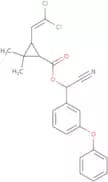
CAS:Cypermethrin is an insecticide that belongs to the family of chemical pesticides. It is used in agriculture and in public health to control malaria-transmitting mosquitoes, head lice, and scabies mites. Cypermethrin disrupts the insect nervous system by inhibiting the function of synapses between nerves, resulting in paralysis and death. The compound also affects signal pathways that regulate locomotor activity and enzyme activities. Cypermethrin has been shown to have a high resistance to degradation by glycol ethers such as ethylene glycol monomethyl ether acetate (EGMEA). It has an optimum concentration of 0.01 ppm for mosquito control and 0.1 ppm for lice control. The analytical method involves liquid chromatography with sodium citrate as an ion-pairing agent and a linear calibration curve using a standard curve generated from known concentrations of cypermethrin.Fórmula:C22H19Cl2NO3Pureza:Min. 95%Forma y color:Colorless Clear LiquidPeso molecular:416.3 g/mol4-Octylbenzylamine
CAS:4-Octylbenzylamine is a hydrophobic molecule that is soluble in organic solvents. In simulations, it was shown to have affinity for anions and aromatic hydrocarbons, as well as the ability to be immobilized on surfaces. 4-Octylbenzylamine is also a chromatographic stationary phase that can be used to separate solutes with similar properties. This molecule has been oriented so that it binds to the hydrated surface of the column, which improves its affinity for anions and aromatic hydrocarbons. The high-performance liquid chromatography (HPLC) technique utilizes this property to separate molecules of different affinities from one another in a systematic manner.Fórmula:C15H25NPureza:Min. 95%Forma y color:PowderPeso molecular:219.37 g/mol2'-Cyano-4-(dibromomethyl)biphenyl
CAS:2'-Cyano-4-(dibromomethyl)biphenyl is a reactive component that belongs to the group of speciality chemicals. It can be used as a building block in organic synthesis and as an intermediate in the production of fine chemicals. 2'-Cyano-4-(dibromomethyl)biphenyl has been used for the synthesis of various complex compounds, such as an anti-inflammatory drug, an anti-diabetic drug, and a chemotherapeutic agent.Fórmula:C14H9Br2NPureza:Min. 97 Area-%Forma y color:Off-White PowderPeso molecular:351.04 g/mol5-Cyanoindole
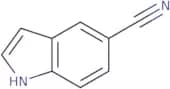
CAS:5-Cyanoindole is a hydrophobic molecule that has been shown to have an inhibitory effect on the trifluoroacetic acid-induced fluorescence in the presence of chloride ions. It is also able to bind peptides and has been used as an antimicrobial peptide. 5-Cyanoindole can be synthesized electrochemically or by electrochemical impedance spectroscopy. The synthesis of 5-cyanoindole can be achieved through a Friedel-Crafts reaction, followed by a hydrolysis with hydrogen peroxide and then a reduction with sodium borohydride.
!-- END OF PRODUCT DESCRIPTION -->Fórmula:C9H6N2Forma y color:White PowderPeso molecular:142.16 g/mol4-Amino-3-nitrobenzonitrile
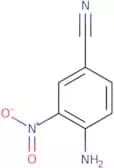
CAS:4-Amino-3-nitrobenzonitrile is an organic compound that is used as a precursor in the synthesis of drugs to treat infectious diseases. 4-Amino-3-nitrobenzonitrile has been shown to have potent activity against Leishmania species, including L. major and L. braziliensis. It binds to sulfoxides by a nitro group and forms a covalent bond with the sulfoxide. This results in the formation of an intramolecular hydrogen bond between the nitro group and the sulfoxide, which prevents it from forming hydrogen bonds with other molecules. Gel permeation chromatography can be used for analytical determination of this drug. 4-Amino-3-nitrobenzonitrile has also been studied using chemosensors and in vivo studies, showing that it can be used to inhibit protozoa such as Giardia lamblia, Entamoeba histolyt
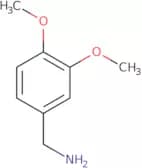
Fórmula:C7H5N3O2Pureza:Min. 98%Forma y color:PowderPeso molecular:163.13 g/mol3,4-Dimethoxybenzylamine
CAS:3,4-Dimethoxybenzylamine is an amine that is used in the synthesis of pharmaceuticals. It can be polymerized by heating with aqueous formaldehyde and hydrochloric acid to form a resin. 3,4-Dimethoxybenzylamine inhibits serotonin receptors, exhibiting inhibitory properties at concentrations of 10-5 M. 3,4-Dimethoxybenzylamine also has pharmacokinetic properties that are similar to vitamin B1. This compound has been shown to inhibit homogeneous catalysts and is used for coatings for ganglion cells.
Fórmula:C9H13NO2Pureza:Min. 95%Forma y color:Clear LiquidPeso molecular:167.21 g/molm-Hydroxybenzonitrile
CAS:m-Hydroxybenzonitrile is a cationic surfactant that has the ability to form hydrogen bonds with an intramolecular hydrogen. It is used in the production of detergents, textile processing aids, and inks. m-Hydroxybenzonitrile inhibits fatty acids by forming an inhibitory complex at the surface of the cell membrane. This complex disrupts lipid bilayers and inhibits protein synthesis. m-Hydroxybenzonitrile also has been shown to have vibrational properties that can be seen when it absorbs ultraviolet light.Fórmula:C7H5NOPureza:Min. 95%Forma y color:Off-White PowderPeso molecular:119.12 g/molMesitylacetonitrile
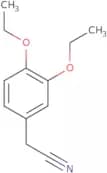
CAS:Mesitylacetonitrile is a mesityl-substituted acetonitrile. It is used in organic synthesis as a Grignard reagent, which is an organometallic compound containing an alkyl or other carbon group bound to magnesium. Mesitylacetonitrile has been shown to react with chlorides to produce furyl chlorides and chloride. Mesitylacetonitrile can be synthesized by reacting phenylacetonitrile (a byproduct of the synthesis of acetone) with chlorine gas and hydrogen in the presence of a catalyst such as copper(II) chloride. This reaction produces mesitylacetonitrile and hydrogen chloride gas as byproducts. The compound has been used to synthesize corticotropin-releasing factor receptor antagonists that have potential therapeutic applications for the treatment of stress-related disorders.Fórmula:C11H13NPureza:Min. 95%Forma y color:PowderPeso molecular:159.23 g/mol3,4-Diethoxyphenylacetonitrile
CAS:3,4-Diethoxyphenylacetonitrile is an intermediate that is used in the synthesis of drotaverine. It can also be used to synthesize catechol, which is a medicine used to treat depression and anxiety. 3,4-Diethoxyphenylacetonitrile can be chloromethylated with phosphorus pentachloride to produce 3,4-diethoxyphenylacetic acid. This product has been used in the synthesis of sodium cyanide and catechol hydrochloride.
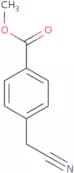
Fórmula:C12H15NO2Pureza:Min. 95%Forma y color:PowderPeso molecular:205.25 g/molMethyl 4-(cyanomethyl)benzoate
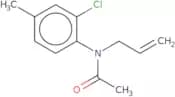
CAS:Methyl 4-(cyanomethyl)benzoate is a synthetic compound that binds to the H1 receptor, which is part of the histamine family. It is an antagonist of this receptor and inhibits its activity. The affinity of methyl 4-(cyanomethyl)benzoate for the H1 receptor was measured by fluorescence displacement analysis in rat brain membranes. This compound also has potent anti-inflammatory properties, which may be due to its inhibition of prostaglandin synthesis. Methyl 4-(cyanomethyl)benzoate has been shown to be expressed in cells that are chemotactic for neutrophils and natural killer (NK) cells. Methyl 4-(cyanomethyl)benzoate also binds to a prostanoid receptor, CRTh2, leading to an increase in NK cell migration. Methyl 4-(cyanomethyl)benzoate inhibits cyclooxygenase-1 (COXFórmula:C10H9NO2Pureza:Min. 95%Forma y color:Clear LiquidPeso molecular:175.18 g/molN-Allyl-n-(4-cyano-2-chlorophenyl)acetamide
CAS:N-Allyl-N-(4-cyano-2-chlorophenyl)acetamide is a high quality reagent that has been used as an intermediate in the synthesis of fine chemicals, useful scaffolds and building blocks. It is also a versatile building block that can be used to synthesize high quality compounds with a wide range of functionalities. N-Allyl-N-(4-cyano-2-chlorophenyl)acetamide is a speciality chemical that can be used for research purposes. This compound has been shown to produce reactions with other compounds, such as nitrobenzene, to generate useful products.
Fórmula:C12H11ClN2OPureza:Min. 95%Peso molecular:234.68 g/mol3-Cyanopropionaldehydedimethylacetal
CAS:3-Cyanopropionaldehydedimethylacetal (3CPDMA) is a reactive compound that inhibits the proliferation of muscle cells. It has been shown to inhibit the synthesis of 3-hydroxy-3-methylglutaryl coenzyme A, which is required for the production of cholesterol and fatty acids. This inhibition leads to a decrease in the growth of cells and their ability to divide. 3CPDMA has also been shown to have an inhibitory effect on picolinic acid, which is involved in the activation of receptors that induce cellular proliferation. The inhibition of this receptor may be due to its ability to compete with other ligands for binding sites on the receptor. It has been shown that 3CPDMA acts as an antagonist against acarids, which are mites that feed on skin cells. This property may be due to its antagonistic effects on amino acid composition, which may affect calcium uptake by cells or cell membrane permeability.Fórmula:C6H11NO2Pureza:Min. 95%Forma y color:PowderPeso molecular:129.16 g/mol