Iminas
Se han encontrado 130 productos para "Iminas".
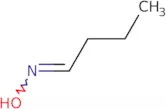
Butyraldoxime
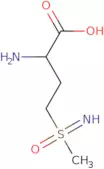
CAS:Butyraldoxime is a chemical that is used in the treatment of skin cancer. It has been shown to inhibit the growth of cultured human cells, including melanoma cells and leukemia cells. In vitro tests have shown that butyraldoxime inhibits sodium citrate-induced changes in cell morphology, an increase in cellular protein content and DNA synthesis, and an increase in tumor size. The mechanism of action for butyraldoxime is thought to be similar to that of the oxime inhibitor drugs. Oximes react with nitrite ion to form a reactive intermediate called nitrous acid, which reacts with caproic acid to form a nitric oxide radical. Nitric oxide radicals are then able to react with free methyl ethyl groups on the surface of cells and produce reactive oxygen species (ROS). ROS can cause damage to cell membranes, proteins and DNA within the cell. This damage may lead to cell death or inhibition of cellular function.Fórmula:C4H9NOPureza:Min. 95%Peso molecular:87.12 g/molDL-Methionine-DL-sulfoximine
CAS:DL-Methionine sulfoximine is a drug that blocks the synthesis of glutathione, an important antioxidant and detoxifying agent. DL-Methionine sulfoximine may be useful in preventing or treating eye disorders, such as age-related macular degeneration and retinitis pigmentosa. It also has been shown to have beneficial effects in animal models of epilepsy, Alzheimer’s disease, Parkinson's disease, and stroke. DL-Methionine sulfoximine has been shown to have beneficial effects in animal models of epilepsy, Alzheimer’s disease, Parkinson's disease, and stroke. This drug is being studied for its potential use in metabolic disorders such as diabetes and obesity.Fórmula:C5H12N2O3SPureza:Min. 95%Forma y color:White PowderPeso molecular:180.23 g/molRef: 3D-FM57660
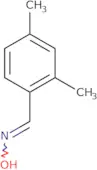
Producto descatalogado2,4-Dimethylbenzaldehyde oxime
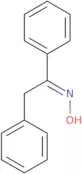
CAS:2,4-Dimethylbenzaldehyde oxime is a useful chemical for the synthesis of complex organic compounds. It is used as a research chemical and as a speciality chemical in the production of fine chemicals. 2,4-Dimethylbenzaldehyde oxime can be used as a versatile building block to form new compounds with different substituents. The compound has been shown to have high reactivity and good quality.Fórmula:C9H11NOPureza:Min. 95%Peso molecular:149.19 g/molDeoxybenzoic oxime
CAS:Deoxybenzoic oxime is an oxime derivative that inhibits the enzyme toll-like receptor 4 (TLR4) and also blocks activation of chloride channels. It has been shown to inhibit the production of nitric oxide and proinflammatory cytokines in vitro. Deoxybenzoic oxime has also been shown to have a broad spectrum of activity against chemical species, such as benzonitrile, sulfide, and amines. This drug has shown inhibitory activities against a wide variety of functional groups including hydroxyl, nitrile, amine, thiol, ethers, phosphates and carboxylic acids.
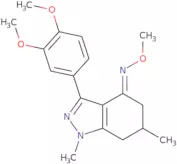
Fórmula:C14H13NOPureza:Min. 95%Peso molecular:211.26 g/mol3-(3,4-dimethoxyphenyl)-1,6-dimethyl-(5,6,7-trihydro1H-indazol)-4-O-methyloxime
CAS:Please enquire for more information about 3-(3,4-dimethoxyphenyl)-1,6-dimethyl-(5,6,7-trihydro1H-indazol)-4-O-methyloxime including the price, delivery time and more detailed product information at the technical inquiry form on this page
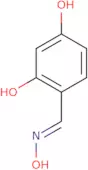
Pureza:Min. 95%β-Resorcylic aldehyde oxime
CAS:beta-Resorcylic aldehyde oxime is a compound that can be used as a reagent, speciality chemical, and research chemical. It has the CAS number 5399-68-8, and it is a fine chemical that has been shown to be useful in organic synthesis. beta-Resorcylic aldehyde oxime is soluble in methanol, ethanol, benzene, diethyl ether, and acetone. This compound can be used as a building block for other compounds by reacting with amines or carboxylic acids. It can also be used as an intermediate for other reactions. beta-Resorcylic aldehyde oxime has been shown to have versatile properties that make it an excellent scaffold for creating new compounds.Fórmula:C7H7NO3Peso molecular:153.14 g/mol(S)-(+)-Methyl phenyl sulfoximine
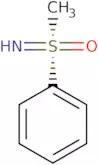
CAS:(S)-(+)-Methyl phenyl sulfoximine, or MMPS, is a synthetic chiral organocatalyst that has been shown to be a highly effective catalyst for the asymmetric synthesis of benzothiazines. It is used in a variety of reactions including cross-coupling, catalytic asymmetric synthesis, desymmetrization and solvents. MMPS has been shown to be enantiopure and stereochemically pure. The yield of this reaction using MMPS as a catalyst was about 98%.
Fórmula:C7H9NOSPureza:Min. 95%Forma y color:Colorless PowderPeso molecular:155.22 g/molRef: 3D-FM25542
Producto descatalogado4-Nitrobenzaldehyde oxime
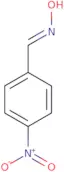
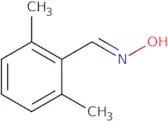
CAS:4-Nitrobenzaldehyde oxime is a phenylhydrazone derivative that is a potent cytotoxic agent. The 1,2-nitration of the benzene ring in 4-nitrobenzaldehyde oxime produces a reactive intermediate that reacts with nucleophilic groups on cellular macromolecules to produce DNA strand breaks and other types of damage. 4-Nitrobenzaldehyde oxime has been shown to have significant anticancer activity against leukemia cells in culture, as well as antibacterial and anticancer activity against Staphylococcus aureus and Escherichia coli.Fórmula:C7H6N2O3Pureza:Min. 95%Forma y color:PowderPeso molecular:166.13 g/mol2,6-Dimethylbenzaldehyde oxime
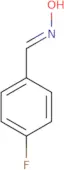
CAS:2,6-Dimethylbenzaldehyde oxime is a reagent and useful intermediate for the synthesis of complex compounds. It is also a building block for speciality chemicals. 2,6-Dimethylbenzaldehyde oxime has been used in research and as a reaction component for various organic syntheses. This compound has a CAS number of 55882-62-7.Fórmula:C9H11NOPureza:Min. 95%Peso molecular:149.19 g/mol4-Fluorobenzaldehyde oxime
CAS:4-Fluorobenzaldehyde oxime is a phenylhydrazine derivative that reacts with an aromatic amine to form a ternary complex. The reaction time for this process is short, and the yield of the product is high. 4-Fluorobenzaldehyde oxime also reacts with an aromatic amine to form an ion-pair. It can react with acidic hydrogen donors such as peracids and it also has high hydrogen bonding interactions. 4-Fluorobenzaldehyde oxime is used in pharmacological agents as well as other chemical reactions, including halogenation.
Fórmula:C7H6FNOPureza:Min. 95%Forma y color:White PowderPeso molecular:139.13 g/mol