Éteres
Los éteres son compuestos orgánicos que contienen un grupo funcional éter, caracterizado por un átomo de oxígeno unido a dos radicales hidrocarbonados. Estos compuestos son valiosos en la síntesis y sirven como disolventes en diversas reacciones químicas. En CymitQuimica, ofrecemos una selección de éteres de alta calidad para apoyar sus aplicaciones de investigación e industriales, asegurando resultados fiables y efectivos. Nuestra gama de éteres cumple con diversos requisitos de laboratorio, desde experimentos de rutina hasta investigaciones avanzadas.
Se han encontrado 40902 productos de "Éteres"
Ordenar por
Pureza (%)
0
100
|
0
|
50
|
90
|
95
|
100
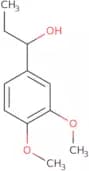
1-(3',4'-Dimethoxyphenyl)-1-propanol
CAS:<p>1-(3’,4’-Dimethoxyphenyl)-1-propanol is a naturally occurring chemical with the molecular formula C10H14O2. It has been found in the bark of Pinus pinaster and the rhizome of Piper auritum. This compound has been shown to have an antiinflammatory effect by inhibiting prostaglandin synthesis. It also inhibits nitrosation reactions and is being studied for its potential as a cancer chemopreventive agent. 1-(3’,4’-Dimethoxyphenyl)-1-propanol is an enantiomer of 2-(3',4'-dimethoxyphenyl)propane-1,3-diol.</p>Fórmula:C11H16O3Pureza:Min. 95%Peso molecular:196.24 g/mol3-Methoxybenzene-1,2-diamine
CAS:<p>3-Methoxybenzene-1,2-diamine is a chloride surfactant that is cationic at low concentrations. It is most commonly used as a cross-linking agent in polymers and also has anti-inflammation properties. 3-Methoxybenzene-1,2-diamine is an osmotic agent that binds to water molecules, which prevents the loss of water from cells and increases cell volume. This chemical also has been shown to be an antagonist of 5Ht4 receptors and can be used for the treatment of inflammatory diseases such as asthma. 3-Methoxybenzene-1,2-diamine has been shown to have low toxicity in rats when consumed in dietary concentrations.</p>Pureza:Min. 95%4-Chloro-2-methoxy-5-methylaniline
CAS:4-Chloro-2-methoxy-5-methylaniline is a dye molecule that is used in the synthesis of other molecules, such as diketene. It is also used as a solvent, coupling agent, and a dye molecule. This compound can be synthetically prepared by reacting naphthylamine with pyrazolone. The reaction requires catalytic amounts of polyvalent metal salts, such as zinc chloride or iron(III) chloride. The halogenation of 4-chloro-2-methoxy-5-methylaniline to produce 2,4,5-trichlorophenol can be achieved by diazotising the molecule with sodium nitrite and potassium dichromate. 4-Chloro-2-methoxy-5 methylaniline's substituents are methyl groups on the phenyl ring (Cl) and chlorine atoms (C1). Derivatives of thisFórmula:C8H10ClNOPureza:Min. 95%Peso molecular:171.62 g/mol2-Chloro-5-methoxyaniline
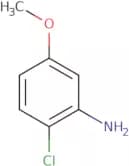
CAS:<p>2-Chloro-5-methoxyaniline is a primary amine that has structural isomers. It is also a lactam with an aromatic ring. 2-Chloro-5-methoxyaniline can be used as a cytotoxic compound. It can inhibit the uptake of unlabeled chemical ionization by cells and has been shown to have potent inhibition of brain uptake in rats. 2-Chloro-5-methoxyaniline has been shown to be effective against Alzheimer's disease in clinical studies. Chemical ionization mass spectrometry has demonstrated that this compound binds to the molecule acetylcholine, which is involved in the neurotransmitter system.</p>Fórmula:C7H8ClNOPureza:Min. 95%Forma y color:Colourless To Yellow To Brown Solid Or Liquid (May Vary)Peso molecular:157.6 g/mol5-Ethoxy-2-mercaptobenzimidazole
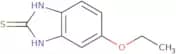
CAS:<p>5-Ethoxy-2-mercaptobenzimidazole is a corrosion inhibitor that has been shown to inhibit the growth of cancer cells by causing them to undergo apoptotic cell death. It also has a protective effect on nerve cells, as evidenced by its ability to prevent the neurotoxic effects of hydrochloric acid. 5-Ethoxy-2-mercaptobenzimidazole is synthesized from 2-(2'-hydroxyethoxy)benzaldehyde and ethyl chloroformate in the presence of sodium chloride and hydrochloric acid. It is then converted into 5-ethoxy-2-mercaptobenzimidazole with sodium hydroxide.</p>Fórmula:C9H10N2OSPureza:Min. 95%Forma y color:PowderPeso molecular:194.25 g/mol(2-Bromoethoxy)-tert-butyldimethylsilane
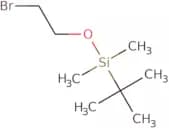
CAS:<p>2-Bromoethoxy-tert-butyldimethylsilane is a conjugate that has been shown to have anticancer efficacy in vivo. It is a pyrimidine derivative and inhibits the viral enzyme RNA polymerase, thereby inhibiting viral replication. 2-Bromoethoxy-tert-butyldimethylsilane also inhibits glyceraldehyde 3-phosphate dehydrogenase, which is an enzyme that catalyzes the conversion of glucose into glyceraldehyde 3-phosphate and plays an important role in glycolysis. The compound has been shown to be active against mouse tumors, which are associated with endogenous retroviruses. The compound has also been shown to inhibit gapdh, an enzyme involved in energy metabolism and cancer therapy.</p>Fórmula:C8H19BrOSiPureza:Min. 95%Forma y color:Colorless Clear LiquidPeso molecular:239.23 g/mol4-(Ethoxycarbonyl)phenylboronic acid
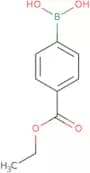
CAS:<p>4-(Ethoxycarbonyl)phenylboronic acid is a potential use for picric acid detection. It has been shown to be a chemosensor with an electrochemical impedance spectroscopy response that is sensitive to chloride ions. 4-(Ethoxycarbonyl)phenylboronic acid can be used as a linker in multigram-scale synthesis of aryl halides, and its reaction mechanism has been elucidated by crystal x-ray diffraction. The synthesis of this compound is scalable and involves the formation of an apical carboxylate from ethoxycarbonyl phenyl boronic acid and an aryl halide.</p>Fórmula:C9H11BO4Pureza:Min. 95%Forma y color:PowderPeso molecular:193.99 g/mol(5-Methoxy-1-methyl-1H-benzimidazol-2-yl)methanol
CAS:Producto controladoPlease enquire for more information about (5-Methoxy-1-methyl-1H-benzimidazol-2-yl)methanol including the price, delivery time and more detailed product information at the technical inquiry form on this pageFórmula:C10H12N2O2Pureza:Min. 95%Peso molecular:192.21 g/mol4-Methoxyphenyl chloroformate
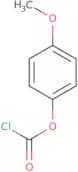
CAS:<p>4-Methoxyphenyl chloroformate is a reactive chemical that can be used to synthesize amides, esters, and anhydrides. It reacts with nucleophiles such as chloride or hydroxide to form an intermediate product. This intermediate product then reacts with the desired molecule to form the desired final product. 4-Methoxyphenyl chloroformate has shown selectivity for binding to opioid receptors, including mu and delta subtypes. This chemical may be used in the synthesis of antibiotic drugs that have similar receptor subtypes. 4-Methoxyphenyl chloroformate also has been shown to modulate G protein signaling pathways in cells, which may lead to improved pharmacokinetic properties.</p>Fórmula:C8H7ClO3Pureza:Min. 95%Forma y color:Clear LiquidPeso molecular:186.59 g/moltert-Butyl 2-(2-chloroethoxy)acetate
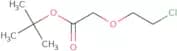
CAS:<p>Please enquire for more information about tert-Butyl 2-(2-chloroethoxy)acetate including the price, delivery time and more detailed product information at the technical inquiry form on this page</p>Fórmula:C8H15ClO3Pureza:Min. 95%Forma y color:Clear, colourless liquid.Peso molecular:194.66 g/mol1-(4-Methoxyphenyl)-7-oxo-6-(4-(2-oxopiperidin-1-yl)phenyl)-4,5,6,7-tetrahydro-1H-pyrazolo[3,4-c]pyridine-3-carboxylic acid
CAS:<p>Apixaban is a novel, orally active, and selective factor Xa inhibitor. It is the first oral anticoagulant that has been developed to inhibit both free and clot-bound thrombin. Apixaban binds reversibly to the active site of factor Xa and inhibits factor Xa-mediated conversion of prothrombin to thrombin, resulting in an increased concentration of prothrombin in blood. Apixaban also inhibits the activity of thrombin-activated protein C (APC) that degrades fibrin clots by proteolytic cleavage of fibrinogen. This drug has a crystalline form with a particle size between 10 and 100 μm.</p>Fórmula:C25H24N4O5Pureza:Min. 95%Peso molecular:460.48 g/mol(-)-3-Methoxy butorphanol
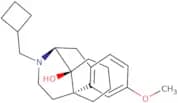
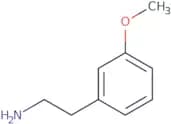
CAS:Producto controlado<p>Please enquire for more information about (-)-3-Methoxy butorphanol including the price, delivery time and more detailed product information at the technical inquiry form on this page</p>Fórmula:C22H31NO2Pureza:Min. 95%Peso molecular:341.49 g/mol3-Methoxyphenethylamine
CAS:Producto controlado<p>3-Methoxyphenethylamine is a naturally occurring phenethylamine that is found in the human body. It is produced by the enzyme phenylethanolamine N-methyltransferase from dopamine and 3-methoxytyramine. 3-Methoxyphenethylamine can be found in the saliva, but also in the brain, muscle and kidneys. Its presence has been detected in women's breast milk. This compound has been shown to have a significant effect on chloride ion absorption and renal blood flow, as well as on 5-hydroxyindoleacetic acid levels in the urine of patients with Parkinson's disease. The predominant metabolite of 3-methoxyphenethylamine is 3-hydroxymethylphenethylamine (3HMPEA).</p>Fórmula:C9H13NOPureza:Min. 95%Forma y color:Colorless Clear LiquidPeso molecular:151.21 g/mol4-Hydroxy-N-(2-Piperidinylmethyl)-2,5-Bis(2,2,2-Trifluoroethoxy)Benzamide
CAS:<p>Please enquire for more information about 4-Hydroxy-N-(2-Piperidinylmethyl)-2,5-Bis(2,2,2-Trifluoroethoxy)Benzamide including the price, delivery time and more detailed product information at the technical inquiry form on this page</p>Fórmula:C17H20F6N2O4Pureza:Min. 95%Peso molecular:430.34 g/mol4-Amino-3-(trifluoromethoxy)benzoic acid
CAS:<p>Please enquire for more information about 4-Amino-3-(trifluoromethoxy)benzoic acid including the price, delivery time and more detailed product information at the technical inquiry form on this page</p>Fórmula:C8H6F3NO3Pureza:Min. 95%Peso molecular:221.13 g/mol(S)-1,2,3,4,5,6,7,8-Octahydro-1-[(4-methoxyphenyl)methyl]isoquinoline (acetate salt )
CAS:<p>(S)-1,2,3,4,5,6,7,8-Octahydro-1-[(4-methoxyphenyl)methyl]isoquinoline (acetate salt ) is a diphosphine that can be used as a catalyst to produce formic acid from methanol and carbon monoxide. This product is an enantiomer of picric acid and has been shown to be an effective additive in the crystallization of picric acid. The acetate salt is also optically pure.</p>Pureza:Min. 95%1-(4-Methoxy-pyridin-2-yl)-ethanone
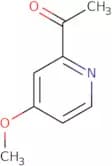
CAS:<p>Please enquire for more information about 1-(4-Methoxy-pyridin-2-yl)-ethanone including the price, delivery time and more detailed product information at the technical inquiry form on this page</p>Fórmula:C8H9NO2Pureza:Min. 95%Peso molecular:151.16 g/mol6-Methoxypyridine-2-boronic acid
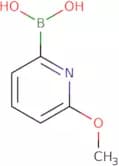
CAS:<p>6-Methoxypyridine-2-boronic acid is a boronate ligand that can be used to form coordination complexes with metals. It has been shown to interact with silver ions, which are the most effective ligands for enhancing the fluorescence of organic dyes. 6-Methoxypyridine-2-boronic acid is able to rigidify organic molecules by binding to their steric and electronic properties, making them more resistant to photodegradation. This property makes it an excellent candidate for the use in the development of fluorescent labels in analytical chemistry.</p>Fórmula:C6H8BNO3Pureza:Min. 95%Peso molecular:152.94 g/mol3,4-Dimethoxybenzyl chloride
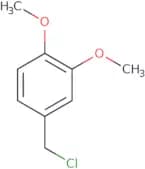
CAS:<p>3,4-Dimethoxybenzyl chloride is an acetate extract that has been shown to have anticancer properties. It is also a corrosion inhibitor with the ability to inhibit fatty acid demethylation and antimicrobial agents. It has been used in pharmaceutical preparations for treating high blood pressure, as well as in the production of eugenol, papaverine and other drugs.</p>Fórmula:C9H11ClO2Pureza:Min. 95%Peso molecular:186.64 g/mol2-Hydroxy-3-(Trifluoromethoxy)Benzaldehyde
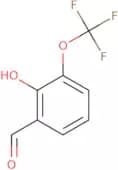
CAS:<p>2-Hydroxy-3-(trifluoromethoxy)benzaldehyde is a coordination compound that is used as a ligand. It has two-dimensional and crystal structures. The ligated molecule is usually coordinated to the metal ion, forming a dimer.</p>Fórmula:C8H5F3O3Pureza:Min. 95%Peso molecular:206.12 g/mol



![1-(4-Methoxyphenyl)-7-oxo-6-(4-(2-oxopiperidin-1-yl)phenyl)-4,5,6,7-tetrahydro-1H-pyrazolo[3,4-c]p…](/_next/image/?url=https%3A%2Fstatic.cymitquimica.com%2Fproducts%2F3D%2Fthumb-webp%2FFM155764.webp&w=3840&q=75)


![(S)-1,2,3,4,5,6,7,8-Octahydro-1-[(4-methoxyphenyl)methyl]isoquinoline (acetate salt )](/_next/image/?url=https%3A%2Fstatic.cymitquimica.com%2Fproducts%2F3D%2Fthumb-webp%2FFO29465.webp&w=3840&q=75)