Éteres
Los éteres son compuestos orgánicos que contienen un grupo funcional éter, caracterizado por un átomo de oxígeno unido a dos radicales hidrocarbonados. Estos compuestos son valiosos en la síntesis y sirven como disolventes en diversas reacciones químicas. En CymitQuimica, ofrecemos una selección de éteres de alta calidad para apoyar sus aplicaciones de investigación e industriales, asegurando resultados fiables y efectivos. Nuestra gama de éteres cumple con diversos requisitos de laboratorio, desde experimentos de rutina hasta investigaciones avanzadas.
Se han encontrado 40902 productos de "Éteres"
Ordenar por
Pureza (%)
0
100
|
0
|
50
|
90
|
95
|
100
Avanafil
CAS:<p>Avanafil is a drug that can be used as a treatment for male erectile dysfunction. It works by inhibiting the production of PDE5, which is an enzyme that regulates the levels of cGMP in the penis. Avanafil has been shown to be effective when taken at a dose of 100 mg; this is because it takes about 30 minutes for avanafil to reach its peak level. Avanafil has a chemical stability that is greater than 12 hours, with an average lifespan of 24 hours. The drug also has no major drug interactions and does not inhibit any other drugs from working.</p>Fórmula:C23H26ClN7O3Pureza:Min. 98 Area-%Forma y color:White PowderPeso molecular:483.95 g/mol2-(2-Aza-1-methyl-2-(3-(1,1,2,2-tetrafluoroethoxy)phenyl)vinyl)indane-1,3-dione
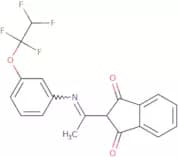
CAS:Please enquire for more information about 2-(2-Aza-1-methyl-2-(3-(1,1,2,2-tetrafluoroethoxy)phenyl)vinyl)indane-1,3-dione including the price, delivery time and more detailed product information at the technical inquiry form on this pageFórmula:C19H13F4NO3Pureza:Min. 95%Forma y color:PowderPeso molecular:379.3 g/mol4-(4-Ethoxyphenyl)-2-(3-methyl-5-oxo-1-phenyl(2-pyrazolin-4-yl))-4-oxobutanoic acid
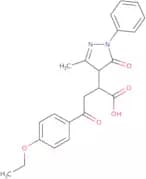
CAS:<p>Please enquire for more information about 4-(4-Ethoxyphenyl)-2-(3-methyl-5-oxo-1-phenyl(2-pyrazolin-4-yl))-4-oxobutanoic acid including the price, delivery time and more detailed product information at the technical inquiry form on this page</p>Pureza:Min. 95%6,7-Dimethoxyquinazoline-2,4-dione
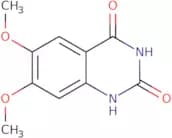
CAS:6,7-Dimethoxyquinazoline-2,4-dione is a chemical compound that can be synthesized by reacting amide and formaldehyde. It has been investigated as an efficient method for the synthesis of amides. 6,7-Dimethoxyquinazoline-2,4-dione is also a potential antibacterial agent which may prevent bacterial growth by inhibiting choline uptake or by binding to ribosomes and blocking protein synthesis. The reaction mechanism of this compound is not well understood, but it may involve hydrolysis of cyanate to produce hydrogen cyanide (HCN), which then reacts with the amide to form the quinazoline ring.Fórmula:C10H10N2O4Pureza:Min. 95%Forma y color:PowderPeso molecular:222.2 g/mol2,4,6-Trimethoxybenzamide
CAS:<p>2,4,6-Trimethoxybenzamide is a triggered compound that reacts with lithium to form an efficient regiospecific lithium 2,4,6-trimethoxybenzamide complex. This reaction occurs at low temperatures and has been shown to be more efficient than other methods for the synthesis of acridones. The reaction has not been shown to be reversible and requires the use of a strong base such as lithium.</p>Fórmula:C10H13NO4Pureza:Min. 95%Forma y color:PowderPeso molecular:211.21 g/mol3-Carbethoxy-2-piperidone
CAS:<p>3-Carbethoxy-2-piperidone is a cycloaddition product of formaldehyde and an amine. This reaction proceeds through the formation of a dicarbonyl intermediate, which then reacts with chloride to form the final product. The absorption maximum of 3-carboxy-2-piperidone is at 270 nm, and its structure can be determined by using infrared spectroscopy. 3-Carbethoxy-2-piperidone has a dipole moment of 1.3 D and is electron deficient due to the absence of a hydrogen atom on the nitrogen atom. It also has an amido group (C=O) that is bonded to the carbonyl group (C=O).<br>3-Carbethoxy-2-piperidone is not soluble in water, but it does dissolve in polar organic solvents such as acetone or dimethylformamide (DMF). The chemical reactions</p>Fórmula:C8H13NO3Forma y color:White PowderPeso molecular:171.19 g/mol2-Bromo-5-methoxybenzaldehyde
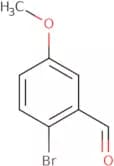
CAS:<p>2-Bromo-5-methoxybenzaldehyde is an organic compound that is used as a synthetic intermediate. It has been shown to be a substrate for the acid transporter SLC26A2, which transports it into cells. This compound has also been found in low levels in human tissues and fluids, where it may play a role in the development of cancer. 2-Bromo-5-methoxybenzaldehyde has been shown to inhibit the growth of cancer cells by uv absorption and terminal alkynes. The anticancer activity of this compound is due to its ability to react with functional groups such as benzyl groups and other alkyl groups.</p>Fórmula:C8H7BrO2Pureza:Min. 95%Forma y color:PowderPeso molecular:215.04 g/mol4-Methoxy-1-indanone
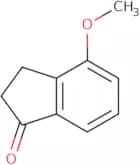
CAS:4-Methoxy-1-indanone is a quinoline derivative that is used as an intermediate for the synthesis of a number of bioactive molecules, such as gephyrotoxin (a potent neurotoxin) and oxime derivatives. 4-Methoxy-1-indanone has been shown to be activated by metal ions and oximes to form iminium cations. These cations are then converted into chloride or carbonic anions by dehydrogenase enzymes, which are important in the metabolism of carbohydrates in living organisms.Fórmula:C10H10O2Pureza:Min. 95%Forma y color:PowderPeso molecular:162.19 g/molp-(Trifluoromethoxy)benzonitrile
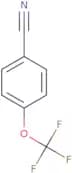
CAS:<p>p-(Trifluoromethoxy)benzonitrile is an organic compound that reacts with electron-rich molecules to form a covalent bond. It has been shown to be reactive in abiotic conditions and can be used as a probe for electron transfer reactions. p-Trifluoromethoxybenzonitrile undergoes a reaction mechanism in which the carbonyl group first reacts with an electron donor, such as acetonitrile, to form an unstable intermediate. This intermediate then reacts with a second electron-rich molecule to form the product. p-Trifluoromethoxybenzonitrile also has been shown to react efficiently with benzonitrile and produce the desired product in one step.</p>Fórmula:C8H4F3NOPureza:Min. 95%Forma y color:Clear LiquidPeso molecular:187.12 g/mol3-Bromo-2,6-dimethoxy-5-nitrobenzoic acid
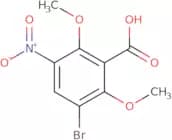
CAS:3-Bromo-2,6-dimethoxy-5-nitrobenzoic acid is a chemical component that can be used as a reagent or building block for the synthesis of other compounds. It is also an intermediate in the synthesis of pesticides and pharmaceuticals. 3-Bromo-2,6-dimethoxy-5-nitrobenzoic acid is a versatile compound with many applications in organic chemistry. This chemical has been shown to have high purity and can be used as a reaction component or reagent in research and development laboratories.Fórmula:C9H8BrNO6Pureza:Min. 95%Forma y color:PowderPeso molecular:306.07 g/mol4-(3,4-Dimethoxyphenyl)-1,3-thiazol-2-amine
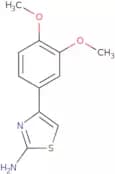
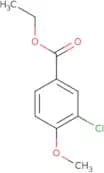
CAS:<p>Please enquire for more information about 4-(3,4-Dimethoxyphenyl)-1,3-thiazol-2-amine including the price, delivery time and more detailed product information at the technical inquiry form on this page</p>Fórmula:C11H12N2O2SPureza:Min. 95%Peso molecular:236.29 g/mol3-Chloro-4-methoxybenzoic acid ethyl ester
CAS:<p>3-Chloro-4-methoxybenzoic acid ethyl ester is a chemical compound that is used as a reactant in organic synthesis. It has shown high quality and can be used for research. 3-Chloro-4-methoxybenzoic acid ethyl ester can be used as a scaffold to make fine chemicals, pharmaceuticals, and other products. It has been shown to be useful in the synthesis of many complex compounds and as an intermediate or building block for chemical reactions.</p>Fórmula:C10H11ClO3Pureza:Min. 95%Forma y color:PowderPeso molecular:214.65 g/mol2,2-Difluoro-2-[1,1,2,2-tetrafluoro-2-(trifluoromethoxy)ethoxy]acetic acid
CAS:<p>2,2-Difluoro-2-[1,1,2,2-tetrafluoro-2-(trifluoromethoxy)ethoxy]-acetic acid is a fluorinated compound that can be used as an adsorbent for organic compounds. It is a highly selective material and has high adsorption capacity. The adsorption equilibrium data for 2,2-difluoro-2-[1,1,2,2-tetrafluoro-2-(trifluoromethoxy)ethoxy]-acetic acid are given in the table below. Table: Adsorption Equilibrium Data Temperature (°C) Pressure (kPa) Vapor Pressure (Pa) Equilibrium Vapor Pressure (Pa) Adsorption Capacity (%) 0 0.001 0.0008 0.0012 100</p>Fórmula:C5HF9O4Pureza:Min. 95%Forma y color:Clear LiquidPeso molecular:296.04 g/mol3-(4-ethoxyphenyl)spiro[1,3-thiazolidine-2,3'-indoline]-4,7-dione
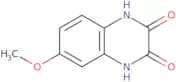
CAS:Please enquire for more information about 3-(4-ethoxyphenyl)spiro[1,3-thiazolidine-2,3'-indoline]-4,7-dione including the price, delivery time and more detailed product information at the technical inquiry form on this pagePureza:Min. 95%6-Methoxy-1,4-dihydroquinoxaline-2,3-dione
CAS:6-Methoxy-1,4-dihydroquinoxaline-2,3-dione is a nitrile that is generated by the catalytic oxidation of quinoxaline. It is a colorless to yellow solid with a melting point of about 155°C. 6-Methoxy-1,4-dihydroquinoxaline-2,3-dione has been shown to be an effective nitrile for the synthesis of diketene. 6-Methoxy-1,4-dihydroquinoxaline-2,3-dione can be converted into hydrochloric acid and ethanol through hydrolysis with hydrochloric acid or ethanol in the presence of heat. This reaction will proceed more quickly at higher temperatures. The filtration method can be used to remove any unwanted solids from the reaction mixture.Fórmula:C9H8N2O3Pureza:Min. 95%Forma y color:PowderPeso molecular:192.17 g/mol2-Methoxy-1-[(4-methylphenyl)sulphinyl]benzene
CAS:2-Methoxy-1-[(4-methylphenyl)sulphinyl]benzene is a reagent and useful intermediate that is used in the synthesis of complex compounds. This chemical has been shown to be a useful scaffold for the synthesis of natural products. It can also be used as a building block in the synthesis of speciality chemicals and research chemicals, as well as versatile building blocks in reactions.Fórmula:C14H14O2SPureza:Min. 95%Peso molecular:246.33 g/mol3-Bromo-2-methoxybenzyl alcohol
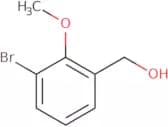
CAS:3-Bromo-2-methoxybenzyl alcohol is a reaction component that is used in the synthesis of a number of chemical compounds. It has been shown to be a useful scaffold, with versatile building blocks and intermediates. 3-Bromo-2-methoxybenzyl alcohol is an intermediate for the synthesis of complex compounds such as antihypertensive drugs, anti-inflammatory agents, and immunosuppressant drugs. This compound also has a variety of uses in research including as a reagent for the determination of enzyme activity and as an analytical reference standard.Fórmula:C8H9BrO2Pureza:Min. 95%Forma y color:PowderPeso molecular:217.06 g/mol2-Ethoxycinnamic acid
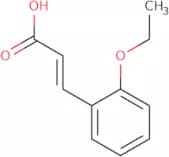
CAS:<p>2-Ethoxycinnamic acid is a metastable molecule that has been obtained by an asymmetric synthesis. It is unreactive, and its reaction products are polyvalent. 2-Ethoxycinnamic acid can be analyzed using analytical methods such as flow system, functional theory, and gas chromatography. 2-Ethoxycinnamic acid has been used in the preparation of cinnamates, which are used in perfumes and flavors. Polymorphs of this molecule have also been observed in crystalline form. There are two different forms of the molecule: α-form and β-form. The α-form is more stable than the β-form because it has a hydrogen bond with the methyl group on the left side of the molecule.</p>Fórmula:C11H12O3Pureza:Min. 95%Forma y color:PowderPeso molecular:192.21 g/mol3,5-Dimethoxycinnamic acid
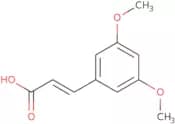
CAS:3,5-Dimethoxycinnamic acid is a compound that belongs to the class of cinnamic acid derivatives. It is a synthetic substance obtained by demethylation of 3,5-dimethoxybenzoic acid. This substance has been shown to have an antifungal activity in vitro against filamentous fungi and many other microorganisms. The antimicrobial effect can be explained by the presence of functional groups such as hydroxyl and methoxyl on the aromatic ring. Hydroxide solution can be used as an analytical reagent for determining the formation rate of this compound.Fórmula:C11H12O4Pureza:Min. 95%Forma y color:PowderPeso molecular:208.21 g/mol(3,5-Dimethoxyphenyl)acetonitrile
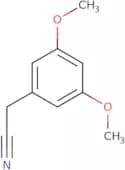
CAS:<p>3,5-Dimethoxyphenylacetonitrile is a synthetic compound that has been shown to be an inhibitor of the demethylation reaction. It is postulated to have anticancer activity and inhibits the biosynthesis of octaketides in vitro. This compound has also been shown to have antibacterial activity and is structurally related to cannabinoids. The mechanism by which 3,5-dimethoxyphenylacetonitrile inhibits cancer cells is not known. However, it may be due to its ability to bind cannabinoid receptors.</p>Fórmula:C10H11NO2Pureza:Min. 95%Forma y color:PowderPeso molecular:177.2 g/mol




![2,2-Difluoro-2-[1,1,2,2-tetrafluoro-2-(trifluoromethoxy)ethoxy]acetic acid](/_next/image/?url=https%3A%2Fstatic.cymitquimica.com%2Fproducts%2F3D%2Fthumb-webp%2FFD99821.webp&w=3840&q=75)
![3-(4-ethoxyphenyl)spiro[1,3-thiazolidine-2,3'-indoline]-4,7-dione](/_next/image/?url=https%3A%2Fstatic.cymitquimica.com%2Fproducts%2F3D%2Fthumb-webp%2FFE169782.webp&w=3840&q=75)
![2-Methoxy-1-[(4-methylphenyl)sulphinyl]benzene](/_next/image/?url=https%3A%2Fstatic.cymitquimica.com%2Fproducts%2F3D%2Fthumb-webp%2FFM66194.webp&w=3840&q=75)