Éteres
Los éteres son compuestos orgánicos que contienen un grupo funcional éter, caracterizado por un átomo de oxígeno unido a dos radicales hidrocarbonados. Estos compuestos son valiosos en la síntesis y sirven como disolventes en diversas reacciones químicas. En CymitQuimica, ofrecemos una selección de éteres de alta calidad para apoyar sus aplicaciones de investigación e industriales, asegurando resultados fiables y efectivos. Nuestra gama de éteres cumple con diversos requisitos de laboratorio, desde experimentos de rutina hasta investigaciones avanzadas.
Se han encontrado 40902 productos de "Éteres"
Ordenar por
Pureza (%)
0
100
|
0
|
50
|
90
|
95
|
100
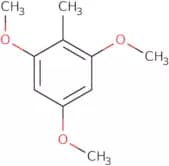
(2,4,6-Trimethoxy)toluene
CAS:<p>2,4,6-Trimethoxy)toluene is a volatile aromatic compound that is used in the synthesis of other organic compounds. It is found in some essential oils and has shown to have protonation properties. 2,4,6-Trimethoxy)toluene can be obtained by hydrolysis of its methyl ester or by demethylation of toluene. The carbocationic nature of this compound has been confirmed through crystallography studies on the p-coumaric acid derivative. This study also revealed that 2,4,6-trimethoxy)toluene reacts with acetonitrile to form an anion which may be identified as a fluorinated aromatic cation.<br>2,4,6-Trimethoxy)toluene can react with hydrogen chloride gas (HCl) to form the corresponding chloride ion (Cl). The formation of this ion can be followed by observing the</p>Fórmula:C10H14O3Pureza:Min. 98 Area-%Forma y color:PowderPeso molecular:182.22 g/mol6-(3-(Adamantan-1-yl)-4-methoxyphenyl)-2-naphthoic acid
CAS:Producto controladoAgonist of retinoic acid receptors (RAR-? and RAR-?); pro-apoptoticFórmula:C28H28O3Pureza:Min. 95%Forma y color:PowderPeso molecular:412.52 g/mol(S)-2-Methoxy-2-(1-naphthyl)propanoic acid
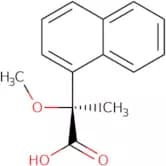
CAS:(S)-2-Methoxy-2-(1-naphthyl)propanoic acid is a chiral molecule that can exist in two different forms, each of which has the same physical and chemical properties. The two enantiomers are not optically active, meaning they have the same degree of rotation when passed through a polarizing filter. It is an organic compound that is used as a flavoring agent in food chemistry and as a bioactive compound. (S)-2-Methoxy-2-(1-naphthyl)propanoic acid also has been shown to function as an attractant for hemipteran insects such as mosquitoes, although it is not clear if this property is due to its aromatic or enantiomeric structure.Fórmula:C14H14O3Pureza:Min. 95%Forma y color:PowderPeso molecular:230.26 g/molN-[4-(2-Hydrazino-2-oxoethoxy)phenyl]acetamide
CAS:<p>N-[4-(2-Hydrazino-2-oxoethoxy)phenyl]acetamide is a phenolic compound that has been shown to have an antimicrobial effect. It has been shown to have antitubercular activity against Mycobacterium tuberculosis and the ability to inhibit the growth of cancer cells in vitro. N-[4-(2-Hydrazino-2-oxoethoxy)phenyl]acetamide is also known as monastrol. The pharmacophore of this drug is based on the structure of paracetamol, which is a member of the class of drugs known as analgesics, antipyretics, and antiinflammatory agents. Paracetamol has been used for decades in humans and animals for relief from pain, fever, and inflammation. N-[4-(2-Hydrazino-2-oxoethoxy)phenyl]acetamide may be useful for treating diseases such as cancer or tuberculosis due to its antic</p>Fórmula:C10H13N3O3Pureza:Min. 95%Forma y color:PowderPeso molecular:223.23 g/mol8-Hydroxy-7-methoxy-2-oxo-2H-1-benzopyran-3-carboxylic acid
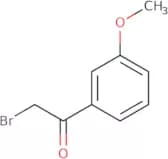
<p>8-Hydroxy-7-methoxy-2-oxo-2H-1-benzopyran-3-carboxylic acid is a versatile building block with a broad range of applications. It has been used in the synthesis of many complex compounds and research chemicals, including CAS No. 1207819-96-6. This chemical can be used as a reagent to produce important biological molecules such as antibiotics, antivirals, and antihypertensives.</p>Fórmula:C11H7NO8Pureza:Min. 95%Forma y color:Green SolidPeso molecular:281.18 g/mol2-Bromo-3'-methoxyacetophenone
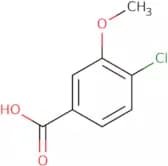
CAS:2-Bromo-3'-methoxyacetophenone is a reactive compound that has been used as an antiplatelet drug. It is a prodrug of vicagrel, which inhibits the platelet aggregation by blocking the conversion of ADP to ATP. It also has been shown to inhibit the growth of cryptococcus neoformans. This compound binds to matrix proteins and disrupts their structure, leading to a decrease in platelet adhesion. 2-Bromo-3'-methoxyacetophenone has been shown to be metabolized through a number of metabolic transformations, including hydrolysis by esterases or glucuronidases, oxidation by cytochrome P450 enzymes, reduction by glutathione reductase, or conjugation with glucuronic acid. The biological properties of this drug are complex and depend on its concentration and duration of exposure. Its effect on platelet aggregation is due to its ability to inhibit the activity of protein kinFórmula:C9H9BrO2Pureza:Min. 95%Peso molecular:229.07 g/mol4-Chloro-3-methoxybenzoic acid
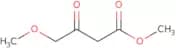
CAS:4-Chloro-3-methoxybenzoic acid (4CMB) is a putative cancer drug that belongs to the group of imidazole derivatives. 4CMB has been shown to inhibit the growth of human breast and colon cancer cells in culture by altering the metabolism of 3-hydroxyanthranilic acid, which is an acceptor for aromatic amino acid hydroxylase. The effect of 4CMB on this enzyme leads to a decrease in the production of kynurenine, which is a molecule involved in the production of melanin. This reduced amount of kynurenine results in a loss of pigment and decreases the ability of melanocytes to produce pigments such as melanin. This may help explain how 4CMB works against malignant cells and cancer.Fórmula:C8H7ClO3Pureza:Min. 95%Forma y color:PowderPeso molecular:186.59 g/molMethyl 4-methoxyacetoacetate
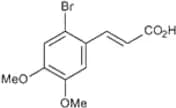
CAS:<p>Methyl 4-methoxyacetoacetate is a synthetic chemical compound that can be used in the synthesis of other substances. It has been shown to react with diacetates and produce hydroxy compounds during the reaction system. The reaction rate is dependent on the temperature and concentration of the reactants, as well as the presence of a catalyst such as hydrochloric acid. Methyl 4-methoxyacetoacetate has also been shown to form crystals when heated at constant temperature, which have been analyzed by X-ray diffraction. These crystals are composed of 2 molecules of methyl 4-methoxyacetoacetate that are held together through hydrogen bonding.</p>Fórmula:C6H10O4Pureza:Min. 95%Forma y color:Colorless Clear LiquidPeso molecular:146.14 g/mol2-Bromo-4,5-dimethoxycinnamic acid
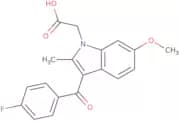
CAS:2-Bromo-4,5-dimethoxycinnamic acid is a dicarboxylic acid that belongs to the group of polysaccharides. It is a furan derivative with two methoxy groups on the cinnamic acid moiety. This compound can be found in plants and animals as well as in pyrolysis products from wood and other natural materials. 2-Bromo-4,5-dimethoxycinnamic acid has been analyzed by spectroscopy and pyrolysis to determine its chemical composition. The chemical composition was determined to contain caffeine and amines, as well as esters of fatty acids and alcohols.Fórmula:C11H11BrO4Pureza:Min. 95%Forma y color:PowderPeso molecular:287.11 g/mol3-(4-Fluorobenzoyl)-6-Methoxy-2-Methyl-1H-Indole-1-Acetic Acid
CAS:Producto controlado3-(4-Fluorobenzoyl)-6-Methoxy-2-Methyl-1H-Indole-1-Acetic Acid is a prodrug that is metabolized to 6-fluoro-3,4 dioxo tamoxifen in the liver. It has been shown to have anticholinergic, cytosolic calcium and c1-4 alkyl properties. 3-(4-Fluorobenzoyl)-6-Methoxy-2-Methylindole Acetic Acid also has a basic group, cyclopentane ring, and pyridine ring.Fórmula:C19H16FNO4Pureza:Min. 95%Peso molecular:341.33 g/mol2-(R)-[1-(R)-(3,5-Bis(trifluoromethyl)phenyl)ethoxy]-3-(S)-fluorophenylmorpholine
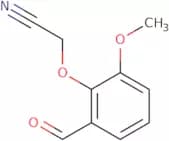
CAS:2-(R)-[1-(R)-(3,5-Bis(trifluoromethyl)phenyl)ethoxy]-3-(S)-fluorophenylmorpholine is a fine chemical with high quality. It has been used as a versatile building block in organic synthesis. 2-(R)-[1-(R)-(3,5-Bis(trifluoromethyl)phenyl)ethoxy]-3-(S)-fluorophenylmorpholine is a useful scaffold and can be used as a reaction component in the synthesis of other compounds. This compound is also an intermediate for the preparation of more complex compounds. CAS No. 171338-27-5Fórmula:C20H18F7NO2Pureza:Min. 95%Forma y color:Yellow PowderPeso molecular:437.35 g/mol2-(2-formyl-6-methoxyphenoxy)acetonitrile
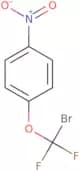
CAS:<p>Please enquire for more information about 2-(2-formyl-6-methoxyphenoxy)acetonitrile including the price, delivery time and more detailed product information at the technical inquiry form on this page</p>Fórmula:C10H9NO3Pureza:Min. 95%Forma y color:PowderPeso molecular:191.18 g/mol4-(Bromodifluoromethoxy)nitrobenzene
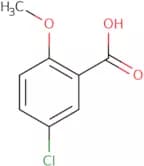
CAS:4-(Bromodifluoromethoxy)Nitrobenzene is a versatile building block that can be used to synthesize a wide variety of organic and inorganic compounds. It is a brominated derivative of nitrobenzene, which is useful for the synthesis of complex compounds and research chemicals. 4-(Bromodifluoromethoxy)Nitrobenzene is also an intermediate for the synthesis of pharmaceuticals and other valuable chemical compounds. This compound has been shown to provide high quality results in reactions with other molecules. 4-(Bromodifluoromethoxy)Nitrobenzene can be used as a scaffold for the construction of more complex molecules.Fórmula:C7H4BrF2NO3Pureza:Min. 95%Forma y color:LiquidPeso molecular:268.01 g/mol5-Chloro-2-methoxybenzoic acid
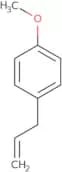
CAS:<p>5-Chloro-2-methoxybenzoic acid is an industrial chemical that is used in the production of pharmaceuticals, plastics, and dyes. It also has hypoglycemic activity and can be used to treat type 2 diabetes. The molecular modeling study of this compound showed that it binds to the chloride ion by forming a hydrogen bond between the oxygen atom of the carboxylic acid group and the nitrogen atom of the chloride ion. This interaction leads to a lower pH value in the environment where 5-chloro-2-methoxybenzoic acid is present. This change in pH may affect other molecules such as glucose, which could lead to a decrease in blood sugar levels. Researchers have found that 5-chloro-2-methoxybenzoic acid has cancer cell growth inhibiting properties and can be used as a potential drug for colorectal adenocarcinoma treatment.</p>Fórmula:C8H7ClO3Pureza:Min. 95%Peso molecular:186.59 g/mol1-Methoxy-4-(2-propenyl)benzene
CAS:1-Methoxy-4-(2-propenyl)benzene is a natural compound that has been found to have insecticidal properties. It is used in the synthesis of eugenol and estragole, which are important components in the flavor industry. The optimum concentration of 1-methoxy-4-(2-propenyl)benzene for killing insects is around 0.1%. In toxicity studies, it has been shown to be carcinogenic in rats and mice. However, this chemical's effect on humans is not well understood at this time.Fórmula:C10H12OPureza:Min. 95%Forma y color:Clear LiquidPeso molecular:148.2 g/mol2,4-Dimethoxytoluene
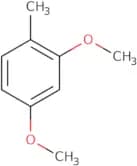
CAS:<p>2,4-Dimethoxytoluene is a natural compound found in the leaves of the arecaceae plant. It is structurally similar to β-caryophyllene and has been shown to have insecticidal activity. The leaf structure of this plant can be analyzed using chromatographic methods, and its fatty acid content can be determined by a reaction mechanism. This compound also has ether linkages and hydroxyl groups that can be analyzed through structural analysis. 2,4-Dimethoxytoluene is extracted from the leaf of this plant using a supercritical fluid extraction method. This extraction process yields a higher concentration than an extraction process with water or ethanol as the solvent. 2,4-Dimethoxytoluene is composed of two methoxy groups that are responsible for its insecticidal activities against mosquitoes.</p>Fórmula:C9H12O2Pureza:Min. 95%Forma y color:Clear LiquidPeso molecular:152.19 g/mol5-Methoxy-2-(trifluoromethyl)benzaldehyde
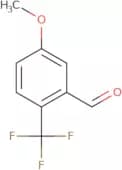
CAS:5-Methoxy-2-(trifluoromethyl)benzaldehyde (5MFBA) is a potential anticancer compound that has been shown to inhibit the growth of pancreatic cancer cells. 5MFBA is formed by the reaction of methoxybenzene and trifluoromethyl bromide in the presence of copper chloride, which acts as a dehydrogenase. This compound also has prognostic and clinicopathological implications in patients with pancreatic cancer, as well as staining properties in tissues. 5MFBA modulates biological function via reactive oxygen species (ROS) production, which induces cell apoptosis. Research on this compound has been done on cancer tissues from various organs, including breast and prostate cancers.Fórmula:C9H7F3O2Pureza:Min. 95%Forma y color:PowderPeso molecular:204.15 g/mol1-Ethoxycyclopropanol
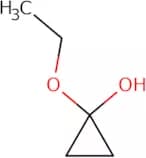
CAS:1-Ethoxycyclopropanol is a dehydrogenase that is activated by an acceptor, such as propionate. Its activity can be titrated and it has an acidic pH optimum. It is also a filamentous enzyme with immunocytochemical subunits. 1-Ethoxycyclopropanol has been shown to catalyze the conversion of primary alcohols to their corresponding secondary alcohols. It also has been shown to have activities against P. aeruginosa, which are bacteria that can cause lung infections in humans. This product converts alkene into secondary alcohols and also plays a role in the synthesis of amino acids.Fórmula:C5H10O2Pureza:Min. 95 Area-%Forma y color:Clear LiquidPeso molecular:102.13 g/mol2-Carbomethoxybenzaldehyde
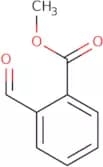
CAS:<p>2-Carbomethoxybenzaldehyde (2CMB) is a synthetic chemical compound that has been used as an efficient method for the synthesis of amines. The carbonyl group in 2CMB reacts with nucleophiles, such as amines, to form a tetrahydroisoquinoline derivative. This nucleophilic attack leads to the formation of an unstable intermediate that can be isolated and purified by trifluoroacetic acid (TFA). 2CMB is also used in the synthesis of quinoline derivatives and naphthalene derivatives. The acidic properties of 2CMB allow it to react with carboxylic acids, leading to the formation of esters.</p>Fórmula:C9H8O3Pureza:Min. 95%Forma y color:Colorless PowderPeso molecular:164.16 g/mol3-Acetoxy-2,4-dimethoxyacetophenone
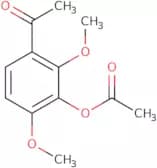
CAS:3-Acetoxy-2,4-dimethoxyacetophenone is a chemical building block that has been shown to be useful in the synthesis of complex compounds. This compound can be used as a reaction component and reagent in organic synthesis. 3-Acetoxy-2,4-dimethoxyacetophenone can be used as a versatile building block for the synthesis of high quality research chemicals and speciality chemicals. It is also a useful intermediate for the preparation of fine chemicals such as pharmaceuticals, agrochemicals, and dyestuffs. 3-Acetoxy-2,4-dimethoxyacetophenone has CAS number 63604-86-4.Fórmula:C12H14O5Pureza:Min. 95%Peso molecular:238.24 g/mol


![N-[4-(2-Hydrazino-2-oxoethoxy)phenyl]acetamide](/_next/image/?url=https%3A%2Fstatic.cymitquimica.com%2Fproducts%2F3D%2Fthumb-webp%2FFH131261.webp&w=3840&q=75)
![2-(R)-[1-(R)-(3,5-Bis(trifluoromethyl)phenyl)ethoxy]-3-(S)-fluorophenylmorpholine](/_next/image/?url=https%3A%2Fstatic.cymitquimica.com%2Fproducts%2F3D%2Fthumb-webp%2FFB18758.webp&w=3840&q=75)