Éteres
Los éteres son compuestos orgánicos que contienen un grupo funcional éter, caracterizado por un átomo de oxígeno unido a dos radicales hidrocarbonados. Estos compuestos son valiosos en la síntesis y sirven como disolventes en diversas reacciones químicas. En CymitQuimica, ofrecemos una selección de éteres de alta calidad para apoyar sus aplicaciones de investigación e industriales, asegurando resultados fiables y efectivos. Nuestra gama de éteres cumple con diversos requisitos de laboratorio, desde experimentos de rutina hasta investigaciones avanzadas.
Se han encontrado 40902 productos de "Éteres"
Ordenar por
Pureza (%)
0
100
|
0
|
50
|
90
|
95
|
100
7-Amino-2-(4-methoxyphenyl)[1,2,4]triazolo[1,5-a]pyrimidin-5(4H)-one
CAS:7-Amino-2-(4-methoxyphenyl)[1,2,4]triazolo[1,5-a]pyrimidin-5(4H)-one is a fine chemical that belongs to the category of versatile building blocks. It can be used as a reagent for research purposes and as a speciality chemical for the production of complex compounds. This compound is also an important building block for the synthesis of compounds with high quality and useful scaffolds.Fórmula:C12H11N5O2Pureza:Min. 95%Forma y color:PowderPeso molecular:257.25 g/mol1,3-Dimethoxy-2-methylimidazoliumbis(trifluoromethylsulfonyl)imide
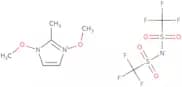
CAS:Please enquire for more information about 1,3-Dimethoxy-2-methylimidazoliumbis(trifluoromethylsulfonyl)imide including the price, delivery time and more detailed product information at the technical inquiry form on this pageFórmula:C8H11F6N3O6S2Pureza:Min. 95%Forma y color:PowderPeso molecular:423.31 g/mol1,2-Bis(1,1,2,2-tetrafluoroethoxy)ethane
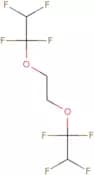
CAS:1,2-Bis(1,1,2,2-tetrafluoroethoxy)ethane is an electrolyte with a balanced composition of sulfur and fluorine. It is also a symmetric compound that can shuttle lithium ions between the two halves of the molecule. This process can be repeated many times without significant degradation. 1,2-Bis(1,1,2,2-tetrafluoroethoxy)ethane has been used as a negative electrode material in lithium ion batteries because it has high capacity and good cycling properties.Fórmula:C6H6F8O2Pureza:Min. 99 Area-%Peso molecular:262.10 g/mol2,4-Dimethoxy-3-methylbenzoic acid
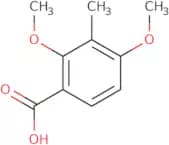
CAS:<p>2,4-Dimethoxy-3-methylbenzoic acid is a fine chemical that is used as a versatile building block in the synthesis of other organic compounds. 2,4-Dimethoxy-3-methylbenzoic acid has been used in research to generate novel compounds with desired properties. It is also used as a reaction component and speciality chemical. The compound can be reacted with sodium methoxide in methanol to form 2,4-dimethoxybenzaldehyde, which is an intermediate for the synthesis of other chemicals. It also reacts with nitric acid to form 2,4-dimethylbenzoic acid and oleum. These reactions are useful for the production of certain drugs or for the synthesis of polymers.</p>Fórmula:C10H12O4Pureza:Min. 95%Peso molecular:196.2 g/molMethyl 4(2-hydroxyethoxy)benzoate
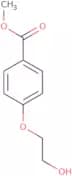
CAS:<p>Methyl 4-(2-hydroxyethoxy)benzoate is an experimental monomer that can be used in the synthesis of polymers. It is a compound that has a spacer group on the 2 position of the benzene ring. It can be used to determine the molecular weight of polymers by comparing their average molecular weight with the theoretical molecular weight. The systematic name for methyl 4-(2-hydroxyethoxy)benzoate is methyl 4-[(2-hydroxyethoxy)methyl]benzoate. The chemical formula for this molecule is C 10 H 16 O 3 and its average molecular weight is 178. The theory behind this molecule is that it will have more than one polymer chain, which makes it polymeric.</p>Fórmula:C10H12O4Pureza:Min. 95%Peso molecular:196.2 g/mol1-Chloro-3-[4-(2-methoxyethyl)phenoxy]-2-propanol
CAS:<p>1-Chloro-3-[4-(2-methoxyethyl)phenoxy]-2-propanol is a potent antihypertensive agent that is synthesized by the chemoenzymatic process. It differs from other antihypertensive drugs in that it incorporates an oxirane group, which makes it more hydrophobic than other drugs. 1-Chloro-3-[4-(2-methoxyethyl)phenoxy]-2-propanol is a crystalline solid with a melting point of 128°C and a density of 1.0 g/mL. The chemical name for this drug is 4-[(1E)-1-(chloromethoxy)propyl]phenol, which has potent antihypertensive activity and high enantioselectivity.</p>Fórmula:C12H17ClO3Pureza:Min. 95%Peso molecular:244.71 g/mol3-Trifluoromethoxyphenylboronic acid
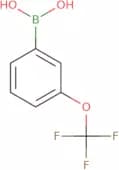
CAS:<p>3-Trifluoromethoxyphenylboronic acid is a lead compound that has the potential to be an efficient and water-soluble inhibitor of protein kinases. It has been shown to have a significant inhibitory effect on vismodegib transport. This compound may also have anticancer properties. 3-Trifluoromethoxyphenylboronic acid binds to the active site of protein kinases, blocking their catalytic activity and inhibiting cell proliferation by interfering with the signaling pathway that regulates cancer cells.</p>Fórmula:C7H6BF3O3Pureza:Min. 90%Forma y color:PowderPeso molecular:205.93 g/mol(S)-2-((((9H-Fluoren-9-yl)methoxy)carbonyl)amino)-3-(1H-pyrrolo[2,3-b]pyridin-3-yl)propanoic acid
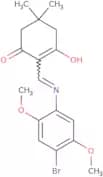
CAS:<p>Please enquire for more information about (S)-2-((((9H-Fluoren-9-yl)methoxy)carbonyl)amino)-3-(1H-pyrrolo[2,3-b]pyridin-3-yl)propanoic acid including the price, delivery time and more detailed product information at the technical inquiry form on this page</p>Fórmula:C25H21N3O4Pureza:Min. 95%Peso molecular:427.45 g/mol2-(((4-Bromo-2,5-dimethoxyphenyl)amino)methylene)-5,5-dimethylcyclohexane-1,3-dione
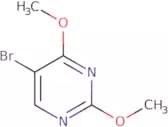
CAS:Please enquire for more information about 2-(((4-Bromo-2,5-dimethoxyphenyl)amino)methylene)-5,5-dimethylcyclohexane-1,3-dione including the price, delivery time and more detailed product information at the technical inquiry form on this pageFórmula:C17H20BrNO4Pureza:Min. 95%Peso molecular:382.25 g/mol5-Bromo-2,4-dimethoxypyrimidine
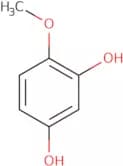
CAS:5-Bromo-2,4-dimethoxypyrimidine is a compound that functions as a potent inhibitor of L-glutamic acid amidohydrolase. This enzyme is essential for the synthesis of gamma-amino butyric acid (GABA) and glutamine, which are neurotransmitters in the central nervous system. 5-Bromo-2,4-dimethoxypyrimidine inhibits the formylation of l-glutamic acid to glutamate by inhibiting the enzyme L-glutamate formate lyase. It also inhibits herpes simplex virus type 1 (HSV1) replication by preventing viral DNA polymerization. 5-Bromo-2,4-dimethoxypyrimidine has been shown to be an effective inhibitor of chloride ion transport in some bacteria. The compound also shows photochromism when exposed to ultraviolet light or visible light under certain conditions. 5BROMO 2, 4 -DIMFórmula:C6H7BrN2O2Pureza:Min. 95%Forma y color:PowderPeso molecular:219.04 g/mol4-Methoxyresorcinol
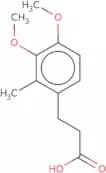
CAS:<p>4-Methoxyresorcinol is a chemical compound that has the molecular formula CHNO. It has a hydroxyl group in the 4-position and a methyl group on the 8-position. The intramolecular hydrogen of this molecule is denatured by heating to about 220°C. This process converts it into resorcinol, which is structurally similar but has different properties. 4-Methoxyresorcinol can be used as a polymerization initiator for polycarboxylic acid or quinoline derivatives, and its analytical methods are used in determining its structure.</p>Fórmula:C7H8O3Pureza:Min. 95%Forma y color:PowderPeso molecular:140.14 g/mol3,4-Dimethoxy-2-methylphenylpropionic acid
CAS:3,4-Dimethoxy-2-methylphenylpropionic acid is a building block for organic synthesis. It has been used as a research chemical and as a reaction component in the synthesis of other chemicals. 3,4-Dimethoxy-2-methylphenylpropionic acid is also available at high purity levels and can be used as a reagent for analytical purposes.Fórmula:C12H16O4Pureza:Min. 95%Forma y color:PowderPeso molecular:224.25 g/mol2-Methoxy-1-[(4-methylphenyl)sulphinyl]benzene
CAS:2-Methoxy-1-[(4-methylphenyl)sulphinyl]benzene is a reagent and useful intermediate that is used in the synthesis of complex compounds. This chemical has been shown to be a useful scaffold for the synthesis of natural products. It can also be used as a building block in the synthesis of speciality chemicals and research chemicals, as well as versatile building blocks in reactions.Fórmula:C14H14O2SPureza:Min. 95%Peso molecular:246.33 g/mol3-Carbethoxy-2-piperidone
CAS:<p>3-Carbethoxy-2-piperidone is a cycloaddition product of formaldehyde and an amine. This reaction proceeds through the formation of a dicarbonyl intermediate, which then reacts with chloride to form the final product. The absorption maximum of 3-carboxy-2-piperidone is at 270 nm, and its structure can be determined by using infrared spectroscopy. 3-Carbethoxy-2-piperidone has a dipole moment of 1.3 D and is electron deficient due to the absence of a hydrogen atom on the nitrogen atom. It also has an amido group (C=O) that is bonded to the carbonyl group (C=O).<br>3-Carbethoxy-2-piperidone is not soluble in water, but it does dissolve in polar organic solvents such as acetone or dimethylformamide (DMF). The chemical reactions</p>Fórmula:C8H13NO3Forma y color:White PowderPeso molecular:171.19 g/mol4'-Methoxyresveratrol
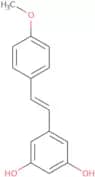
CAS:4'-Methoxyresveratrol is a polyphenol found in red wine and other plants. It has been shown to have anti-angiogenic effects, which may be due to its ability to inhibit vascular endothelial growth factor (VEGF) synthesis. 4'-Methoxyresveratrol has also been shown to have long-term efficacy against autoimmune diseases such as colitis, arthritis and asthma. This compound has not been studied in women or animals for toxicity or carcinogenicity. The most common side effects include gastrointestinal disturbances, headache, dizziness and skin rash.Fórmula:C15H14O3Pureza:Min. 95%Forma y color:White PowderPeso molecular:242.27 g/mol2,3-Dimethoxy-1,4-benzoquinone
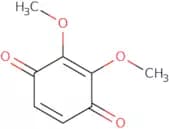
CAS:2,3-Dimethoxy-1,4-benzoquinone is a chemical compound that belongs to the class of quinones. It is one of the most potent inhibitors of bacterial growth and has been shown to be effective against Gram-positive bacteria such as Staphylococcus aureus and Mycobacterium tuberculosis. 2,3-Dimethoxy-1,4-benzoquinone inhibits bacterial growth by interfering with fatty acid synthesis. This inhibition is due to its ability to react with methoxy groups on membrane lipids and nucleophilic attack on the carbon atom in the fatty acid chain. The binding constants for this interaction are relatively weak, which may explain why 2,3-dimethoxy-1,4-benzoquinone does not inhibit other types of cells like eukaryotic cells.Fórmula:C8H8O4Pureza:Min. 95%Forma y color:Red PowderPeso molecular:168.15 g/mol[1-(3-Methoxyphenyl)-1-methylethyl]amine hydrochloride
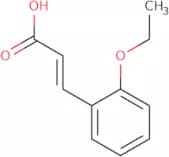
CAS:[1-(3-Methoxyphenyl)-1-methylethyl]amine hydrochloride is an organic compound that can be used as a reagent and a building block. It has been shown to be a useful intermediate in the synthesis of various other compounds, such as pharmaceuticals. This chemical is also used in research, as it is versatile and can react with other compounds easily. [1-(3-Methoxyphenyl)-1-methylethyl]amine hydrochloride can be purchased at our store if you are interested in purchasing this product.Fórmula:C10H15NO·HClPureza:Min. 95%Forma y color:PowderPeso molecular:201.69 g/mol2-Ethoxycinnamic acid
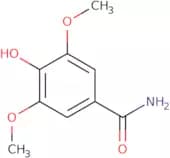
CAS:<p>2-Ethoxycinnamic acid is a metastable molecule that has been obtained by an asymmetric synthesis. It is unreactive, and its reaction products are polyvalent. 2-Ethoxycinnamic acid can be analyzed using analytical methods such as flow system, functional theory, and gas chromatography. 2-Ethoxycinnamic acid has been used in the preparation of cinnamates, which are used in perfumes and flavors. Polymorphs of this molecule have also been observed in crystalline form. There are two different forms of the molecule: α-form and β-form. The α-form is more stable than the β-form because it has a hydrogen bond with the methyl group on the left side of the molecule.</p>Fórmula:C11H12O3Pureza:Min. 95%Forma y color:PowderPeso molecular:192.21 g/mol4-Hydroxy-3,5-dimethoxybenzamide
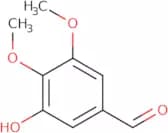
CAS:<p>4-Hydroxy-3,5-dimethoxybenzamide is a phenolic compound that is soluble in organic solvents. It has been shown to bind to fatty acid sequences and neutral polypeptides in the presence of an acidic or basic environment. 4-Hydroxy-3,5-dimethoxybenzamide has also been shown to have catalytic activity, which may be due to its ability to form a polymeric matrix with other compounds.</p>Fórmula:C9H11NO4Pureza:Min. 95%Forma y color:PowderPeso molecular:197.19 g/mol3,4-Dimethoxy-5-hydroxybenzaldehyde
CAS:3,4-Dimethoxy-5-hydroxybenzaldehyde is a phenolic compound that has been shown to be bactericidal against Listeria monocytogenes and Staphylococcus aureus. It has also been shown to have antioxidant properties in vivo. 3,4-Dimethoxy-5-hydroxybenzaldehyde may be used in the treatment of cardiovascular diseases such as atherosclerosis because it inhibits platelet aggregation and lipoprotein oxidation. The compound prevents the oxidation of prosthetic groups and the formation of adducts with DNA, which can lead to carcinogenesis. 3,4-Dimethoxy-5-hydroxybenzaldehyde is known to inhibit the growth of Pseudomonas aeruginosa, Salmonella typhimurium, Escherichia coli and Lactobacillus plantarum.Fórmula:C9H10O4Pureza:Min. 95%Forma y color:PowderPeso molecular:182.17 g/mol
![7-Amino-2-(4-methoxyphenyl)[1,2,4]triazolo[1,5-a]pyrimidin-5(4H)-one](/_next/image/?url=https%3A%2Fstatic.cymitquimica.com%2Fproducts%2F3D%2Fthumb-webp%2FFA134729.webp&w=3840&q=75)

![1-Chloro-3-[4-(2-methoxyethyl)phenoxy]-2-propanol](/_next/image/?url=https%3A%2Fstatic.cymitquimica.com%2Fproducts%2F3D%2Fthumb-webp%2FFC27415.webp&w=3840&q=75)
![(S)-2-((((9H-Fluoren-9-yl)methoxy)carbonyl)amino)-3-(1H-pyrrolo[2,3-b]pyridin-3-yl)propanoic acid](/_next/image/?url=https%3A%2Fstatic.cymitquimica.com%2Fproducts%2F3D%2Fthumb-webp%2FFF154979.webp&w=3840&q=75)
![2-Methoxy-1-[(4-methylphenyl)sulphinyl]benzene](/_next/image/?url=https%3A%2Fstatic.cymitquimica.com%2Fproducts%2F3D%2Fthumb-webp%2FFM66194.webp&w=3840&q=75)

![[1-(3-Methoxyphenyl)-1-methylethyl]amine hydrochloride](/_next/image/?url=https%3A%2Fstatic.cymitquimica.com%2Fproducts%2F3D%2Fthumb-webp%2FFM136868.webp&w=3840&q=75)