Éteres
Los éteres son compuestos orgánicos que contienen un grupo funcional éter, caracterizado por un átomo de oxígeno unido a dos radicales hidrocarbonados. Estos compuestos son valiosos en la síntesis y sirven como disolventes en diversas reacciones químicas. En CymitQuimica, ofrecemos una selección de éteres de alta calidad para apoyar sus aplicaciones de investigación e industriales, asegurando resultados fiables y efectivos. Nuestra gama de éteres cumple con diversos requisitos de laboratorio, desde experimentos de rutina hasta investigaciones avanzadas.
Se han encontrado 40902 productos de "Éteres"
Ordenar por
Pureza (%)
0
100
|
0
|
50
|
90
|
95
|
100
2,5-Dimethoxybenzyl alcohol
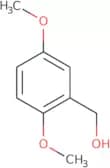
CAS:<p>2,5-Dimethoxybenzyl alcohol is a monoterpene compound that is chemically related to menthol and thymol. It has been shown to have cytotoxic effects against cancer cells in culture. The mechanism of action is not fully understood, but it has been proposed that 2,5-dimethoxybenzyl alcohol may be an allelopathic compound. This means that it inhibits the growth of plants by releasing substances into the soil that inhibit the growth of other plants nearby. 2,5-Dimethoxybenzyl alcohol has also been shown to reduce blood pressure in rats. This effect is due to its ability to inhibit angiotensin I-converting enzyme (ACE) as well as increase vasodilation through nitric oxide release. A kinetic study on human urine showed that 2,5-dimethoxybenzyl alcohol undergoes a stepwise reaction with carbinols and methoxy groups. Further research is needed to determine</p>Fórmula:C9H12O3Pureza:Min. 95%Forma y color:Clear LiquidPeso molecular:168.19 g/mol2,6-Dimethoxy-4-methylbenzyl alcohol
CAS:<p>2,6-Dimethoxy-4-methylbenzyl alcohol is a high quality, versatile building block that is used as a reagent. The chemical has been shown to be a useful intermediate in the production of fine chemicals and speciality chemicals. 2,6-Dimethoxy-4-methylbenzyl alcohol can be used as a reaction component in the production of research chemicals and versatile building blocks. This compound can be found on CAS registry number 875664-51-0.</p>Fórmula:C10H14O3Pureza:Min. 95%Forma y color:PowderPeso molecular:182.22 g/mol3-Amino-4-carbomethoxybenzoic acid
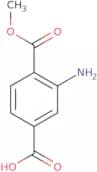
CAS:3-Amino-4-carbomethoxybenzoic acid is a compound that has not yet been labeled with a function. It has been shown to be an intermediate in the synthesis of polymers, such as polyamides and polyesters. 3-Amino-4-carbomethoxybenzoic acid is involved in biological functions related to butyric acid, which is a metabolite of the amino acids phenylalanine and tyrosine, or from the degradation of proteins. It is also used as a precursor for amines and may be an intermediate in the synthesis of glycoconjugates. The compound was found to have anticancer properties when used in combination with other drugs, such as doxorubicin and etoposide. Furthermore, it was found to have anti-inflammatory activities by inhibiting prostaglandin synthesis.Fórmula:C9H9NO4Pureza:Min. 95%Forma y color:PowderPeso molecular:195.17 g/mol3,3'-Dimethoxybenzidine dihydrochloride
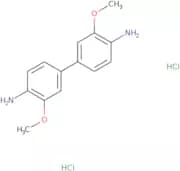
CAS:Producto controlado<p>3,3'-Dimethoxybenzidine dihydrochloride is a fluorogenic probe that has been shown to have activity index in the range of 0.1-0.5, which makes it suitable for use as a fluorescent dye in biological samples such as human serum or cerebrospinal fluid. 3,3'-Dimethoxybenzidine dihydrochloride can be used in histological studies for the detection of cell lysis and cardiac disease activity. It has also been shown to cause liver lesions when administered orally to rats.</p>Fórmula:C14H16N2O2•(HCl)2Pureza:Min. 98 Area-%Forma y color:PowderPeso molecular:317.21 g/molCarbethoxysyringic acid
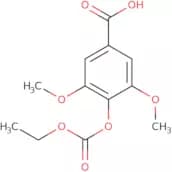
CAS:<p>Carbethoxysyringic acid is a reagent, complex compound, useful intermediate and fine chemical. It is also a useful scaffold for the synthesis of other organic compounds. Carbethoxysyringic acid is used in the production of speciality chemicals, research chemicals and versatile building blocks. Carbethoxysyringic acid has been shown to be an excellent reaction component in many reactions such as hydrogenation, nitro reduction, oxidation and hydrolysis.</p>Fórmula:C12H14O7Pureza:Min. 95%Forma y color:PowderPeso molecular:270.24 g/mol3-Bromo-4-methoxybenzaldehyde
CAS:<p>3-Bromo-4-methoxybenzaldehyde is a heterocycle that contains a covalent inhibitor. It has been shown to have inhibitory activity against imines, hydroxyl groups, and human serum. 3-Bromo-4-methoxybenzaldehyde has been shown to be an efficient method for the synthesis of nitrogen containing heterocycles with potential use as pharmaceuticals. This compound has also been used in the asymmetric synthesis of diphenyl ethers, which are useful in pharmacological studies. The reaction mechanism of this compound is not well understood and needs more research before it can be applied to other areas.</p>Fórmula:C8H7BrO2Pureza:Min. 95%Forma y color:PowderPeso molecular:215.04 g/mol(5-Bromo-4-methoxyphenyl)acetone
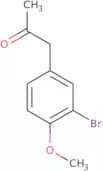
CAS:5-Bromo-4-methoxyphenyl)acetone (BMA) is a versatile building block that is used in the production of fine chemicals, research chemicals, and reagents. It has been shown to be a useful scaffold for the synthesis of complex compounds. BMA is also an intermediate for the production of other chemicals. This chemical has been shown to have high quality with a wide range of uses as a reaction component or useful scaffold.Fórmula:C10H11BrO2Pureza:Min. 95%Peso molecular:243.1 g/molBis[3-(triethoxysilyl)propyl]-disulfide
CAS:<p>Bis[3-(triethoxysilyl)propyl]-disulfide is a polymer that has been shown to inhibit tumor growth in vivo and in vitro. It also inhibits the synthesis of fatty acids. Bis[3-(triethoxysilyl)propyl]-disulfide is synthesized by reacting triethoxysilane with sulfur dioxide, followed by hydrolysis of the resultant bis(hydroxysilyl)sulfide with water. The polymer is then purified by precipitation from an alcohol solution, followed by drying to form a powder. Bis[3-(triethoxysilyl)propyl]-disulfide has a viscosity of about 1 cP at room temperature and can be used as a polymer matrix for drug delivery.</p>Fórmula:C18H42O6S2Si2Pureza:Min. 85.0 Area-%Forma y color:Clear LiquidPeso molecular:474.83 g/mol4-Hydroxy-3-methoxybenzylamine
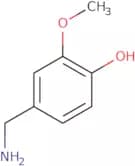
CAS:<p>4-Hydroxy-3-methoxybenzylamine is a nonsteroidal anti-inflammatory drug (NSAID) that has been shown to inhibit the production of cytokines and prostaglandins. It is metabolized by cytochrome P450 enzymes in the liver to form an amide and anhydrous sodium methyl myristate, which are excreted in urine. The reaction solution was analyzed using kinetic energy spectroscopy, which showed that 4-hydroxy-3-methoxybenzylamine reacts with vanillylamine to create a polymerase chain reaction product. This compound also has specific binding affinity for toll-like receptor 2 with high affinity, suggesting that it may have immunomodulatory properties.</p>Fórmula:C8H11NO2Pureza:Min. 95%Forma y color:PowderPeso molecular:153.18 g/mol(3,4-Dimethoxyphenyl)acetone
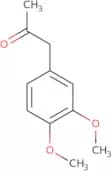
CAS:<p>(3,4-Dimethoxyphenyl)acetone is a compound that has been used in the synthesis of chiral drugs. It is a reactive carbonyl group with an alcohol group and a methyl ethyl acylation reaction. The biological properties of this compound are not known, but it can be used in the synthesis of amines. This chemical can also be found in urine samples and is commonly used as a testicular marker.</p>Fórmula:C11H14O3Pureza:Min. 97 Area-%Forma y color:Clear LiquidPeso molecular:194.23 g/mol4-(5-Methoxy-1H-indol-3-yl)-1,3-thiazol-2-amine
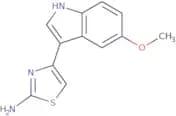
CAS:<p>4-(5-Methoxy-1H-indol-3-yl)-1,3-thiazol-2-amine is a useful scaffold that can be used in the synthesis of drugs and other chemical compounds. 4-(5-Methoxy-1H-indol-3-yl)-1,3-thiazol-2-amine is a fine chemical with CAS no. 3624611454. It has been shown to react as a useful intermediate for the preparation of complex compounds. This compound has also been used in research as a reagent and reaction component.</p>Fórmula:C12H11N3OSPureza:Min. 95%Forma y color:PowderPeso molecular:245.3 g/mol2,5-Dimethoxy-3-nitrobenzoic acid
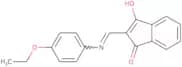
CAS:2,5-Dimethoxy-3-nitrobenzoic acid is a versatile building block that can be used to synthesize many different compounds. It is often used in the synthesis of complex organic molecules and can be used as a reagent or intermediate. The CAS number for this compound is 17894-26-7.Fórmula:C9H9NO6Pureza:Min. 95%Forma y color:PowderPeso molecular:227.17 g/mol2-(((4-ethoxyphenyl)amino)methylene)indane-1,3-dione
CAS:<p>Please enquire for more information about 2-(((4-ethoxyphenyl)amino)methylene)indane-1,3-dione including the price, delivery time and more detailed product information at the technical inquiry form on this page</p>Pureza:Min. 95%Poly[2-methoxy-5-(2-ethylhexyloxy)-1,4-phenylenevinylene - M.W. average 40,000-70,000
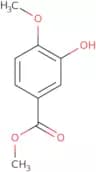
CAS:<p>Poly[2-methoxy-5-(2-ethylhexyloxy)-1,4-phenylenevinylene] is a polymeric material that is soluble in various organic solvents. It has a high refractive index and can be used as an optical filter or polarizer. Poly[2-methoxy-5-(2-ethylhexyloxy)-1,4-phenylenevinylene] particles are monodisperse with an average size of 40,000 to 70,000 daltons. This material has been shown to have excellent light absorption properties and can be made into nanoparticles for use in biomedical applications.</p>Fórmula:(C18H28O2)nPureza:Min. 95%Forma y color:Powder3-Hydroxy-4-methoxybenzoic acid methyl ester
CAS:<p>3-Hydroxy-4-methoxybenzoic acid methyl ester is a phenolic acid that is a potent inhibitor of tyrosinase activity. It has been shown to inhibit the growth of cancer cells by binding to 5-HT2A receptors and inhibiting the production of epidermal growth factor, which leads to a decrease in the expression of tyrosinase. 3-Hydroxy-4-methoxybenzoic acid methyl ester has also been shown to have an inhibitory effect on the synthesis of protocatechuic acid and acetate extract from soybean. This compound was found to be more effective than kojic acid, arbutin, and ascorbic acid.</p>Fórmula:C9H10O4Pureza:Min. 95%Forma y color:PowderPeso molecular:182.17 g/mol7-Amino-2-(4-methoxyphenyl)[1,2,4]triazolo[1,5-a]pyrimidin-5(4H)-one
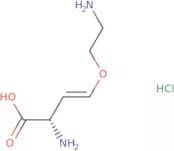
CAS:7-Amino-2-(4-methoxyphenyl)[1,2,4]triazolo[1,5-a]pyrimidin-5(4H)-one is a fine chemical that belongs to the category of versatile building blocks. It can be used as a reagent for research purposes and as a speciality chemical for the production of complex compounds. This compound is also an important building block for the synthesis of compounds with high quality and useful scaffolds.Fórmula:C12H11N5O2Pureza:Min. 95%Forma y color:PowderPeso molecular:257.25 g/mol(S)-trans-2-Amino-4-(2-aminoethoxy)-3-butenoic acid hydrochloride
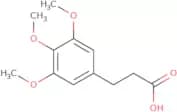
CAS:(S)-trans-2-Amino-4-(2-aminoethoxy)-3-butenoic acid hydrochloride is a chemical pesticide that inhibits the production of ethylene in plants. It is used to control growth and enhance the fruit quality of horticultural crops. It is also used as an inhibitor of serine proteases, which are enzymes that catalyze the hydrolysis of proteins. This product has been shown to act as a growth regulator by inhibiting the activity of serine proteases and blocking the biosynthesis of ethylene. (S)-trans-2-Amino-4-(2-aminoethoxy)-3-butenoic acid hydrochloride also blocks the biosynthesis of human chorionic gonadotropin, a hormone involved in reproduction and development.Fórmula:C6H13ClN2O3Pureza:Min. 97 Area-%Forma y color:Off-White PowderPeso molecular:196.63 g/mol3-(3,4,5-Trimethoxyphenyl)propionic acid
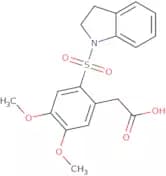
CAS:<p>3-(3,4,5-Trimethoxyphenyl)propionic acid (TMPPA) is a monocarboxylic acid that is structurally related to the amino acid lysine. It has been shown to have antinociceptive effects in animals and humans. TMPPA inhibits the production of prostaglandins and nitric oxide, which are inflammatory mediators that induce pain. TMPPA also has nociceptive properties in rats when given intraperitoneally or intrathecally, showing a reduction in locomotor activity. This compound also inhibits protein synthesis by binding to the ribosomal protein S6 kinase-1 (RSK-1), which is the target of many antibiotics used for cancer treatment. TMPPA binds to human serum albumin with high affinity and specificity, suggesting it may be useful as an agent for targeting human blood cells or as an antiobesity drug.</p>Fórmula:C12H16O5Pureza:Min. 95%Forma y color:Clear LiquidPeso molecular:240.25 g/mol2-(4,5-Dimethoxy-2-(indolin-1-ylsulfonyl)phenyl)acetic acid
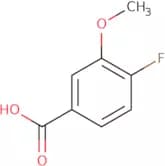
CAS:Please enquire for more information about 2-(4,5-Dimethoxy-2-(indolin-1-ylsulfonyl)phenyl)acetic acid including the price, delivery time and more detailed product information at the technical inquiry form on this pagePureza:Min. 95%4-Fluoro-3-methoxybenzoic acid
CAS:4-Fluoro-3-methoxybenzoic acid is a chiral, organic compound. It is an estrogen antagonist that binds to the estrogen receptor. 4-Fluoro-3-methoxybenzoic acid has been shown to inhibit tumor growth by blocking the interaction of estradiol with its receptor in the cancer cell line MCF-7. The metabolically active form of this compound is 4′-hydroxymethyl 4′,4″-difluorobenzoate and it can be converted into other metabolites such as 3′,4′,5′,6′-tetrahydroxybenzoic acid. This conversion may be mediated by cytochrome P450 enzymes or through hydrolysis by esterases or glucuronidases. The stereoisomers of 4-fluoro-3 methoxybenzoic acid are erythro and threo forms which have different affinities forFórmula:C8H7FO3Pureza:Min. 95%Forma y color:PowderPeso molecular:170.14 g/mol



![Bis[3-(triethoxysilyl)propyl]-disulfide](/_next/image/?url=https%3A%2Fstatic.cymitquimica.com%2Fproducts%2F3D%2Fthumb-webp%2FFB40976.webp&w=3840&q=75)

![7-Amino-2-(4-methoxyphenyl)[1,2,4]triazolo[1,5-a]pyrimidin-5(4H)-one](/_next/image/?url=https%3A%2Fstatic.cymitquimica.com%2Fproducts%2F3D%2Fthumb-webp%2FFA134729.webp&w=3840&q=75)