Éteres
Los éteres son compuestos orgánicos que contienen un grupo funcional éter, caracterizado por un átomo de oxígeno unido a dos radicales hidrocarbonados. Estos compuestos son valiosos en la síntesis y sirven como disolventes en diversas reacciones químicas. En CymitQuimica, ofrecemos una selección de éteres de alta calidad para apoyar sus aplicaciones de investigación e industriales, asegurando resultados fiables y efectivos. Nuestra gama de éteres cumple con diversos requisitos de laboratorio, desde experimentos de rutina hasta investigaciones avanzadas.
Se han encontrado 40902 productos de "Éteres"
Ordenar por
Pureza (%)
0
100
|
0
|
50
|
90
|
95
|
100
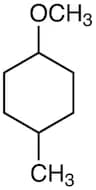
1-Methoxy-4-methylcyclohexane (cis- and trans- mixture)
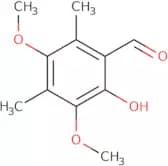
CAS:Fórmula:C8H16OPureza:>98.0%(GC)Forma y color:Colorless to Almost colorless clear liquidPeso molecular:128.222-Hydroxy-4,6-dimethoxy-3,5-dimethylbenzaldehyde
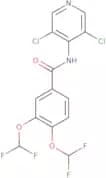
CAS:2-Hydroxy-4,6-dimethoxy-3,5-dimethylbenzaldehyde is a versatile building block that can be used in research chemicals, reagents, and speciality chemicals. It is also a useful building block that can be used as a reaction component or scaffold for high-quality compounds. This chemical has been shown to have antihistamine properties with applications in treatment of allergies and asthma.Fórmula:C11H14O4Pureza:Min. 95%Forma y color:PowderPeso molecular:210.23 g/mol3,4-Bis(difluoromethoxy) Roflumilast
CAS:<p>3,4-Bis(difluoromethoxy) roflumilast is a reagent that is used to synthesize fine chemicals. It is an intermediate for the synthesis of 3,4-bis(difluoromethoxy) roflumilast-1-carboxylic acid and can also be used as a building block for other research chemicals. 3,4-Bis(difluoromethoxy) roflumilast has been shown to be useful in reactions that require versatile building blocks.</p>Fórmula:C14H8Cl2F4N2O3Pureza:Min. 95%Forma y color:PowderPeso molecular:399.12 g/mol8-Methoxycarbonyloctanoic acid
CAS:<p>8-Methoxycarbonyloctanoic acid is a fatty acid derivative that has been found to be a potent inhibitor of platelet aggregation. It exhibits anti-platelet activity in human pathogens and in the model system studied. The mechanism of this inhibition is not clearly understood, but it may involve the inhibition of the enzyme ns3 protease or an interaction with the cell membrane. 8-Methoxycarbonyloctanoic acid has also shown antibacterial efficacy against human pathogens such as Escherichia coli, Pseudomonas aeruginosa, Klebsiella pneumoniae, and Bacillus cereus. This drug also inhibits bacterial growth by binding to DNA-dependent RNA polymerase, thereby preventing transcription and replication. The high frequency of human activity has been shown using a patch-clamp technique on human erythrocytes. This active form is metabolized through a number of metabolic transformations, including hydrolysis by esterases or glucuron</p>Fórmula:C10H18O4Pureza:Min. 95%Forma y color:White/Off-White SolidPeso molecular:202.25 g/molHexadecyltrimethoxysilane
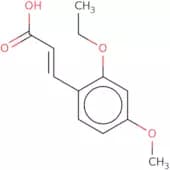
CAS:<p>Hexadecyltrimethoxysilane is a volatile organic compound that has high values in the water vapor range. It is soluble in water and organic solvents, and can be used as a surface treatment agent for hydrophobic surfaces. Hexadecyltrimethoxysilane has been shown to have antimicrobial effects against bacteria such as Staphylococcus aureus and Escherichia coli by disrupting the cell membrane. Hexadecyltrimethoxysilane also inhibits the growth of microorganisms by preventing the synthesis of proteins essential for cellular processes. The transport rate of hexadecyltrimethoxysilane is relatively slow, with an optimum concentration of about 1%. This compound does not react with sodium citrate and has chemical stability.</p>Fórmula:C19H42O3SiPureza:Min. 95%Forma y color:Clear LiquidPeso molecular:346.62 g/mol2-Ethoxy-4-methoxycinnamic acid
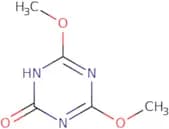
CAS:<p>2-Ethoxy-4-methoxycinnamic acid is a synthetic chemical with the CAS number 1372859-34-1. It is a versatile building block that can be used for the synthesis of many complex compounds. 2-Ethoxy-4-methoxycinnamic acid is one of a number of scaffolds that are useful for creating fine chemicals and research chemicals. This compound is also an intermediate in many reactions and can be used as a reagent to produce other substances.</p>Fórmula:C12H14O4Pureza:Min. 95%Peso molecular:222.24 g/mol4,6-Dimethoxy-1H-1,3,5-triazin-2-one
CAS:<p>4,6-Dimethoxy-1H-1,3,5-triazin-2-one is a conjugate of pyridinium with an amide. The compound has been used as a disinfectant for surfaces and in the treatment of wounds. It is also used as a biocide in water treatment. This compound has shown to be effective against Staphylococcus aureus and other bacteria, as well as some fungi. 4,6-Dimethoxy-1H-1,3,5-triazin-2-one can be synthesized from 2-(4'-methoxyphenyl)acetonitrile and chloral hydrate. The compound contains functionalities such as amines and oligosaccharides that are important for its antimicrobial activity.</p>Fórmula:C5H7N3O3Pureza:Min. 95%Forma y color:PowderPeso molecular:157.13 g/molo-(Trifluoromethoxy)benzonitrile
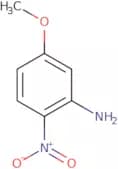
CAS:<p>o-(Trifluoromethoxy)benzonitrile is a fine chemical that is mainly used as a reagent in organic synthesis. It is also used as a building block in the synthesis of various other chemicals, such as pharmaceuticals, dyes, and pesticides. O-(Trifluoromethoxy)benzonitrile is a versatile intermediate that can be used to synthesize a variety of compounds with different functional groups. This compound has been shown to have high quality and can be used for research purposes or as an intermediate for industrial processes.</p>Fórmula:C8H4F3NOPureza:Min. 95%Peso molecular:187.12 g/mol5-Methoxy-2-nitrophenylamine
CAS:<p>5-Methoxy-2-nitrophenylamine (5MN) is a synthetic compound. It has been shown to produce an inhibitory effect on Alzheimer's disease and Leishmania infantum by inhibiting the formation of amyloid beta (Aβ) and leishmanicidal alpha-ketoglutarate, respectively. 5MN has also been observed to stabilize supramolecular structures in magnetic resonance spectroscopy experiments. This chemical is synthesized from 4-amino-3-nitrophenol and methylamine by reacting them in the presence of sodium hydroxide and sulfuric acid under refluxing conditions. The reaction products are analyzed using FTIR spectroscopy, as shown below:</p>Fórmula:C7H8N2O3Pureza:Min. 95%Forma y color:PowderPeso molecular:168.15 g/molDibenzoyl-(+)-p-methoxy-D-tartaric acid
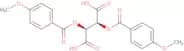
CAS:Dibenzoyl-(+)-p-methoxy-D-tartaric acid is a macrocyclic molecule that has been synthesized as an enantiomer. It has been found to be an effective drug against schistosomiasis in experimental studies. The compound inhibits the growth of Schistosoma mansoni by preventing the formation of eggs, which are released by the female worms into the environment. Dibenzoyl-(+)-p-methoxy-D-tartaric acid also inhibits the development of larval stages and prevents the release of eggs from male worms. This drug is not yet used clinically for this purpose, but it is being researched for use in tropical regions where schistosomiasis is endemic.Fórmula:C20H18O10Pureza:Min. 95%Forma y color:White PowderPeso molecular:418.35 g/mol1-(3-(Trifluoromethoxy)phenyl)-2-nitroethene
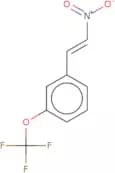
CAS:<p>1-(3-Trifluoromethoxy)phenyl)-2-nitroethene is a fluorinated aromatic compound that can be used as a building block for synthesis of pharmaceuticals, research chemicals, and other specialty chemicals. It is an intermediate that can be used in the production of other compounds. This compound may be used in pharmaceuticals to treat bacterial infections and inflammatory diseases. 1-(3-Trifluoromethoxy)phenyl)-2-nitroethene may also be utilized as a reaction component for synthesizing other organic compounds. It is soluble in solvents such as benzene, ether, chloroform, and acetone.</p>Fórmula:C9H6F3NO3Pureza:Min. 95%Peso molecular:233.14 g/mol4-Bromo-2-methoxytoluene
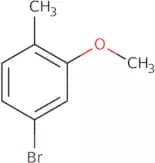
CAS:<p>4-Bromo-2-methoxytoluene is a lactone compound that has been shown to have bioactivities. It is also known as methoxy, an aromatic organic compound with one methyl substituent and two hydroxyl substituents on a benzene ring. 4-Bromo-2-methoxytoluene is found in the natural products cephalotaxaceae and cephalotaxus. This compound can be synthesized by reacting diisopropylamine with formylation of bromobenzene in the presence of acetic acid followed by treatment with sodium acetate. The chemical structure forms a skeleton containing four carbon atoms and six hydrogen atoms, which are arranged in three rings (a cyclic system). This compound exists as two isomers, namely cis and trans.</p>Fórmula:C8H9BrOPureza:Min. 95%Forma y color:PowderPeso molecular:201.06 g/mol[3-Methyl-4-(2,2,2-trifluoro-ethoxy)-pyridin-2-yl]-methanol
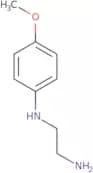
CAS:[3-Methyl-4-(2,2,2-trifluoro-ethoxy)-pyridin-2-yl]-methanol is a synthetic organic compound that is used in the synthesis of other organic compounds. It can be purified by filtration or gasification and recrystallization.Pureza:Min. 95%Forma y color:PowderN-(4-Methoxyphenyl)ethane-1,2-diamine
CAS:<p>N-(4-Methoxyphenyl)ethane-1,2-diamine is a synthetic compound that has been shown to inhibit the activity of cathepsins. It can be used in the treatment of diseases caused by these enzymes, such as osteoarthritis and Alzheimer's disease. N-(4-Methoxyphenyl)ethane-1,2-diamine has a pharmacokinetic profile that is favorable for oral administration. The drug is absorbed from the gastrointestinal tract readily and undergoes extensive metabolism in the liver. This process leads to the formation of active metabolites which are excreted in urine or bile. N-(4-Methoxyphenyl)ethane-1,2-diamine also inhibits nitroalkanes with activated aromatic rings, such as 4-nitrobenzaldehyde and 2,4,6-trinitrobenzene.</p>Fórmula:C9H14N2OPureza:Min. 95%Forma y color:Slightly Yellow PowderPeso molecular:166.22 g/mol3'-(Trimethoxyphenyl)acetone
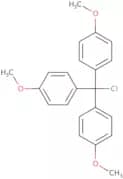
<p>3'-(Trimethoxyphenyl)acetone is a reagent and useful scaffold for the synthesis of complex compounds. It is also used as a reaction component in the preparation of valuable research chemicals, specialty chemicals, and fine chemicals. 3'-(Trimethoxyphenyl)acetone has been shown to be an effective building block for synthesizing complex compounds, such as heterocycles. This chemical has a CAS number of 689-52-3.</p>Pureza:Min. 95%4,4',4''-Trimethoxytrityl chloride
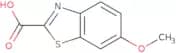
CAS:<p>4,4',4''-Trimethoxytrityl chloride is a carbonyl compound that reacts with alkenyloxy groups to form alkaloids. It also reacts with halogen atoms to form halogenated products. 4,4',4''-Trimethoxytrityl chloride is used in the synthesis of ecteinascidins and acyl group compounds. This chemical can be used in the synthesis of alkaloids and alkenyloxy compounds. It has a reactive carbon atom that can be substituted by other organic groups.</p>Fórmula:C22H21ClO3Pureza:Min. 95%Forma y color:Off-White PowderPeso molecular:368.85 g/mol6-Methoxybenzothiazole-2-carboxylic acid
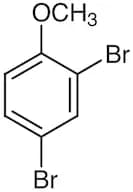
CAS:<p>6-Methoxybenzothiazole-2-carboxylic acid is a synthetic sulfur compound that is used in the synthesis of benzothiazines. It is also an intermediate in the biosynthesis of thiocyanate, a natural product that has been shown to have anti-inflammatory properties. 6-Methoxybenzothiazole-2-carboxylic acid has been shown to be highly efficient as a luciferin, and can be used in the production of bioluminescence. 6-Methoxybenzothiazole-2-carboxylic acid belongs to the family of benzothiazines, which are benzoquinones with two fused rings. Benzothiazines are found in marine natural products such as luciferins and some other nature products.</p>Fórmula:C9H7NO3SPureza:Min. 95%Forma y color:PowderPeso molecular:209.22 g/mol2,4-Dibromoanisole
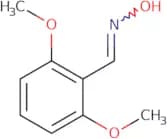
CAS:Fórmula:C7H6Br2OPureza:>98.0%(GC)Forma y color:White to Light yellow to Light red powder to crystalPeso molecular:265.932,6-Dimethoxybenzaldoxime
CAS:<p>2,6-Dimethoxybenzaldoxime is a phenylhydrazone that can be used in the catalytic system for oxidation of carbonyl compounds. The reaction proceeds through the periodate-mediated oxidation of the hydrazone to form the corresponding hydroxamic acid. This compound has been shown to be efficient and selective for the oxidation of a wide range of carbonyl compounds, including porphyrins. 2,6-Dimethoxybenzaldoxime is also used as a precursor for other syntheses, such as tetraphenylporphyrin.</p>Fórmula:C9H11NO3Pureza:Min. 95%Peso molecular:181.19 g/mol2-(2-Bromo-1,1,2,2-tetrafluoroethoxy)-1,1,1,2,3,3-hexafluoro-3-(pentafluoroethoxy)propane
CAS:Fórmula:C7BrF15O2Pureza:>98.0%(GC)Forma y color:Colorless to Almost colorless clear liquidPeso molecular:480.96





![[3-Methyl-4-(2,2,2-trifluoro-ethoxy)-pyridin-2-yl]-methanol](/_next/image/?url=https%3A%2Fstatic.cymitquimica.com%2Fproducts%2F3D%2Fthumb-webp%2FFM38829.webp&w=3840&q=75)