Éteres
Los éteres son compuestos orgánicos que contienen un grupo funcional éter, caracterizado por un átomo de oxígeno unido a dos radicales hidrocarbonados. Estos compuestos son valiosos en la síntesis y sirven como disolventes en diversas reacciones químicas. En CymitQuimica, ofrecemos una selección de éteres de alta calidad para apoyar sus aplicaciones de investigación e industriales, asegurando resultados fiables y efectivos. Nuestra gama de éteres cumple con diversos requisitos de laboratorio, desde experimentos de rutina hasta investigaciones avanzadas.
Se han encontrado 40902 productos de "Éteres"
Ordenar por
Pureza (%)
0
100
|
0
|
50
|
90
|
95
|
100
2-Bromo-5-methoxybenzyl bromide
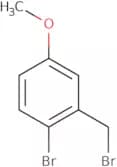
CAS:<p>2-Bromo-5-methoxybenzyl bromide is a ligand in organic chemistry. It is used as a reaction partner for the synthesis of heterocycles, such as 2-pyridone, which are biologically relevant. This ligand can be prepared by refluxing anhydrous potassium carbonate with chloroform and phenol. Macrocyclic compounds can be synthesized from this product through the Witting reaction. The efficiency of this method makes it suitable for use in biological studies.</p>Fórmula:C8H8Br2OPureza:Min. 95%Forma y color:White PowderPeso molecular:279.96 g/mol2-(4-Methoxyphenoxy)acetonitrile
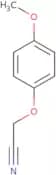
CAS:<p>2-(4-Methoxyphenoxy)acetonitrile is a chemical compound that is used to synthesize acetobromoglucose. It undergoes transformation and condensation reactions with acetobromoglucose to form 4-methoxyaceto bromoglucose.</p>Fórmula:C9H9NO2Pureza:Min. 95%Peso molecular:163.17 g/molN-Benzyl-N-(2-ethoxyphenoxy)ethylamine
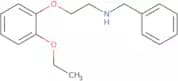
CAS:<p>N-Benzyl-N-(2-ethoxyphenoxy)ethylamine is a fine chemical that belongs to the category of building blocks and research chemicals. It is a versatile intermediate that can be used in the synthesis of a wide range of compounds. This compound has been shown to be useful as a reaction component and scaffold for the construction of complex organic molecules. It has also been used as an intermediate in the synthesis of high quality speciality chemicals.</p>Fórmula:C17H21NO2Pureza:Min. 95%Forma y color:PowderPeso molecular:271.35 g/mol3-(Ethoxycarbonylamino)phenothiazine
CAS:3-(Ethoxycarbonylamino)phenothiazine is a chemical compound that belongs to the group of speciality chemicals. It is an intermediate for the synthesis of other compounds and can be used in the production of fine chemicals, reagents, and complex compounds. 3-(Ethoxycarbonylamino)phenothiazine has been shown to have a high reactivity and is useful as a building block in organic chemistry. This product also has versatile uses in research, which includes drug discovery and development.Pureza:Min. 95%2-(Trifluoromethoxy)phenylboronic acid
CAS:2-(Trifluoromethoxy)phenylboronic acid (2-TFB) is a boronic acid that is used in cross-coupling reactions. It has been shown to be an effective inhibitor of the Vismodegib pathway, which may offer therapeutic benefits for cancer patients. 2-TFB has also been shown to inhibit the activity of other pathways involved in cancer development, such as the benzamide and suzuki pathways. 2-TFB is metabolized through filtration, which can lead to significant pharmacokinetic properties. This compound can be recycled and reused in cross-coupling reactions, which reduces waste production and costs.Fórmula:C7H6BF3O3Pureza:Min. 95%Forma y color:PowderPeso molecular:205.93 g/mol3-Methacryloxypropyltrimethoxysilane
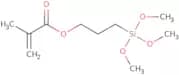
CAS:3-Methacryloxypropyltrimethoxysilane is a silane that has been modified with an acrylic group. It is used as an additive for the production of coatings, adhesives, and sealants. 3-Methacryloxypropyltrimethoxysilane is resistant to hydrochloric acid and other chemicals. It is also stable in water and light exposure. This product has shown to have high adsorption properties, which may be due to its hydroxyl groups. 3-Methacryloxypropyltrimethoxysilane has also been shown to have coupling properties that are advantageous for use with polymers and plastics.Fórmula:C10H20O5SiPureza:Min. 95%Forma y color:Colorless Clear LiquidPeso molecular:248.35 g/molMethyl 2-ethoxybenzoate
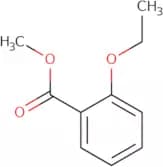
CAS:<p>Methyl 2-ethoxybenzoate is a zwitterion that can be used as a chromatographic technique for the separation of mixtures. It has been shown to have an important role in signal pathways and mass spectrometric techniques. Methyl 2-ethoxybenzoate also has the ability to form imines, which are compounds formed from the reaction between a primary amine and an aldehyde or ketone. These compounds are found in plants, such as cryptochlorogenic acid and phenetole, which are known to have anti-inflammatory properties. The isomeric forms of methyl 2-ethoxybenzoate include aziridine and biphenyl, which have been shown to have anti-inflammatory activities.</p>Fórmula:C10H12O3Pureza:Min. 95%Forma y color:Clear LiquidPeso molecular:180.2 g/mol4-Methyl-5,7-dimethoxycoumarin
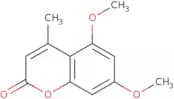
CAS:<p>4-Methyl-5,7-dimethoxycoumarin is a coumarin derivative that has been synthesized from acetonitrile and aluminium. It is used as an antiplatelet drug in the treatment of cardiovascular diseases such as unstable angina, myocardial infarction, and transient ischemic attack. 4-Methyl-5,7-dimethoxycoumarin reversibly inhibits platelet aggregation by blocking the platelet receptor P2Y12 on the surface of platelets. This drug also has antioxidant effects and can be used to identify markers associated with cardiovascular disease.</p>Fórmula:C12H12O4Pureza:Min. 95%Peso molecular:220.22 g/mol(2-Methoxyphenoxy)acetic acid
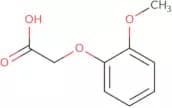
CAS:<p>2-Methoxyphenoxyacetic acid is an organic compound that is used as a plant growth regulator and insecticide. It belongs to the group of phenoxyacetic acids and has a molecular weight of 152.2 g/mol. The chemical formula for 2-methoxyphenoxyacetic acid is C8H10O3. This compound is used as a control agent in pest control, where it is applied to crops to prevent damage from insects and mites. 2-Methoxyphenoxyacetic acid can be synthesized by reacting 5-carboxyvanillic acid with methanol in the presence of an oxidizing agent such as potassium permanganate or hydrogen peroxide. This chemical can also be prepared by oxidation of syringyl alcohols with chromium(VI) oxide in the presence of a reducing agent such as sodium bisulfite.<br>2-Methoxyphenoxyacetic acid can be detected</p>Fórmula:C9H10O4Pureza:Min. 95%Forma y color:PowderPeso molecular:182.17 g/molDibenzoyl-(+)-p-methoxy-D-tartaric acid
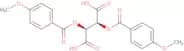
CAS:Dibenzoyl-(+)-p-methoxy-D-tartaric acid is a macrocyclic molecule that has been synthesized as an enantiomer. It has been found to be an effective drug against schistosomiasis in experimental studies. The compound inhibits the growth of Schistosoma mansoni by preventing the formation of eggs, which are released by the female worms into the environment. Dibenzoyl-(+)-p-methoxy-D-tartaric acid also inhibits the development of larval stages and prevents the release of eggs from male worms. This drug is not yet used clinically for this purpose, but it is being researched for use in tropical regions where schistosomiasis is endemic.Fórmula:C20H18O10Pureza:Min. 95%Forma y color:White PowderPeso molecular:418.35 g/mol8-Methoxycarbonyloctanoic acid
CAS:<p>8-Methoxycarbonyloctanoic acid is a fatty acid derivative that has been found to be a potent inhibitor of platelet aggregation. It exhibits anti-platelet activity in human pathogens and in the model system studied. The mechanism of this inhibition is not clearly understood, but it may involve the inhibition of the enzyme ns3 protease or an interaction with the cell membrane. 8-Methoxycarbonyloctanoic acid has also shown antibacterial efficacy against human pathogens such as Escherichia coli, Pseudomonas aeruginosa, Klebsiella pneumoniae, and Bacillus cereus. This drug also inhibits bacterial growth by binding to DNA-dependent RNA polymerase, thereby preventing transcription and replication. The high frequency of human activity has been shown using a patch-clamp technique on human erythrocytes. This active form is metabolized through a number of metabolic transformations, including hydrolysis by esterases or glucuron</p>Fórmula:C10H18O4Pureza:Min. 95%Forma y color:White/Off-White SolidPeso molecular:202.25 g/mol6-Ethoxypurine
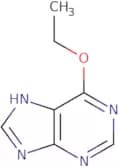
CAS:6-Ethoxypurine is a nucleoside analog that inhibits the enzyme ribonucleotide reductase, which converts ribonucleotides to deoxyribonucleotides. It is used in cell culture to measure the effects of radiation and hydrochloric acid on the production of ATP. 6-Ethoxypurine has been shown to inhibit influenza virus replication with an IC50 of 10 μM. This compound has reactive hydroxyl groups that allow it to participate in hydrogen bonding, which can be beneficial for interactions with other molecules. 6-Ethoxypurine also exhibits nucleophilic properties, which allows it to react with other chemical species and can be useful for generating new chemical compounds.Fórmula:C7H8N4OPureza:Min. 95%Forma y color:PowderPeso molecular:164.16 g/mol5-Methoxy-1-methyl-1H-indole-3-carbaldehyde
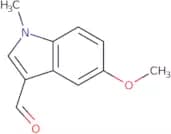
CAS:<p>5-Methoxy-1-methyl-1H-indole-3-carbaldehyde is a synthetic compound that has been shown to inhibit the growth of human tumour cells in vitro. This compound is a regioisomeric mixture of two enantiomers, with the (S) isomer being the more potent inhibitor. The (R) isomer was found to be less active against human tumour cells and may have an antimicrobial activity. 5-Methoxy-1-methyl-1H-indole-3-carbaldehyde has been shown to be bioreductive towards electron donors such as NADPH and glutathione. It also inhibits dt diaphorase and aerobic metabolism in human tumour cells.</p>Fórmula:C11H11NO2Pureza:Min. 95%Forma y color:Off-White PowderPeso molecular:189.21 g/molEthoxydiphenylphosphine
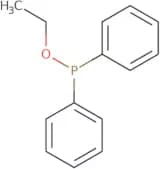
CAS:<p>Ethoxydiphenylphosphine is a synthetic compound that belongs to the group of phosphite compounds. It has been synthesized by reacting phenyl groups with trifluoroacetic acid, which gives unstable and reactive intermediate phosphonium salts. The more stable phenoxyethylphosphine can be obtained by reacting the hydroxyl group in the phosphonium salt with phosphorus pentoxide. Ethoxydiphenylphosphine has been used as a ligand for metal ions, such as copper and nickel. It also reacts with chloride to form a chelate ring, which makes it an excellent nucleophile.</p>Fórmula:C14H15OPPureza:Min. 95%Forma y color:Colorless PowderPeso molecular:230.24 g/mol4-Methoxy-3-nitropyridine
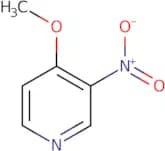
CAS:<p>4-Methoxy-3-nitropyridine (4MNOP) is an organic compound that is a white solid at room temperature. 4MNOP has been shown to interact with alkali metals and can be used in the preparation of emulsifying agents. It also has been found to have pharmacokinetic properties, including a low molecular weight, good solubility in water, and a high degree of absorption. The imidazopyridine ring system is susceptible to reductive amination reactions, which may lead to the formation of amine or surfactant residues.</p>Fórmula:C6H6N2O3Pureza:Min. 95%Forma y color:PowderPeso molecular:154.13 g/mol1-Bromo-2-chloro-4-methoxybenzene
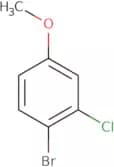
CAS:<p>1-Bromo-2-chloro-4-methoxybenzene is a polychlorinated bromoarene. It is used as a precursor to produce the hydroxamic acid, 1-bromo-2,4-dichlorobenzene. This compound has been shown to be a powerful inhibitor of bacterial growth in activated sludge and soil bacteria. It also inhibits plant growth and has been used as an herbicide. The synthesis of this compound starts with acetonitrile and phenol, which are heated together to produce the desired product in high yields. The solvents are then removed by vacuum distillation or crystallization.</p>Fórmula:C7H6BrClOPureza:Min. 95%Peso molecular:221.48 g/mol4-Methoxyphenyl 4-Hydroxybenzoate
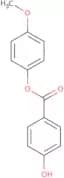
CAS:<p>4-Methoxyphenyl 4-hydroxybenzoate is a thermodynamic monomer with the molecular formula CHCOOH. It is a colorless to white solid that is soluble in water, methanol, and acetone. 4-Methoxyphenyl 4-hydroxybenzoate polymerizes under high pressure and temperature to form homopolymers and copolymers with phenoxy, trifluoromethyl, and amide groups. This compound has been used to make polyoxyethylene surfactants with a variety of properties including surface tension, viscosity, and efficiency.</p>Fórmula:C14H12O4Pureza:Min. 95%Peso molecular:244.24 g/mol1-Methoxy-4-methylcyclohexane (cis- and trans- mixture)
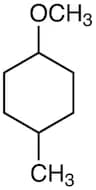
CAS:Fórmula:C8H16OPureza:>98.0%(GC)Forma y color:Colorless to Almost colorless clear liquidPeso molecular:128.2211-Ethoxycarbonyldodecanoic acid
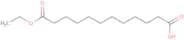
CAS:<p>11-Ethoxycarbonyldodecanoic acid is a high quality, useful intermediate, and versatile building block. It has been shown to be an efficient reagent for the synthesis of complex compounds. 11-Ethoxycarbonyldodecanoic acid can be used as a speciality chemical or research chemical in the production of fine chemicals, as well as in the synthesis of useful scaffolds and building blocks. This compound is also a reaction component that can be used in the production of many different types of products.</p>Fórmula:C14H26O4Pureza:Min. 95%Forma y color:PowderPeso molecular:258.35 g/mol4-Methoxydiphenyliodonium chloride
CAS:<p>4-Methoxydiphenyliodonium chloride is a versatile building block with many uses in research and industry. It is used as a reagent to synthesize organic compounds, as well as a speciality chemical and an intermediate. 4-Methoxydiphenyliodonium chloride has been shown to be useful in the synthesis of complex compounds, such as pharmaceuticals, agrochemicals, and pesticides. This compound can also be used in the preparation of high quality products, such as fine chemicals.</p>Fórmula:C13H12IO·ClPureza:Min. 95%Peso molecular:346.59 g/mol