Éteres
Los éteres son compuestos orgánicos que contienen un grupo funcional éter, caracterizado por un átomo de oxígeno unido a dos radicales hidrocarbonados. Estos compuestos son valiosos en la síntesis y sirven como disolventes en diversas reacciones químicas. En CymitQuimica, ofrecemos una selección de éteres de alta calidad para apoyar sus aplicaciones de investigación e industriales, asegurando resultados fiables y efectivos. Nuestra gama de éteres cumple con diversos requisitos de laboratorio, desde experimentos de rutina hasta investigaciones avanzadas.
Se han encontrado 40902 productos de "Éteres"
Ordenar por
Pureza (%)
0
100
|
0
|
50
|
90
|
95
|
100
2-(4-Methoxyphenyl)-4,6-bis(trichloromethyl)-1,3,5-triazine
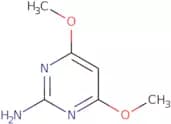
CAS:<p>2-(4-Methoxyphenyl)-4,6-bis(trichloromethyl)-1,3,5-triazine is a chemical compound that belongs to the class of cyanine dyes. It is used as a developer in photopolymerization and as an electron donor in electron-sensitive materials. 2-(4-Methoxyphenyl)-4,6-bis(trichloromethyl)-1,3,5-triazine has a viscosity of 0.56 Pa·s at 25°C and is sensitive to light with wavelengths ranging from 300 to 400 nm. This dye also has a yield of 1.0 g/g and a phenolic content of 0.2%.</p>Fórmula:C12H7Cl6N3OPureza:Min. 95%Forma y color:White PowderPeso molecular:421.92 g/mol4,6-Dimethoxypyrimidin-2-amine
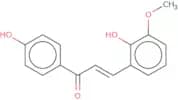
CAS:<p>4,6-Dimethoxypyrimidin-2-amine is a pyrimidine compound with the molecular formula C5H4N4O2. It can be prepared from the reaction of 2,4,6-trichloropyrimidine with formaldehyde and sodium cyanide in an organic solution. The properties of 4,6-Dimethoxypyrimidin-2-amine were studied on bacterial strain and human urine samples. This molecule is soluble in water and reacts with carboxylic acid to form a hydrogen bond. The nitrogen atoms show some reactivity towards copper chloride and hydrogen chloride.</p>Fórmula:C6H9N3O2Pureza:Min. 95%Forma y color:White PowderPeso molecular:155.15 g/mol4',2-Dihydroxy-3-methoxychalcone
CAS:<p>4,2-Dihydroxy-3-methoxychalcone is a fine chemical that is useful in the synthesis of various pharmaceuticals and other chemicals. It is a versatile building block that can be used as a reaction component or intermediate in the synthesis of complex compounds. 4,2-Dihydroxy-3-methoxychalcone has been shown to be a high quality reagent for use in the synthesis of speciality chemicals and research chemicals. This compound is also useful as a scaffold for the development of new drugs.</p>Fórmula:C16H14O4Pureza:Min. 95%Peso molecular:270.28 g/molN-Benzyl-N-(2-ethoxyphenoxy)ethylamine
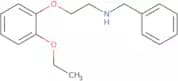
CAS:<p>N-Benzyl-N-(2-ethoxyphenoxy)ethylamine is a fine chemical that belongs to the category of building blocks and research chemicals. It is a versatile intermediate that can be used in the synthesis of a wide range of compounds. This compound has been shown to be useful as a reaction component and scaffold for the construction of complex organic molecules. It has also been used as an intermediate in the synthesis of high quality speciality chemicals.</p>Fórmula:C17H21NO2Pureza:Min. 95%Forma y color:PowderPeso molecular:271.35 g/molPoly[2-methoxy-5-(2-ethylhexyloxy)-1,4-phenylenevinylene] - M.W. average 10,000-100,000
CAS:<p>Poly[2-methoxy-5-(2-ethylhexyloxy)-1,4-phenylenevinylene] (MEH-PPV) is a polymer that has been extensively studied in the past. It has an average molecular weight of 10,000 to 100,000 and exhibits semiconducting properties. MEH-PPV can be synthesized by chemical sulfonation of MEH-PPV with sulfuric acid followed by addition of potassium hydroxide. This process yields a polymer that is soluble in organic solvents. The degree of sulfonation can be controlled by adjusting the ratio of sulfuric acid to MEH-PPV. MEH-PPV can also be synthesized from vinyl alcohol and vinylene monomers by free radical polymerization or copolymerization reactions. In this process, vinyl alcohol and vinylene are copolymerized to form polymers with alternating ethylene glycol and phenylethynyl moieties.</p>Fórmula:(C17H24O2)nPureza:Min. 95%Forma y color:Red PowderReserpiline
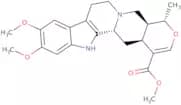
CAS:Methyl (3beta,19alpha,20alpha)-16,17-didehydro-10,11-dimethoxy-19-methyloxayohimban-16-carboxylate is a trifluoroacetate ester of apocynin. It is used to treat bowel disease by reducing inflammation and stimulating the growth of new cells in the epithelium. Apocynin has been shown to inhibit the release of inflammatory cytokines such as epidermal growth factor (EGF) in vitro. In vivo studies have shown that it reduces symptoms of bowel disease and prevents ulceration. Apocynin has been shown to be a potent analog for EGF and has been studied for its potential use in the treatment of cancer. However, it has also been found to cause psychosis when administered at high doses. The toxicity studies on apocynin show that it is not toxic at lower doses but becomes more toxic at higher doses dueFórmula:C23H28N2O5Pureza:Min. 95%Forma y color:PowderPeso molecular:412.48 g/mol1-(3-Hydroxy-4-methoxyphenyl)-2-nitroethane
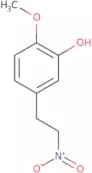
CAS:1-(3-Hydroxy-4-methoxyphenyl)-2-nitroethane is a chemical intermediate that can be used in the synthesis of other compounds. It is a fine chemical with many potential uses, as well as being a versatile building block for organic synthesis. As an example, 1-(3-Hydroxy-4-methoxyphenyl)-2-nitroethane can be used to synthesize the drug erythromycin. This chemical has been shown to have antihistamine and antiinflammatory properties.Fórmula:C9H11NO4Pureza:Min. 95%Peso molecular:197.19 g/mol4,5-Dimethoxy-2-fluorobenzylamine hydrochloride
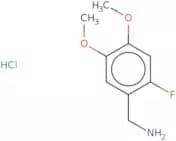
CAS:4,5-Dimethoxy-2-fluorobenzylamine hydrochloride is a fine chemical that is the building block for a variety of other compounds. It has been used as an intermediate in organic synthesis and as a research chemical. 4,5-Dimethoxy-2-fluorobenzylamine hydrochloride has also been used as a reaction component in the preparation of complex compounds with interesting physical and chemical properties. This compound is also used as a reagent in the production of high quality products.Fórmula:C9H12FNO2·HClPureza:Min. 95%Peso molecular:221.66 g/mol[3-Methyl-4-(2,2,2-trifluoro-ethoxy)-pyridin-2-yl]-methanol
CAS:[3-Methyl-4-(2,2,2-trifluoro-ethoxy)-pyridin-2-yl]-methanol is a synthetic organic compound that is used in the synthesis of other organic compounds. It can be purified by filtration or gasification and recrystallization.Pureza:Min. 95%Forma y color:PowderMethyl 3,4,5-trimethoxyphenyl acetate
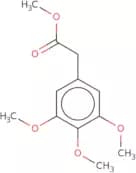
CAS:Methyl 3,4,5-trimethoxyphenyl acetate is an ester that is used as a building block and intermediate in the synthesis of pharmaceuticals. It can also be used as an intermediate in research and as a reagent for chemical analysis. Methyl 3,4,5-trimethoxyphenyl acetate has high purity and is available at competitive prices.Fórmula:C12H16O5Pureza:Min. 95%Peso molecular:240.25 g/mol2-Bromo-N-(4-methoxyphenyl)-N-methylbenzamide
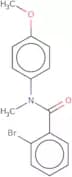
CAS:2-Bromo-N-(4-methoxyphenyl)-N-methylbenzamide is a fine chemical that is used in the synthesis of other chemicals. It is also a reagent and a speciality chemical, which can be used as a reaction component or as an intermediate in the synthesis of other compounds. 2-Bromo-N-(4-methoxyphenyl)-N-methylbenzamide can be used to make a wide variety of compounds, including polymers and pharmaceuticals. This compound has been shown to be useful for the synthesis of polycarbonates, polyurethanes, polyesters, polyamides, and polystyrenes.Fórmula:C15H14BrNO2Pureza:Min. 95%Peso molecular:320.18 g/mol2-Bromo-5-methoxybenzyl bromide
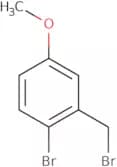
CAS:<p>2-Bromo-5-methoxybenzyl bromide is a ligand in organic chemistry. It is used as a reaction partner for the synthesis of heterocycles, such as 2-pyridone, which are biologically relevant. This ligand can be prepared by refluxing anhydrous potassium carbonate with chloroform and phenol. Macrocyclic compounds can be synthesized from this product through the Witting reaction. The efficiency of this method makes it suitable for use in biological studies.</p>Fórmula:C8H8Br2OPureza:Min. 95%Forma y color:White PowderPeso molecular:279.96 g/mol3-(5-Iodo-4-hydroxy-3-methoxy)cinnamic acid
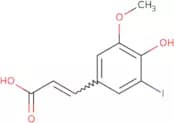
CAS:3-(5-Iodo-4-hydroxy-3-methoxy)cinnamic acid is a chemical compound that can be used as a starting material for synthesis of complex compounds. It is a white solid with a melting point of about 100°C, and it is soluble in water. This product is an excellent reagent for the synthesis of new chemicals, and it has been widely used as a reaction component in organic syntheses. 3-(5-Iodo-4-hydroxy-3-methoxy)cinnamic acid also has antibacterial properties.Fórmula:C10H9IO4Pureza:Min. 95%Peso molecular:320.08 g/mol2-Chloro-5-(4-chloro-5-difluoromethoxy-1-methylpyrazol-3-yl)-4-fluorophenoxyacetic acid monohydrate
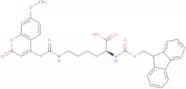
CAS:<p>2-Chloro-5-(4-chloro-5-difluoromethoxy-1-methylpyrazol-3-yl)-4-fluorophenoxyacetic acid monohydrate (2,4,5P) is a phenoxy herbicide that has been shown to be an effective broadleaf and grass weed control agent. 2,4,5P is a granule formulation that can be applied by helicopter or ground equipment. It has synergistic effects with glyphosate when applied together to soybean plants and can be used in combination with other herbicides for more effective weed control.</p>Fórmula:C13H9Cl2F3N2O·H2OPureza:Min. 95%Forma y color:White PowderPeso molecular:355.14 g/molN-α-Fmoc-Nε-7-methoxycoumarin-4-acetyl-L-lysine
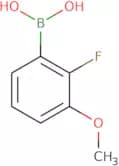
CAS:N-alpha-Fmoc-Nepsilon-7-methoxycoumarin-4-acetyl-L-lysine is a fluorogenic molecule that is synthesized by the solid phase method. It is an analog of lysine, which is a bioactive amino acid. This compound binds to copper and exhibits fluorescence emission at 585 nm when excited at 488 nm. N-alpha-Fmoc-Nepsilon-7-methoxycoumarin-4-acetyl-L-lysine can be used as a substrate for bone growth in vitro and in vivo. It can also be used as a labeling reagent for bone tissue, such as bone sections or cells. It has been shown to produce osteogenic activity in vitro and in vivo.Fórmula:C33H32N2O8Pureza:Min. 97 Area-%Forma y color:PowderPeso molecular:584.62 g/mol(2-Fluoro-3-methoxyphenyl)boronic acid
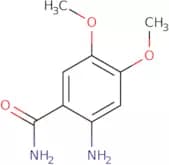
CAS:<p>2-Fluoro-3-methoxyphenylboronic acid is a boronic acid that has been shown to be orally activated. It is a potent inhibitor of the enzyme target, which is involved in the production of estradiol. 2-Fluoro-3-methoxyphenylboronic acid has been found to inhibit cellular growth and induce cancer cell death by targeting estrogen receptor β. This molecule also inhibits the growth factor, leading to inhibition of prostate cancer cells in vitro.</p>Fórmula:C7H8BFO3Pureza:Min. 95%Forma y color:White PowderPeso molecular:169.95 g/mol2-Amino-4,5-dimethoxybenzamide
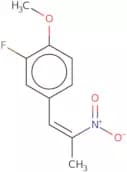
CAS:<p>2-Amino-4,5-dimethoxybenzamide is an anticancer agent that inhibits the epidermal growth factor receptor tyrosine kinase. It binds to the linker region of the epidermal growth factor receptor and prevents autophosphorylation. 2-Amino-4,5-dimethoxybenzamide has shown in vitro cytotoxic activity against testicular cancer cells and acute lymphoblastic leukemia cells. 2-Amino-4,5-dimethoxybenzamide is a synthetic compound that has been shown to have bioisosteric properties with other growth factors such as epidermal growth factor.</p>Fórmula:C9H12N2O3Pureza:Min. 95%Forma y color:PowderPeso molecular:196.2 g/mol1-(3-Fluoro-4-methoxyphenyl)-2-nitropropene
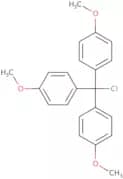
CAS:<p>1-(3-Fluoro-4-methoxyphenyl)-2-nitropropene is a chemical compound with the molecular formula CHNO. It is a high quality reagent that is useful for preparing complex compounds, scaffolds and building blocks for use in research and development. 1-(3-Fluoro-4-methoxyphenyl)-2-nitropropene is a fine chemical that can be used as a versatile building block in reactions.</p>Fórmula:C10H10FNO3Pureza:Min. 95%Peso molecular:211.19 g/mol4,4',4''-Trimethoxytrityl chloride
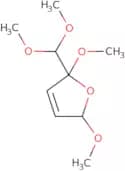
CAS:4,4',4''-Trimethoxytrityl chloride is a carbonyl compound that reacts with alkenyloxy groups to form alkaloids. It also reacts with halogen atoms to form halogenated products. 4,4',4''-Trimethoxytrityl chloride is used in the synthesis of ecteinascidins and acyl group compounds. This chemical can be used in the synthesis of alkaloids and alkenyloxy compounds. It has a reactive carbon atom that can be substituted by other organic groups.Fórmula:C22H21ClO3Pureza:Min. 95%Forma y color:Off-White PowderPeso molecular:368.85 g/mol2,5-Dihydro-2,5-dimethoxy-2-dimethoxymethylfuran
CAS:<p>2,5-Dihydro-2,5-dimethoxy-2-dimethoxymethylfuran is a chemical compound that belongs to the group of reagents. It is used as a reaction component in organic synthesis and has been shown to be a useful scaffold for the development of new compounds. 2,5-Dihydro-2,5-dimethoxy-2-dimethoxymethylfuran is also a versatile building block for complex compounds and fine chemicals.</p>Fórmula:C9H16O5Pureza:Min. 95%Peso molecular:204.22 g/mol


![Poly[2-methoxy-5-(2-ethylhexyloxy)-1,4-phenylenevinylene] - M.W. average 10,000-100,000](/_next/image/?url=https%3A%2Fstatic.cymitquimica.com%2Fproducts%2F3D%2Fthumb-webp%2FFP165854.webp&w=3840&q=75)
![[3-Methyl-4-(2,2,2-trifluoro-ethoxy)-pyridin-2-yl]-methanol](/_next/image/?url=https%3A%2Fstatic.cymitquimica.com%2Fproducts%2F3D%2Fthumb-webp%2FFM38829.webp&w=3840&q=75)