


Éteres
Se han encontrado 40904 productos de "Éteres"
9-Fluoro-11β,17-Dihydroxy-16α-Methyl-3,20-Dioxopregna-1,4-Dien-21-Yl 2-[2-(2-Ethoxyethoxy)Ethoxy]Acetate
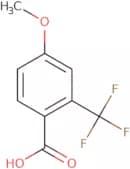
CAS:Producto controladoMethylprednisolone is a corticosteroid that has been used for the treatment of many conditions, including asthma and arthritis. It is used to reduce inflammation and suppress the immune system. Methylprednisolone can be administered orally or as an injection. It is also used in the diagnosis of tumours, especially those that are difficult to diagnose by other means. Methylprednisolone may be given together with another drug called dexamethasone, which has synergistic effects. These drugs have been shown to cause death in animals with certain types of tumours. In humans, they can cause cutaneous lesions, such as follicle cysts and tnf-α expression in skin cells. This drug also causes a microsporum infection (a type of fungus) on the skin to grow more rapidly when it is applied topically, resulting in a larger diameter section than untreated areas.Fórmula:C30H43FO9Pureza:Min. 95%Peso molecular:566.66 g/mol4-Methoxy-2-(trifluoromethyl)benzoic acid
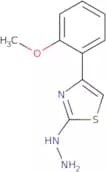
CAS:4-Methoxy-2-(trifluoromethyl)benzoic acid is a useful building block for the synthesis of various organic compounds. It is used in the preparation of pharmaceuticals, agrochemicals, and pesticides. 4-Methoxy-2-(trifluoromethyl)benzoic acid is also a reagent for many organic reactions, such as Friedel–Crafts reactions, Grignard reactions, and alkylation reactions. It is also an intermediate for the synthesis of other compounds.Fórmula:C9H7F3O3Pureza:Min. 95%Forma y color:PowderPeso molecular:220.15 g/mol4-(2-Methoxyphenyl)-2(3H)-thiazolone hydrazone
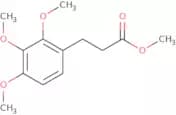
CAS:4-(2-Methoxyphenyl)-2(3H)-thiazolone hydrazone is a versatile building block for the synthesis of complex compounds. It is also a useful intermediate for the preparation of research chemicals, reagents, and speciality chemicals. 4-(2-Methoxyphenyl)-2(3H)-thiazolone hydrazone has been used in the synthesis of a number of biologically active compounds, including hydroxyarylacetamides and 2,5-dioxo-4-(2-methoxybenzoyl)thiazolidine derivatives. This compound can be used as a scaffold to produce novel compounds with biological activity.Fórmula:C10H11N3OSPureza:Min. 95%Forma y color:Off-White PowderPeso molecular:221.28 g/molMethyl 3-(2,3,4-trimethoxyphenyl)propanoate
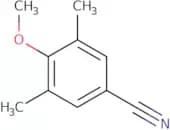
CAS:Methyl 3-(2,3,4-trimethoxyphenyl)propanoate is a reagent that is used as an intermediate in chemical synthesis. It has been shown to be useful as a scaffold for complex compounds and as a building block in the preparation of speciality chemicals. Methyl 3-(2,3,4-trimethoxyphenyl)propanoate is also a versatile building block that can be used in reactions with other molecules. It is an important intermediate in organic synthesis and can be used to prepare research chemicals such as methyl 2-((2,6-dimethoxyphenyl)amino)-5-nitropentanoate.Fórmula:C13H18O5Pureza:Min. 95%Peso molecular:254.28 g/mol3,5-Dimethyl-4-methoxybenzonitrile
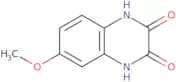
CAS:3,5-Dimethyl-4-methoxybenzonitrile is a chemical that can be used as an intermediate for the synthesis of organic compounds. It is also useful for research purposes. 3,5-Dimethyl-4-methoxybenzonitrile has a CAS number of 152775-45-6 and can be found in the chemical catalog at Acros Organics. This compound is a reactive building block that can undergo many reactions to produce other chemicals. 3,5-Dimethyl-4-methoxybenzonitrile is a complex compound with high purity and quality.Fórmula:C10H11NOPureza:Min. 95%Forma y color:PowderPeso molecular:161.2 g/mol6-Methoxy-1,4-dihydroquinoxaline-2,3-dione
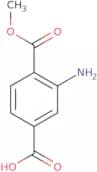
CAS:6-Methoxy-1,4-dihydroquinoxaline-2,3-dione is a nitrile that is generated by the catalytic oxidation of quinoxaline. It is a colorless to yellow solid with a melting point of about 155°C. 6-Methoxy-1,4-dihydroquinoxaline-2,3-dione has been shown to be an effective nitrile for the synthesis of diketene. 6-Methoxy-1,4-dihydroquinoxaline-2,3-dione can be converted into hydrochloric acid and ethanol through hydrolysis with hydrochloric acid or ethanol in the presence of heat. This reaction will proceed more quickly at higher temperatures. The filtration method can be used to remove any unwanted solids from the reaction mixture.Fórmula:C9H8N2O3Pureza:Min. 95%Forma y color:PowderPeso molecular:192.17 g/mol3-Amino-4-carbomethoxybenzoic acid
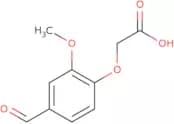
CAS:3-Amino-4-carbomethoxybenzoic acid is a compound that has not yet been labeled with a function. It has been shown to be an intermediate in the synthesis of polymers, such as polyamides and polyesters. 3-Amino-4-carbomethoxybenzoic acid is involved in biological functions related to butyric acid, which is a metabolite of the amino acids phenylalanine and tyrosine, or from the degradation of proteins. It is also used as a precursor for amines and may be an intermediate in the synthesis of glycoconjugates. The compound was found to have anticancer properties when used in combination with other drugs, such as doxorubicin and etoposide. Furthermore, it was found to have anti-inflammatory activities by inhibiting prostaglandin synthesis.Fórmula:C9H9NO4Pureza:Min. 95%Forma y color:PowderPeso molecular:195.17 g/mol(4-Formyl-2-methoxyphenoxy)acetic acid
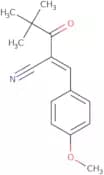
CAS:Phenoxyacetic acid is a phenoxy compound that exhibits antibacterial and anthelmintic activity. It has been shown to be highly active against helminthes, such as tapeworms and roundworms. Phenoxyacetic acid interacts with the helminth's cell membrane, which causes the release of cytochrome c from mitochondria and inhibits mitochondrial function. This leads to cell death by inhibiting protein synthesis and DNA replication. The hydrophobic nature of phenoxyacetic acid allows it to penetrate the anthelmint's cuticle and enter the worm's body cavity where it inhibits mitochondrial function. Phenoxyacetic acid has also been shown to inhibit tuberculosis in mice in vivo, but not in vitro. In addition, phenoxyacetic acid binds to nuclei of cancer cells and prevents the production of RNA and protein synthesis. This results in cell death by apoptosis or necrosis.Fórmula:C10H10O5Pureza:Min. 95%Forma y color:PowderPeso molecular:210.18 g/mol2-(2,2-dimethylpropanoyl)-3-(4-methoxyphenyl)prop-2-enenitrile
CAS:Please enquire for more information about 2-(2,2-dimethylpropanoyl)-3-(4-methoxyphenyl)prop-2-enenitrile including the price, delivery time and more detailed product information at the technical inquiry form on this pagePureza:Min. 95%2-Methoxy-4-nitrobenzoic acid
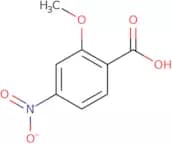
CAS:Please enquire for more information about 2-Methoxy-4-nitrobenzoic acid including the price, delivery time and more detailed product information at the technical inquiry form on this page
Fórmula:C8H7NO5Pureza:Min. 95%Peso molecular:197.14 g/mol4-Methoxystilbene
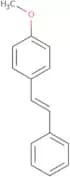
CAS:4-Methoxystilbene is a nonpolar solvent that has a high boiling point and is used to extract quaternary ammonium salts in organic chemistry. It has been shown to react with chloride ions and form a complex, which can be used as a nucleophilic reagent. The metal ion Mg2+ can also form complexes with 4-methoxystilbene, which can be used to synthesize organic compounds. This molecule also reacts with dimethylamine to produce the compound methyl 4-methoxysilane, which is an important precursor for the manufacture of pharmaceuticals like cinnamates and quinine.Fórmula:C15H14OPureza:Min. 95%Forma y color:PowderPeso molecular:210.27 g/mol5-Chloro-2-methoxyphenylhydrazine hydrochloride
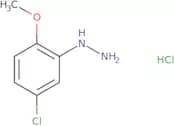
CAS:5-Chloro-2-methoxyphenylhydrazine hydrochloride is a reagent, complex compound with CAS No. 5446-16-2. It is useful as an intermediate in the manufacture of a variety of fine chemicals and research chemicals. This compound can be used as a versatile building block in the synthesis of new chemical compounds and is also a reaction component.Fórmula:C7H9ClN2O·ClHPureza:Min. 95%Forma y color:PowderPeso molecular:209.07 g/mol((2,5-dimethoxyphenyl)sulfonyl)(2-indol-3-ylethyl)amine
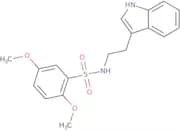
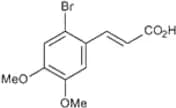
CAS:Please enquire for more information about ((2,5-dimethoxyphenyl)sulfonyl)(2-indol-3-ylethyl)amine including the price, delivery time and more detailed product information at the technical inquiry form on this pagePureza:Min. 95%2-Bromo-4,5-dimethoxycinnamic acid
CAS:2-Bromo-4,5-dimethoxycinnamic acid is a dicarboxylic acid that belongs to the group of polysaccharides. It is a furan derivative with two methoxy groups on the cinnamic acid moiety. This compound can be found in plants and animals as well as in pyrolysis products from wood and other natural materials. 2-Bromo-4,5-dimethoxycinnamic acid has been analyzed by spectroscopy and pyrolysis to determine its chemical composition. The chemical composition was determined to contain caffeine and amines, as well as esters of fatty acids and alcohols.Fórmula:C11H11BrO4Pureza:Min. 95%Forma y color:PowderPeso molecular:287.11 g/mol2-Methoxypropyl acetate
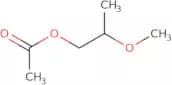
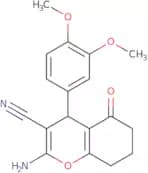
CAS:2-Methoxypropyl acetate is a cross-linking agent that is used in water treatment. It is used as an additive to deionized water and can be found in high concentrations in wastewater. 2-Methoxypropyl acetate reacts with xylene to produce light emission, which makes it suitable for use as a chemical marker. The optimum dose of 2-methoxypropyl acetate ranges from 0.025% to 0.2%. 2-Methoxypropyl acetate has been shown to be toxic when injected into rats at doses of 100 mg/kg body weight, but not at doses of 25 mg/kg body weight or less. This compound was also shown to cause protrusion and necrosis of the nasal septum in rats after administration at doses of 500 mg/kg body weight.Fórmula:C6H12O3Pureza:Min. 95%Forma y color:Colourless LiquidPeso molecular:132.16 g/mol2-amino-4-(3,4-dimethoxyphenyl)-5-oxo-4,6,7,8-tetrahydro2H-chromene-3-carbonitrile
CAS:Please enquire for more information about 2-amino-4-(3,4-dimethoxyphenyl)-5-oxo-4,6,7,8-tetrahydro2H-chromene-3-carbonitrile including the price, delivery time and more detailed product information at the technical inquiry form on this page
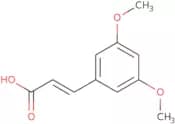
Fórmula:C18H18N2O4Pureza:Min. 95%Forma y color:PowderPeso molecular:326.35 g/mol3,5-Dimethoxycinnamic acid
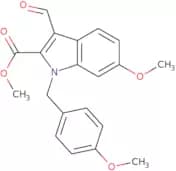
CAS:3,5-Dimethoxycinnamic acid is a compound that belongs to the class of cinnamic acid derivatives. It is a synthetic substance obtained by demethylation of 3,5-dimethoxybenzoic acid. This substance has been shown to have an antifungal activity in vitro against filamentous fungi and many other microorganisms. The antimicrobial effect can be explained by the presence of functional groups such as hydroxyl and methoxyl on the aromatic ring. Hydroxide solution can be used as an analytical reagent for determining the formation rate of this compound.Fórmula:C11H12O4Pureza:Min. 95%Forma y color:PowderPeso molecular:208.21 g/molMethyl 3-formyl-6-methoxy-1-(4-methoxybenzyl)-1H-indole-2-carboxylate
CAS:Producto controladoPlease enquire for more information about Methyl 3-formyl-6-methoxy-1-(4-methoxybenzyl)-1H-indole-2-carboxylate including the price, delivery time and more detailed product information at the technical inquiry form on this pageFórmula:C20H19NO5Pureza:Min. 95%Peso molecular:353.37 g/mol2-[4-(4-Chloro-a-phenylbenzyl)-1-piperazinyl]-ethoxyacetic acid hydrochloride
CAS:2-[4-(4-Chloro-a-phenylbenzyl)-1-piperazinyl]-ethoxyacetic acid hydrochloride is a chemical compound that has been used to investigate the possible neuroprotective effects of cetirizine, an antihistamine. This drug was developed as a prodrug of cetirizine, which is converted in vivo to its active form. The main mechanism of action for this drug is inhibition of histamine release from mast cells and basophils by blocking H1 receptors. 2-[4-(4-Chloro-a-phenylbenzyl)-1-piperazinyl]-ethoxyacetic acid hydrochloride has also been shown to have beneficial effects on allergic symptoms and bowel disease in experimental models and clinical properties.Fórmula:C21H25ClN2O3·HClPureza:Min. 95%Forma y color:PowderPeso molecular:425.35 g/mol6-Chloro-9-[[4-(diethylamino)-1-methylbutyl]amino]-2-methoxyacridine dihydrochloride
CAS:6-Chloro-9-[[4-(diethylamino)-1-methylbutyl]amino]-2-methoxyacridine dihydrochloride (CMA) is a fluorescent dye that is used in the diagnosis of platelet disorders. It binds to the beta subunit of glycoprotein IIb/IIIa receptors on platelets, which are involved in the aggregation of platelets. CMA has shown to be effective against antibiotic resistant strains and may be useful for patients with infectious diseases. This drug has been shown to have cytosolic calcium ion (Ca2+) antagonist properties and an inhibitory effect on cell nuclei, as well as biological properties similar to mepacrine and atabrine.
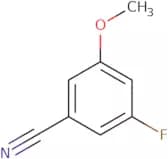
Fórmula:C23H30ClN3O•(HCl)2Pureza:Min. 98 Area-%Forma y color:Slightly Yellow PowderPeso molecular:472.88 g/mol3-Fluoro-5-methoxybenzonitrile
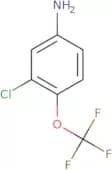
CAS:3-Fluoro-5-methoxybenzonitrile is a useful chemical intermediate that can be used in organic synthesis. It is a versatile building block with a high quality and it is easy to use in the synthesis of complex compounds. 3-Fluoro-5-methoxybenzonitrile has been shown to react as a nucleophile, and it has been used as a reagent for the production of other compounds. This compound also has potential applications in research, such as being an intermediate for the production of pharmaceuticals and agrochemicals. 3-Fluoro-5-methoxybenzonitrile is not classified as hazardous and does not pose any significant risk to human health or the environment.Fórmula:C8H6FNOPureza:Min. 95%Forma y color:PowderPeso molecular:151.14 g/mol3-Chloro-4-(trifluoromethoxy)aniline
CAS:Please enquire for more information about 3-Chloro-4-(trifluoromethoxy)aniline including the price, delivery time and more detailed product information at the technical inquiry form on this pageFórmula:C7H5ClF3NOPureza:Min. 95%Forma y color:PowderPeso molecular:211.57 g/mol2-[(2-Ethoxy phenoxy)methyl]morpholine HCl
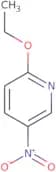
CAS:2-[(2-Ethoxy phenoxy)methyl]morpholine HCl is a sophisticated chemical compound utilized extensively in scientific research. As a synthetic organic compound, it is derived through a meticulous process involving the reaction of morpholine with ethoxy phenoxy derivatives, followed by hydrochloride salt formation. This synthesis ensures high purity and accurate functionality, making it suitable for precise laboratory studies.Fórmula:C13H20ClNO3Pureza:Min. 95%Forma y color:PowderPeso molecular:273.76 g/mol2-Ethoxy-5-nitropyridine
CAS:2-Ethoxy-5-nitropyridine is a potassium salt of 2-ethoxy-5-nitropyridine. It has been used as a reagent in the synthesis of sulfonates, pyridines, and phenols. The nitrogen atom in this molecule can be oxidized to nitro group. This compound also reacts with anilines to form 2-chloro-5-nitropyridine and 2-hydroxy-5-nitropyridine. In addition, it can react with halogen to form substituted anilines or chloropyridines. 2-Ethoxy-5-nitropyridine is a nucleophile that can be used for the preparation of nucleophiles for biomolecular chemistry studies.Fórmula:C7H8N2O3Pureza:Min. 95%Forma y color:PowderPeso molecular:168.15 g/mol2-(2-Methoxyphenethyl) alcohol
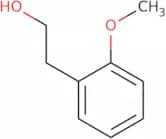
CAS:2-(2-Methoxyphenethyl) alcohol (2MPE) is a ligand that binds to the phenylpropanoid glycosides, which are responsible for the biosynthesis of plant pigments. It has been shown to inhibit tyrosinase and tyrosinase activity in vitro. 2MPE is used in radiopharmaceuticals as a radioactive label. It has also been shown to inhibit melanogenesis and the synthesis of volatile compounds in corncob at high temperatures. 2MPE is found in rhodiola and together with 2-hydroxyphenylacetic acid, it inhibits bacterial growth by inhibiting protein synthesis.Fórmula:C9H12O2Pureza:Min. 98%Forma y color:Clear LiquidPeso molecular:152.19 g/mol2-Ethoxybenzaldehyde
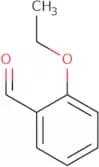
CAS:2-Ethoxybenzaldehyde is an organic compound that has been found to be a potential anticancer agent. It inhibits the growth of tumor cells in vitro, by inhibiting the PI3K/Akt signaling pathway. 2-Ethoxybenzaldehyde also has antibacterial activity against Gram-positive bacteria, such as P. aeruginosa, by binding to the nitrogen atoms on the cell wall and disrupting their function. The molecule has a functional group that reacts with metal cations, which helps to explain its chemical nature and its reaction mechanism. The molecule is soluble in water but not in organic solvents. 2-Ethoxybenzaldehyde crystallizes as a white solid with a monoclinic crystal system and can react with salicylaldehyde to produce benzalmalonic acid.Fórmula:C9H10O2Pureza:Min. 97 Area-%Forma y color:Clear LiquidPeso molecular:150.17 g/mol2-Methoxyphenylhydrazine hydrochloride
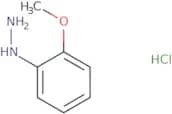
CAS:2-Methoxyphenylhydrazine hydrochloride is a chemical that is used as a research scaffold, building block, or intermediate. It can be used in the synthesis of complex compounds with high quality and purity. This product is soluble in water and alcohols. 2-Methoxyphenylhydrazine hydrochloride has CAS No. 6971-45-5 and a molecular weight of 183.2 g/mol.Fórmula:C7H10N2O·HClPureza:Min. 95%Forma y color:PowderPeso molecular:174.63 g/mol4-(4-TETRAHYDROPYRANYL)PHENYLBORONIC ACID PINACOL ESTER
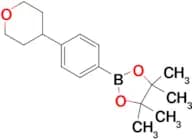
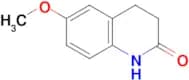
CAS:Fórmula:C17H25BO3Pureza:95%Forma y color:SolidPeso molecular:288.196-Methoxy-2-oxo-1,2,3,4-tetrahydroquiniline
CAS:Fórmula:C10H11NO2Pureza:98%Forma y color:SolidPeso molecular:177.203(2S,4S)-Boc-4-Phenoxy-pyrrolidine-2-carboxylic acid
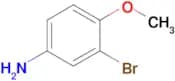
CAS:Fórmula:C16H21NO5Pureza:97%Forma y color:Solid, White powderPeso molecular:307.3463-Bromo-4-methoxyaniline
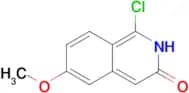
CAS:Fórmula:C7H8BrNOPureza:98%Forma y color:Solid, Low Melting SolidPeso molecular:202.0511-Chloro-6-methoxyisoquinolin-3(2H)-one
CAS:Fórmula:C10H8ClNO2Pureza:97%Forma y color:Solid, No data available.Peso molecular:209.63Ref: 10-F663986
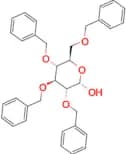
1g426,00€5g1.101,00€10g1.629,00€2.5g796,00€50mg94,00€100mg127,00€250mg177,00€500mg321,00€(2S,3R,4S,5R,6R)-3,4,5-Tris(benzyloxy)-6-((benzyloxy)methyl)tetrahydro-2H-pyran-2-ol
CAS:Pureza:98%Forma y color:SolidPeso molecular:540.65600594,6-BIS((S)-4-(TERT-BUTYL)-4,5-DIHYDROOXAZOL-2-YL)DIBENZO[B,D]FURAN
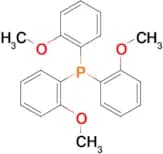
CAS:Pureza:97%Peso molecular:418.5369873Tris(2-methoxyphenyl)phosphine
CAS:Fórmula:C21H21O3PPureza:96%Forma y color:SolidPeso molecular:352.372-(3,5-Dichloro-4-methoxyphenyl)4,4,5,5-tetramethyl-1,3,2-dioxaborolane
CAS:Pureza:95%Peso molecular:302.98999024-Bromo-3-(trifluoromethoxy)phenol
CAS:Fórmula:C7H4BrF3O2Pureza:98%Forma y color:SolidPeso molecular:257.0062-((6-Amino-1-methyl-2-oxo-1,2-dihydroquinolin-3-yl)oxy)-N-methylacetamide
CAS:Pureza:97%Peso molecular:261.2810059
![9-Fluoro-11β,17-Dihydroxy-16α-Methyl-3,20-Dioxopregna-1,4-Dien-21-Yl 2-[2-(2-Ethoxyethoxy)Ethoxy]A…](/_next/image/?url=https%3A%2Fstatic.cymitquimica.com%2Fproducts%2F3D%2Fthumb-webp%2FFF103016.webp&w=3840&q=75)

![2-[4-(4-Chloro-a-phenylbenzyl)-1-piperazinyl]-ethoxyacetic acid hydrochloride](/_next/image/?url=https%3A%2Fstatic.cymitquimica.com%2Fproducts%2F3D%2Fthumb-webp%2FFC33467.webp&w=3840&q=75)
![6-Chloro-9-[[4-(diethylamino)-1-methylbutyl]amino]-2-methoxyacridine dihydrochloride](/_next/image/?url=https%3A%2Fstatic.cymitquimica.com%2Fproducts%2F3D%2Fthumb-webp%2FFC76313.webp&w=3840&q=75)
![2-[(2-Ethoxy phenoxy)methyl]morpholine HCl](/_next/image/?url=https%3A%2Fstatic.cymitquimica.com%2Fproducts%2F3D%2Fthumb-webp%2FFE152271.webp&w=3840&q=75)




![4,6-BIS((S)-4-(TERT-BUTYL)-4,5-DIHYDROOXAZOL-2-YL)DIBENZO[B,D]FURAN](/_next/image/?url=https%3A%2Fstatic.cymitquimica.com%2Fproducts%2F10%2Fthumb-webp%2FF847615.webp&w=3840&q=75)

![[(4R)-4,5-Dihydro-4-(1-methylethyl)-2-oxazolyl]-ferrocene](/_next/image/?url=https%3A%2Fstatic.cymitquimica.com%2Fproducts%2F10%2Fthumb-webp%2FF986069.webp&w=3840&q=75)

![7-Methoxyimidazo[1,2-a]pyridine-3-carboxylic acid](/_next/image/?url=https%3A%2Fstatic.cymitquimica.com%2Fproducts%2F10%2Fthumb-webp%2FF610679.webp&w=3840&q=75)
