Nitro
Los compuestos nitro son moléculas orgánicas que contienen uno o más grupos nitro (NO2). Estos compuestos se utilizan ampliamente en la síntesis de explosivos, productos farmacéuticos y colorantes. En CymitQuimica, ofrecemos una amplia gama de compuestos nitro de alta calidad para apoyar sus aplicaciones de investigación e industriales, asegurando resultados seguros y efectivos. Nuestra selección incluye una variedad de compuestos nitro adecuados para diferentes síntesis químicas y aplicaciones.
Se han encontrado 2516 productos de "Nitro"
Ordenar por
Pureza (%)
0
100
|
0
|
50
|
90
|
95
|
100
4-Fluoro-3-nitrophenylacetic acid
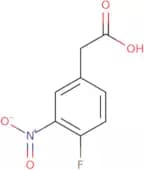
CAS:4-Fluoro-3-nitrophenylacetic acid is a chiral monomer that can be used to synthesize diphenyl ethers. The reaction requires a carbamic acid as the acid catalyst and a nucleophilic reagent, such as an amine. 4-Fluoro-3-nitrophenylacetic acid has been shown to have anti-cancer properties in vitro and in vivo. 4-Fluoro-3-nitrophenylacetic acid may also inhibit the synthesis of dihydroisoquinolines, which are important for the function of DNA polymerase. There are two strategies for synthesizing this compound: one is based on the condensation of two molecules of phenylacetaldehyde in the presence of an acid catalyst; the other employs a Lewis acid catalyst with a pyridine nucleophile.Fórmula:C8H6FNO4Pureza:Min. 95%Forma y color:SolidPeso molecular:199.14 g/mol1-(4-Aminophenyl)-2-nitroethane
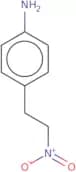
CAS:1-(4-Aminophenyl)-2-nitroethane is a high quality, reagent, complex compound that can be used as a useful intermediate in the production of fine chemicals. It is also used as a useful scaffold for the synthesis of compounds with interesting biological activities. This chemical can be used as a building block for reactions to produce versatile building blocks and reaction components for research chemicals.Fórmula:C8H10N2O2Pureza:Min. 95%Forma y color:PowderPeso molecular:166.18 g/mol5-Chloro-2-nitrocinnamic acid
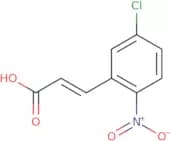
CAS:<p>5-Chloro-2-nitrocinnamic acid is a fine chemical with a CAS number of 20357-28-2. It is a versatile building block that can be used as a reaction component or intermediate in the synthesis of more complex compounds. The high purity and quality of 5-Chloro-2-nitrocinnamic acid makes it an ideal reagent for research purposes, and it can be used as a building block for the synthesis of useful scaffolds.</p>Fórmula:C9H6ClNO4Pureza:Min. 95%Peso molecular:227.6 g/mol1,4-Dinitrosopiperazine
CAS:<p>1,4-Dinitrosopiperazine is a chemical compound that has been used as an anthelmintic drug and for the treatment of cancer. It is a structural analog of piperazine, but with two nitro groups on each amine group. 1,4-Dinitrosopiperazine can be synthesized from 2,6-diamino-3-nitropyridine and formaldehyde in the presence of sodium nitrite and potassium hydroxide. The reaction mechanism is similar to that of piperazine but with a different product. 1,4-Dinitrosopiperazine can be found in urine samples and reacts with sulfhydryl groups at cysteine residues to form stable adducts. In vitro studies have shown that these adducts inhibit acetylcholinesterase activity and may be responsible for its anticancer properties. <br>1,4-Dinitrosopiperazine inhibits the growth of squamous carcin</p>Fórmula:C4H8N4O2Pureza:Min. 95%Forma y color:PowderPeso molecular:144.13 g/mol4,5-Dimethoxy-2-nitroaniline
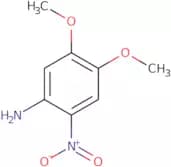
CAS:Producto controlado<p>4,5-Dimethoxy-2-nitroaniline (DMNA) is a nucleophilic compound that reacts with glyoxylate to form formic acid. DMNA has been shown to be an effective anti-malarial agent, as it inhibits the growth of leishmania and related protozoans. The mechanism of action is not fully understood but may be due to its ability to produce reactive oxygen species. DMNA also inhibits bacterial growth in vitro by interfering with DNA synthesis and protein synthesis. DMNA has been shown to have a cytotoxic effect on mammalian cells, which may be due to the production of free radicals from its reaction with formic acid.</p>Fórmula:C8H10N2O4Forma y color:PowderPeso molecular:198.18 g/mol1-(3-(Trifluoromethoxy)phenyl)-2-nitroethene
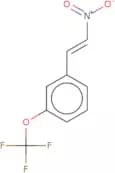
CAS:<p>1-(3-Trifluoromethoxy)phenyl)-2-nitroethene is a fluorinated aromatic compound that can be used as a building block for synthesis of pharmaceuticals, research chemicals, and other specialty chemicals. It is an intermediate that can be used in the production of other compounds. This compound may be used in pharmaceuticals to treat bacterial infections and inflammatory diseases. 1-(3-Trifluoromethoxy)phenyl)-2-nitroethene may also be utilized as a reaction component for synthesizing other organic compounds. It is soluble in solvents such as benzene, ether, chloroform, and acetone.</p>Fórmula:C9H6F3NO3Pureza:Min. 95%Peso molecular:233.14 g/mol2,6-Dinitro-1,4-phenylenediamine
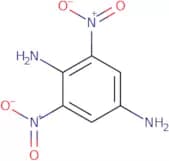
CAS:<p>2,6-Dinitro-1,4-phenylenediamine is a versatile building block that can be used in the synthesis of complex compounds. It is a high quality chemical with excellent stability and purity. This chemical is also useful as an intermediate for the synthesis of other chemicals, and as a reagent for research purposes. 2,6-Dinitro-1,4-phenylenediamine is also useful in organic chemistry as a scaffold for synthesizing important organic molecules.</p>Fórmula:C6H6N4O4Pureza:Min. 95%Peso molecular:198.14 g/molN-(4-Nitrophenyl)maleimide
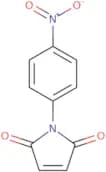
CAS:<p>N-(4-Nitrophenyl)maleimide is a nitro compound that has been shown to be an inhibitor of the enzyme phthalimidase, which catalyzes the hydrolysis of phthalimides. It inhibits the growth of marine sponges and other microorganisms by reacting with primary amino groups in proteins. N-(4-Nitrophenyl)maleimide has also been shown to inhibit the biosynthesis of DNA and RNA.</p>Fórmula:C10H6N2O4Pureza:Min. 95%Forma y color:White PowderPeso molecular:218.17 g/molNitroxoline
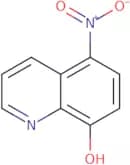
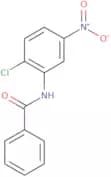
CAS:<p>Nitroxoline is a compound that inhibits the formation of iron-containing proteins and has been shown to be effective in reducing tumor growth. It has also been shown to reduce the development of resistant mutants in bacteria, as well as inhibiting the production of epithelial mesenchymal markers. Nitroxoline inhibits the polymerase chain reaction (PCR) by blocking DNA synthesis and is being studied for its potential to treat cancer. Nitroxoline was found to inhibit the proliferation of carcinoma cell lines and showed anticancer activity when combined with temozolomide treatment. Nitroxoline is not active against Gram-positive bacteria such as Staphylococcus aureus or Enterococcus faecalis, but it does have antimicrobial effects against Gram-negative bacteria such as Escherichia coli, Pseudomonas aeruginosa, Haemophilus influenzae, and Klebsiella pneumoniae. Nitroxoline can be used to clean wounds infected with</p>Fórmula:C9H6N2O3Pureza:Min. 95%Forma y color:PowderPeso molecular:190.16 g/molN-(2-Chloro-5-Nitrophenyl)Benzamide
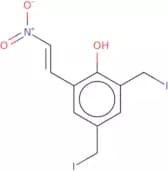
CAS:<p>Please enquire for more information about N-(2-Chloro-5-Nitrophenyl)Benzamide including the price, delivery time and more detailed product information at the technical inquiry form on this page</p>Fórmula:C13H9ClN2O3Pureza:Min. 95%Forma y color:PowderPeso molecular:276.67 g/mol2-Hydroxy-3,5-diiodomethylnitrostyrene
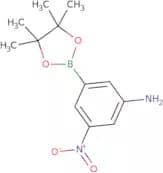
CAS:<p>2-Hydroxy-3,5-Diiodomethylnitrostyrene is a high quality chemical that is useful as a reagent and an intermediate. It has been shown to be a useful scaffold in the synthesis of complex compounds and is also used as a building block in the synthesis of speciality chemicals. The compound can be used in reactions as both a reactant and a catalyst, which makes it versatile for research purposes. This chemical reacts with ketones to form nitroalkenes and has been shown to have good activity with aromatic amines, hydrocarbons, alcohols, carboxylic acids, esters, ethers and nitriles.</p>Fórmula:C10H9I2NO3Pureza:Min. 95%Peso molecular:444.99 g/mol3-Amino-5-nitrophenylboronic acid pinacol ester
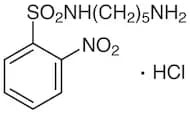
CAS:<p>3-Amino-5-nitrophenylboronic acid pinacol ester is a versatile building block that can be used in the synthesis of complex compounds. This compound has been shown to have useful properties in research chemicals and as reagents or speciality chemicals. Useful intermediates are usually synthesized from 3-Amino-5-nitrophenylboronic acid pinacol ester, which is also a useful scaffold for the synthesis of other compounds.</p>Fórmula:C12H17BN2O4Pureza:Min. 95%Forma y color:Yellow PowderPeso molecular:264.09 g/molN-(5-Aminopentyl)-2-nitrobenzenesulfonamide Hydrochloride
CAS:Fórmula:C11H17N3O4S·HClPureza:>98.0%(T)Forma y color:Light orange to Yellow to Green powder to crystalPeso molecular:323.794-Nitro-3-(trifluoromethyl)aniline (FLU-1)
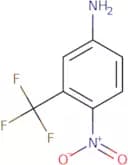
CAS:<p>4-Nitro-3-(trifluoromethyl)aniline (FLU-1) is a molecule that has been shown to be carcinogenic in both animals and humans. This compound has an activation energy of 4.2 kcal/mol, which is a measure of the amount of energy required for a reaction to occur. FLU-1 is stable in n-dimethylformamide and reacts with acetic acid to form an ester, which can be hydrolyzed to form 4-nitro-3-(trifluoromethyl)acetic acid. FLU-1 also reacts with ammonia and boron nitride to form 4-(aminocarbonyl)-3-(trifluoromethyl)aniline. The physical properties of this compound are dependent on the solvents used in the reaction. For example, its nmr spectra are different in chloroform than they are in acetone or</p>Fórmula:C7H5F3N2O2Pureza:Min. 98 Area-%Forma y color:PowderPeso molecular:206.12 g/mol4-Nitrophenyl N-Benzylcarbamate
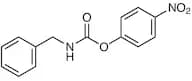
CAS:Fórmula:C14H12N2O4Pureza:>98.0%(N)Forma y color:White to Light yellow to Green powder to crystalPeso molecular:272.264-Nitroaniline
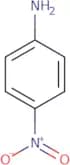
CAS:<p>4-Nitroaniline is a genotoxic chemical that has shown an increase in the rate of DNA synthesis. It has been shown to have synergistic effects with calcium pantothenate and caproic acid, which are materials that can be used for wastewater treatment. The analytical method for nitrite ion is a chromatographic analysis. Nitrate ion is determined by the use of a solid phase microextraction technique and electrochemical impedance spectroscopy. 4-Nitroaniline also has an acute toxicity and can be used in analytical methods such as gas chromatography.</p>Fórmula:C6H6N2O2Pureza:Min. 95%Forma y color:Yellow Clear LiquidPeso molecular:138.12 g/mol1-(3-Methylphenyl)-2-nitropropene
CAS:<p>1-(3-methylphenyl)-2-nitropropene is a versatile building block that is used in the synthesis of complex compounds. It is also an intermediate for the synthesis of other chemicals, such as reaction components and useful scaffolds. It has been shown to be high quality and useful as reagent and speciality chemical.</p>Fórmula:C10H11NO2Pureza:Min. 95%Peso molecular:177.2 g/mol5-Methoxy-2-nitrophenylamine
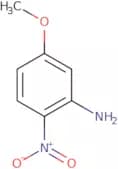
CAS:<p>5-Methoxy-2-nitrophenylamine (5MN) is a synthetic compound. It has been shown to produce an inhibitory effect on Alzheimer's disease and Leishmania infantum by inhibiting the formation of amyloid beta (Aβ) and leishmanicidal alpha-ketoglutarate, respectively. 5MN has also been observed to stabilize supramolecular structures in magnetic resonance spectroscopy experiments. This chemical is synthesized from 4-amino-3-nitrophenol and methylamine by reacting them in the presence of sodium hydroxide and sulfuric acid under refluxing conditions. The reaction products are analyzed using FTIR spectroscopy, as shown below:</p>Fórmula:C7H8N2O3Pureza:Min. 95%Forma y color:PowderPeso molecular:168.15 g/mol4-Nitro-D-phenylalanine hydrate
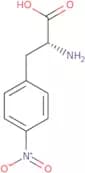
CAS:<p>4-Nitro-D-phenylalanine hydrate is a cytosolic enzyme that catalyzes the conversion of phenylpropionic acid to its conjugate base, 4-nitrophenol. This reaction is important in the synthesis of antimicrobial peptides and extractants. The enzyme also has hemolytic activity and can be used as an extractant for pancreatic juice. 4-Nitro-D-phenylalanine hydrate is a catalyst for acylation reactions, which are involved in the production of various pharmaceuticals. 4-Nitro-D-phenylalanine hydrate binds to receptors on the surface of bacterial cells, making it an effective antibacterial agent.</p>Fórmula:C9H10N2O4·H2OPureza:Min. 95%Forma y color:PowderPeso molecular:228.2 g/mol8-Hydroxy-5-nitroquinoline-2-carbaldehyde
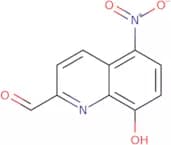
CAS:8-Hydroxy-5-nitroquinoline-2-carbaldehyde is a high quality, versatile building block that can be used as a reaction intermediate or to synthesize heterocycles. It is also a useful scaffold for the synthesis of complex compounds. The CAS number of this chemical is 884497-63-6.Fórmula:C10H6N2O4Pureza:Min. 95%Forma y color:PowderPeso molecular:218.17 g/mol