Nitro
Los compuestos nitro son moléculas orgánicas que contienen uno o más grupos nitro (NO2). Estos compuestos se utilizan ampliamente en la síntesis de explosivos, productos farmacéuticos y colorantes. En CymitQuimica, ofrecemos una amplia gama de compuestos nitro de alta calidad para apoyar sus aplicaciones de investigación e industriales, asegurando resultados seguros y efectivos. Nuestra selección incluye una variedad de compuestos nitro adecuados para diferentes síntesis químicas y aplicaciones.
Se han encontrado 2516 productos de "Nitro"
Ordenar por
Pureza (%)
0
100
|
0
|
50
|
90
|
95
|
100
6-Nitrobenzothiazole
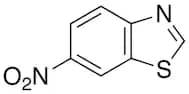
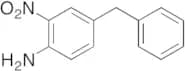
CAS:Producto controlado<p>Applications A related compound of 1,2,3-benzothiadiazoles as synergists against the housefly (M. domestica).<br>References Gil, D.L., et al.: Pesticide Biochem. Physiol., 6, 338 (1976),<br></p>Fórmula:C7H4N2O2SForma y color:NeatPeso molecular:180.184-Benzyl-2-nitroaniline
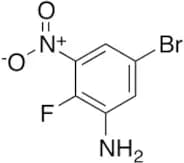
CAS:Producto controladoFórmula:C13H12N2O2Forma y color:NeatPeso molecular:228.2475-Bromo-2-fluoro-3-nitroaniline
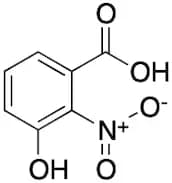
CAS:Producto controladoFórmula:C6H4BrFN2O2Forma y color:NeatPeso molecular:235.0113-Hydroxy-2-nitrobenzoic Acid
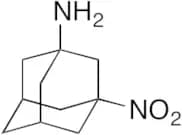
CAS:Producto controlado<p>Applications 3-Hydroxy-2-nitrobenzoic Acid (cas# 602-00-6) is a compound useful in organic synthesis.<br></p>Fórmula:C7H5NO5Forma y color:NeatPeso molecular:183.121-Amino-3-nitroadamantane
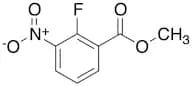
CAS:Producto controlado<p>Impurity Vildagliptin Impurity<br>Applications 1-Amino-3-nitroadamantane has potential application in co-catalyst for transition metal reactions and maybe a useful intermediate for the synthesis of Vildagliptin (V305000), an antidiabetic drug that inhibits dipeptidyl peptidase 4 (DPP-4). Vildagliptin exhibits antioxidant properties and may be an apoptotic compound against pancreatic cancer cells.<br>References Amritha, C., et al.: JCDR 9, FC14 (2015); Ahren, B., et al.: J. Clin. Endocrinol. Metab., 89, 2078 (2004), Ahren, B., et al.: Diabetes Care, 27, 2874 (2004), Barlocco, D., et al.: Curr. Opin. Invest. Drugs, 5, 1094 (2004)<br></p>Fórmula:C10H16N2O2Forma y color:NeatPeso molecular:196.25Methyl 2-fluoro-3-nitrobenzoate
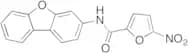
CAS:Producto controlado<p>Applications Methyl 2-fluoro-3-nitrobenzoate<br></p>Fórmula:C8H6FNO4Forma y color:NeatPeso molecular:199.14N-(3-Dibenzofuranyl)-5-nitro-2-furancarboxamide
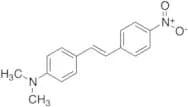
CAS:<p>Applications N-(3-Dibenzofuranyl)-5-nitro-2-furancarboxamide is synthesized from Dibenzo[b,d]furan-3-amine (D418205), which is a building block used as a reactant in the preparation of dibenzofuryl(phosphonomethyl)alanines as endothelin converting enzyme inhibitors.<br>References De Lombaert, S., et al.: J. Med. Chem., 43, 488 (2000);<br></p>Fórmula:C17H10N2O5Forma y color:NeatPeso molecular:322.274-Dimethylamino-4'-nitrostilbene
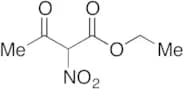
CAS:Producto controlado<p>Applications 4-Dimethylamino-4'-nitrostilbene (cas# 4584-57-0) is a useful research chemical.<br> Not a dangerous good if item is equal to or less than 1g/ml and there is less than 100g/ml in the package<br></p>Fórmula:C16H16N2O2Forma y color:NeatPeso molecular:268.32Ethyl Nitroacetoacetate
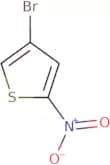
CAS:Producto controladoFórmula:C6H9NO5Forma y color:NeatPeso molecular:175.1394-Bromo-2-nitrothiophene
CAS:Please enquire for more information about 4-Bromo-2-nitrothiophene including the price, delivery time and more detailed product information at the technical inquiry form on this pageFórmula:C4H2BrNO2SPureza:Min. 95%Peso molecular:208.03 g/mol2-Iodo-4-nitroanisole
CAS:<p>2-Iodo-4-nitroanisole is a reagent that catalyzes the labeling of proteins with iodine. The reaction is anomalously slow in the presence of bovine serum albumin and results in an increase in the amount of labeled protein. This reagent can also be used to study the kinetics of reactions involving nitrous oxide. The rate of reaction is dependent on the concentration of hydrogen ions, which is why this reagent is often used in assays that have acidic conditions. 2-Iodo-4-nitroanisole can also be used to label lysine residues on proteins by reacting with nitrous oxide and dinitrogen tetroxide, which react at high rates when they are mixed together.</p>Fórmula:C7H6INO3Pureza:Min. 95%Peso molecular:279.03 g/mol6-Amino-1-methyl-5-nitrosouracil
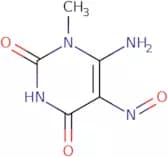
CAS:<p>6-Amino-1-methyl-5-nitrosouracil is a neutral form of the molecule that has both protonated and unprotonated forms. It is a bidentate ligand that can bind to a metal ion. The nitrogen atom in the molecule is an important part of its structure, as it contains two nitro groups and one amino group. 6-Amino-1-methyl-5-nitrosouracil has been used in techniques such as spectroscopies and dinitroso analysis. The neutral form of the molecule can be converted into its ionic form by adding either chlorine or nitrate ions to it, which causes the nitrogen atoms to be more electronegative. This conversion changes the nature of the compound, making it more acidic. Dehydration also occurs when water molecules are removed from 6-amino 1 methyl 5 nitrosourea, which causes a change in shape and shifts its properties to</p>Fórmula:C5H6N4O3Pureza:Min. 95%Peso molecular:170.13 g/mol1-(4-Nitro-3-piperidin-1-ylphenyl)piperazine
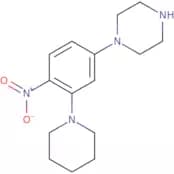
CAS:1-(4-Nitro-3-piperidin-1-ylphenyl)piperazine is a synthetic molecule that is used as a polymerization initiator. It can be used to prepare polymers with functional groups that contain nitro and piperidine groups. 1-(4-Nitro-3-piperidin-1-ylphenyl)piperazine reacts with monomers such as thiourea, which are then polymerized by the addition of other reagents such as solvents or catalysts. The most common use of 1-(4-Nitro-3-piperidin-1-ylphenyl)piperazine is in the synthesis of nalidixic acid, an antibiotic drug that inhibits bacterial growth by preventing DNA replication. This compound has been shown to be nonhazardous to humans and animals in bioassays, although it may cause toxic effects on the skin, eyes, and respiratory system when exposedFórmula:C15H22N4O2Pureza:Min. 95%Peso molecular:290.36 g/mol4-Chloro-2-nitroaniline
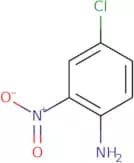
CAS:<p>4-Chloro-2-nitroaniline (4CNA) is a chemical that is used for wastewater treatment. 4CNA reacts with phosphorus pentachloride or phosphorus pentoxide to form phosphoric acid, which can be used as a pH buffer in water treatment applications. It is also used as an antidepressant treatment in pharmaceutical dosage and has been shown to have signal properties. 4CNA is also used in the production of monoclonal antibodies, n-dimethyl formamide and intracranial haemorrhage treatments. It can be produced by reacting hydrochloric acid with membrane systems at low energy.</p>Fórmula:C6H5ClN2O2Pureza:Min. 95%Peso molecular:172.57 g/mol(NZ)-4-chloro-N-[1-[2-(4-nitrophenyl)ethyl]piperidin-2-ylidene]benzenesulfonamide
CAS:Producto controlado<p>Please enquire for more information about (NZ)-4-chloro-N-[1-[2-(4-nitrophenyl)ethyl]piperidin-2-ylidene]benzenesulfonamide including the price, delivery time and more detailed product information at the technical inquiry form on this page</p>Fórmula:C19H20ClN3O4SPureza:Min. 95%Peso molecular:421.9 g/molN-Methyl-4-nitroaniline
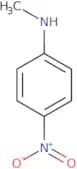
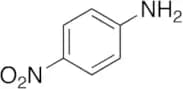
CAS:Producto controlado<p>Intermediate in the synthesis of nintedanib</p>Fórmula:C7H8N2O2Pureza:Min. 95%Peso molecular:152.15 g/mol3-(Methylnitrosamino)propionitrile
CAS:3-(Methylnitrosamino)propionitrile (NNK) is a potent, but toxic, carcinogen that has been shown to be one of the major causes of lung cancer in animals. It is metabolized to 3-aminobenzamide and N-nitrosodimethylamine (NDMA) by cytochrome P450 enzymes. These metabolites are then further converted into reactive species that bind covalently with DNA, leading to mutations and ultimately cancer. The activation of NNK can be prevented by inhibiting the enzyme hydrolysis or by blocking the synthesis of the reactive metabolites.Fórmula:C4H7N3OPureza:Area-% Min. 95 Area-%Peso molecular:113.12 g/mol4-(Methylnitrosoamino)-1-(3-pyridinyl)-1-butanone
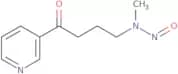
CAS:<p>4-(Methylnitrosoamino)-1-(3-pyridinyl)-1-butanone (NNK) is a carcinogenic chemical that has been identified in tobacco smoke. It induces squamous cell carcinomas in the respiratory tract of rodents and induces lung cancer in the offspring of pregnant rats exposed to NNK. This compound binds to double-stranded DNA, with high affinity for the minor groove, and inhibits DNA synthesis by binding to enzymes such as polymerase chain. In addition, it has been shown to cause transformation of epithelial cells into mesenchymal cells in vitro. 4-(Methylnitrosoamino)-1-(3-pyridinyl)-1-butanone binds to α7 nicotinic acetylcholine receptors and increases the response element activity.</p>Fórmula:C10H13N3O2Pureza:Min. 95%Forma y color:PowderPeso molecular:207.23 g/mol5-Nitropyridin-3-ol
CAS:Please enquire for more information about 5-Nitropyridin-3-ol including the price, delivery time and more detailed product information at the technical inquiry form on this pageFórmula:C5H4N2O3Pureza:Min. 95%Peso molecular:140.1 g/mol


![(NZ)-4-chloro-N-[1-[2-(4-nitrophenyl)ethyl]piperidin-2-ylidene]benzenesulfonamide](/_next/image/?url=https%3A%2Fstatic.cymitquimica.com%2Fproducts%2F3D%2Fthumb-webp%2FFN154024.webp&w=3840&q=75)