Nitro
Los compuestos nitro son moléculas orgánicas que contienen uno o más grupos nitro (NO2). Estos compuestos se utilizan ampliamente en la síntesis de explosivos, productos farmacéuticos y colorantes. En CymitQuimica, ofrecemos una amplia gama de compuestos nitro de alta calidad para apoyar sus aplicaciones de investigación e industriales, asegurando resultados seguros y efectivos. Nuestra selección incluye una variedad de compuestos nitro adecuados para diferentes síntesis químicas y aplicaciones.
Se han encontrado 2516 productos de "Nitro"
Ordenar por
Pureza (%)
0
100
|
0
|
50
|
90
|
95
|
100
2-(2-Nitroanilino)-5-methylthiophene-3-carbonitrile
CAS:2-(2-Nitroanilino)-5-methylthiophene-3-carbonitrile is a crystalline compound that belongs to the group of small molecules. It has a molecular weight of 153.2 g/mol and a melting point of 281 °C. The compound has three different crystalline forms, including a monoclinic form, which is thermodynamically stable at room temperature. 2-(2-Nitroanilino)-5-methylthiophene-3-carbonitrile can be used as a model system for studying influenza virus and as an inhibitor of influenza virus replication. 2-(2-Nitroanilino)-5-methylthiophene-3-carbonitrile also inhibits the activity of carbamazepine, which is an anti epileptic drug, by binding to its active site on the molecule.Fórmula:C12H9N3O2SPureza:Min. 95%Forma y color:PowderPeso molecular:259.29 g/mol2-Bromo-4-nitrophenol
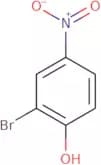
CAS:2-Bromo-4-nitrophenol is a byproduct of the reaction between hydrogen peroxide and sodium bromate. It can be detected in the presence of hydrochloric acid, which reacts with 2-bromo-4-nitrophenol to form an orange color that can be detected spectrophotometrically. 2-Bromo-4-nitrophenol has been shown to inhibit the growth of various strains of bacteria, including Escherichia coli, Bacillus subtilis, and Pseudomonas aeruginosa. This compound binds to flavin adenine dinucleotide (FAD) as well as other nucleophilic cofactors such as thioredoxin reductase. The binding affinity is increased when carbon sources are present. This property makes it a useful inhibitor for catalytic reduction reactions in biotechnology and synthetic chemistry applications.br>br> 2B4NP is a byFórmula:C6H4BrNO3Pureza:Min. 95%Forma y color:PowderPeso molecular:218 g/mol2,4-Dinitrobenzenesulfonyl chloride
CAS:<p>2,4-Dinitrobenzenesulfonyl chloride is a chemical reagent that is used in analytical chemistry. It reacts with pyrazole rings to form 2-aminopyridine derivatives. The reaction can be enhanced by adding metal ions such as copper(II) or zinc(II). 2,4-Dinitrobenzenesulfonyl chloride is also used in the solid-phase synthesis of heterocycles and in the synthesis of pharmaceuticals. The compound has been shown to react with human serum and form an unstable intermediate that undergoes hydrolysis to produce sulfate ion and trifluoroacetic acid. This reaction mechanism can be applied to other nucleophilic compounds such as bromide ion. 2,4-Dinitrobenzenesulfonyl chloride reacts with the amine group of proteins using the S N 1 mechanism. The resulting product is a chlorinated amino acid derivative which exhibits fluorescence properties when reacted with</p>Fórmula:C6H3ClN2O6SPureza:Min. 95%Peso molecular:266.62 g/mol2-(2-Methyl-4-nitro-1H-imidazol-1-yl)ethanol
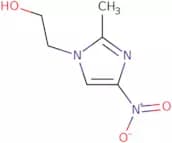
CAS:<p>Please enquire for more information about 2-(2-Methyl-4-nitro-1H-imidazol-1-yl)ethanol including the price, delivery time and more detailed product information at the technical inquiry form on this page</p>Fórmula:C6H9N3O3Pureza:Min. 95%Peso molecular:171.15 g/mol4-Fluoro-2-nitroaniline
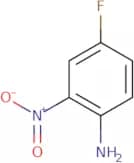
CAS:4-Fluoro-2-nitroaniline is an amide that is a l1210 murine carcinogen. It is also an analytical reagent for the detection of nitrogen atoms in amines and thione compounds. 4-Fluoro-2-nitroaniline has been shown to be effective against cervical cancer, but not cancerous cells, which may be due to its ability to inhibit fatty acid synthesis. The carbon disulphide reacts with the nitro group of 4-fluoro-2-nitroaniline, resulting in the formation of a thione compound.Fórmula:C6H5FN2O2Pureza:Min. 95%Forma y color:Orange PowderPeso molecular:156.11 g/mol3-Nitro-benzene-1,2-diol
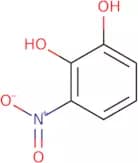
CAS:<p>3-Nitro-benzene-1,2-diol is an inhibitor of catechol-o-methyltransferase (COMT), which catalyzes the transfer of a methyl group from S-adenosyl methionine to dopamine. This results in the formation of 3-O-(methylamino) catechol. COMT inhibitors are used as pharmaceutical preparations for the treatment of Parkinson's disease and other diseases involving dopamine. 3-Nitro-benzene-1,2-diol has been shown to inhibit COMT and prevent the breakdown of dopamine in the brain, which may be beneficial for treating Parkinson's disease and other nervous system diseases.</p>Fórmula:C6H5NO4Pureza:Min. 95%Peso molecular:155.11 g/mol4-Nitro-1H-imidazole-1-ethanol
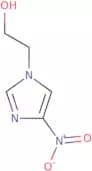
CAS:<p>Please enquire for more information about 4-Nitro-1H-imidazole-1-ethanol including the price, delivery time and more detailed product information at the technical inquiry form on this page</p>Fórmula:C5H7N3O3Pureza:Min. 95%Forma y color:Beige PowderPeso molecular:157.13 g/mol4-Nitroisoxazole
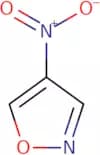
CAS:4-Nitroisoxazole is a primary amino compound that has been synthesized from the reaction of nitrobenzene with ammonia. 4-Nitroisoxazole is homochiral, meaning it can exist in only one form. It has been shown to stabilize secondary and tertiary amines, which are used as building blocks for peptides, proteins, and other biomolecules. When 4-nitroisoxazole is treated with zinc powder in hydrochloric acid, an asymmetric synthesis occurs. The resulting product is an isoxazole with two different chiral centers. This process can be catalyzed by ammonium nitrate, which is a chemical reagent that can be used for industrial purposes such as fertilizer production.Fórmula:C3H2N2O3Pureza:Min. 95%Peso molecular:114.06 g/mol4-(Benzyloxy)-5-methoxy-2-nitrobenzaldehyde
CAS:<p>4-(Benzyloxy)-5-methoxy-2-nitrobenzaldehyde (BOMBA) is an amide with affinity for microtubules. It has been shown to interact with the microtubule lattice and inhibit the polymerization of tubulin. This leads to a decrease in cell viability and cytotoxicity, as well as a decrease in tumor size. In vivo studies have demonstrated that BOMBA inhibits tumor growth by inducing thrombosis and coagulation, which results in reduced blood flow to the tumor. The mechanism of action of BOMBA is thought to be due to its ability to form sulfamates, which are known for their anti-coagulant activity.</p>Fórmula:C15H13NO5Pureza:Min. 95%Peso molecular:287.27 g/mol1,2-Epoxy-3-(4-nitrophenoxy)propane
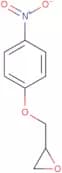
CAS:<p>1,2-Epoxy-3-(4-nitrophenoxy)propane is an epoxide that is a reactive intermediate that participates in a number of reactions, including the formation of disulfide bonds. It has been shown to have genotoxic effects and to be toxic to polymorphonuclear leucocytes. The compound can also inhibit detoxification enzymes, which may make it useful as a biomarker for environmental exposure to xenobiotics. 1,2-Epoxy-3-(4-nitrophenoxy)propane has also been shown to be a potential anti-cancer agent in gene therapy studies. This compound inhibits energy metabolism by inhibiting the enzyme glyceraldehyde 3 phosphate dehydrogenase (GAPDH).</p>Fórmula:C9H9NO4Pureza:Min. 95%Peso molecular:195.17 g/mol2-Bromo-4'-nitroacetophenone
CAS:2-Bromo-4'-nitroacetophenone is a chemical compound that has been shown to be active in enzyme inhibition experiments. It has been found to inhibit the activity of histidine decarboxylase, which catalyzes the conversion of histidine to histamine, and uv absorption. 2-Bromo-4'-nitroacetophenone binds to the active site of P450 enzymes, inhibiting their catalytic activity. This compound also inhibits fatty acid oxidation by binding to fatty acid hydroxylase and hydrogen bonds with tyrosine residues in proteins. 2-Bromo-4'-nitroacetophenone is structurally similar to 2-bromoacetophenone, which has been shown to have antihistaminic properties.Fórmula:C8H6BrNO3Pureza:Min. 95%Forma y color:PowderPeso molecular:244.04 g/molFmoc-3-nitro-L-phenylalanine
CAS:<p>Please enquire for more information about Fmoc-3-nitro-L-phenylalanine including the price, delivery time and more detailed product information at the technical inquiry form on this page</p>Fórmula:C24H20N2O6Pureza:Min. 98 Area-%Forma y color:White PowderPeso molecular:432.43 g/mol4-Chloro-2,5-dimethoxynitrobenzene
CAS:Producto controlado<p>4-Chloro-2,5-dimethoxynitrobenzene (CDMNB) is a solvent and a synthetic intermediate. It is soluble in diethylene, solvents, and sodium formate. CDMNB can be reduced with catalytic reduction or amines to 2,5-dimethoxybenzoic acid. CDMNB has been shown to react with xylene under catalytic conditions to produce 4-chloro-3,5-dimethoxybenzoic acid. This reaction can be monitored by liquid phase chromatography or cyclic voltammetry.</p>Fórmula:C8H8ClNO4Pureza:Min. 95%Peso molecular:217.61 g/mol4-Nitrophenyl hexanoate
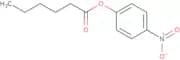
CAS:4-Nitrophenyl hexanoate is an acyl phosphate monoclonal antibody (aMAb) that binds to the enzyme hydroxylase, which converts 4-nitrophenol to p-nitrophenol. This aMAb has been shown to inhibit the activity of this enzyme and its conversion of 4-nitrophenol to p-nitrophenol, leading to its use in biochemical studies as a model for monooxygenase enzymes. The reaction mechanism for this aMAb is believed to be that it reacts with the acyl chain of hydroxylase and hinders the active site from binding 4-nitrophenol. 4-Nitrophenyl hexanoate also has a cationic surfactant that can bind or react with proteins or nucleic acids by electrostatic interactions or hydrogen bonding. It is also able to form polymers with other monoclonal antibodies and has been used in protein purification processesFórmula:C12H15NO4Pureza:Min. 98 Area-%Forma y color:Colorless Clear LiquidPeso molecular:237.25 g/mol3-Nitrobutyrophenone
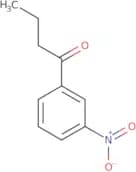
CAS:<p>Please enquire for more information about 3-Nitrobutyrophenone including the price, delivery time and more detailed product information at the technical inquiry form on this page</p>Fórmula:C10H11NO3Pureza:Min. 95%Peso molecular:193.2 g/mol3-Fluoro-4-nitrobenzonitrile
CAS:<p>3-Fluoro-4-nitrobenzonitrile is a diamine that is activated by a nitro group and a halogen. It can be used as an intermediate in the synthesis of other chemicals, such as dyes, pharmaceuticals, and pesticides. 3-Fluoro-4-nitrobenzonitrile is also used to synthesize nitroaminobenzenes, which are converted to aminonitriles by reaction with ammonia. Nitro groups on 3-fluoro-4-nitrobenzonitrile react with alcohols to form nitrosamines. 3-Fluoro-4-nitrobenzonitrile has been shown to be effective in the treatment of angina pectoris and myocardial infarction due to its ability to dilate coronary arteries.</p>Fórmula:C7H3FN2O2Pureza:Min. 95%Forma y color:White PowderPeso molecular:166.11 g/mol6-Amino-5-nitroso-2-thiouracil
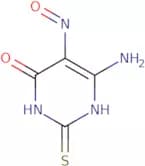
CAS:6-Amino-5-nitroso-2-thiouracil is a water molecule that has been synthesized and characterized by the kinetic method. It has an intense absorption line at 514 nm and can be used as a marker for technetium. 6-Amino-5-nitroso-2-thiouracil is also a ligand, which is a chemical that binds to metal ions in order to form coordination complexes. 6-Amino-5-nitroso-2-thiouracil is formed by the reaction of chloramine with ammonia, as well as other reactions involving chlorine atoms. 6Amino - 5 nitroso - 2 thiouracil can be used as a chelate ring, which is a type of ligand that contains both nitrogen and sulfur atoms. Bleomycin, a five membered ring molecule, reacts with 6 amino - 5 nitroso - 2 thiouracil toFórmula:C4H4N4O2SPureza:Min. 95%Peso molecular:172.17 g/molN-α-Z-L-lysine 4-nitrophenyl ester hydrochloride
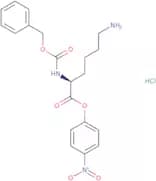
CAS:<p>N-alpha-Z-L-lysine 4-nitrophenyl ester hydrochloride is a protease that belongs to the family of serine proteases. It is produced by the biotechnological process of enzymatic extraction from the natural polysaccharide carrageenan. This product has been used in the production of high yield and purified enzymes for industrial applications. The enzyme has been shown to have cysteine and hydrolytic activity, as well as being able to break peptidic bonds in peptides. N-alpha-Z-L-lysine 4-nitrophenyl ester hydrochloride also has a high specificity for proteolytic cleavage of proteins at their carboxy terminal end.</p>Fórmula:C20H23N3O6•HClPureza:Min. 95%Peso molecular:437.87 g/mol1-Nitro-Cyclohexene
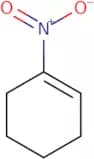
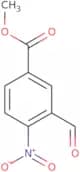
CAS:<p>1-Nitro-cyclohexene is an aromatic compound that reacts with nitric oxide to form a nitroso. 1-Nitro-cyclohexene has been shown to be a reactive intermediate in the Covid-19 pandemic, catalyzing the formation of covidimycin from dimethoxymethylpenicillin. 1-Nitro-cyclohexene also has been found to react with hydrogen peroxide and flavin mononucleotide to form hydroxyl radicals, which are highly reactive chemical species capable of damaging DNA and other cellular components. The toxicity of 1-nitrocyclohexene is related to its ability to form nitrosamines and nitrophenols, which are both carcinogenic. 1-Nitro-cyclohexene can also react with protonated amines or amides to form imines or imides, which are chemically stable species that can persist in the environment.</p>Fórmula:C6H9NO2Pureza:Min. 95%Peso molecular:127.14 g/molMethyl3-formyl-4-nitrobenzoate
CAS:Methyl3-formyl-4-nitrobenzoate is a polycyclic, boronic ester ligand that can be used in organic synthesis. It has a monocyclic alkenyl group with substitutable hydrogens and a haloalkyl substituent. The heterocycle is an aryloxy substituted with an alkynyl group. This reagent has been patented by the University of California.Fórmula:C9H7NO5Pureza:Min. 95%Peso molecular:209.16 g/mol