Nitro
Los compuestos nitro son moléculas orgánicas que contienen uno o más grupos nitro (NO2). Estos compuestos se utilizan ampliamente en la síntesis de explosivos, productos farmacéuticos y colorantes. En CymitQuimica, ofrecemos una amplia gama de compuestos nitro de alta calidad para apoyar sus aplicaciones de investigación e industriales, asegurando resultados seguros y efectivos. Nuestra selección incluye una variedad de compuestos nitro adecuados para diferentes síntesis químicas y aplicaciones.
Se han encontrado 2516 productos de "Nitro"
Ordenar por
Pureza (%)
0
100
|
0
|
50
|
90
|
95
|
100
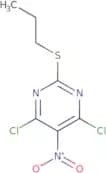
4,6-Dichloro-5-nitro-2-propylthiopyrimidine
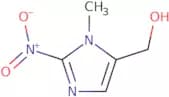
CAS:<p>Intermediate in the synthesis of ticagrelor</p>Fórmula:C7H7Cl2N3O2SPureza:Min. 95%Peso molecular:268.12 g/mol(3-Methyl-2-nitro-3H-imidazol-4-yl)methanol
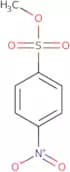
CAS:<p>3-Methyl-2-nitro-3H-imidazol-4-yl)methanol is a fluorescent probe that can be used to detect hypoxic tumor cells. It has been shown to selectively react with the methylethyl group in Trichomonas vaginalis. 3-Methyl-2-nitro-3H-imidazol-4-yl)methanol is bioreductive and can be activated by nitro groups in proteins, which are found in the active site of enzymes such as bacterial dna gyrase. This probe has been shown to bind to the sn38 position of bacterial DNA, but not mammalian DNA.</p>Fórmula:C5H7N3O3Pureza:Min. 95%Peso molecular:157.13 g/molMethyl-4-nitrobenzenesulfonate
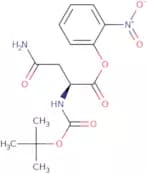
CAS:<p>Methyl-4-nitrobenzenesulfonate is a chemical reagent that is used in the preparation of samples for structural analysis. It can be used to determine the structure of amines, glycol ethers, and polyethers by means of kinetic data. Methyl-4-nitrobenzenesulfonate has been used to analyze human serum and wastewater treatment samples. This chemical reagent is also used as a fluorescent derivative in analytical chemistry due to its high detection sensitivity.</p>Fórmula:C7H7NO5SPureza:Min. 95%Forma y color:PowderPeso molecular:217.2 g/molBoc-Asn-o-nitrophenyl ester
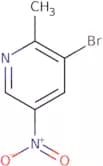
CAS:<p>Please enquire for more information about Boc-Asn-o-nitrophenyl ester including the price, delivery time and more detailed product information at the technical inquiry form on this page</p>Fórmula:C15H19N3O7Pureza:Min. 95%Peso molecular:353.33 g/mol3-Bromo-2-methyl-5-nitropyridine
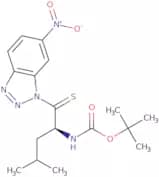
CAS:<p>Please enquire for more information about 3-Bromo-2-methyl-5-nitropyridine including the price, delivery time and more detailed product information at the technical inquiry form on this page</p>Fórmula:C6H5BrN2O2Pureza:Min. 95%Peso molecular:217.02 g/molBoc-Thionoleu-1-(6-nitro)benzotriazolide
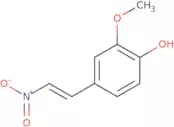
CAS:<p>Please enquire for more information about Boc-Thionoleu-1-(6-nitro)benzotriazolide including the price, delivery time and more detailed product information at the technical inquiry form on this page</p>Fórmula:C17H23N5O4SPureza:Min. 95%Peso molecular:393.46 g/mol1-(4-Hydroxy-3-methoxyphenyl)-2-nitroethene
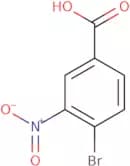
CAS:<p>1-(4-Hydroxy-3-methoxyphenyl)-2-nitroethene is an experimental molecule that was not previously known to exist. The intramolecular reaction of 1,4-dihydroxynitrobenzene and glyoxylic acid yields the product. It is a phenolic compound with biological activity, which has been shown to inhibit glycosidases and alkaloids.</p>Fórmula:C9H9NO4Pureza:Min. 95%Forma y color:SolidPeso molecular:195.17 g/mol4-Bromo-3-nitrobenzoicacid
CAS:<p>4-Bromo-3-nitrobenzoicacid is a fluorogenic substrate for the labeling of d-serine. It reacts with picric acid to form a fluorescent product, which can be detected by fluorescence spectroscopy. 4BnBA has been used in immobilized enzyme studies to determine the catalysis of chloride and the fluorescence response of chloride. The hydrolysis of 4BnBA by esterases produces 3-nitroaniline, which has been shown to be an intermediate for the synthesis of flavin mononucleotide (FMN). FMN is an essential cofactor for catalytic reactions involving ribonucleotides and ATP. The subunits of FMN are flavin adenine dinucleotide (FAD) and nicotinamide adenine dinucleotide (NAD). 4BnBA has also been analysed using synthetic techniques and functional theory to determine its role in biomolecular processes.</p>Fórmula:C7H4BrNO4Pureza:Min. 95%Forma y color:PowderPeso molecular:246.02 g/mol1-(Dibromomethyl)-4-nitrobenzene
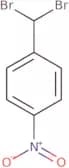
CAS:<p>1-(Dibromomethyl)-4-nitrobenzene is a chemical substance that belongs to the group of industrial chemicals. It has been classified as toxic and hazardous for human health, with an expansion potential. This substance is used in the production of a number of insecticides and other chemical control agents. The toxic effects of 1-(dibromomethyl)-4-nitrobenzene are related to its alkaline properties and include irritation of the eyes, skin, and respiratory tract; central nervous system depression; liver damage; kidney damage; and gastrointestinal disturbances. Inhalation may result in pulmonary edema or death due to oxygen deprivation. This chemical is also known to cause cancer in animals.</p>Fórmula:C7H5Br2NO2Pureza:Min. 95%Peso molecular:294.93 g/mol5-Nitro-2-aminophenol
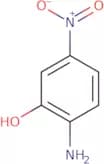
CAS:<p>5-Nitro-2-aminophenol is an aminophenol that has been shown to be a carcinogen in animal studies. It can cause allergic reactions and has been shown to have oxidative DNA damage, which can lead to cancer. 5-Nitro-2-aminophenol is used as a chemical intermediate in the preparation of other chemicals and pharmaceuticals. This chemical has been studied extensively for its analytical properties and is used as a reagent in chromatography. The coordination geometry of 5-nitro-2-aminophenol is octahedral, with nitro groups occupying one axial site each. The toxicity of this compound in animals has been studied extensively, including carcinogenic potential and mutagenicity studies, and it has been shown to inhibit the growth of cultured cells at high concentrations.</p>Fórmula:C6H6N2O3Pureza:Min. 95%Peso molecular:154.12 g/mol3-Fluoro-4-nitrobenzoic acid
CAS:<p>3-Fluoro-4-nitrobenzoic acid is an organic solvent that is used as a reagent in the synthesis of peptidomimetics. 3-Fluoro-4-nitrobenzoic acid has been shown to be a nucleophilic addition agent, which can react with serine proteases in the presence of benzamidine. This reaction results in the formation of an amide bond between the amino group and carboxylic acid moiety of the serine protease, thereby inhibiting its activity. 3-Fluoro-4-nitrobenzoic acid is also used as a synthetic intermediate for peptides and other organic compounds.</p>Fórmula:C7H4FNO4Pureza:Min. 95%Forma y color:PowderPeso molecular:185.11 g/mol5-Bromo-2-nitropyridine
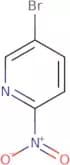
CAS:<p>5-Bromo-2-nitropyridine is a hydrogen bond donor. It is an organic molecule with the chemical formula C5H5BrN3. The compound has been used in the synthesis of other molecules, such as nicotinic acetylcholine and mitochondrial membrane potential inhibitors. 5-Bromo-2-nitropyridine is also a good candidate for cancer treatment due to its ability to inhibit cell cycle progression at G2/M phase. 5-Bromo-2-nitropyridine can be synthesized by reacting 2,4,6-trinitrobenzenesulfonic acid with bromine and potassium carbonate in a reaction vessel at 200 °C for about 30 minutes.</p>Fórmula:C5H3BrN2O2Forma y color:PowderPeso molecular:202.99 g/mol(S)-(+)-Glycidyl-4-nitrobenzoate
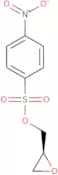
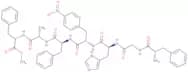
CAS:<p>Glycidyl-4-nitrobenzoate (GLYNB) is an opioid receptor ligand, which binds to the κ opioid receptor. It has been used in biological testing and has been shown to have affinity for the κ opioid receptor. GLYNB may be a useful tool for investigating the molecular diversity of this receptor and its function in both normal and pathological conditions.</p>Fórmula:C9H9NO6SPureza:Min. 95%Peso molecular:259.24 g/molH-Phe-Gly-His-p-nitro-Phe-Phe-Ala-Phe-OMe
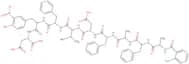
CAS:<p>H-Phe-Gly-His-p-nitro-Phe-Phe-Ala-Phe-OMe is a protonated amino acid. It has been shown to have a high affinity for the histidine subsite of human thrombin. This compound has been found to have a kinetic rate of hydrolysis that is competitive with that of aspartic acid, but slower than that of valine. H-Phe-Gly-His-p-nitro-Phe--Phe--Ala--Phe--OMe also functions as an anticoagulant and inhibits clotting by inhibiting the conversion of fibrinogen to fibrin.</p>Fórmula:C48H54N10O10Pureza:Min. 95%Peso molecular:931 g/molAbz-Ala-Phe-Ala-Phe-Asp-Val-Phe-3-nitro-Tyr-Asp-OH trifluoroacetate salt
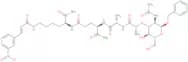
CAS:<p>Please enquire for more information about Abz-Ala-Phe-Ala-Phe-Asp-Val-Phe-3-nitro-Tyr-Asp-OH trifluoroacetate salt including the price, delivery time and more detailed product information at the technical inquiry form on this page</p>Fórmula:C62H71N11O18Pureza:Min. 95%Peso molecular:1,258.29 g/molAc-α-benzyl-muramyl-Ala-D-Glu(Lys(trans-(3-nitrocinnamoyl))-NH2)-NH2
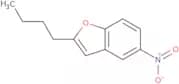
CAS:<p>Please enquire for more information about Ac-alpha-benzyl-muramyl-Ala-D-Glu(Lys(trans-(3-nitrocinnamoyl))-NH2)-NH2 including the price, delivery time and more detailed product information at the technical inquiry form on this page</p>Fórmula:C41H56N8O14Pureza:Min. 95%Peso molecular:884.93 g/mol2-Butyl-5-nitrobenzofuran
CAS:<p>2-Butyl-5-nitrobenzofuran (2B5NBF) is a drug that belongs to the class of salicylaldehydes. It is an acylation product of 2-butanol and 5-nitrobenzofuran that has the potential for use as a pharmaceutical agent. The reaction yield for this compound is high and can be increased by using hydrochloric acid as the acid catalyst. When 2B5NBF is reacted with chloride, it produces an active substance with a structural formula of C14H11NO3Cl. This substance has been shown to have arrhythmic properties in atrial tissue in rats.</p>Fórmula:C12H13NO3Pureza:Min. 95%Peso molecular:219.24 g/mol4-Chloro-2-nitrobenzaldehyde
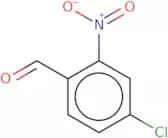
CAS:<p>4-Chloro-2-nitrobenzaldehyde is a reactive intermediate that has been used to investigate the reaction mechanism of protonation. It is an n-oxide and has been shown to react with calcium carbonate under acidic conditions, forming a stable product. 4-Chloro-2-nitrobenzaldehyde has also been used in the synthesis of amides and nitro compounds. This compound possesses two functional groups, which are a nitro group and a chloro group on the aromatic ring.</p>Fórmula:C7H4ClNO3Pureza:Min. 95%Forma y color:PowderPeso molecular:185.56 g/mol5-Nitro nicotinic acid
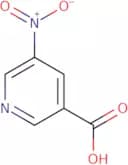
CAS:<p>5-Nitro nicotinic acid is a drug that has been synthesized in the laboratory. It is a white crystalline solid with a molecular weight of 201.18, and it has the chemical formula of C6H5NO2. 5-Nitro nicotinic acid is an antitubercular drug that inhibits Mycobacterium tuberculosis and Mycobacterium avium complex without inhibiting other human cells. It also inhibits the growth of bacteria that are resistant to aminoglycosides (e.g., Pbtz169). This drug binds to the enzyme NADH dehydrogenase, which leads to inhibition of bacterial respiration and ATP synthesis. 5-Nitro nicotinic acid also has antimycobacterial activity against mycobacteria by forming nitric oxide radicals (NO) through hydrogen peroxide oxidation, which react with cellular components such as DNA and proteins.</p>Fórmula:C6H4N2O4Pureza:Min. 95%Peso molecular:168.11 g/mol4-Nitrophenethylamine
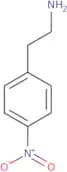
CAS:Producto controlado<p>4-Nitrophenethylamine is a synthetic chemical that is used as an antigen to raise antibodies. It is used in the detection of chemical substances that are associated with the production of histamine and acetylcholine. This chemical has been shown to inhibit the reaction between nitro and acylation, which can lead to the formation of carcinogenic nitrosamines. 4-Nitrophenethylamine also has an inhibitory effect on oxidases and amines, which are enzymes found in cells. This chemical binds to amide groups in proteins and inhibits their activity.</p>Fórmula:C8H10N2O2Pureza:Min. 95%Forma y color:LiquidPeso molecular:166.18 g/mol