Nitro
Se han encontrado 2517 productos de "Nitro"
2-Bromo-5-nitrobenzoic acid
CAS:2-Bromo-5-nitrobenzoic acid is an amine that has been shown to have a potent inhibitory effect on the enzyme fibrinogen, which is needed for blood clotting. It also inhibits other enzymes in the fibrinogen pathway, including those involved in protein synthesis and cellular metabolism. 2-Bromo-5-nitrobenzoic acid has been shown to inhibit cancer cells by blocking their ability to use amino acids as building blocks for new proteins. This drug may be used as a treatment for cancer and other diseases where protein synthesis is critical.
Fórmula:C7H4BrNO4Pureza:Min. 95%Forma y color:PowderPeso molecular:246.02 g/mol4-Chloro-3-nitrobenzanilide
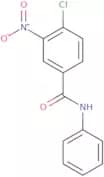
CAS:4-Chloro-3-nitrobenzanilide is a versatile building block for the preparation of complex compounds. It is used as a reagent in research and as a speciality chemical for the production of high quality fine chemicals. This compound can be used as a reaction component or scaffold to synthesize other compounds. 4-Chloro-3-nitrobenzanilide is a useful intermediate in organic synthesis because it has many functional groups that are easy to modify, making it easy to synthesize new compounds.
Fórmula:C13H9ClN2O3Pureza:Min. 95%Forma y color:PowderPeso molecular:276.67 g/mol4-Chloro-3-nitrobenzamide
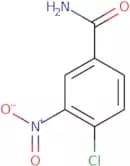
CAS:4-Chloro-3-nitrobenzamide (4CNBA) is a potent inducer of hepatic drug metabolizing enzymes. It reacts with methyl cinnamate to form the 4-chloro-3-nitrobenzamide methyl ester and chloride ions. This reaction is catalyzed by copper, which binds to the 4CNBA molecule. The chloride ion then displaces water from the ester, producing a nitroso intermediate. This intermediate breaks down into an unstable nitrite, which in turn reacts with hydrogen peroxide to form a hydroxylamine intermediate. Hydroxylamine can then react with sulfhydryl groups to produce reactive thiols that are responsible for the induction of detoxification enzymes in the liver.
4CNBA has been shown to be toxic at high concentrations and is rapidly detoxified by Phase II enzymes such as glutathione S transferase, UDP glucuronosyltransferase, and N-acetylFórmula:C7H5ClN2O3Pureza:Min. 95%Forma y color:PowderPeso molecular:200.58 g/mol2-Hydroxy-5-methoxy-3-nitrobenzaldehyde
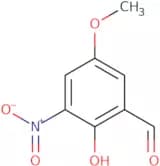
CAS:2-Hydroxy-5-methoxy-3-nitrobenzaldehyde is a 6-membered aromatic compound that has been shown to have anti-cancer properties. It has been shown to inhibit the proliferation of cancer cells by inhibiting protein synthesis, as well as inducing apoptosis. This compound also inhibits the growth of colon cancer cells and cervical cancer cells in culture. 2-Hydroxy-5-methoxy-3-nitrobenzaldehyde has an inhibitory effect on the growth of cancer cells and may be used for treatment against tumors.Fórmula:C8H7NO5Pureza:Min. 95%Forma y color:PowderPeso molecular:197.14 g/mol3'-Bromo-4'-fluoro-β-methyl-β-nitrostyrene
CAS:3'-Bromo-4'-fluoro-beta-methyl-beta-nitrostyrene is a chemical compound with the molecular formula C9H5BrFN2O. It can be used as an intermediate in the synthesis of other chemical compounds. 3'-Bromo-4'-fluoro-beta-methyl-beta-nitrostyrene can also be used to produce research chemicals, speciality chemicals, and complex compounds. This compound has a high quality and is useful for research purposes.
Fórmula:C9H7BrFNO2Pureza:Min. 95%Forma y color:PowderPeso molecular:260.06 g/mol5-Nitroisatoic anhydride
CAS:5-Nitroisatoic anhydride is a chemical compound that has found use in the synthesis of complex compounds and fine chemicals. It is a useful intermediate for the preparation of 5-nitro-1,2,4-triazole, which can be used as a research chemical or speciality chemical. 5-Nitroisatoic anhydride reacts with alcohols to form nitrosamines. This reaction component is also used in organic syntheses and as a reagent in the production of other chemicals.
Fórmula:C8H4N2O5Pureza:Min. 95%Peso molecular:208.13 g/mol4-Chloro-3-nitro-5-sulfamoylbenzoic acid
CAS:4-Chloro-3-nitro-5-sulfamoylbenzoic acid is a chemical compound that belongs to the group of speciality chemicals. It is a versatile building block for the synthesis of complex compounds. 4-Chloro-3-nitro-5-sulfamoylbenzoic acid has high quality and can be used as reagents in research or as a building block for the synthesis of new molecules.Fórmula:C7H5ClN2O6SPureza:Min. 95%Forma y color:PowderPeso molecular:280.64 g/mol4-Acetamido-2',4'-dinitro-5'-methyldiphenyl sulphone
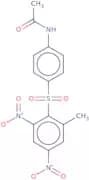
CAS:4-Acetamido-2',4'-dinitro-5'-methyldiphenyl sulphone is a high quality, versatile building block that is used as a reagent and complex intermediate. It can be used in the production of speciality chemicals, research chemicals and fine chemicals. 4-Acetamido-2',4'-dinitro-5'-methyldiphenyl sulphone is also a useful scaffold for the construction of new chemical compounds. This compound has been shown to be a reaction component in organic synthesis reactions.Fórmula:C15H13N3O7SPureza:Min. 95%Forma y color:Solid.Peso molecular:379.35 g/mol4-Hydroxy-3-nitrobenzophenone
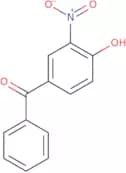
CAS:4-Hydroxy-3-nitrobenzophenone is a divinylbenzen compound that is used as a polymerization catalyst. This product is an efficient method for synthesizing polymeric matrices containing immobilized carboxylic acids, which can be used in chromatographic science. 4-Hydroxy-3-nitrobenzophenone has been shown to have anticholinesterase activity and can be used for the synthesis of polymeric matrices containing immobilized carboxylic acids, which can be used in chromatographic science. 4-Hydoxy-3-nitrobenzophenone also has an acid catalyst that can react with glyceraldehyde 3 phosphate dehydrogenase.Fórmula:C13H9NO4Pureza:Min. 95%Forma y color:SolidPeso molecular:243.21 g/mol2-Bromo-6-methyl-4-nitroaniline
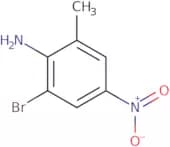
CAS:2-Bromo-6-methyl-4-nitroaniline is a fine chemical that is used in the preparation of other chemicals and as a reagent. It can be used as an intermediate for organic synthesis, such as the conversion of 2-bromoindole to indoxyl, or as a building block for the preparation of more complex compounds. This chemical is also versatile in that it can be used in reactions with different reactants, including amines, carboxylic acids, thiols, and alcohols.Fórmula:C7H7BrN2O2Pureza:Min. 95%Forma y color:PowderPeso molecular:231.05 g/mol2-Nitrophenethylamine hydrochloride
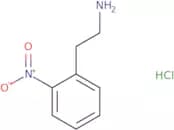
CAS:Producto controlado2-Nitrophenethylamine hydrochloride is a fine chemical that is useful as a versatile building block. It can be used as a reaction component, or in the synthesis of other chemicals. 2-Nitrophenethylamine hydrochloride has CAS No. 861337-74-8 and is a complex compound with many possible uses, including as a research chemical or speciality chemical. As an intermediate for other compounds, it can be used to produce high quality reagents and products.Fórmula:C8H11ClN2O2Pureza:Min. 95 Area-%Forma y color:PowderPeso molecular:202.64 g/mol2-Nitrobenzhydrazide
CAS:2-Nitrobenzhydrazide is a pharmaceutical drug that inhibits the growth of cancer cells. It is a nitro-substituted benzoic acid derivative that reacts with nucleophilic groups in proteins to form covalent adducts, which inhibit cell growth. 2-Nitrobenzhydrazide has been shown to be effective against cervical cancer and spontaneous human breast cancer cells in culture. The mechanism of action involves the formation of reactive nitrosamines, which are thought to react with DNA bases or cause DNA strand breaks.
Fórmula:C7H7N3O3Pureza:90%Forma y color:PowderPeso molecular:181.15 g/mol4-Methyl-2-nitroanisole
CAS:4-Methyl-2-nitroanisole (4NA) is a hydronium that has been shown to be an anticancer drug. It inhibits the growth of cancer cells by binding to reactive methoxy groups on the cell surface and promotes apoptosis, or programmed cell death. 4NA also produces nitric oxide, which may cause DNA damage in cancer cells. The mechanism of action for 4NA is not fully understood but it has been shown to have a radical mechanism of action which leads to the formation of reactive molecules that can react with other molecules in the cell, leading to DNA damage and cell death. Preparative methods for synthesizing 4NA are acidic and involve aldehydes and nitrites.
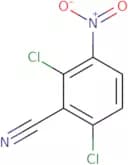
Fórmula:C8H9NO3Pureza:Min. 95%Forma y color:PowderPeso molecular:167.16 g/mol2,6-Dichloro-3-nitrobenzonitrile
CAS:2,6-Dichloro-3-nitrobenzonitrile is a chemical compound that has been synthesized by optimising the potentials of monoclonal antibodies. It has shown to have high affinity for rat brain membranes and is also able to bind to the target molecule with high affinity. 2,6-Dichloro-3-nitrobenzonitrile can be used as a pesticide and has been shown to have an affinity for the target molecule with high affinity. This chemical compound is trisubstituted and has three nitro groups, which are all located in the same position on the benzene ring. The structure of this chemical compound is optimized, meaning that it has been modified so that its physical properties are more desirable than its original form.
Fórmula:C7H2Cl2N2O2Pureza:Min. 95%Forma y color:PowderPeso molecular:217.01 g/molβ-Nitrostyrene
CAS:b-Nitrostyrene is a nitroso compound that has been shown to inhibit the activity of methoxy groups in the intestine. It also inhibits the growth of animals, both in vitro and in vivo. b-Nitrostyrene binds to a receptor that is found on cells in the brain and other organs, which may be related to its ability to prevent cancerous tumors from forming. The binding affinity for this receptor is much lower than that of carbazole or sulfonic acid compounds, which may account for its greater toxicity. b-Nitrostyrene also has a number of other effects, such as inhibiting radiation-induced damage to maternal tissue or optical properties. It can also act as an additive for devices or quaternary alkaloids.
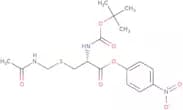
Fórmula:C8H7NO2Pureza:Min. 95%Peso molecular:149.15 g/molBoc-S-acetamidomethyl-L-cysteine 4-nitrophenyl ester
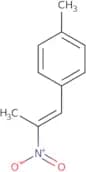
CAS:Please enquire for more information about Boc-S-acetamidomethyl-L-cysteine 4-nitrophenyl ester including the price, delivery time and more detailed product information at the technical inquiry form on this pageFórmula:C17H23N3O7SPureza:Min. 95%Forma y color:PowderPeso molecular:413.45 g/mol4-Methylphenylnitropropene
CAS:4-Methylphenylnitropropene is a psychostimulant drug that has been shown to have a high binding affinity for dopamine transporters. It is also known to increase the level of dopamine in the synaptic cleft and can be used as a research tool for understanding the function of dopamine in neuronal synapses. 4-Methylphenylnitropropene has been shown to cause an increase in locomotor activity and is able to induce euphoria when administered to rats. This drug is not thought to cause any physical dependence, although it may lead to psychological dependence.
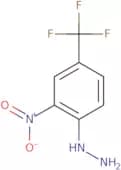
Fórmula:C10H11NO2Pureza:Min. 95%Forma y color:PowderPeso molecular:177.2 g/mol4-Hydrazino-3-nitrobenzotrifluoride
CAS:4-Hydrazino-3-nitrobenzotrifluoride (4HNBF) is a derivative of 4-hydrazinobenzoic acid that has been used as a precursor for the synthesis of vitamin D. The drug is detectable in blood plasma samples by mass spectrometry and can be quantified using linear calibration curves. 4HNBF has been detected in human urine samples after oral administration, but not in other biological fluids. It has also been used to measure the flow rate of urine. The drug's use for cancer treatment has been investigated, with results showing that it inhibits the growth of cancer cells and induces apoptosis. 4HNBF may act on GABA receptors to inhibit their activity and induce a reduction in the release of oxysterols.Fórmula:C7H6F3N3O2Pureza:Min. 95%Forma y color:PowderPeso molecular:221.14 g/mol6-Nitroindole
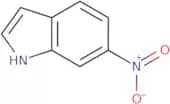
CAS:6-Nitroindole is a heterocyclic compound that belongs to the group of nitro compounds. It is a methylating agent that can be used for the production of 6-nitropurines, which are used as anticancer agents. The reaction mechanism of this compound involves the attack of the electrophilic nitro group on an electron-deficient carbon atom in a molecule. This process creates an N-methylated product, which can then be oxidized to form a carboxylic acid. The kinetics of this reaction have been studied using kinetic data and anomers. 6-Nitroindole has also been shown to inhibit DNA synthesis by binding to oligodeoxynucleotides and inhibiting their catalytic activity.
Fórmula:C8H6N2O2Pureza:Min. 95%Forma y color:PowderPeso molecular:162.15 g/mol4-Hydroxy-3-nitrobenzoic acid ethyl ester
CAS:4-Hydroxy-3-nitrobenzoic acid ethyl ester is a small molecule that binds to DNA and RNA. It is cytotoxic, inhibiting cell growth in the presence of amides, nucleosides, or nucleotides. 4-Hydroxy-3-nitrobenzoic acid ethyl ester also inhibits the proliferation of cancer cells in culture. This drug has been shown to be effective against pancreatic cancer, ovarian cancer, and glioblastoma cells. The structure of this compound was elucidated by spectral analysis of its NMR and mass spectra data. It has yielded a 2780% increase in glioblastoma cell line growth rates when compared to control cells.Fórmula:C9H9NO5Pureza:Min. 95%Forma y color:PowderPeso molecular:211.17 g/mol