Nitro
Se han encontrado 2517 productos de "Nitro"
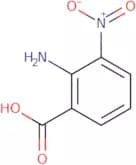
2-Amino-3-nitrobenzoic acid
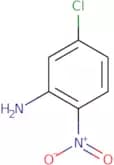
CAS:2-Amino-3-nitrobenzoic acid (2ABN) is a peroxide that is used as an antiviral. 2ABN has been shown to inhibit the formation of reactive oxygen species in cancer cells, leading to apoptosis. It also inhibits the growth of carcinoma cell lines and tissues. 2ABN reacts with chloral hydrate to form a particle that can be encapsulated for delivery and release in vivo. This drug has been expressed in Escherichia coli, which may lead to improved stability and ease of production. 2ABN is thought to have anti-inflammatory properties due to its ability to inhibit the production of prostaglandins. The reactivity of 2ABN with surfactants such as sodium laureth sulfate (SLES) has been shown, which leads to it being used as an emulsifying agent for topical application.Fórmula:C7H6N2O4Pureza:Min. 95%Forma y color:PowderPeso molecular:182.13 g/mol5-Chloro-2-nitroaniline
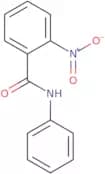
CAS:5-Chloro-2-nitroaniline is a proton transport agent that is used to dissolve the stones in the kidney and bladder. It belongs to the chemical class of anilines and has a chlorine atom. This drug is structurally similar to sorafenib, which is used for cancer treatment, and has been shown to inhibit cb2 receptor activity. 5-Chloro-2-nitroaniline also reacts with hydrochloric acid or sodium hydroxide solution to produce nitrous acid, which can be used as a reactant in organic synthesis.Fórmula:C6H5ClN2O2Pureza:Min. 95%Peso molecular:172.57 g/mol2-Nitrobenzanilide
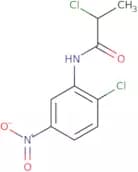
CAS:2-Nitrobenzanilide is a synthetic nitro compound that has been used as a reagent in organic synthesis. It is a colorless or pale yellow solid with a melting point of -14°C. It can be dissolved in benzene, chloroform, acetone and ether, but not in water. 2-Nitrobenzanilide can react with acridones to produce nitrosamines, which are carcinogenic compounds. The reaction rate for this reaction depends on the solvent used and the pH of the solution. Acridones are an alkaloid from plants of the genus Acridium. They have also been synthesized from anilines and potassium t-butoxide in sulphates or chloride media. 2-Nitrobenzanilide is one of the isomeric products when acridone reacts with chlorine at elevated temperatures. Synthesis takes place by heating acridone with potassium t-butoxide and sulphuric acid or hydroFórmula:C13H10N2O3Pureza:Min. 95%Forma y color:PowderPeso molecular:242.23 g/mol2-Chloro-N-(2-chloro-5-nitrophenyl)propanamide
CAS:Please enquire for more information about 2-Chloro-N-(2-chloro-5-nitrophenyl)propanamide including the price, delivery time and more detailed product information at the technical inquiry form on this pageFórmula:C9H8Cl2N2O3Pureza:Min. 95%Peso molecular:263.08 g/mol3-Chloro-4-nitrotoluene
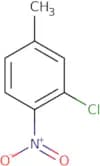
CAS:3-Chloro-4-nitrotoluene (3CNT) is a lactam that is produced from hydrochloric acid and styrene. 3CNT has a reactive nature, as it readily undergoes dehydration to produce benzothiazine. The reaction of 3CNT with hydroxamic acids yields the corresponding nitro compound, which can be used for the synthesis of organic compounds. 3CNT also reacts with protonated amines to form an oxazoline derivative. 3CNT is used in cross-coupling reactions, which are important for the synthesis of complex molecules such as pharmaceuticals and agrochemicals. Kinetic data on 3CNT’s reaction with hydroxamic acids show that it has a high rate of conversion to nitro compounds.Fórmula:C7H6ClNO2Pureza:Min. 95%Forma y color:PowderPeso molecular:171.58 g/molMethyl 3-methyl-2-nitrobenzoate
CAS:Methyl 3-methyl-2-nitrobenzoate is a chiral, catalytic, and magnetic additive. It is used in the production of alkyl chlorides, cinnolines, and cyclic compounds. Methyl 3-methyl-2-nitrobenzoate can be used as a diagnostic for chloride ions or chlorine gas in water. It also has an important application in wastewater treatment by removing organics from wastewater effluent. Methyl 3-methyl-2-nitrobenzoate can be synthesized from allylic oxidation of methyl benzoate with sodium hypochlorite in the presence of copper sulfate catalyst. The reaction proceeds through an addition–elimination mechanism to produce the desired product and copper(II) chloride as a byproduct. The process occurs on a mesoporous material to increase surface area for the reaction to proceed more quickly and efficiently.Fórmula:C9H9NO4Pureza:Min. 95%Peso molecular:195.17 g/mol2'-Hydroxy-3-nitrochalcone
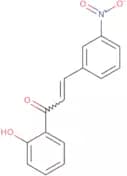
CAS:2'-Hydroxy-3-nitrochalcone is a yellow crystalline solid that has been shown to have an antiviral effect against HIV and herpes simplex virus. The crystal structure of 2'-hydroxy-3-nitrochalcone has been determined using x-ray crystallography. The compound is structurally similar to other antiviral agents, such as acyclovir, valacyclovir, and penciclovir.
2'-Hydroxy-3-nitrochalcone inhibits the viral DNA polymerase by competing with the nucleotide cofactor at the enzyme active site. This leads to a reduction in viral DNA synthesis and an inhibition of cell proliferation.Fórmula:C15H11NO4Pureza:Min. 95%Forma y color:PowderPeso molecular:269.25 g/mol(3,5-dichlorophenyl)(4-(3-nitrophenyl)(2,5-thiazolyl))amine
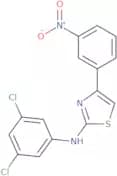
CAS:Please enquire for more information about (3,5-dichlorophenyl)(4-(3-nitrophenyl)(2,5-thiazolyl))amine including the price, delivery time and more detailed product information at the technical inquiry form on this pagePureza:Min. 95%5-Methyl-2-nitrophenol
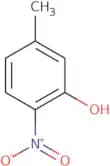
CAS:5-Methyl-2-nitrophenol is a phytotoxic chemical that is used as a synthetic intermediate in organic chemistry. It has been shown to have a high bioconcentration factor and can be found in wastewater. The major use of 5-methyl-2-nitrophenol is the synthesis of 2,4,6-trinitrophenylhydrazine (TNP) which is used as an analytical reagent for the determination of nitrates. The reaction mechanism of 5-methyl-2-nitrophenol involves intramolecular hydrogen transfer from the methylene group to the nitro group and subsequent elimination of HCl. This reaction product can be found by using analytical methods such as gas chromatography, mass spectrometry, or nuclear magnetic resonance spectroscopy. Functional groups on the reactant include phenols and nitro groups with the following endpoints: hydrochloric acid (HCl), kinetic method, and vapor pressure
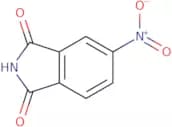
Fórmula:C7H7NO3Pureza:Min. 95%Forma y color:PowderPeso molecular:153.14 g/mol4-Nitrophthalimide
CAS:4-Nitrophthalimide is a nitroimidazole compound that has been shown to be active against bacterial strains belonging to the group P2. It is also soluble in organic solvents such as chloroform, ethanol, and acetone. 4-Nitrophthalimide has been used for experimental solubility data and as a pharmaceutical preparation. The reaction of 4-nitrophthalimide with diazonium salt produces 3-nitrophthalic anhydride, which is then hydrolyzed by hydrochloric acid to form nitrobenzene. This reaction can be monitored using fluorescence resonance spectroscopy.
Fórmula:C8H4N2O4Pureza:Min. 95%Forma y color:PowderPeso molecular:192.13 g/mol3-Nitrophthalic acid
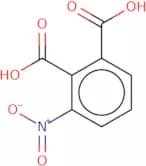
CAS:3-Nitrophthalic acid is an organic compound that has been used in biological studies. It has been shown to bind to DNA and RNA, which may be due to hydrogen bonding interactions with the nitrogen atoms. 3-Nitrophthalic acid is synthesized by reacting sodium carbonate with trifluoroacetic acid, resulting in a carboxylate group. This compound has photochemical properties and can be used as a photosensitizer for the treatment of certain forms of cancer. 3-Nitrophthalic acid reacts with oxygen and generates singlet oxygen, which results in cellular damage.
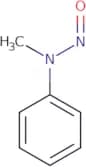
Fórmula:C8H5NO6Pureza:Min. 95%Forma y color:PowderPeso molecular:211.13 g/molN-Nitroso-N-methylaniline
CAS:N-Nitroso-N-methylaniline is a chemical substance that has been shown to have genotoxic effects in rats. It reacts with deuterium isotopes, which are hydrogen isotopes, to form a nitrite ion. The nitrite ion then reacts with hydrochloric acid to form a carbonyl group and the trifluoroacetic acid product. The reaction mechanism is as follows: N-Nitroso-N-methylaniline + deuterium isotope → N-nitrosodimethylaniline + deuterium isotope N-Nitrosodimethylaniline + hydrochloric acid → N-nitrosomethylenetriamine + carbonyl group N-Nitrosomethylenetriamine + trifluoroacetic acid → N,O-dimethyltrifluoroacetamidineFórmula:C7H8N2OPureza:Min. 95 Area-%Forma y color:Clear LiquidPeso molecular:136.15 g/mol2,6-Difluoronitrobenzene
CAS:2,6-Difluoronitrobenzene is a compound that is classified as an aromatic amine. It has been shown to be a potential antiviral drug for the treatment of pandemic covid-19. Covid-19 virus is a respiratory syncytial virus that causes serious disease in infants and young children, with symptoms including fever, runny nose, cough and difficulty breathing. 2,6-Difluoronitrobenzene inhibits the viral membrane fusion by competing with the receptor activity of the virus. This drug also has anti-inflammatory effects on muscle cells by inhibiting proliferation and decreasing cytokines such as TNF-α and IL-1β.Fórmula:C6H3F2NO2Pureza:Min. 95%Forma y color:Red Clear LiquidPeso molecular:159.09 g/mol2,2'-Dithio-bis(5-nitropyridine)
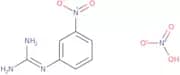
CAS:2,2'-Dithio-bis(5-nitrophenyl) is a redox probe that can be used to study ATP-sensitive K+ channels. This probe has been shown to bind to the carboxy terminal of the channel and disulfide bond through its thiol group. The binding of 2,2'-dithio-bis(5-nitropyridine) to the activated liver cells causes an increase in the redox potential, which leads to an accumulation of electrons in these cells. These electrons are then transferred to pyridine nucleotides and phosphate ions, leading to an increase in ATP levels and activation of ATP-sensitive K+ channels.Fórmula:C10H6N4O4S2Pureza:Min. 95%Peso molecular:310.31 g/mol3-Nitrophenylguanidine nitrate
CAS:3-Nitrophenylguanidine nitrate is a drug that targets the enzyme kinases, which are involved in the regulation of cell growth and division. It has been shown to inhibit the activity of stromal tumor cells, as well as chronic myeloid leukemia cells. 3-Nitrophenylguanidine nitrate inhibits protein synthesis by inhibiting demethylation and efflux, which enables imatinib to bind to the target site. This drug also has a rapid onset of action and can be used for monitoring chronic myeloid leukemia patients without the need for positron emission tomography (PET) scanning.
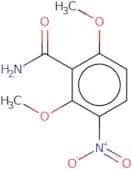
Fórmula:C7H8N4O2•HNO3Pureza:Min. 95%Forma y color:PowderPeso molecular:243.18 g/mol2,6-Dimethoxy-3-nitrobenzamide
CAS:2,6-Dimethoxy-3-nitrobenzamide is a fine chemical that is used as an intermediate in the synthesis of other compounds. This material can be used to make pharmaceuticals and research chemicals, such as antibiotics and pesticides. 2,6-Dimethoxy-3-nitrobenzamide is a versatile building block that can be used for the production of many different compounds. It has a CAS number of 55776-15-3 and has been assigned the Chemical Abstracts Service (CAS) registry number of 71887-92-8.
Fórmula:C9H10N2O5Pureza:Min. 90%Forma y color:PowderPeso molecular:226.19 g/molMethyl 4-hydroxy-3-nitrobenzoate
CAS:Methyl 4-hydroxy-3-nitrobenzoate (HNBP) is a nitro chemical that has been shown to have inhibitory properties. It was found to be a potent inhibitor of the virus covid-19, which is related to the pandemic H1N1 flu. Covid-19 is an influenza A virus that contains a single gene segment encoding for hemagglutinin and neuraminidase. The compound has also shown inhibitory activity against pyridine 2,4 dicarboxylate and is able to form hydrogen bonds with its target. This chemical is not active against many other compounds, such as amides and esters.Fórmula:C8H7NO5Pureza:Min. 95%Peso molecular:197.14 g/mol8-Nitroquinoline
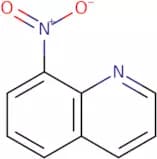
CAS:8-Nitroquinoline is a nitrogenous compound that has been used as an inhibitor of Leishmania, a parasite that causes leishmaniasis. 8-Nitroquinoline inhibits the growth of Leishmania by inhibiting the enzyme hepg2, which is involved in the synthesis of lipids and cholesterol. The inhibition of this enzyme leads to the accumulation of malonic acid, which inhibits the production of ATP. This inhibition may lead to cell death or inhibitory effects on other enzyme activities. 8-Nitroquinoline has been shown to be effective against Leishmania parasites in vivo.Fórmula:C9H6N2O2Pureza:Min. 95%Forma y color:PowderPeso molecular:174.16 g/mol4-Nitroquinoline-N-oxide
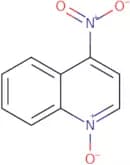
CAS:4-Nitroquinoline-N-oxide is a polymerase chain reaction (PCR) inhibitor that blocks the activity of methyltransferases, which are enzymes involved in DNA replication and repair. The mechanism of action has been shown to be due to the inhibition of the activities of these enzymes in cancer tissues. The efficacy of 4-Nitroquinoline-N-oxide has been demonstrated using an experimental model system composed of cells from Candida glabrata and other cancers, as well as a model system for carcinogenesis in vitro. This compound also shows antiinflammatory activity and can be used as a natural compound for chemotherapy. Chromatographic analysis has revealed that 4-Nitroquinoline-N-oxide is not toxic to wild type strains, but it is toxic to cancer cells with mutations in their DNA repair mechanisms.Fórmula:C9H6N2O3Pureza:Min. 95%Forma y color:PowderPeso molecular:190.16 g/mol2-Methyl-3-nitroanisole
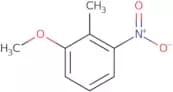
CAS:2-Methyl-3-nitroanisole is a synthetic molecule with a bicyclic, cyclized ring system. It was synthesized by the cyclization reaction of 2-methylbenzaldehyde and nitroethane. The reductive amination of 2-methyl-3-nitroanisole with hydroxylamine yields a mixture of products that can be used to study intramolecular reductive amination.Fórmula:C8H9NO3Pureza:Min. 95%Forma y color:PowderPeso molecular:167.16 g/mol