Nitro
Los compuestos nitro son moléculas orgánicas que contienen uno o más grupos nitro (NO2). Estos compuestos se utilizan ampliamente en la síntesis de explosivos, productos farmacéuticos y colorantes. En CymitQuimica, ofrecemos una amplia gama de compuestos nitro de alta calidad para apoyar sus aplicaciones de investigación e industriales, asegurando resultados seguros y efectivos. Nuestra selección incluye una variedad de compuestos nitro adecuados para diferentes síntesis químicas y aplicaciones.
Se han encontrado 2516 productos de "Nitro"
Ordenar por
Pureza (%)
0
100
|
0
|
50
|
90
|
95
|
100
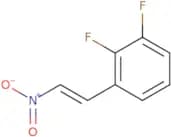
1-(2',3'-Difluorophenyl)-2-nitroethene
CAS:1-(2',3'-Difluorophenyl)-2-nitroethene (1,2-DFNE) is a speciality chemical that is used as an intermediate for the synthesis of a wide variety of organic compounds. It has been found to be a useful scaffold for the synthesis of complex compounds and can also be used as a building block for the synthesis of fine chemicals, research chemicals, and versatile building blocks. 1,2-DFNE is soluble in many organic solvents and can be handled without special precautions. This reagent is a high quality compound with purity greater than 99%.Fórmula:C8H5F2NO2Pureza:Min. 95%Forma y color:PowderPeso molecular:185.13 g/mol3-Amino-5-nitro-2,1-benzisothiazole
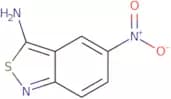
CAS:3-Amino-5-nitro-2,1-benzisothiazole is a diazonium salt that is used in wastewater treatment. It reacts with hydrogen peroxide to produce an unstable amine and a stable glycol ether. This process is known as the 3ABA reaction. The amine can be cleaved by water to produce ammonia and nitrous acid. Nitrous acid can react with organic matter in wastewater to form nitrate salts, which are soluble and easily removed from the wastewater stream. 3-Amino-5-nitro-2,1-benzisothiazole is also used in the manufacture of polyethylene terephthalate (PET) plastics. PET plastics are resistant to staining and have excellent color clarity.Fórmula:C7H5N3O2SPureza:Min. 98 Area-%Forma y color:PowderPeso molecular:195.2 g/mol2,7-Dinitrofluorene
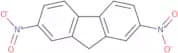
CAS:<p>2,7-Dinitrofluorene is a nitro compound that is used as an analytical reagent. It is used in the determination of redox potentials and is commonly used to measure the activity of nitroreductases. 2,7-Dinitrofluorene is also a genotoxic agent that causes DNA damage by producing reactive oxygen species (ROS), which react with DNA bases and cause strand breaks. Nitroreductase enzymes catalyze the reduction of nitro groups to amines, which are then converted to ammonia. This process produces ammonia, which reacts with other compounds in the body to form nitrosamines. Nitrosamines have been shown to be carcinogenic in animal models, and some of these compounds can be found in human tissues.</p>Fórmula:C13H8N2O4Pureza:Min. 95%Forma y color:PowderPeso molecular:256.21 g/mol2,4-Dinitro-5-fluorotoluene
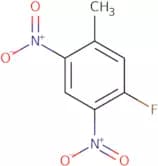
CAS:<p>2,4-Dinitro-5-fluorotoluene is a fine chemical that can be used as a versatile building block in the synthesis of complex compounds. It is an intermediate in many reactions involving aliphatic nitro compounds and has been shown to be reactive with aromatic amines. This chemical has been used as a research chemical for the detection of proteins and nucleic acids and is also a good reagent for the synthesis of other chemicals. The compound reacts quickly with acid to produce a highly explosive gas which can be stabilized by reacting it with potassium nitrate or sodium bicarbonate.</p>Fórmula:C7H5FN2O4Pureza:Min. 95%Forma y color:PowderPeso molecular:200.12 g/mol5,5-dimethyl-2-(((3-nitrophenyl)amino)methylene)cyclohexane-1,3-dione
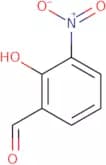
CAS:Please enquire for more information about 5,5-dimethyl-2-(((3-nitrophenyl)amino)methylene)cyclohexane-1,3-dione including the price, delivery time and more detailed product information at the technical inquiry form on this pagePureza:Min. 95%3-Nitrosalicylaldehyde
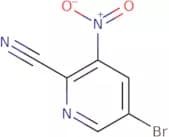
CAS:<p>3-Nitrosalicylaldehyde is an oxidizing agent that reacts with DNA in vitro to form DNA adducts. 3-Nitrosalicylaldehyde also has antioxidative properties, which can be demonstrated by its ability to inhibit the oxidation of low density lipoprotein (LDL) in vivo. This compound has been shown to activate the metalloproteinase MT2 receptor, which is involved in the regulation of blood pressure and heart function. 3-Nitrosalicylaldehyde is metabolized by hydrolysis and reduction to form a neutral product, which has been shown to have antidiabetic effects on mice.</p>Fórmula:C7H5NO4Pureza:Min. 95%Forma y color:PowderPeso molecular:167.12 g/mol5-Bromo-2-cyano-3-nitropyridine
CAS:<p>5-Bromo-2-cyano-3-nitropyridine is a medication that has been shown to be an effective inhibitor of the RET tyrosine kinase. It has been used in clinical studies to treat chronic kidney disease and has been shown to inhibit the growth of cancer cells. The molecular electrostatic potential (MEP) simulations have shown that 5-bromo-2-cyano-3-nitropyridine interacts with the reactive site of RET, inhibiting its function by binding to the nucleophilic substitutions. 5-Bromo-2-cyano-3-nitropyridine is synthesized from 2,5 dibromopyridine and 3 nitrobenzene at high yield. The molecule is chromatographically separated from impurities such as 4 bromo pyridine.</p>Fórmula:C6H2BrN3O2Pureza:Min. 95%Forma y color:PowderPeso molecular:228 g/mol2-[(Ethylamino)methyl]-4-nitrophenol
CAS:<p>Please enquire for more information about 2-[(Ethylamino)methyl]-4-nitrophenol including the price, delivery time and more detailed product information at the technical inquiry form on this page</p>Fórmula:C9H12N2O3Pureza:Min. 95%Forma y color:PowderPeso molecular:196.2 g/mol5-Fluoro-2-nitrobenzonitrile
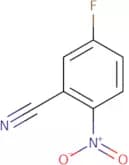
CAS:<p>5-Fluoro-2-nitrobenzonitrile is a synthetic compound that has been shown to inhibit the growth of tumor cells. It binds to nucleic acids and causes DNA damage, which leads to cell death. 5-Fluoro-2-nitrobenzonitrile inhibits the synthesis of proteins in cancer cells and also induces their apoptosis. The molecular modeling data indicates that this molecule has a hydrophobic pocket that can be used for targeting tumour cells. X-ray crystallography studies have confirmed that 5-fluoro-2-nitrobenzonitrile binds selectively to the minor groove of dna, suggesting its inhibitory potency against tumour cells.</p>Fórmula:C7H3FN2O2Pureza:Min. 95%Forma y color:Off-White PowderPeso molecular:166.11 g/molMethyl 4-amino-3-nitrobenzoate
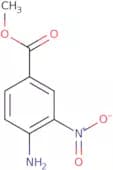
CAS:Methyl 4-amino-3-nitrobenzoate is a synthetic compound that has been found to have a variety of uses. It has been used to prepare intramolecular hydrogen bonds in anilines, and it can be used as an intermediate to synthesize amides and anilines. This molecule also forms resonance structures with the nitro group, which allows for increased stability. The proton magnetic resonance spectra of Methyl 4-amino-3-nitrobenzoate show that the molecule has a high degree of symmetry, which is due to the presence of intramolecular hydrogen bonding.Fórmula:C8H8N2O4Pureza:Min. 95%Peso molecular:196.16 g/mol1,8-Dihydroxy-4,5-dinitroanthraquinone
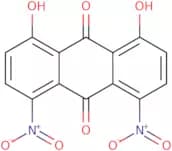
CAS:<p>1,8-Dihydroxy-4,5-dinitroanthraquinone (1,8DDNA) is a chemical inhibitor that inhibits the protease activity of ns3 protease. 1,8DDNA has been shown to inhibit the replication of wild-type virus in cell culture. This molecule also inhibits methyl transferase and structural analysis. The second-order rate constant for this compound was found to be 0.64 M-1s-1 at pH 7.5 in the presence of 10 mM NaCl and 5 mM Tris buffer at pH 8.0. 1,8DDNA's solubility data indicates that it is soluble in water with a solubility limit of 9 g/L at 25°C; however, its solubility decreases as the temperature increases.</p>Fórmula:C14H6N2O8Pureza:Min. 95%Peso molecular:330.21 g/molMethyl 3-hydroxy-4-nitrobenzoate
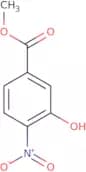
CAS:<p>Methyl 3-hydroxy-4-nitrobenzoate is a surfactant that has been shown to interact with toxins in the environment, such as polycyclic aromatic hydrocarbons. Methyl 3-hydroxy-4-nitrobenzoate interacts with these toxins by forming heterodimers and stabilizing them in solution. This interaction is achieved through hydrophobic interactions between the carboxylate group of methyl 3-hydroxy-4-nitrobenzoate and the other molecule's hydrophobic regions. The thermodynamic parameters for this interaction are determined by titration calorimetry.</p>Fórmula:C8H7NO5Pureza:Min. 95%Forma y color:PowderPeso molecular:197.14 g/mol1-(4-Nitrophenyl)glycerol
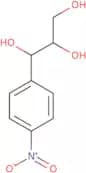
CAS:<p>1-(4-Nitrophenyl)glycerol has been shown to inhibit the growth of Gram-positive bacteria, including Streptococcus faecalis, and Gram-negative bacteria, including Pseudomonas aeruginosa. It is also used as a sample preparation for antimicrobial resistance testing.</p>Fórmula:C9H11NO5Pureza:Min. 97 Area-%Forma y color:Off-White PowderPeso molecular:213.19 g/mol3-Fluoro-2-nitrobenzoic acid ethyl ester
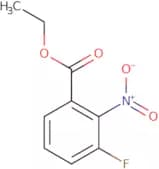
CAS:3-Fluoro-2-nitrobenzoic acid ethyl ester is a fine chemical that is useful as a versatile building block in the synthesis of complex compounds. It can be used as an intermediate in the preparation of research chemicals and has been shown to react with amines to form nitrosoamines, which are useful reaction components. 3-Fluoro-2-nitrobenzoic acid ethyl ester has CAS number 163077-89-2 and is available at high quality.Fórmula:C9H8FNO4Pureza:Min. 95%Forma y color:PowderPeso molecular:213.16 g/mol3-Bromo-2-hydroxy-5-nitrobenzaldehyde
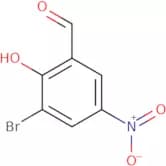
CAS:3-Bromo-2-hydroxy-5-nitrobenzaldehyde is a hydroxy group with a formyl group, an imine and an isomeric structure. It can be used as a fluorescence probe in biological studies. The compound has been shown to have antioxidant activity, which may be due to its ability to donate hydrogen bonds or its ability to act as a phenylhydrazone. 3-Bromo-2-hydroxy-5-nitrobenzaldehyde also has the ability to react with ammonium nitrate and produce nitrogen gas (NH3) when heated. This reaction is exothermic and produces an orange color.Fórmula:C7H4BrNO4Pureza:Min. 95%Forma y color:PowderPeso molecular:246.02 g/molp-Nitrobenzyl 6-(1'-hydroxyethyl)-azabicyclo(3.2.0)heptane-3,7-dione-2-carboxylate
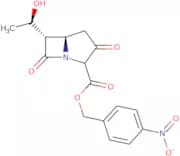
CAS:p-Nitrobenzyl 6-(1'-hydroxyethyl)-azabicyclo(3.2.0)heptane-3,7-dione-2-carboxylate is a drug substance that is used in the manufacture of carbapenem antibiotics. It can be detected by a chloride ion chromatographic method, and the detection limit is 0.5 mg/L in the presence of zinc powder as a modifier. This material is used to prepare carbapenems using an analytical method that includes reaction monitoring by optical rotation, diastereomer chromatography, and transfer.Fórmula:C16H16N2O7Pureza:Min. 95%Forma y color:PowderPeso molecular:348.31 g/mol2-Bromo-6-nitrophenol
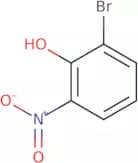
CAS:<p>2-Bromo-6-nitrophenol is a synthetic chemical that is used as an intermediate in the synthesis of other chemicals. It can be prepared by reacting ammonium formate with hydroxyl group of 2-bromo-6-nitropyridine. The reaction yield can be improved by activating the hydroxyl group and removing impurities through a dehydration reaction. The time required for the reaction to occur can be shortened by using acetonitrile as a solvent instead of water. This chemical is also synthesized by coupling metal salts with nitro groups or amines, which are called Suzuki coupling reactions.</p>Fórmula:C6H4BrNO3Forma y color:PowderPeso molecular:218 g/molNitrovin
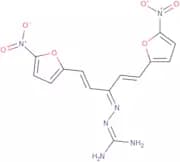
CAS:<p>Nitrovin (difurazone) is widely used as an antibacterial growth promotor in livestock. Nitrovin was shown to inhibit Salmonella growth both in vitro and in vivo (in chickens). It induces ROS-mediated non-apoptotic and apoptotic-like cell death by targeting TrxR1.</p>Fórmula:C14H12N6O6Pureza:Min. 95%Forma y color:PowderPeso molecular:360.28 g/molN-Nitroso-N-methyl-4-aminobutyric acid
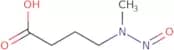
CAS:<p>N-Nitroso-N-methyl-4-aminobutyric acid (NMBA) is a solid with a low melting point which has been identified as a potentially carcinogenic component of both tobacco and tobacco smoke. NMBA is also one of a number of nitrosamine impurities which have been found to be present in angiotensin II receptor blocker (ARB) drugs used to treat high blood pressure.</p>Fórmula:C5H10N2O3Pureza:Min. 98 Area-%Forma y color:Slightly Yellow PowderPeso molecular:146.14 g/mol3-Hydroxy-5-nitrobenzoic acid
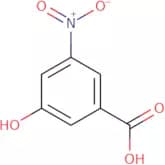
CAS:<p>3-Hydroxy-5-nitrobenzoic acid is a reactive mesomorphic compound. It is often used as an analytical reagent and has been shown to be useful in spectrometric analysis of amino acid sequences. 3-Hydroxy-5-nitrobenzoic acid can be quantified by gas chromatography and mass spectrometry to determine its chemical composition. 3-Hydroxybenzoic acid and 2,5-dihydroxybenzoic acid are the two main products that are formed when this compound reacts with hydroxyl radical under certain conditions.</p>Fórmula:C7H5NO5Pureza:Min. 98%Forma y color:PowderPeso molecular:183.12 g/mol


![2-[(Ethylamino)methyl]-4-nitrophenol](/_next/image/?url=https%3A%2Fstatic.cymitquimica.com%2Fproducts%2F3D%2Fthumb-webp%2FFE23132.webp&w=3840&q=75)