Nitro
Los compuestos nitro son moléculas orgánicas que contienen uno o más grupos nitro (NO2). Estos compuestos se utilizan ampliamente en la síntesis de explosivos, productos farmacéuticos y colorantes. En CymitQuimica, ofrecemos una amplia gama de compuestos nitro de alta calidad para apoyar sus aplicaciones de investigación e industriales, asegurando resultados seguros y efectivos. Nuestra selección incluye una variedad de compuestos nitro adecuados para diferentes síntesis químicas y aplicaciones.
Se han encontrado 2516 productos de "Nitro"
Ordenar por
Pureza (%)
0
100
|
0
|
50
|
90
|
95
|
100
4-Acetamido-2'-nitro-4'-(trifluoromethyl)diphenyl sulphone
CAS:<p>4-Acetamido-2'-nitro-4'-(trifluoromethyl)phenyl sulphone is a fine chemical that has versatile building block properties. It is a complex compound that has been used in research chemicals and as a reagent. 4-Acetamido-2'-nitro-4'-(trifluoromethyl)phenyl sulphone is also useful for the production of speciality chemicals and as an intermediate for the synthesis of high quality compounds, such as pharmaceuticals, agrochemicals and other industrial products. This product can be used as a reaction component or scaffold for the synthesis of new compounds.</p>Fórmula:C15H11F3N2O5SPureza:Min. 95%Forma y color:PowderPeso molecular:388.32 g/mol4-Nitrophenylboronic acid
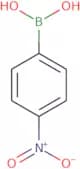
CAS:4-Nitrophenylboronic acid is a chemical compound that has been shown to inhibit the enzyme PTP1B. This enzyme is responsible for the phosphorylation of proteins and plays an important role in regulating insulin release, glucose uptake, and fat metabolism. The inhibition of this enzyme by 4-Nitrophenylboronic acid is reversible and potent. It has also been shown to have anticancer activity in vitro and in vivo, as well as cross-coupling with other boronic acids to form new compounds with different biological activities.Fórmula:C6H6BNO4Pureza:Min. 95%Forma y color:PowderPeso molecular:166.93 g/mol1-(3-Hydroxy-4-methoxyphenyl)-2-nitroethane
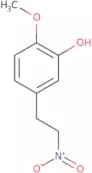
CAS:1-(3-Hydroxy-4-methoxyphenyl)-2-nitroethane is a chemical intermediate that can be used in the synthesis of other compounds. It is a fine chemical with many potential uses, as well as being a versatile building block for organic synthesis. As an example, 1-(3-Hydroxy-4-methoxyphenyl)-2-nitroethane can be used to synthesize the drug erythromycin. This chemical has been shown to have antihistamine and antiinflammatory properties.Fórmula:C9H11NO4Pureza:Min. 95%Peso molecular:197.19 g/molN-Nitrosodipropylamine
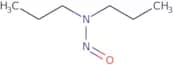
CAS:<p>N-Nitrosodipropylamine is a chemical that is used in wastewater treatment. It is found in acetate extracts of sewage sludge and has been shown to inhibit the activity of rat liver microsomes. N-Nitrosodipropylamine has been linked to cancer, and although it has not been shown to cause cancer in rats, it does have carcinogenic potential. This chemical also inhibits the activity of bacterial cytochrome P450 enzymes, which are important for regulating the synthesis of lipids, steroids, and other biologically important molecules. N-Nitrosodipropylamine has also been shown to be an anthelmintic drug, but when administered orally or intraperitoneally at high doses, it causes maternal toxicity and fetal death in pregnant rats. The use of this drug should therefore be avoided during pregnancy.</p>Fórmula:C6H14N2OPureza:Min. 95%Forma y color:Clear LiquidPeso molecular:130.19 g/mol4-Hydroxy-3-nitrobenzoic acid
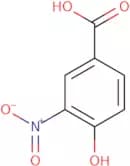
CAS:<p>4-Hydroxy-3-nitrobenzoic acid is an antioxidant that has been studied for its potential therapeutic effects on pancreatitis. This compound is a precursor to protocatechuic acid, a molecule that helps to protect the pancreas. 4-Hydroxy-3-nitrobenzoic acid is also used in the preparation of hydroxide solution and activated carbon. The terminal half-life of this compound is approximately 15 hours, with a plasma concentration–time curve that peaks at about 2 hours after administration. The biological activity of 4-Hydroxy-3-nitrobenzoic acid can be increased by reaction with sodium hydroxide solution or 5 nitrosalicylic acid.</p>Fórmula:C7H5NO5Pureza:Min. 95%Peso molecular:183.12 g/mol5-Nitro-3-pyrazolecarboxylic acid
CAS:5-Nitro-3-pyrazolecarboxylic acid is a lead compound that has been shown to induce transcription of the gene encoding for the transcription factor, PPARγ. This molecule has also been shown to have anti-cancer and anti-diabetic properties in cellular and animal models. 5-Nitro-3-pyrazolecarboxylic acid has been observed to interact with other molecules by bonding to them or inhibiting their function. These interactions may be responsible for some of its diverse effects on metabolic disease, cancer, and transcription factors.Fórmula:C4H3N3O4Pureza:Min. 95%Forma y color:PowderPeso molecular:157.08 g/mol2-Nitro-4-ethylsulfonylchlorobenzene
CAS:<p>2-Nitro-4-ethylsulfonylchlorobenzene is a high quality, versatile and useful chemical. It has been used as an intermediate in the synthesis of other compounds, such as pharmaceuticals. As a reagent, it has been used to form complex compounds and to produce fine chemicals. 2-Nitro-4-ethylsulfonylchlorobenzene is also a useful scaffold for the production of research chemicals. This compound has shown potential for use in the production of speciality chemicals or as a reaction component.</p>Fórmula:C8H8ClNO4SPureza:Min. 95%Forma y color:PowderPeso molecular:249.67 g/mol2-Fluoro-6-nitrotoluene
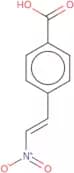
CAS:<p>2-Fluoro-6-nitrotoluene is a nitro compound that is used as an additive in the manufacture of pesticides. It has been shown to have addictive properties and is structurally similar to 2,4-dinitrotoluene and other nitrotoluenes. The conformational and structural stability of 2-fluoro-6-nitrotoluene has been studied using computational methods. These studies revealed that its activation energy for cyclization was about 5 kcal/mol higher than that of 2,4-dinitrotoluene. This difference in activation energy can be attributed to fluorine substitutions on the aromatic ring. In addition, it can be seen from the vibrational spectra of these two compounds that they are not identical.</p>Fórmula:C7H6FNO2Pureza:Min. 95%Forma y color:LiquidPeso molecular:155.13 g/mol1-(4-Carboxyphenyl)-2-nitroethene
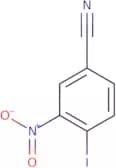
CAS:<p>1-(4-Carboxyphenyl)-2-nitroethene is a reagent that belongs to the group of speciality chemicals. It has been used as a reaction component in organic synthesis and as a building block for more complex compounds. 1-(4-Carboxyphenyl)-2-nitroethene is an effective intermediate for the synthesis of fine chemicals such as pesticides, pharmaceuticals, and herbicides. It is also used as an intermediate in the production of dyes and pigments.</p>Fórmula:C9H7NO4Pureza:Min. 95%Peso molecular:193.16 g/mol4-Iodo-3-nitrobenzonitrile
CAS:4-Iodo-3-nitrobenzonitrile is a chemical intermediate that can be used to synthesize other chemicals. It is an aromatic compound with the formula CHNO. 4-Iodo-3-nitrobenzonitrile can be used as a reactive building block in organic synthesis and has shown to be useful in the preparation of complex compounds that are difficult to prepare by other methods. This chemical has been shown to have high quality and is stable at room temperature.Fórmula:C7H3IN2O2Pureza:Min. 95 Area-%Forma y color:PowderPeso molecular:274.02 g/mol3-Nitrophenylacetic acid
CAS:3-Nitrophenylaceticacid (3NPAA) is a nitro compound that is used as an intermediate in the synthesis of other organic compounds. It can be synthesized by reacting phenylacetic acid with nitric acid, which is then oxidized to 3-nitrophenol with potassium permanganate. The product is then reacted with acetic anhydride to produce 3-nitrophenylacetic acid. This chemical has been shown to inhibit plant physiology and chlorophyll production by binding reversibly to the protein photosystem II in plants. 3-Nitrophenylaceticacid reacts with chloride ions to form a reversible covalent bond, which may be hydrolyzed by water or alkali.Fórmula:C8H7NO4Pureza:Min. 95%Forma y color:PowderPeso molecular:181.15 g/mol5-Bromo-2-nitrophenol
CAS:<p>5-Bromo-2-nitrophenol is an organic compound that is used in the industrial production of drugs and dyes. It is soluble in ethanol, but insoluble in water. 5-Bromo-2-nitrophenol can be obtained by extracting it from the filtrate of a solution of potassium tert-butyl ether with aqueous ethanol. The extraction process involves adding morpholine to the solution, which is then heated and refluxed. This process yields high yields of 5-bromo-2-nitrophenol.</p>Fórmula:C6H4BrNO3Pureza:Min. 95%Forma y color:Yellow solid.Peso molecular:218 g/mol3,5-Dinitro-2-hydroxyphenylacetic acid
<p>3,5-Dinitro-2-hydroxyphenylacetic acid is a high quality reagent useful as an intermediate in the synthesis of complex compounds. It is also an important building block in the synthesis of fine chemicals and research chemicals. 3,5-Dinitro-2-hydroxyphenylacetic acid can be used in many chemical reactions due to its versatility as a building block. This compound has CAS number 51343-07-9 and is classified as a speciality chemical.</p>Pureza:Min. 95%3,6-Dinitro-1,8-naphthalenedicarboxylicanhydride
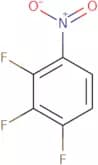
CAS:3,6-Dinitro-1,8-naphthalenedicarboxylic anhydride is a fine chemical that is used as a building block in the synthesis of other compounds. It is also used as a reagent and can be found in research chemicals with CAS No. 3807-80-5. 3,6-Dinitro-1,8-naphthalenedicarboxylic anhydride is versatile and has many uses as a reaction component. The compound can be used to produce complex compounds or scaffolds that are useful in research.Fórmula:C12H4N2O7Pureza:Min. 95%Forma y color:Beige PowderPeso molecular:288.17 g/mol2,3,4-Trifluoronitrobenzene
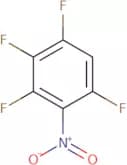
CAS:<p>2,3,4-Trifluoronitrobenzene is a chemical compound that contains fluorine and nitrogen. It can be used in the synthesis of medicines to treat cancer and autoimmune diseases. The reaction of 2,3,4-trifluoronitrobenzene with hydrochloric acid produces hydrogen fluoride and nitrous acid. Hydroxide solution is then added to the mixture, which causes a series of chemical reactions involving hydrogen ions. This process results in the formation of a factor receptor that is activated by growth factors. This activated factor receptor is then involved in eye disorders such as age-related macular degeneration and retinitis pigmentosa.</p>Fórmula:C6H2F3NO2Pureza:Min. 95%Peso molecular:177.08 g/mol2,3,4,6-Tetrafluoronitrobenzene
CAS:2,3,4,6-Tetrafluoronitrobenzene is a fluorinated molecule that has been shown to be an excellent substrate for the hydrolysis of acetonitrile. The reaction products are a mixture of ortho and para isomers with equal amounts of 2,3,4- and 6-fluoro derivatives. The rate of the reaction is dependent on the number of water molecules present in the system. Tetramethylguanidine (TMG) can be used as a catalyst to increase the rate of the hydrolysis reaction without changing its course. The result is an increased yield with decreased time required to complete the experiment.Fórmula:C6HF4NO2Pureza:Min. 95%Forma y color:Light (Or Pale) Yellow To Yellow LiquidPeso molecular:195.07 g/mol4-Nitrobenzyl cyanide
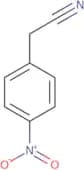
CAS:<p>4-Nitrobenzyl cyanide is a chemical compound that has been shown to have anticancer activity. 4-Nitrobenzyl cyanide inhibits acetylcholinesterase, an enzyme that is found in the synapse of certain nerve cells and breaks down acetylcholine, leading to cell death. It also has been shown to be a solid catalyst for organic reactions. Kinetic data was obtained using electrochemical impedance spectroscopy, which showed that this compound reacts with protons at a much slower rate than methyl ethyl ketone or protonated water.</p>Fórmula:C8H6N2O2Pureza:Min. 95%Forma y color:PowderPeso molecular:162.15 g/mol4-Acetamido-2-nitrodiphenyl sulphone
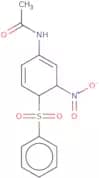
CAS:4-Acetamido-2-nitrodiphenyl sulphone is a fine chemical that is used as a versatile building block for research chemicals and complex compounds. The compound can be used as an intermediate for the synthesis of other compounds and reaction components for the manufacture of speciality chemicals. 4-Acetamido-2-nitrodiphenyl sulphone has a CAS number of 914636-75-2, and its high quality makes it a useful scaffold in the development of new drugs.Fórmula:C14H12N2O5SPureza:Min. 95%Peso molecular:320.32 g/mol1,2-Dimethyl-3-nitrobenzene
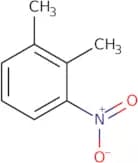
CAS:<p>1,2-Dimethyl-3-nitrobenzene is an organic compound that is a diazonium salt. It reacts with hydrochloric acid to form diazonium chloride and disulfide. The reaction vessel should be acidic in order to promote the reaction. The structural analysis of 1,2-dimethyl-3-nitrobenzene has been conducted using a model system. The structural analysis revealed that 1,2-dimethyl-3-nitrobenzene is an organic molecule with a single bond between the methyl group and the nitro group. The reaction products are nitric acid and dimethylamine hydrochloride. The reaction solution contains water, hydrochloric acid, and dimethylamine hydrochloride.</p>Fórmula:C8H9NO2Pureza:Min. 95%Forma y color:Yellow Clear LiquidPeso molecular:151.16 g/mol2-Nitro-1,8-naphthalic anhydride
CAS:<p>2-Nitro-1,8-naphthalic anhydride is a chemical compound that is used as a photochemical reagent. It reacts with amines to produce nitrosoamines, which are useful in the detection of dna duplexes and nucleophiles. 2-Nitro-1,8-naphthalic anhydride has fluorescence properties and is used as a photoacceptor in photophysical studies. This molecule has been shown to be stable when exposed to light and can be used for optical measurements. 2-Nitro-1,8-naphthalic anhydride is soluble in organic solvents such as chloroform or ether and insoluble in water.</p>Fórmula:C12H5NO5Pureza:90%Forma y color:PowderPeso molecular:243.17 g/mol