Nitro
Los compuestos nitro son moléculas orgánicas que contienen uno o más grupos nitro (NO2). Estos compuestos se utilizan ampliamente en la síntesis de explosivos, productos farmacéuticos y colorantes. En CymitQuimica, ofrecemos una amplia gama de compuestos nitro de alta calidad para apoyar sus aplicaciones de investigación e industriales, asegurando resultados seguros y efectivos. Nuestra selección incluye una variedad de compuestos nitro adecuados para diferentes síntesis químicas y aplicaciones.
Se han encontrado 2516 productos de "Nitro"
Ordenar por
Pureza (%)
0
100
|
0
|
50
|
90
|
95
|
100
4-Nitro-4'-aminodiphenyl sulfone
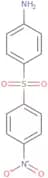
CAS:<p>4-Nitro-4'-aminodiphenyl sulfone is a surfactant that is used in a variety of industries, including wastewater treatment and the manufacture of plastics. It has been shown to inhibit the synthesis of fatty acids and other molecules in cells. 4-Nitro-4'-aminodiphenyl sulfone also inhibits the synthesis of regulatory pathways involved in antimicrobial resistance in bacteria such as chlorobium and solanum tuberosum. The inhibition of fatty acid biosynthesis by 4-nitro-4'-aminodiphenyl sulfone may be due to its ability to bind to catalytic sites on enzymes responsible for this process. This binding prevents them from functioning properly, resulting in an accumulation of fatty acid precursors.</p>Fórmula:C12H10N2O4SPureza:Min. 95%Peso molecular:278.28 g/mol(R,S)-N-Nitroso anatabine
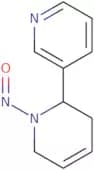
CAS:<p>(R,S)-N-Nitroso anatabine is a nitrosamine that is used as an analytical standard for the determination of the covalent binding of carcinogens to DNA. It can be synthesized by reacting (R,S)-N-nitrosodimethylamine with nitric acid in the presence of aluminum chloride. The structure and purity of this compound were confirmed by LC-MS/MS. The compound was found to be carcinogenic when administered to female mice, but not male mice. The carcinogenicity was attributed to the formation of DNA adducts in tissues and the induction of chromosomal aberrations.</p>Fórmula:C10H11N3OPureza:Min. 95%Forma y color:Clear LiquidPeso molecular:189.21 g/mol2-Amino-4-chloro-3-nitropyridine
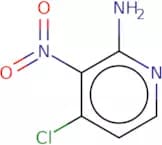
CAS:<p>2-Amino-4-chloro-3-nitropyridine is a potent inhibitory molecule that inhibits the activity of the enzyme acetylcholinesterase. It has been used in the treatment of chronic pain, and has been shown to be effective for inhibiting malonate esters and amino acid esters. This drug is an ethyl ester that can be synthesized from chlorobenzene and malonic acid by chlorinating it with chlorine gas. 2-Amino-4-chloro-3-nitropyridine has also been shown to have a high affinity for malonic acid diethyl esters.</p>Fórmula:C5H4ClN3O2Pureza:Min. 98 Area-%Forma y color:PowderPeso molecular:173.56 g/mol1-(4-Nitro-3-piperidin-1-ylphenyl)piperazine
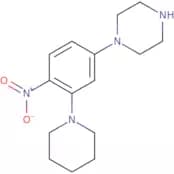
CAS:1-(4-Nitro-3-piperidin-1-ylphenyl)piperazine is a synthetic molecule that is used as a polymerization initiator. It can be used to prepare polymers with functional groups that contain nitro and piperidine groups. 1-(4-Nitro-3-piperidin-1-ylphenyl)piperazine reacts with monomers such as thiourea, which are then polymerized by the addition of other reagents such as solvents or catalysts. The most common use of 1-(4-Nitro-3-piperidin-1-ylphenyl)piperazine is in the synthesis of nalidixic acid, an antibiotic drug that inhibits bacterial growth by preventing DNA replication. This compound has been shown to be nonhazardous to humans and animals in bioassays, although it may cause toxic effects on the skin, eyes, and respiratory system when exposedFórmula:C15H22N4O2Pureza:Min. 95%Peso molecular:290.36 g/mol4-Nitro-1H-imidazole-1-ethanol
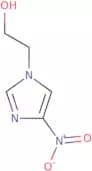
CAS:<p>Please enquire for more information about 4-Nitro-1H-imidazole-1-ethanol including the price, delivery time and more detailed product information at the technical inquiry form on this page</p>Fórmula:C5H7N3O3Pureza:Min. 95%Forma y color:Beige PowderPeso molecular:157.13 g/mol3,4-Dinitrophenol
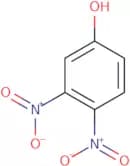
CAS:Producto controlado<p>3,4-Dinitrophenol is a yellow solid that is chemically synthesized from 2,4-dinitrobenzene and morpholine. 3,4-Dinitrophenol is a high energy compound with an activation energy of about 28 kcal/mol. The endpoints for the reaction are oligosaccharides and the acceptor is an ionisation mass. This molecule has a pyrazole ring and can be classified as belonging to group P2 on the periodic table of elements. 3,4-Dinitrophenol has been found to have biological functions in organic solvents such as acetone or benzene.</p>Fórmula:C6H4N2O5Pureza:Min. 95%Forma y color:PowderPeso molecular:184.11 g/molDiethyl[2-(4-nitrophenoxy)ethyl]amine
CAS:Producto controlado<p>Please enquire for more information about Diethyl[2-(4-nitrophenoxy)ethyl]amine including the price, delivery time and more detailed product information at the technical inquiry form on this page</p>Fórmula:C12H18N2O3Pureza:Min. 95%Peso molecular:238.28 g/molN-Nitroso-N-methyl-4-aminobutyric acid methyl ester
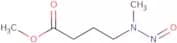
CAS:<p>Please enquire for more information about N-Nitroso-N-methyl-4-aminobutyric acid methyl ester including the price, delivery time and more detailed product information at the technical inquiry form on this page</p>Fórmula:C6H12N2O3Pureza:Min. 95%Peso molecular:160.17 g/mol3-Chloro-7-nitro-1H-indole
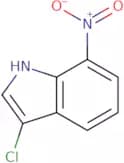
CAS:3-Chloro-7-nitro-1H-indole is a chemical compound that has been shown to have antitumor activity in clinical trials. It is catalysed by the addition of chloride ions to the nitro group, yielding an aminocarbonyl intermediate. This intermediate reacts with hydrogen chloride to form a chlorinating agent that can react with DNA and protein bases. The chlorinating agent has been shown to be efficient in screening for anticancer drugs. 3-Chloro-7-nitro-1H-indole is currently being tested for efficacy against colon carcinoma cells and human colon carcinoma xenografts.Fórmula:C8H5ClN2O2Pureza:Min. 95%Peso molecular:196.59 g/mol2-Bromo-4-nitrophenol
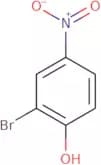
CAS:2-Bromo-4-nitrophenol is a byproduct of the reaction between hydrogen peroxide and sodium bromate. It can be detected in the presence of hydrochloric acid, which reacts with 2-bromo-4-nitrophenol to form an orange color that can be detected spectrophotometrically. 2-Bromo-4-nitrophenol has been shown to inhibit the growth of various strains of bacteria, including Escherichia coli, Bacillus subtilis, and Pseudomonas aeruginosa. This compound binds to flavin adenine dinucleotide (FAD) as well as other nucleophilic cofactors such as thioredoxin reductase. The binding affinity is increased when carbon sources are present. This property makes it a useful inhibitor for catalytic reduction reactions in biotechnology and synthetic chemistry applications.br>br> 2B4NP is a byFórmula:C6H4BrNO3Pureza:Min. 95%Forma y color:PowderPeso molecular:218 g/mol(R,S)-N-Nitroso anabasine
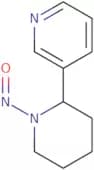
CAS:(R,S)-N-Nitroso anabasine is a nitrosamine that has been shown to be a potent carcinogen in laboratory animals. It is found in tobacco smoke and cigarette tar. The production of this chemical is related to the activity of cytochrome P450 (CYP) enzymes, which are involved in the metabolism of aromatic hydrocarbons. The carcinogenicity of (R,S)-N-nitroso anabasine has been demonstrated by its ability to induce cancer in laboratory animals when administered at high doses. This chemical has also been shown to have mutagenic effects on bacteria exposed to it. The mechanism for this effect is not known but may involve inhibition of DNA synthesis or oxidation of DNA bases. Toxicity studies have indicated that (R,S)-N-nitroso anabasine is toxic when administered orally or intravenously to rats and mice.Fórmula:C10H13N3OPureza:Min. 95%Forma y color:Clear LiquidPeso molecular:191.23 g/mol4-Nitro lenalidomide
CAS:<p>4-Nitro lenalidomide is an organic compound that is a derivative of the drug lenalidomide. It is synthesized by reacting 2-nitrobenzaldehyde with amines, yielding 4-nitro-N-(2-chloroethyl)-N-(2,3-dihydroxypropyl)benzamide or 4-nitrolenalidomide. This reaction occurs in tetrahydrofuran (THF) as a solvent and in the presence of sodium borohydride (NaBH4). The four nitro groups are used to control the enantiomeric purity of the product. The chemical formula for 4-nitro lenalidomide is C12H14ClNO2.</p>Fórmula:C13H11N3O5Pureza:Min. 95%Peso molecular:289.24 g/mol4-Nitrobenzoyl chloride
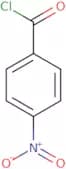
CAS:4-Nitrobenzoyl chloride is an amide that has been shown to have a number of pharmacokinetic properties. It binds to the gamma-aminobutyric acid (GABA) receptor, and has been shown to be a potent inhibitor of GABA transaminase in vitro. The structure of 4-Nitrobenzoyl chloride has been determined by FT-IR spectroscopy. The kinetic data for this compound showed that it is a substrate for diazonium salt and chloride reactions. 4-Nitrobenzoyl chloride is also found in wastewater and can cause cutaneous lesions in rats with high doses. This amine reacts with nitrous acid to form nitro compounds, which are known to be carcinogenic.Fórmula:C7H4ClNO3Pureza:Min. 95%Forma y color:Slightly Yellow PowderPeso molecular:185.56 g/mol5-Fluoro-2-nitroaniline
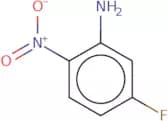
CAS:<p>5-Fluoro-2-nitroaniline is a sulfonated compound that acts as a growth factor. It has been shown to be effective in the treatment of cancer, especially in the epidermal growth factor receptor (EGFR) signaling pathway. 5-Fluoro-2-nitroaniline has also been shown to have antithrombotic properties and may be beneficial for cardiovascular diseases. This compound is an inhibitor of the human serum albumin binding site on EGFR and inhibits the activation of EGFR by its ligand, epidermal growth factor. The sulfonation reaction increases the polarity of the molecule, which has been attributed to increased activity against cancer cells.</p>Fórmula:C6H5FN2O2Pureza:Min. 95%Forma y color:PowderPeso molecular:156.11 g/mol2,5-Dimethoxy-4-nitroaniline
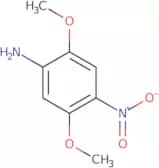
CAS:Producto controlado<p>Please enquire for more information about 2,5-Dimethoxy-4-nitroaniline including the price, delivery time and more detailed product information at the technical inquiry form on this page</p>Fórmula:C8H10N2O4Pureza:Min. 95%Peso molecular:198.18 g/mol4-Chloro-2-nitroaniline
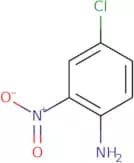
CAS:<p>4-Chloro-2-nitroaniline (4CNA) is a chemical that is used for wastewater treatment. 4CNA reacts with phosphorus pentachloride or phosphorus pentoxide to form phosphoric acid, which can be used as a pH buffer in water treatment applications. It is also used as an antidepressant treatment in pharmaceutical dosage and has been shown to have signal properties. 4CNA is also used in the production of monoclonal antibodies, n-dimethyl formamide and intracranial haemorrhage treatments. It can be produced by reacting hydrochloric acid with membrane systems at low energy.</p>Fórmula:C6H5ClN2O2Pureza:Min. 95%Peso molecular:172.57 g/mol1-(2-Nitrophenyl)-1,2-ethanediol
CAS:1-(2-Nitrophenyl)-1,2-ethanediol is a chemical that has been shown to inhibit the glutamate-induced increase in cytosolic Ca2+ concentration. It also prevents the loss of membrane integrity and protects against cell death by inhibiting apoptosis. 1-(2-Nitrophenyl)-1,2-ethanediol also inhibits amp-activated protein kinase activity and increases ATP production. These effects may be due to its ability to reduce intracellular Ca2+ levels and prevent Ca2+ overload in mitochondria. 1-(2-Nitrophenyl)-1,2-ethanediol has been shown to have a protective effect on isolated heart cells and ventricular myocytes from hypoxia/reoxygenation injury and is an effective model system for investigating biochemical properties of glutamate excitotoxicity.Fórmula:C8H9NO4Pureza:Min. 95%Forma y color:PowderPeso molecular:183.16 g/mol5-Nitropyridin-3-ol
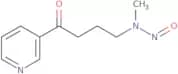
CAS:Please enquire for more information about 5-Nitropyridin-3-ol including the price, delivery time and more detailed product information at the technical inquiry form on this pageFórmula:C5H4N2O3Pureza:Min. 95%Peso molecular:140.1 g/mol4-(Methylnitrosoamino)-1-(3-pyridinyl)-1-butanone
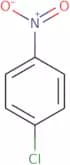
CAS:<p>4-(Methylnitrosoamino)-1-(3-pyridinyl)-1-butanone (NNK) is a carcinogenic chemical that has been identified in tobacco smoke. It induces squamous cell carcinomas in the respiratory tract of rodents and induces lung cancer in the offspring of pregnant rats exposed to NNK. This compound binds to double-stranded DNA, with high affinity for the minor groove, and inhibits DNA synthesis by binding to enzymes such as polymerase chain. In addition, it has been shown to cause transformation of epithelial cells into mesenchymal cells in vitro. 4-(Methylnitrosoamino)-1-(3-pyridinyl)-1-butanone binds to α7 nicotinic acetylcholine receptors and increases the response element activity.</p>Fórmula:C10H13N3O2Pureza:Min. 95%Forma y color:PowderPeso molecular:207.23 g/mol4-Chloronitrobenzene
CAS:<p>4-Chloronitrobenzene is a type strain of the bacterium Nitrosomonas europaea. It has been shown to be toxic to cells in both aerobic and anaerobic culture. 4-Chloronitrobenzene inhibits the activity of hydrogenase enzymes, which are required for the reduction of molecular oxygen to water. The toxicity of 4-chloronitrobenzene is due to its ability to inhibit enzyme activity, leading to cell death. This bacterium also has the ability to use chlorinated hydrocarbons as a carbon source and cause chlorination of other biological molecules. In addition, it can reduce metal hydroxides and form metal complexes with palladium and platinum metals. 4-Chloronitrobenzene is found in soil samples that have high concentrations of chloride ions or neutral pH values. Its phase equilibrium diagram shows that this compound exists mainly in liquid form when it is at low temperature, but becomes more</p>Fórmula:C6H4ClNO2Pureza:Min. 95%Forma y color:SolidPeso molecular:157.55 g/mol

![Diethyl[2-(4-nitrophenoxy)ethyl]amine](/_next/image/?url=https%3A%2Fstatic.cymitquimica.com%2Fproducts%2F3D%2Fthumb-webp%2FFD21808.webp&w=3840&q=75)