


Amidas
Las amidas son una amplia gama de compuestos químicos que contienen al menos un anillo heterocíclico, el cual posee átomos de al menos dos elementos diferentes en la estructura del anillo, y al menos un grupo amida (-CONH2). Estos compuestos son cruciales en la síntesis de productos farmacéuticos, polímeros y agroquímicos. Las amidas exhiben propiedades y reactividad únicas, lo que las hace valiosos intermediarios en la síntesis orgánica. En CymitQuimica, ofrecemos una selección integral de amidas de alta calidad para apoyar sus necesidades de investigación e industriales.
Se han encontrado 16485 productos de "Amidas"
Ordenar por
Pureza (%)
0
100
|
0
|
50
|
90
|
95
|
100
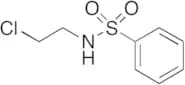
N-(2-Chloroethyl)benzenesulfonamide
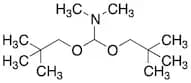
CAS:Producto controlado<p>Applications N-(2-Chloroethyl)benzenesulfonamide is an intermediate for the synthesis of Bensulide (B166000), which is an organophosphate acetylcholinesterase inhibitor used as an herbicide (1) in the protection of crops through pesticides (2). Drinking water contaminant candidate list 3 (CCL 3) compound as per United States Environmental Protection Agency (EPA), environmental, and food contaminants.<br></p>Fórmula:C8H10ClNO2SForma y color:NeatPeso molecular:219.69N,N-Dimethylformamide Dineopentyl Acetal
CAS:Producto controlado<p>Applications N,N-DIMETHYLFORMAMIDE DINEOPENTYL ACETAL (cas# 4909-78-8) is a useful research chemical.<br></p>Fórmula:C13H29NO2Forma y color:NeatPeso molecular:231.37N-(3-Acetylphenyl)-N-ethylacetamide
CAS:Producto controlado<p>Applications N-(3-Acetylphenyl)-N-ethylacetamide is a reactant used in the preparation of 5-Oxo-Zaleplon (O870470), a metabolite of Zaleplon (Z145000).<br></p>Fórmula:C12H15NO2Forma y color:NeatPeso molecular:205.25rac-cis-[3-Hydroxycyclohexyl]benzamide
CAS:Producto controlado<p>Applications rac-cis-[3-Hydroxycyclohexyl]benzamide (cas# 177366-89-1) is a compound useful in organic synthesis.<br></p>Fórmula:C13H17NO2Forma y color:NeatPeso molecular:219.28p-Vinylguaiacol-d3
CAS:Producto controlado<p>Applications p-Vinylguaiacol-d3 is the isotope labelled analog of p-Vinylguaiacol (V424960); an aromatic substance, one of the compounds responsible for the natural aroma of buckwheat, and also one of the major pyrolytic products of (E)-N-[(4-hydroxy-3-methoxy)-phenethyl]-3-[(3-methoxy-4-O-β-D-glucopyranosyloxy) phenyl] acrylamide; a new gycloside in tobacco.<br>References Janes, Damjan., et al.: Food Chem., 112(1), 120-124 (2009); Zhou, Rong., et al.: Yancao Keji, (7), 34-36, 42 (2013)<br></p>Fórmula:C9H7D3O2Forma y color:Clear ColourlessPeso molecular:153.19(AlphaS)-α-Amino-4-nitrobenzenepropanamide
CAS:Producto controlado<p>Applications (αS)-α-Amino-4-nitrobenzenepropanamide (cas# 81677-61-4) is a compound useful in organic synthesis.<br></p>Fórmula:C9H11N3O3Forma y color:NeatPeso molecular:209.2N-(2,6-Dimethylphenyl)-2-oxo-acetamide
CAS:Producto controladoFórmula:C10H11NO2Forma y color:NeatPeso molecular:177.2rac-trans-[3-Hydroxycyclohexyl]benzamide
CAS:Producto controlado<p>Applications rac-trans-[3-Hydroxycyclohexyl]benzamide (cas# 177366-90-4) is a compound useful in organic synthesis.<br></p>Fórmula:C13H17NO2Forma y color:NeatPeso molecular:219.28N-[3-(Diethylaminomethyl)-4-hydroxyphenyl]acetamide
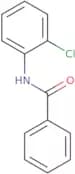
CAS:<p>N-[3-(Diethylaminomethyl)-4-hydroxyphenyl]acetamide is a molecule that has been shown to have acetylcholine esterase (AChE) inhibitory activity. It binds to the active site of AChE, preventing it from breaking down acetylcholine, leading to the accumulation of this neurotransmitter. The inhibition of AChE by N-[3-(Diethylaminomethyl)-4-hydroxyphenyl]acetamide prevents muscle contraction and leads to paralysis and death by asphyxiation. This drug has been used in the treatment of sarin gas poisoning. The molecular structure of N-[3-(Diethylaminomethyl)-4-hydroxyphenyl]acetamide is similar to that of pyridinium chlorides, which are used for synthesizing nerve agents such as sarin and soman. This drug also has a proton</p>Fórmula:C13H20N2O2Pureza:Min. 95%Forma y color:PowderPeso molecular:236.31 g/molN-(2-Chlorophenyl)benzamide
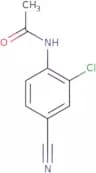
CAS:<p>N-(2-Chlorophenyl)benzamide is a phenanthridone that reacts with chlorides in the presence of anilines to form singlet carbonyls. The photocyclization of these carbonyls yields an electron-deficient product that can be converted to a reactive electrophile by the addition of chlorine. This electrophilic species reacts with electron-rich aromatic compounds, such as phenols and benzene, to produce substitution products. The reaction rate for this process is dependent on the isotope effect, which is the change in reactivity due to changes in the mass number of atoms. The use of deuterium chloride instead of hydrogen chloride provides a kinetic isotope effect, which enhances the reaction rate.</p>Fórmula:C13H10ClNOPureza:Min. 95%Peso molecular:231.68 g/molN-(4-Cyano-2-chlorophenyl)acetamide
CAS:N-(4-Cyano-2-chlorophenyl)acetamide is a versatile building block that is used in the synthesis of complex compounds. N-(4-Cyano-2-chlorophenyl)acetamide has been shown to be a useful intermediate in the synthesis of important compounds such as 4-aminoantipyrine, 4,5-dichloroanthranilic acid and 2,6-dichloropurine. This chemical has also been found to be an effective reagent for the preparation of other chemicals.Fórmula:C9H7ClN2OPureza:Min. 95%Peso molecular:194.62 g/molErucamide
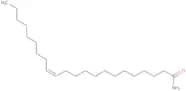
CAS:<p>Erucamide is a fatty acid amide that is a natural compound and part of the biochemical composition of microbial organisms. Erucamide has been shown to have antimicrobial activity against Gram-positive bacteria but not against Gram-negative bacteria. The mechanism by which erucamide kills bacteria is unknown, but it may be due to its hemolytic activity or its ability to inhibit protein synthesis. Erucamide is resistant to hydrolysis by trifluoroacetic acid and glycol ester, which makes it difficult for microbes to metabolize it.</p>Fórmula:C22H43NOPureza:Min. 95%Forma y color:PowderPeso molecular:337.58 g/mol1-Methyl-nicotinamide iodide
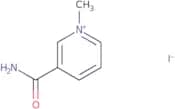
CAS:<p>1-Methyl-nicotinamide iodide is a drug that has been used in clinical trials for the treatment of type 2 diabetes mellitus. It is thought to work by increasing the sensitivity of cells to insulin, which may be related to its ability to bind to protein amide groups and form hydrogen bonds with the amino acid side chains. The compound also has been shown to increase the activity of the enzyme glycogen synthase in rats. 1-Methyl-nicotinamide iodide is soluble in water and human serum, and shows low solubility in ethanol. It has not been studied in humans, but animal studies have shown that it can be absorbed orally and metabolized into hippuric acid, which is excreted as a metabolic product through urine. Animal studies also showed that 1-methyl-nicotinamide iodide inhibits glucose production by pancreatic beta cells, which may lead to an increased insulin response after eating.</p>Fórmula:C7H9IN2OPureza:Min. 95%Forma y color:Off-White PowderPeso molecular:264.06 g/molThiophene-2-sulfonamide
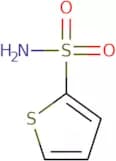
CAS:<p>Thiophene-2-sulfonamide is a fungal biomass inhibitor that binds to specific receptors in the human liver, which decreases the production of hemolytic substances. Thiophene-2-sulfonamide has been shown to have a reversible effect on the metabolism of peptide hormones and metabolic disorders in vivo. The drug also has diagnostic properties and can be used to measure receptor binding activity. Thiophene-2-sulfonamide is an intermediate in the synthesis of diagnostic agents such as 3-(4'-aminophenyl)thiophene-2,5-diol (APTD).</p>Fórmula:C4H5NO2S2Pureza:Min. 95%Forma y color:PowderPeso molecular:163.22 g/molDiacetone acrylamide
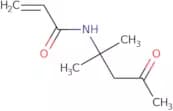
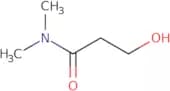
CAS:<p>Diacetone acrylamide is a chemical compound that has the molecular formula C3H6O2N2. It is a colorless liquid with a low boiling point and an unpleasant odor. Diacetone acrylamide has been used as an intermediate in the production of polyvinyl acetate. It can also be used as an additive to rubber, plastics, and other materials. The thermal expansion coefficient of diacetone acrylamide is similar to that of polyvinyl chloride and polystyrene, making it a useful material for constructing models of those substances.</p>Fórmula:C9H15NO2Pureza:Min. 98%Forma y color:PowderPeso molecular:169.22 g/mol3-Hydroxy-N,N-dimethylpropanamide
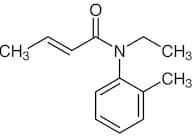
CAS:<p>3-Hydroxy-N,N-dimethylpropanamide is a versatile chemical compound. The compound has been used as an intermediate in research and industrial processes, including the synthesis of various pharmaceuticals. 3-Hydroxy-N,N-dimethylpropanamide is also a reagent and building block for many other compounds. It has been shown to have high quality properties that make it useful for research purposes.</p>Fórmula:C5H11NO2Pureza:Min. 95%Forma y color:PowderPeso molecular:117.15 g/molN-Ethyl-o-crotonotoluidide
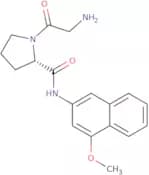
CAS:Fórmula:C13H17NOPureza:>95.0%(GC)Forma y color:Colorless to Light yellow to Light orange clear liquidPeso molecular:203.29Gly-pro-4-methoxy-β-naphthylamide
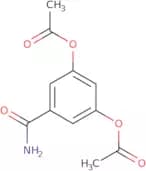
CAS:Gly-pro-4-methoxy-beta-naphthylamide is a synthetic substrate that is used to measure the activity of human plasma phosphatases. Gly-pro-4-methoxy-beta-naphthylamide is synthesized in an organic solvent and then reacted with diazonium salt to form a glycosylated aminophosphonic acid. The product is purified by chromatography and identified by mass spectrometry. Gly-pro-4-methoxy beta naphthylamide has been shown to inhibit the growth of cancer cells in vitro, as well as having antiinflammatory properties. This drug also has been shown to be effective in treating patients with severe hyperbilirubinemia who are undergoing hematopoietic stem cell transplantation.Fórmula:C18H21N3O3Pureza:Min. 95%Peso molecular:327.38 g/mol3,5-Diacetoxybenzamide
CAS:3,5-Diacetoxybenzamide technical is a solvent that can be used in organic synthesis. It is soluble in hydrochloric acid and has a boiling point of 210 degrees Celsius. 3,5-Diacetoxybenzamide technical is soluble in water and has an LD50 (lethal dose) of over 5 g/kg when administered orally to pigs. 3,5-Diacetoxybenzamide technical is also used as a reagent for the preparation of peracetates and esters of aromatic ketones. This product can be used as a reaction medium for lipase or porcine pancreatic lipase. It is also used in the manufacture of pharmaceuticals, fragrances, dyes, herbicides and pesticides.Fórmula:C11H11NO5Pureza:Min. 95%Forma y color:PowderPeso molecular:237.21 g/molN-[(4-Methylphenyl)sulfonyl]acetamide
CAS:Fórmula:C9H11NO3SPureza:>98.0%(T)(HPLC)Forma y color:White to Almost white powder to crystalPeso molecular:213.25


![rac-cis-[3-Hydroxycyclohexyl]benzamide](/_next/image/?url=https%3A%2Fstatic.cymitquimica.com%2Fproducts%2FTR%2Fthumb-webp%2FH827000.webp&w=3840&q=75)


![rac-trans-[3-Hydroxycyclohexyl]benzamide](/_next/image/?url=https%3A%2Fstatic.cymitquimica.com%2Fproducts%2FTR%2Fthumb-webp%2FH827010.webp&w=3840&q=75)
![N-[3-(Diethylaminomethyl)-4-hydroxyphenyl]acetamide](/_next/image/?url=https%3A%2Fstatic.cymitquimica.com%2Fproducts%2F3D%2Fthumb-webp%2FFD71897.webp&w=3840&q=75)


![N-[(4-Methylphenyl)sulfonyl]acetamide](/_next/image/?url=https%3A%2Fstatic.cymitquimica.com%2Fproducts%2F3B%2Fthumb-webp%2FM3123.webp&w=3840&q=75)