Amidas
Las amidas son una amplia gama de compuestos químicos que contienen al menos un anillo heterocíclico, el cual posee átomos de al menos dos elementos diferentes en la estructura del anillo, y al menos un grupo amida (-CONH2). Estos compuestos son cruciales en la síntesis de productos farmacéuticos, polímeros y agroquímicos. Las amidas exhiben propiedades y reactividad únicas, lo que las hace valiosos intermediarios en la síntesis orgánica. En CymitQuimica, ofrecemos una selección integral de amidas de alta calidad para apoyar sus necesidades de investigación e industriales.
Se han encontrado 16485 productos de "Amidas"
Ordenar por
Pureza (%)
0
100
|
0
|
50
|
90
|
95
|
100
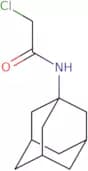
N-1-Adamantyl-2-chloroacetamide
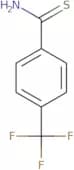
CAS:<p>Adamantyl-2-chloroacetamide is an analog of adamantyl acetamide and has been shown to be a potent inhibitor of Mycobacterium tuberculosis. Adamantyl-2-chloroacetamide inhibits the growth of Mycobacterium tuberculosis by inhibiting the synthesis of DNA, RNA, and protein. This compound also shows selectivity for Mycobacterium tuberculosis over other bacteria such as Escherichia coli. Adamantyl-2-chloroacetamide may have a role in the treatment of tuberculosis because it can inhibit the synthesis of DNA, RNA, and protein in Mycobacterium tuberculosis while leaving these functions intact in other bacteria.</p>Fórmula:C12H18ClNOPureza:Min. 95%Forma y color:PowderPeso molecular:227.73 g/mol4-Trifluoromethylbenzene-1-carbothioamide
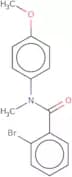
CAS:4-Trifluoromethylbenzene-1-carbothioamide (4FBA) is a non-toxic, organosulfur compound that is found in the fructus of Aurantii or Garcinia mangostana. 4FBA inhibits oxidant enzymes by reacting with their sulfhydryl groups and, as a result, prevents oxidation of other molecules. It has been shown to have antioxidant properties and inhibitory activity against two important enzymes that are involved in the progression of oxidative stress and inflammation. 4FBA has also been shown to be an effective inhibitor of chloride channels which may provide therapeutic potential for diseases such as sclerosis.Fórmula:C8H6F3NSPureza:Min. 95%Forma y color:PowderPeso molecular:205.2 g/mol2-Bromo-N-(4-methoxyphenyl)-N-methylbenzamide
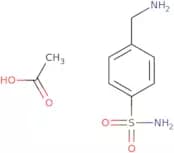
CAS:2-Bromo-N-(4-methoxyphenyl)-N-methylbenzamide is a fine chemical that is used in the synthesis of other chemicals. It is also a reagent and a speciality chemical, which can be used as a reaction component or as an intermediate in the synthesis of other compounds. 2-Bromo-N-(4-methoxyphenyl)-N-methylbenzamide can be used to make a wide variety of compounds, including polymers and pharmaceuticals. This compound has been shown to be useful for the synthesis of polycarbonates, polyurethanes, polyesters, polyamides, and polystyrenes.Fórmula:C15H14BrNO2Pureza:Min. 95%Peso molecular:320.18 g/mol4-(Aminomethyl)benzenesulfonamide acetate
CAS:Producto controlado4-(Aminomethyl)benzenesulfonamide acetate is a biocompatible polymer that is used in the treatment of infectious diseases. It has antibacterial efficacy against a range of microorganisms, including methicillin-resistant Staphylococcus aureus and Pseudomonas aeruginosa. This polymer binds to sulfadiazine and antimicrobial peptides, which then act as antimicrobial agents. 4-(Aminomethyl)benzenesulfonamide acetate also exhibits good chemical stability in vivo and has been shown to inhibit the growth of skin cells.Fórmula:C9H14N2O4SPureza:Min. 95%Forma y color:PowderPeso molecular:246.28 g/mol2-Hydroxy-N-(2-hydroxyethyl)propanamide
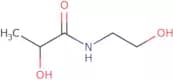
CAS:2-Hydroxy-N-(2-hydroxyethyl)propanamide is a cationic surfactant that has been shown to inhibit the activity of tyrosinase and tnf-α. 2-Hydroxy-N-(2-hydroxyethyl)propanamide is used as a skin conditioning agent in cosmetic formulations and also has antimicrobial properties. It has been shown to be effective against a range of microorganisms, including gram positive bacteria, gram negative bacteria, yeast, and fungi. 2-Hydoxy-N-(2-hydroxyethyl)propanamide does not damage the skin but may cause dryness if it is left on for an extended period of time. It is also an antioxidant compound with a phase transition temperature of -19 degrees Celsius.Fórmula:C5H11NO3Pureza:Min. 95%Forma y color:Colorless Clear LiquidPeso molecular:133.15 g/molγ-L-glutamyl-b-naphthylamide
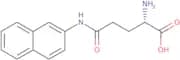
CAS:Gamma-L-glutamyl-b-naphthylamide is a high quality, reagent, complex compound that is used as an intermediate in the production of fine chemicals such as speciality chemicals and research chemicals. Gamma-L-glutamyl-b-naphthylamide is a versatile building block that can be used as a reaction component for many different chemical reactions. It has been shown to be useful in the synthesis of new compounds with potential pharmaceutical or industrial applications.Fórmula:C15H16N2O3Pureza:Min. 95%Peso molecular:272.3 g/molN-(5-Aminopentyl)-2-nitrobenzenesulfonamide Hydrochloride
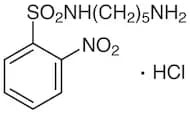
CAS:Fórmula:C11H17N3O4S·HClPureza:>98.0%(T)Forma y color:Light orange to Yellow to Green powder to crystalPeso molecular:323.79N-(4-Cyano-2-chlorophenyl)acetamide
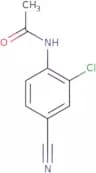
CAS:N-(4-Cyano-2-chlorophenyl)acetamide is a versatile building block that is used in the synthesis of complex compounds. N-(4-Cyano-2-chlorophenyl)acetamide has been shown to be a useful intermediate in the synthesis of important compounds such as 4-aminoantipyrine, 4,5-dichloroanthranilic acid and 2,6-dichloropurine. This chemical has also been found to be an effective reagent for the preparation of other chemicals.Fórmula:C9H7ClN2OPureza:Min. 95%Peso molecular:194.62 g/molSulfamide
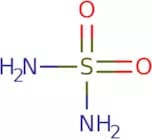
CAS:<p>Sulfamide is a pharmacological agent that inhibits the growth of bacteria. Sulfamide has been shown to be reactive with hydrogen fluoride, which may result in the formation of sulfamoyl chloride. This reactive form of sulfamide may react with other compounds and cause unwanted side-effects. <br>Sulfamides are used for the treatment of infectious diseases such as pneumonia and urinary tract infections, as well as for the treatment of other conditions like congestive heart failure and rheumatoid arthritis. They work by inhibiting enzymes necessary for bacterial growth, including target enzymes such as dihydropteroate synthase, which is involved in folate synthesis. Sulfamides also have inhibitory properties on human osteosarcoma cell proliferation.</p>Fórmula:H4N2O2SPureza:Min. 99%Forma y color:White PowderPeso molecular:96.11 g/molN-(2-Chlorophenyl)benzamide
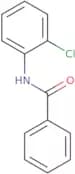
CAS:<p>N-(2-Chlorophenyl)benzamide is a phenanthridone that reacts with chlorides in the presence of anilines to form singlet carbonyls. The photocyclization of these carbonyls yields an electron-deficient product that can be converted to a reactive electrophile by the addition of chlorine. This electrophilic species reacts with electron-rich aromatic compounds, such as phenols and benzene, to produce substitution products. The reaction rate for this process is dependent on the isotope effect, which is the change in reactivity due to changes in the mass number of atoms. The use of deuterium chloride instead of hydrogen chloride provides a kinetic isotope effect, which enhances the reaction rate.</p>Fórmula:C13H10ClNOPureza:Min. 95%Peso molecular:231.68 g/mol4-Chloro-3-pyridinesulfonamide
CAS:<p>4-Chloro-3-pyridinesulfonamide is an antibacterial sulfonamide that inhibits the enzyme carbonic anhydrase. It has been shown to inhibit the growth of cancer cells in vitro and in vivo. The anticancer effect may be due to its ability to block the growth of cancer cells by interfering with DNA synthesis and inducing apoptosis, which causes cell death. 4-Chloro-3-pyridinesulfonamide also inhibits tuberculosis and tuberculostatic activity may be due to its inhibition of mycobacterium tuberculosis ribosomes. 4-Chloro-3-pyridinesulfonamide binds to the active site of bacterial anhydrase as well as human carbonic anhydrase II, blocking the conversion of CO2 into bicarbonate ions, which leads to a decrease in pH. This drug also binds to DNA and RNA, inhibiting DNA synthesis and RNA synthesis respectively, leading to cell</p>Fórmula:C5H5ClN2O2SPureza:Min. 95%Forma y color:SolidPeso molecular:192.62 g/mol3,5-Dimethoxycinnamide
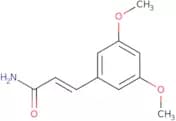
CAS:<p>3,5-Dimethoxycinnamide is a compound that has been shown to inhibit the C1-4 alkoxy and C1-4 alkyl esterase activity of the enzyme secretase. This enzyme is involved in the production of amyloid beta peptides and is thought to be an important contributor to Alzheimer's Disease. 3,5-Dimethoxycinnamide also inhibits the aspartyl protease activity of aspartyl proteases, which are enzymes that may play a role in Alzheimer's disease. 3,5-Dimethoxycinnamide binds to the hydrophobic region of these enzymes and prevents them from binding to their substrates. The affinity of this compound for these enzymes precludes its ability to bind with other proteins in the brain, thereby reducing its potential toxicity. 3,5-Dimethoxycinnamide can be labeled with halogeno groups or other chemical moieties for profiling purposes.</p>Fórmula:C11H13NO3Pureza:Min. 95%Peso molecular:207.23 g/molErucamide
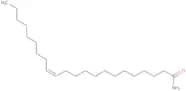
CAS:<p>Erucamide is a fatty acid amide that is a natural compound and part of the biochemical composition of microbial organisms. Erucamide has been shown to have antimicrobial activity against Gram-positive bacteria but not against Gram-negative bacteria. The mechanism by which erucamide kills bacteria is unknown, but it may be due to its hemolytic activity or its ability to inhibit protein synthesis. Erucamide is resistant to hydrolysis by trifluoroacetic acid and glycol ester, which makes it difficult for microbes to metabolize it.</p>Fórmula:C22H43NOPureza:Min. 95%Forma y color:PowderPeso molecular:337.58 g/molN1-Methyl-β-alaninamide
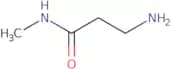
CAS:N1-Methyl-beta-alaninamide (NMA) is an organic compound that is used as a reagent, useful scaffold, or high quality research chemical. NMA belongs to the group of compounds called amino acid amides. It can be used as a building block for complex compounds and fine chemicals. The CAS number for this product is 4874-18-4.Fórmula:C4H10N2OPureza:Min. 95%Forma y color:Orange PowderPeso molecular:102.14 g/molN,N-Dicyclohexyl-2-benzothiazolsulfene amide
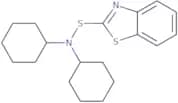
CAS:2-Benzothiazolylsulfenamide is a heterocyclic amine that is used as a chemical intermediate. It reacts with hydrochloric acid to produce the corresponding dicyclohexyl amide, which then reacts with ammonia in the presence of an organic base to produce N,N-dicyclohexyl-2-benzothiazolsulfene amide. This reaction mechanism can be summarized as follows:Fórmula:C19H26N2S2Pureza:Min. 95%Forma y color:PowderPeso molecular:346.56 g/molN-(4-Butylphenyl)acetamide
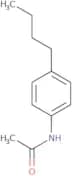
CAS:<p>N-(4-Butylphenyl)acetamide is a reactant that can be used in the production of other chemicals. It is an intermediate for the synthesis of a wide range of organic compounds, which makes it a useful building block. N-(4-Butylphenyl)acetamide has been shown to have antihistamine and anti-inflammatory properties. It is also known as acetanilide or 4-butylaniline. This chemical has CAS number 3663-20-5 and a molecular weight of 150.06 g/mol.</p>Fórmula:C12H17NOPureza:Min. 95%Forma y color:White/Off-White SolidPeso molecular:191.27 g/mol1-Butyl-N-(2,6-dimethylphenyl)-piperidine-2-carboxamide
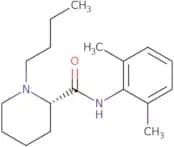
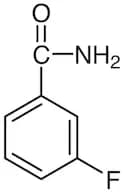
CAS:Ropivacaine is a local anaesthetic of the amino ester group that is used to provide relief from pain caused by surgery or other medical procedures. It is a potent inhibitor of the enzyme activity of cholinesterases, which are enzymes responsible for the degradation of acetylcholine. Ropivacaine also inhibits the activity of cardiac Na+/K+ ATPase and Na+-Ca2+ exchanger, thereby reducing the excitability and contractility of heart muscle. This drug has shown pharmacokinetic properties in maternal blood that are similar to those observed in plasma, indicating that it can cross the placenta. Ropivacaine has been shown to have bactericidal effects against bacterial strains such as Escherichia coli and Staphylococcus aureus. In addition, ropivacaine has been shown to inhibit colorectal adenocarcinoma cells in vitro and in vivo. LevobupivacaineFórmula:C18H28N2OPureza:Min. 95%Forma y color:White/Off-White SolidPeso molecular:288.43 g/mol3-Fluorobenzamide
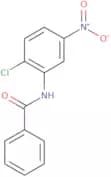
CAS:Fórmula:C7H6FNOPureza:>97.0%(HPLC)(N)Forma y color:White to Almost white powder to crystalPeso molecular:139.13N-(2-Chloro-5-Nitrophenyl)Benzamide
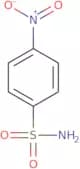
CAS:<p>Please enquire for more information about N-(2-Chloro-5-Nitrophenyl)Benzamide including the price, delivery time and more detailed product information at the technical inquiry form on this page</p>Fórmula:C13H9ClN2O3Pureza:Min. 95%Forma y color:PowderPeso molecular:276.67 g/mol4-Nitrobenzenesulfonamide
CAS:<p>4-Nitrobenzenesulfonamide is an organic compound that consists of a nitro group, a sulfonamide group, and an amine. It is the active analog of 4-dimethylaminobenzoic acid, which is used as an inhibitor of histamine release in the treatment of allergic reactions. The molecule has been shown to bind to copper ions and triflic acid and has been used as a catalyst for aziridination.</p>Fórmula:C6H6N2O4SPureza:Min. 96 Area-%Forma y color:White PowderPeso molecular:202.19 g/mol