Amidas
Se han encontrado 16485 productos de "Amidas"
1-Methyl-N-(9-methyl-9-azabicyclo[3.3.1]non-3-yl)-indazole-3-carboxamide
CAS:Producto controlado1-Methyl-N-(9-methyl-9-azabicyclo[3.3.1]non-3-yl)-indazole-3-carboxamide is a chemical inhibitor of the 5HT2 receptor, which is responsible for regulating nausea and vomiting. It has been shown to have antiemetic properties, and can be used in chemotherapy to control nausea and vomiting. The 5HT2 receptor is coupled to Gs proteins and inhibits adenylyl cyclase activity, while 1MMAI binds to the 5HT2A receptor and blocks serotonin from binding. This prevents serotonin from activating Gq protein receptors, which are involved in the generation of intracellular calcium concentrations that lead to neurotransmitter release. 1MMAI also inhibits the activation of phospholipase C by serotonin, resulting in decreased levels of diacylglycerol (DAG) and inositol triphosphate (IP3). These changes inhibit plateFórmula:C18H24N4OPureza:Min. 95%Forma y color:White Off-White PowderPeso molecular:312.41 g/molOxamide
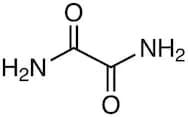
CAS:Fórmula:C2H4N2O2Pureza:>98.0%(N)Forma y color:White to Almost white powder to crystalPeso molecular:88.07L-Valinamide hydrochloride
CAS:L-Valinamide hydrochloride is an amide with a reactive group. It binds to the CB2 receptor and the CB1 receptor, which are found in the brain and immune system. L-Valinamide hydrochloride has been shown to have anti-inflammatory effects in animal models of inflammatory diseases, such as rheumatoid arthritis. L-Valinamide hydrochloride has also been shown to be a synthetic cannabinoid that inhibits pain transmission by binding to the same receptors as delta-9 tetrahydrocannabinol (THC), one of the active components of cannabis.Fórmula:C5H12N2O·HClForma y color:White Off-White PowderPeso molecular:152.62 g/molN-(4-Cyano-2-chlorophenyl)acetamide
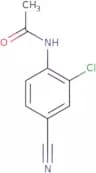
CAS:N-(4-Cyano-2-chlorophenyl)acetamide is a versatile building block that is used in the synthesis of complex compounds. N-(4-Cyano-2-chlorophenyl)acetamide has been shown to be a useful intermediate in the synthesis of important compounds such as 4-aminoantipyrine, 4,5-dichloroanthranilic acid and 2,6-dichloropurine. This chemical has also been found to be an effective reagent for the preparation of other chemicals.Fórmula:C9H7ClN2OPureza:Min. 95%Peso molecular:194.62 g/mol3,5-Diacetoxybenzamide
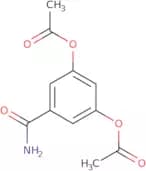
CAS:3,5-Diacetoxybenzamide technical is a solvent that can be used in organic synthesis. It is soluble in hydrochloric acid and has a boiling point of 210 degrees Celsius. 3,5-Diacetoxybenzamide technical is soluble in water and has an LD50 (lethal dose) of over 5 g/kg when administered orally to pigs. 3,5-Diacetoxybenzamide technical is also used as a reagent for the preparation of peracetates and esters of aromatic ketones. This product can be used as a reaction medium for lipase or porcine pancreatic lipase. It is also used in the manufacture of pharmaceuticals, fragrances, dyes, herbicides and pesticides.Fórmula:C11H11NO5Pureza:Min. 95%Forma y color:PowderPeso molecular:237.21 g/mol2-Bromo-N-(4-methoxyphenyl)-N-methylbenzamide
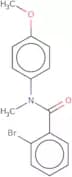
CAS:2-Bromo-N-(4-methoxyphenyl)-N-methylbenzamide is a fine chemical that is used in the synthesis of other chemicals. It is also a reagent and a speciality chemical, which can be used as a reaction component or as an intermediate in the synthesis of other compounds. 2-Bromo-N-(4-methoxyphenyl)-N-methylbenzamide can be used to make a wide variety of compounds, including polymers and pharmaceuticals. This compound has been shown to be useful for the synthesis of polycarbonates, polyurethanes, polyesters, polyamides, and polystyrenes.Fórmula:C15H14BrNO2Pureza:Min. 95%Peso molecular:320.18 g/molN-Ethyl-o-crotonotoluidide
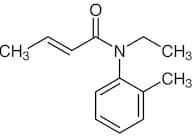
CAS:Fórmula:C13H17NOPureza:>95.0%(GC)Forma y color:Colorless to Light yellow to Light orange clear liquidPeso molecular:203.29alpha-Naphthamide
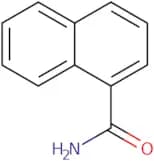
CAS:Alpha-naphthamide is a high-resistance antimicrobial agent that belongs to the group of benzalkonium chloride. It is used in disinfectant products and has been shown to be effective against invertebrates such as mosquitoes and leeches. Alpha-naphthamide binds to the dinucleotide phosphate and inhibits enzyme activities by acting as an alkylsulfonyl and cytosolic Ca2+ inhibitor, leading to cell death. Alpha-naphthamide has also been shown to inhibit multidrug efflux pump activity in bacterial cells, which may be due to its structural similarity with c1-c6.Fórmula:C11H9NOPureza:Min. 95%Forma y color:SolidPeso molecular:171.2 g/mol2-Cyano-N,N-diethylacetamide
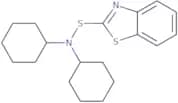
CAS:Fórmula:C7H12N2OPureza:>98.0%(GC)Forma y color:Colorless to Light yellow clear liquidPeso molecular:140.19N,N-Dicyclohexyl-2-benzothiazolsulfene amide
CAS:2-Benzothiazolylsulfenamide is a heterocyclic amine that is used as a chemical intermediate. It reacts with hydrochloric acid to produce the corresponding dicyclohexyl amide, which then reacts with ammonia in the presence of an organic base to produce N,N-dicyclohexyl-2-benzothiazolsulfene amide. This reaction mechanism can be summarized as follows:Fórmula:C19H26N2S2Pureza:Min. 95%Forma y color:PowderPeso molecular:346.56 g/mol4-Chloro-3-pyridinesulfonamide
CAS:4-Chloro-3-pyridinesulfonamide is an antibacterial sulfonamide that inhibits the enzyme carbonic anhydrase. It has been shown to inhibit the growth of cancer cells in vitro and in vivo. The anticancer effect may be due to its ability to block the growth of cancer cells by interfering with DNA synthesis and inducing apoptosis, which causes cell death. 4-Chloro-3-pyridinesulfonamide also inhibits tuberculosis and tuberculostatic activity may be due to its inhibition of mycobacterium tuberculosis ribosomes. 4-Chloro-3-pyridinesulfonamide binds to the active site of bacterial anhydrase as well as human carbonic anhydrase II, blocking the conversion of CO2 into bicarbonate ions, which leads to a decrease in pH. This drug also binds to DNA and RNA, inhibiting DNA synthesis and RNA synthesis respectively, leading to cellFórmula:C5H5ClN2O2SPureza:Min. 95%Forma y color:SolidPeso molecular:192.62 g/molDiacetone acrylamide
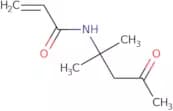
CAS:Diacetone acrylamide is a chemical compound that has the molecular formula C3H6O2N2. It is a colorless liquid with a low boiling point and an unpleasant odor. Diacetone acrylamide has been used as an intermediate in the production of polyvinyl acetate. It can also be used as an additive to rubber, plastics, and other materials. The thermal expansion coefficient of diacetone acrylamide is similar to that of polyvinyl chloride and polystyrene, making it a useful material for constructing models of those substances.
Fórmula:C9H15NO2Pureza:Min. 98%Forma y color:PowderPeso molecular:169.22 g/mol4-(tert-Butyl)benzenesulfonamide
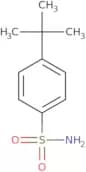
CAS:4-(tert-Butyl)benzenesulfonamide is a pyrimidine derivative that has an affinity for metal ions and can be used as a catalyst. It is insoluble in water but soluble in acetonitrile and other organic solvents. This compound is a strong oxidant when it reacts with ethylene, styrene, or propyl gallate. 4-(tert-Butyl)benzenesulfonamide has been shown to be highly reactive with the oxygen in air, leading to the formation of 4-dimethylaminobenzoic acid, formyl group, and phosphorus oxychloride.Fórmula:C10H15NO2SPureza:Min. 95%Forma y color:PowderPeso molecular:213.3 g/mol2-Amino-4,5-dimethoxybenzamide
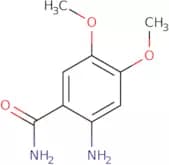
CAS:2-Amino-4,5-dimethoxybenzamide is an anticancer agent that inhibits the epidermal growth factor receptor tyrosine kinase. It binds to the linker region of the epidermal growth factor receptor and prevents autophosphorylation. 2-Amino-4,5-dimethoxybenzamide has shown in vitro cytotoxic activity against testicular cancer cells and acute lymphoblastic leukemia cells. 2-Amino-4,5-dimethoxybenzamide is a synthetic compound that has been shown to have bioisosteric properties with other growth factors such as epidermal growth factor.
Fórmula:C9H12N2O3Pureza:Min. 95%Forma y color:PowderPeso molecular:196.2 g/molSulfamide
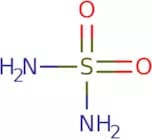
CAS:Sulfamide is a pharmacological agent that inhibits the growth of bacteria. Sulfamide has been shown to be reactive with hydrogen fluoride, which may result in the formation of sulfamoyl chloride. This reactive form of sulfamide may react with other compounds and cause unwanted side-effects.
Sulfamides are used for the treatment of infectious diseases such as pneumonia and urinary tract infections, as well as for the treatment of other conditions like congestive heart failure and rheumatoid arthritis. They work by inhibiting enzymes necessary for bacterial growth, including target enzymes such as dihydropteroate synthase, which is involved in folate synthesis. Sulfamides also have inhibitory properties on human osteosarcoma cell proliferation.Fórmula:H4N2O2SPureza:Min. 99%Forma y color:White PowderPeso molecular:96.11 g/mol5-Amino-N,N'-bis(2,3-dihydroxypropyl)isophthalamide Hydrochloride
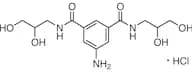
CAS:Fórmula:C14H21N3O6·HClPureza:>98.0%(HPLC)(N)Forma y color:White to Almost white powder to crystalPeso molecular:363.80Gly-pro-4-methoxy-beta-naphthylamide
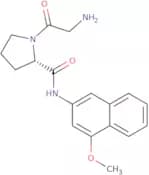
CAS:Gly-pro-4-methoxy-beta-naphthylamide is a synthetic substrate that is used to measure the activity of human plasma phosphatases. Gly-pro-4-methoxy-beta-naphthylamide is synthesized in an organic solvent and then reacted with diazonium salt to form a glycosylated aminophosphonic acid. The product is purified by chromatography and identified by mass spectrometry. Gly-pro-4-methoxy beta naphthylamide has been shown to inhibit the growth of cancer cells in vitro, as well as having antiinflammatory properties. This drug also has been shown to be effective in treating patients with severe hyperbilirubinemia who are undergoing hematopoietic stem cell transplantation.Fórmula:C18H21N3O3Pureza:Min. 95%Peso molecular:327.38 g/molN-[(4-Methylphenyl)sulfonyl]acetamide
CAS:Fórmula:C9H11NO3SPureza:>98.0%(T)(HPLC)Forma y color:White to Almost white powder to crystalPeso molecular:213.253-Hydroxy-N,N-dimethylpropanamide
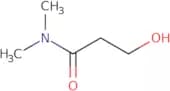
CAS:3-Hydroxy-N,N-dimethylpropanamide is a versatile chemical compound. The compound has been used as an intermediate in research and industrial processes, including the synthesis of various pharmaceuticals. 3-Hydroxy-N,N-dimethylpropanamide is also a reagent and building block for many other compounds. It has been shown to have high quality properties that make it useful for research purposes.
Fórmula:C5H11NO2Pureza:Min. 95%Forma y color:PowderPeso molecular:117.15 g/mol2-Amino-5-fluorobenzamide
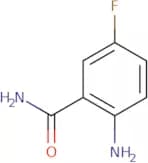
CAS:2-Amino-5-fluorobenzamide (2AFB) is a compound that has been shown to have neurotoxic properties. 2AFB is a ring-opening agent, which means it can open the six-membered ring of aromatic compounds such as benzene or pyridine. 2AFB also has affinity for metal ions and therefore can be used in magnetic separations. The reaction system of 2AFB includes an enzyme, pentylenetetrazole (PTZ), that catalyzes the reaction between 2AFB and its substrate, 4-nitrophenol (4NP). This reaction produces free radicals that react with oxygen to produce peroxides. These peroxides are then detected by a chemiluminescence assay. In this way, the amount of 2AFB and 4NP can be measured quantitatively.
2AFB also has antioxidant properties, which may be due to its ability to scavenge free radicals fromFórmula:C7H7FN2OPureza:Min. 95%Forma y color:PowderPeso molecular:154.14 g/mol
![1-Methyl-N-(9-methyl-9-azabicyclo[3.3.1]non-3-yl)-indazole-3-carboxamide](/_next/image/?url=https%3A%2Fstatic.cymitquimica.com%2Fproducts%2F3D%2Fthumb-webp%2FFM137557.webp&w=3840&q=75)





![N-[(4-Methylphenyl)sulfonyl]acetamide](/_next/image/?url=https%3A%2Fstatic.cymitquimica.com%2Fproducts%2F3B%2Fthumb-webp%2FM3123.webp&w=3840&q=75)