Ácidos carboxílicos
Se han encontrado 12457 productos de "Ácidos carboxílicos"
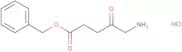
5-Amino-4-oxopentanoic acid benzyl ester hydrochloride
CAS:Please enquire for more information about 5-Amino-4-oxopentanoic acid benzyl ester hydrochloride including the price, delivery time and more detailed product information at the technical inquiry form on this page
Fórmula:C12H15NO3·HClPureza:Min. 97%Forma y color:PowderPeso molecular:257.71 g/molRef: 3D-FA52258
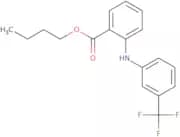
Producto descatalogadoFlufenamic acid butyl ester
CAS:Flufenamic acid is a nonsteroidal anti-inflammatory drug that relieves pain and inflammation. Flufenamic acid butyl ester is an analog of flufenamic acid. It has been shown to be effective in controlling bowel disease, especially inflammatory bowel disease. Flufenamic acid butyl ester has also been shown to control symptoms of neurodermatitis and autoimmune diseases when used as a nutrient solution. Flufenamic acid butyl ester has not been found to have any statistically significant effect on infectious diseases.
Fórmula:C18H18F3NO2Pureza:Min. 95%Forma y color:Colorless PowderPeso molecular:337.34 g/molRef: 3D-FF58677
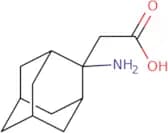
Producto descatalogado(2-Amino-2-adamantyl)acetic acid
CAS:2-Amino-2-adamantylacetic acid is a fine chemical that is used as a building block in the synthesis of many other compounds. It is also used as a research reagent and speciality chemical, and has been shown to be a versatile building block for complex molecules. This compound can be reacted with other chemicals to form useful intermediates that are used in the synthesis of pharmaceuticals and agrochemicals. 2-Amino-2-adamantylacetic acid is listed on the Chemical Abstracts Service (CAS) registry as 1573548-14-7.
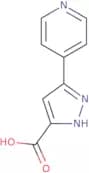
Fórmula:C12H19NO2Pureza:Min. 95%Forma y color:White PowderPeso molecular:209.28 g/mol5-Pyridin-4-yl-1H-pyrazole-3-carboxylic acid
CAS:5-Pyridin-4-yl-1H-pyrazole-3-carboxylic acid is a white crystalline solid. It is soluble in water, methanol and ethanol. The molecular weight of 5-Pyridin-4-yl-1H-pyrazole-3 carboxylic acid is 177.17 g/mol. This compound has been found to have an elemental composition of C, H, N and O with a calculated density of 1.62 g/cm3 in the form of a single crystal x ray diffraction pattern. 5-Pyridin 4 yl 1H pyrazole 3 carboxylic acid has synergistic effects with other drugs used for chemotherapy such as cisplatin and doxorubicin against cancer cells.Fórmula:C9H7N3O2Pureza:Min. 95%Forma y color:PowderPeso molecular:189.17 g/molRef: 3D-FP56364
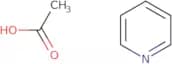
Producto descatalogadoPyridinium acetate
CAS:Producto controladoPyridinium acetate is a chemical compound with the molecular formula of C6H5N3O2. It is a white solid with a melting point of 61 °C. This compound belongs to the class of organic compounds called heterocycles, which contain atoms other than carbon in their ring structures. Pyridinium acetate has been shown to have an inhibitory effect on collagen synthesis and can be used for the treatment of high blood pressure. The synthesis of pyridinium acetate is done by a synthetase enzyme that requires ATP, citric acid, and sodium citrate as substrates. This pathway creates pyridinium acetate from two molecules of aspartic acid and one molecule of acetic acid. The final product contains a carbonyl group, which gives it its acidic properties. Pyridinium acetate also has an acidic pH optimum at 3-4 and is resistant to mutants such as E. coli K-12 that
Fórmula:C5H5N·C2H4O2Pureza:Min. 95%Forma y color:PowderPeso molecular:139.15 g/mol(Des-Gly10,D-Tyr5,D-Trp6,Pro-NHEt 9)-LHRH trifluoroacetate salt
CAS:Please enquire for more information about (Des-Gly10,D-Tyr5,D-Trp6,Pro-NHEt 9)-LHRH trifluoroacetate salt including the price, delivery time and more detailed product information at the technical inquiry form on this page
Fórmula:C64H83N17O12Pureza:Min. 95%Forma y color:PowderPeso molecular:1,282.45 g/molRef: 3D-FD109428
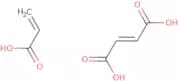
Producto descatalogadoPoly(acrylic acid-co-maleic acid), average Mw 3,000, 50% aqueous solution
CAS:Please enquire for more information about Poly(acrylic acid-co-maleic acid), average Mw 3,000, 50% aqueous solution including the price, delivery time and more detailed product information at the technical inquiry form on this page
Fórmula:(C4H4O4)x•(C3H4O2)yForma y color:Yellow Clear Liquid2,4,6-Trifluorophenylacetic acid
CAS:2,4,6-Trifluorophenylacetic acid is a fluorinated phenylacetic acid that has been shown to inhibit the growth of the fungus Botrytis cinerea. It does this by disrupting the conformation of microtubules and inhibiting cell division. This compound has been synthesized in analogy with other known phenylacetic acids and its structure was confirmed through single-crystal x-ray diffraction studies. The heteroaryl groups on 2,4,6-Trifluorophenylacetic acid disrupt the microtubule polymerization process by binding to tubulin subunits. The fluorine atom also binds to the pyridine ring in this molecule to form an electron-deficient heterocycle.
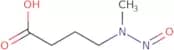
Fórmula:C8H5F3O2Pureza:Min. 95%Forma y color:White PowderPeso molecular:190.12 g/molN-Nitroso-N-methyl-4-aminobutyric acid
CAS:N-Nitroso-N-methyl-4-aminobutyric acid (NMBA) is a solid with a low melting point which has been identified as a potentially carcinogenic component of both tobacco and tobacco smoke. NMBA is also one of a number of nitrosamine impurities which have been found to be present in angiotensin II receptor blocker (ARB) drugs used to treat high blood pressure.
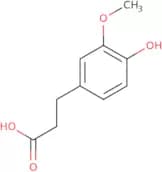
Fórmula:C5H10N2O3Pureza:Min. 98 Area-%Forma y color:Slightly Yellow PowderPeso molecular:146.14 g/molDihydroferulic acid
CAS:Dihydroferulic acid is a natural compound that is found in both plants and animals. It is an intermediate in the metabolism of ferulic acid, which is found in plants. Dihydroferulic acid has been shown to have a redox potential similar to p-hydroxybenzoic acid, which may be due to dihydroferulic acid's ability to reduce hydrogen peroxide. Dihydroferulic acid has also been shown to increase production of neurotrophic factors and stimulate polymerase chain reaction activity. Dihydroferulic acid has been shown to have biological properties that are related to its antioxidant activity, such as its ability to inhibit lipid peroxidation and scavenge hydroxyl radicals.
Fórmula:C10H12O4Pureza:Min. 95%Forma y color:Slightly Yellow PowderPeso molecular:196.2 g/molUsnic acid
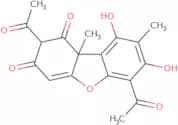
CAS:Usnic acid is a natural compound with significant cytotoxicity. It has been shown to have matrix effects in the environment and oxidative injury on cells. Usnic acid is a component of the herb goldenseal, and has been shown to have pharmacological activities against infectious diseases, such as pandemic influenza. The optical sensor of usnic acid is used as an indicator for environmental pollution and microbial growth.
Fórmula:C18H16O7Pureza:Min. 95%Forma y color:White PowderPeso molecular:344.32 g/molRef: 3D-FU32857
Producto descatalogadoIralukast Na
CAS:Iralukast Na is a leukotriene receptor antagonist that prevents bronchoconstrictor response. It binds to the cystic fibrosis transmembrane conductance regulator (CFTR) and blocks the binding of leukotrienes, which are potent bronchoconstrictors. Iralukast Na also blocks the activity of inflammatory cells and reduces bowel inflammation. Iralukast Na has been shown to be effective in treating asthma, inflammatory bowel disease, and other autoimmune diseases.
Fórmula:C38H36F3NaO8SPureza:Min. 95%Peso molecular:732.198073,4-Diacetoxyphenylacetic acid
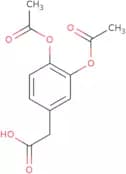
CAS:3,4-Diacetoxyphenylacetic acid is a white crystalline solid. It is soluble in water, ethanol and acetone. This chemical is a useful building block for the synthesis of a wide range of compounds including pharmaceuticals, pesticides and agrochemicals. 3,4-Diacetoxyphenylacetic acid has been used as a reagent for the synthesis of various complex compounds such as anti-inflammatory drugs and antibiotics. 3,4-Diacetoxyphenylacetic acid can be used as a versatile building block in the synthesis of many different compounds with high purity and quality.
Fórmula:C12H12O6Pureza:Min. 95%Peso molecular:252.22 g/molMethyl 4-fluorobenzoylacetate
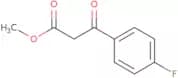
CAS:Methyl 4-fluorobenzoylacetate is a prenyl compound that can be used as an anti-oxidant, hepatoprotective, and regulatory agent. The prenyl group in this molecule is responsible for its antioxidant activity. It also has been shown to have hepatoprotective properties in experimental animals with liver injuries. Methyl 4-fluorobenzoylacetate is used as a synthetic intermediate in the synthesis of coumarin derivatives and phenylcoumarins. This molecule may also have anti-inflammatory properties, which are due to its ability to inhibit cyclooxygenase enzymes. Methyl 4-fluorobenzoylacetate is also an antibacterial agent and has been shown to be a potent inhibitor of bacterial DNA gyrase and topoisomerase IV, which maintain the integrity of bacterial DNA. In addition, methyl 4-fluorobenzoylacetate has anticoagulant
Fórmula:C10H9FO3Pureza:Min. 85%Forma y color:Colourless To Pale Yellow LiquidPeso molecular:196.18 g/molRef: 3D-FM70121
Producto descatalogado1,4-Phenylenebisboronic acid
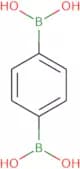
CAS:1,4-Phenylenebisboronic acid is a chemical compound with the following structural formula:
It is a white crystalline solid, soluble in water and ethanol. 1,4-Phenylenebisboronic acid has been used for analytical chemistry and photochemical studies. It has also been studied as a model system for ternary complex formation, x-ray diffraction data analysis, and ester linkages. Structural analysis of 1,4-phenylenebisboronic acid reveals hydrogen bonding interactions between the nitrogen atoms and the boron atoms.Fórmula:C6H8B2O4Pureza:Min. 95 Area-%Forma y color:PowderPeso molecular:165.75 g/molRef: 3D-FP74696
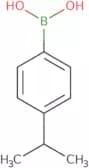
Producto descatalogado4-Isopropylphenylboronic acid
CAS:4-Isopropylphenylboronic acid is a chiral organic chemical that is used as a Grignard reagent. It is an optically pure compound that can be isolated by recrystallization. The optical purity of 4-isopropylphenylboronic acid has been confirmed by the red shift observed in its IR spectrum. This compound undergoes nucleophilic substitution reactions, and it also catalyses the hydrostannylation of styrene with phenyllithium or butyllithium. The synthesis of this molecule requires relatively mild reaction conditions, and it can be obtained in high yield.
Fórmula:C9H13BO2Pureza:Min. 95%Forma y color:PowderPeso molecular:164.01 g/molRef: 3D-FI46458
Producto descatalogado2-Bromo-5-nitrobenzoic acid
CAS:2-Bromo-5-nitrobenzoic acid is an amine that has been shown to have a potent inhibitory effect on the enzyme fibrinogen, which is needed for blood clotting. It also inhibits other enzymes in the fibrinogen pathway, including those involved in protein synthesis and cellular metabolism. 2-Bromo-5-nitrobenzoic acid has been shown to inhibit cancer cells by blocking their ability to use amino acids as building blocks for new proteins. This drug may be used as a treatment for cancer and other diseases where protein synthesis is critical.
Fórmula:C7H4BrNO4Pureza:Min. 95%Forma y color:PowderPeso molecular:246.02 g/molRef: 3D-FB00222
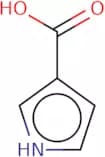
Producto descatalogado1-H-Pyrrole-3-carboxylic acid
CAS:The immobilized 1-H-pyrrole-3-carboxylic acid (1HP) is an amine that has been immobilized on a solid support. It is able to capture the growth factors and enzymes that are involved in immunoglobulin production and release. This immobilized 1HP has been used for the detection of albumin in urine samples, as well as for the determination of dopamine concentrations in blood plasma. The chemical composition of this immobilized 1HP has been determined by means of electrochemical impedance spectroscopy (EIS). The EIS results showed that it contains a few amines, which are responsible for its covalent linkages with the solid support.
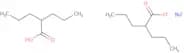
Fórmula:C5H5NO2Pureza:Min. 95%Forma y color:Off-White PowderPeso molecular:111.1 g/molValproic acid semisodium
CAS:Producto controladoValproic acid is a medication used to treat seizures and other conditions. Valproic acid has been shown to be effective in the treatment of metabolic disorders such as hyperammonemia, hypertriglyceridemia, and hypoglycemia. It also has been shown to be an effective treatment for bipolar disorder. Valproic acid does have side-effect profiles that include weight gain, nausea, vomiting, and hair loss. Side effects are more likely to develop when valproic acid is taken with other medications such as erythromycin or divalproex sodium. Valproic acid can cause hypersensitivity syndrome in some patients. In order to avoid this side effect, blood sampling should be done before starting treatment. Valproic acid is metabolized by the liver into the active form, divalproex sodium (divalproex), which then inhibits the enzyme histone deacetylase (HDAC). The inhibition of HDAC leads to an increase inFórmula:C8H16O2•Na0Pureza:Min. 95%Forma y color:White to off-white solid.Peso molecular:311.41 g/molRef: 3D-FV28660
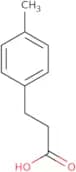
Producto descatalogado3-(4-Methylphenyl)propionic acid
CAS:3-(4-Methylphenyl)propionic acid is a subunit of ATPase, an enzyme that catalyzes the hydrolysis of ATP. 3-(4-Methylphenyl)propionic acid has been shown to inhibit atpase activity in thermodynamic and mechanistic studies. It also binds to DNA gyrase and oxone, a chemical that inhibits DNA replication. 3-(4-Methylphenyl)propionic acid has been shown to be broad-spectrum antibacterial against both gram-positive and gram-negative bacteria. The drug has also been found to have antiinflammatory properties, which may be due to its ability to inhibit prostaglandin synthesis.
Fórmula:C10H12O2Pureza:Min. 95%Forma y color:PowderPeso molecular:164.2 g/mol