


Ácidos carboxílicos
Los ácidos carboxílicos son moléculas orgánicas caracterizadas por tener un grupo funcional de tipo carboxilo (-COOH). Estos ácidos son fundamentales en varias reacciones químicas, incluyendo esterificación, amidación y descarboxilación. Los ácidos carboxílicos se utilizan ampliamente en la producción de productos farmacéuticos, polímeros y agroquímicos. En esta sección, puede encontrar una gran cantidad de ácidos carboxílicos listos para ser utilizados. En CymitQuimica, ofrecemos una amplia gama de ácidos carboxílicos de alta calidad para apoyar sus aplicaciones de investigación e industriales.
Se han encontrado 12454 productos de "Ácidos carboxílicos"
Ordenar por
Pureza (%)
0
100
|
0
|
50
|
90
|
95
|
100
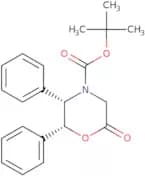
tert-Butyl (2R,3S)-(-)-6-oxo-2,3-diphenyl-4-morpholinecarboxylate
CAS:<p>tert-Butyl (2R,3S)-(-)-6-oxo-2,3-diphenyl-4-morpholinecarboxylate is a chiral compound that contains two stereogenic centers. It is a racemate of enantiomers. The enantiomeric purity can be determined by the preparative method. This compound is soluble in water and is stable in neutral or acidic conditions. It has been shown to act as an α-amino acid and to inhibit glycine uptake by neurons.</p>Fórmula:C21H23NO4Pureza:Min. 95%Forma y color:SolidPeso molecular:353.41 g/molN,N-Bis(carboxymethyl)-L-glutamic acid
CAS:<p>N,N-bis(Carboxymethyl)-L-glutamic acid is a synthetic compound that functions as a disinfectant. It has been shown to be effective against bacteria and fungi in vitro, with an efficacy of over 90%. N,N-bis(Carboxymethyl)-L-glutamic acid is used as a treatment for tumors due to its ability to penetrate the tumor cells and inhibit fatty acid uptake. This compound also prevents the formation of new blood vessels by inhibiting the synthesis of DNA and RNA. N,N-bis(Carboxymethyl)-L-glutamic acid can be used in coatings for metals or metal surfaces that are exposed to water or air because it is biodegradable and noncorrosive.</p>Fórmula:C9H13NO8Pureza:Min. 95%Forma y color:Clear LiquidPeso molecular:263.2 g/molRef: 3D-FC167771
Producto descatalogadoLysergic acid hydrazide
CAS:Producto controlado<p>Lysergic acid hydrazide is a synthetic drug with an active form of lysergic acid. It is used in the synthesis of ergocryptine and other drugs. The compound can be synthesized using methyl alcohol, trifluoromethyl group, hydroxy group, skeleton, and C1-4 alkyl as reactants. Lysergic acid hydrazide can also be synthesized from an inorganic acid such as nitrous or oxoalkyl. This compound has been used as a pharmaceutical preparation for the treatment of psychotic disorders. Lysergic acid hydrazide has shown to have reactive amide groups that may react with organic amines to form neurotoxic compounds.</p>Fórmula:C16H18N4OPureza:Min. 95%Peso molecular:282.34 g/molRef: 3D-FL24963
Producto descatalogado2-[(2,3-Dimethylphenyl)amino]nicotinic acid
CAS:<p>2-[(2,3-Dimethylphenyl)amino]nicotinic acid is an arylpropionic acid that has been designed for the treatment of cancer. It is a neutral compound that can be crystallized or sterilized and then injected or implanted into tissues. The compound can be used as a diagnostic tool to target specific tissues in the body by using iontophoresis or organic solvents. 2-[(2,3-Dimethylphenyl)amino]nicotinic acid interacts with chlorine ions to form a chloride derivative, which is then transported through the tissue. This process can be reversed by adding an acid solution to the tissue, which will cause the chloride ions to break down into hydrogen and chloride ions.</p>Fórmula:C14H14N2O2Pureza:Min. 95%Peso molecular:242.27 g/mol


![2-[(2,3-Dimethylphenyl)amino]nicotinic acid](/_next/image/?url=https%3A%2Fstatic.cymitquimica.com%2Fproducts%2F3D%2Fthumb-webp%2FFD136106.webp&w=3840&q=75)