Ácidos carboxílicos
Se han encontrado 12454 productos de "Ácidos carboxílicos"
N-Methyliminodiacetic Acid
CAS:N-Methyliminodiacetic acid is a monosodium salt that is produced by the reaction of methylamine and malonic acid. It has been shown to have an inhibitory effect on enzymes and metabolic rates in the human body. The structure of N-methyliminodiacetic acid contains a hydroxyl group, which can form hydrogen bonding interactions with nitrogen atoms in proteins, forming a chelate ligand. This type of binding is thought to be responsible for its ability to inhibit enzyme activities and metabolic rate.Fórmula:C5H9NO4Pureza:Min. 95%Peso molecular:147.13 g/molAmylin (free acid) (human) trifluoroacetate salt
CAS:Please enquire for more information about Amylin (free acid) (human) trifluoroacetate salt including the price, delivery time and more detailed product information at the technical inquiry form on this page
Fórmula:C165H260N50O56S2Pureza:Min. 95%Peso molecular:3,904.27 g/molAlpha-MSH (11-13) (free acid) acetate salt
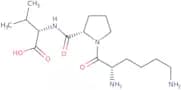
CAS:α-MSH (11-13) (free acid) acetate salt is a synthetic, nonsteroidal compound that binds to and activates α-melanocyte-stimulating hormone receptors. It has been used as an antiinflammatory agent in the treatment of inflammatory bowel disease and bowel disease. α-MSH (11-13) (free acid) acetate salt is also being studied as a contraceptive and an elastase inhibitor. This drug has shown some promise in the treatment of autoimmune diseases, such as rheumatoid arthritis, Crohn's disease, ulcerative colitis, multiple sclerosis, and type 1 diabetes mellitus. It is thought that α-MSH (11-13) (free acid) acetate salt may inhibit the production of inflammatory cells by inhibiting leukocyte elastase activity.
Fórmula:C16H30N4O4Pureza:Min. 95%Peso molecular:342.43 g/mol2-Bromopropionic acid benzyl ester
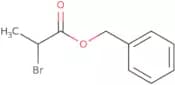
CAS:2-Bromopropionic acid benzyl ester is a synthetic compound with a molecular weight of 220.24 g/mol. It is soluble in organic solvents and has a hydroxyl group at its alpha position. 2-Bromopropionic acid benzyl ester is used in the synthesis of beta-cyclodextrin, which is an important biomaterial for drug delivery as well as other applications. 2-Bromopropionic acid benzyl ester also has antioxidant properties and can be used to treat leukemia cells by inhibiting the production of reactive oxygen species (ROS).
Fórmula:C10H11BrO2Pureza:Min. 95%Peso molecular:243.1 g/molN,N-Bis(carboxymethyl)-L-glutamic acid
CAS:N,N-bis(Carboxymethyl)-L-glutamic acid is a synthetic compound that functions as a disinfectant. It has been shown to be effective against bacteria and fungi in vitro, with an efficacy of over 90%. N,N-bis(Carboxymethyl)-L-glutamic acid is used as a treatment for tumors due to its ability to penetrate the tumor cells and inhibit fatty acid uptake. This compound also prevents the formation of new blood vessels by inhibiting the synthesis of DNA and RNA. N,N-bis(Carboxymethyl)-L-glutamic acid can be used in coatings for metals or metal surfaces that are exposed to water or air because it is biodegradable and noncorrosive.
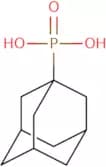
Fórmula:C9H13NO8Pureza:Min. 95%Forma y color:Clear LiquidPeso molecular:263.2 g/mol1-Adamantylphosphonic acid
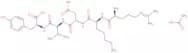
CAS:1-Adamantylphosphonic acid (1APA) is a trifluoroacetic acid derivative that is used as an organic solvent. It is also a catalyst in organic chemistry. 1APA can be used to catalyze the carbonylation of olefins with phosphines, which are ligands that bind to metal compounds and facilitate chemical reactions. Ferrocene, adamantyl, and metallocene are all examples of ligands. 1APA is also used as a reagent in the synthesis of phosphine ligands, which are used in catalytic reactions.Fórmula:C10H17O3PPureza:Min. 95%Peso molecular:216.21 g/molThymopentin acetate salt
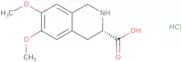
CAS:Producto controladoThymopentin acetate salt H-Arg-Lys-Asp-Val-Tyr-OH acetate salt is an experimental model system that has been shown to replicate the physiological effects of thymopoietin in vitro. It has also been shown to inhibit the growth of Candida glabrata, a fungus that causes infection in patients with HIV or AIDS. Thymopentin acetate salt H-Arg-Lys-Asp-Val-Tyr-OH acetate salt has been shown to activate both toll like receptor and IL2 receptor, which may be due to its ability to stimulate polyamine synthesis.Fórmula:C30H49N9O9Pureza:Min. 95%Peso molecular:679.77 g/mol(S)-(-)-6,7-Dimethoxy-1,2,3,4-tetrahydroisoquinoline-3-carboxylic acid hydrochloride
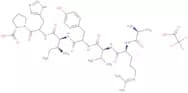
CAS:(S)-(-)-6,7-Dimethoxy-1,2,3,4-tetrahydroisoquinoline-3-carboxylic acid hydrochloride is a synthetic chiral compound that is used to study the role of glyoxylate in biochemical reactions. This drug is an enolate and alkylating agent that can react with nucleophiles such as amines and thiols. It has been shown to be effective against perchlorates by hydrolyzing them into chlorine and oxygen gas. This drug has also been shown to inhibit the growth of Rhodobacter sphaeroides by inhibiting glyoxylate metabolism.Fórmula:C12H15NO4·HClPureza:Min. 95%Forma y color:White PowderPeso molecular:273.71 g/molAngiotensin A (1-7) trifluoroacetate
CAS:Endogenous heptapetide which causes vasodilation and has anti-hypertensive properties.
Fórmula:C40H62N12O9•(C2HF3O2)xPureza:Min. 95%Forma y color:PowderPeso molecular:855 g/molN-(2-Pyridyl)oxamic acid
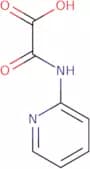
CAS:N-(2-Pyridyl)oxamic acid is a non-steroidal anti-inflammatory drug that belongs to the group of piroxicam. It was found to be a competitive inhibitor of the reaction between singlet oxygen and certain organic compounds. The reaction rate of N-(2-pyridyl)oxamic acid is dependent on the concentration of solvent, which affects the solvation of the reactants and products. The tautomerization equilibrium constant for N-(2-pyridyl)oxamic acid has been determined as 1.3 × 10 at 25°C in acetonitrile, with an apparent molecular weight of 251.6 g/mol. The singlet oxygen constant (Ks) for this compound is 2.8 × 10 at 25°C in acetonitrile, with a maximum absorbance wavelength at 295 nm and a half life time of 0.27 seconds at 298 K in pure water.Fórmula:C7H6N2O3Pureza:Min. 95%Forma y color:PowderPeso molecular:166.13 g/molMethyl 4- bromo- 5- methyl- 1H- imidazole- 2- carboxylate
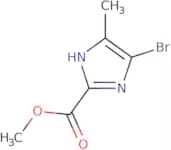
CAS:Please enquire for more information about Methyl 4- bromo- 5- methyl- 1H- imidazole- 2- carboxylate including the price, delivery time and more detailed product information at the technical inquiry form on this pagePureza:Min. 95%N,N'-Bis(2,6-diisopropylphenyl)-3,4,9,10-perylenetetracarboxylic diimide
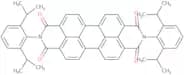
CAS:N,N'-Bis(2,6-diisopropylphenyl)-3,4,9,10-perylenetetracarboxylic diimide is a molecule that has an optimum concentration of 0.5 M. It has a hydrogen bond donor and acceptor and is optically active. This molecule displays fluorescence properties and is inorganic with a chloride acceptor group. N,N'-Bis(2,6-diisopropylphenyl)-3,4,9,10-perylenetetracarboxylic diimide has been shown to have high photostability and to be enhanced by light emission from a diode. This molecule also has carbonyl groups that are electron donors for the fluorescence process.Fórmula:C49H50N6O4Pureza:Min. 95 Area-%Forma y color:PowderPeso molecular:786.96 g/molEthyl 4-formylpyrrole-2-carboxylate
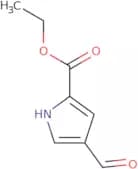
CAS:Ethyl 4-formylpyrrole-2-carboxylate is a chemical compound that is used as an intermediate in organic synthesis. The compound has been reported to have spectra at m/z (M+1) of 168, 156 and 140. It also has been reported to have yields of about 98% when synthesized from ethyl azidoacetate and ethyl bromoacetate. The mass spectra show the molecular ion peak at m/z of 168, 156 and 140 corresponding to the structure of ethyl 4-formylpyrrole-2-carboxylate. Furan, n-substituted furan, thiophene, acetamide and cyclization are other possible structures for this molecule.Fórmula:C8H9NO3Pureza:Min. 95%Peso molecular:167.16 g/mol7-[(2S,3R)-3-Amino-2-methyl-azetidin-1-yl]-1-(2,4-difluorophenyl)-6-fluoro-4-oxo-quinoline-3-carboxylic acid
CAS:7-[(2S,3R)-3-Amino-2-methyl-azetidin-1-yl]-1-(2,4-difluorophenyl)-6-fluoro-4-oxo-quinoline-3-carboxylic acid (ABT) is a drug that binds to bacterial enzymes and inhibits their ability to synthesize proteins. ABT is a conjugate of fluoroquinolone and an amino acid. As the drug is degradable by hydrolysis, it has been shown to be less toxic in Sprague Dawley rats than other fluoroquinolones. This drug has been used in diagnostic tests as a ligand for affinity ligands, but has not been approved for human use. The drug also possesses functional groups that are important for binding to reconstituted enzymes.br>br>ABT's ester linkages are degradable by hydrolysis and can beFórmula:C20H16F3N3O3Pureza:Min. 95%Peso molecular:403.35 g/mol(Des-Gly10, tBu-D-Gly6,Pro-NHEt 9)-LHRH acetate salt
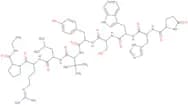
CAS:(Des-Gly10, tBu-D-Gly6,Pro-NHEt 9)-LHRH acetate salt Pyr-His-Trp-Ser-Tyr-tBu-D-Gly-Leu-Arg-Pro-NHEt acetate salt is a synthetic hormone that belongs to the group of gonadotropin releasing hormones (GnRH). It is used in veterinary medicine to stimulate ovulation and follicular growth in animals. (Des-Gly10, tBu-D-Gly6, Pro -NHEt9)-LHRH acetate salt Pyr -His -Trp -Ser -Tyr -tBu -D -Gly -Leu -Arg -Pro NHEt acetate salt is a prodrug that is hydrolyzed in vivo to buserelin, its active form. This drug has been shown to be effective against estradiol benzoate and sodium salts
Fórmula:C59H84N16O12·xC2H4O2Pureza:Min. 95%Peso molecular:1,209.4 g/molCromoglicic acid D5
CAS:Please enquire for more information about Cromoglicic acid D5 including the price, delivery time and more detailed product information at the technical inquiry form on this page
Fórmula:C6D5BrPureza:Min. 95%Forma y color:PowderPeso molecular:473.40 g/molC-Type Natriuretic Peptide (32-53) acetate salt
CAS:C-type Natriuretic peptide is a peptide hormone that causes vasodilation, diuresis, and natriuresis. It is secreted by the heart and kidneys in response to volume overload. C-type Natriuretic peptide has been shown to cause fibrosis of the kidney as well as other tissues in mice. The binding of C-type Natriuretic peptide to its receptor activates cyclase, which converts ATP into cAMP. This leads to increased levels of cGMP, which causes smooth muscle relaxation and vasodilation.Fórmula:C93H157N27O28S3Pureza:Min. 95%Peso molecular:2,197.6 g/mol4-Acetamidobenzenesulfonic acid
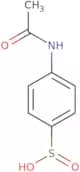
CAS:4-Acetamidobenzenesulfonic acid (4ABS) is an organic compound that is used as a sulfa drug. It is found in the filtrate of the chemical reaction between inulin and sulfamic acid. 4ABS acts as an amine catalyst for acyl transfer reactions. 4ABS also reacts with chloroethanol to form a primary amino group on a colloidal particle surface. This reaction has been shown to be reversible, where hydrochloric acid can react with 4ABS to form the corresponding sulfamic acid.
Fórmula:C8H9NO3SPureza:Min. 95%Peso molecular:199.23 g/molDecanoyl-Arg-Arg-Leu-Leu-chloromethylketone trifluoroacetate salt
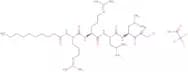
CAS:Decanoyl-arginine-arginine-leucine-chloromethylketone trifluoroacetate salt is a prohormone that is biosynthesized from the amino acid decanoic acid. It has been shown to inhibit fatty acid synthesis and mineralization in tissue samples, as well as drug target enzymes such as human pathogens. Decanoyl-arginine-arginine-leucine-chloromethylketone trifluoroacetate salt has also been shown to have insulin resistance properties and may be used for the treatment of metabolic disorders.Fórmula:C35H67ClN10O5Pureza:Min. 95%Peso molecular:743.42 g/mol11-Keto fusidic acid
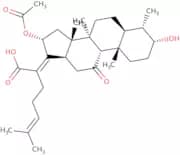
CAS:Fusidic acid is a hydrophilic antibiotic that is structurally related to penicillin. It has a cavity that interacts with γ-cyclodextrin, which can be used for its monitoring and stoichiometry. Fusidic acid has hydroxyl groups that are located on the 7th and 8th positions of the fusidate ring. This antibiotic has been shown to have stability constants in a range of 10-10 M. Fusidic acid also has two electrophoretically distinct forms, depending on the pH of the solution. The form at pH 10 is called fusidane, while the form at pH 5 is called fusidate.Fórmula:C31H46O6Pureza:Min. 95%Peso molecular:514.69 g/mol



![7-[(2S,3R)-3-Amino-2-methyl-azetidin-1-yl]-1-(2,4-difluorophenyl)-6-fluoro-4-oxo-quinoline-3-carbo…](/_next/image/?url=https%3A%2Fstatic.cymitquimica.com%2Fproducts%2F3D%2Fthumb-webp%2FFA30404.webp&w=3840&q=75)