Aldehídos
Los aldehídos son compuestos orgánicos que contienen un grupo carbonilo (C=O) unido al menos a un átomo de hidrógeno. Estos compuestos versátiles son fundamentales en diversas reacciones químicas, incluyendo oxidación, reducción y adición nucleofílica. Los aldehídos son building blocks esenciales en la síntesis de productos farmacéuticos, fragancias y polímeros. En CymitQuimica, ofrecemos una amplia selección de aldehídos de alta calidad para apoyar sus aplicaciones de investigación e industriales.
Se han encontrado 8573 productos de "Aldehídos"
Ordenar por
Pureza (%)
0
100
|
0
|
50
|
90
|
95
|
100
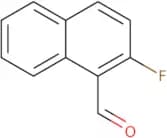
2-Fluoro-1-naphthalenecarboxaldehyde
CAS:<p>2-Fluoro-1-naphthalenecarboxaldehyde is a high quality, complex compound that can be used as a versatile building block in the synthesis of many different compounds. As a reagent, it is used for the conversion of alcohols to ketones, esters to acid chlorides and amides to nitriles. It is also an intermediate in the synthesis of other chemicals such as 2-fluoronaphthalene, 2-(2-fluoroethyl)naphthalene, 1H-indole-2-carboxylic acid, and 3-(2-fluoropropyl)benzothiazole.</p>Fórmula:C11H7FOPureza:Min. 95%Forma y color:PowderPeso molecular:174.17 g/mol2,4,6-Trihydroxybenzaldehyde
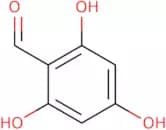
CAS:<p>2,4,6-Trihydroxybenzaldehyde is a polymerase chain inhibitor that blocks the synthesis of DNA and RNA. It has been shown to have significant cytotoxicity in vitro and has been used as an antimicrobial agent to inhibit the growth of bacteria. 2,4,6-Trihydroxybenzaldehyde also inhibits tetracycline resistance in Mycobacterium tuberculosis (Mtb) by inhibiting the production of proteins vital for bacterial cell division. This compound is structurally related to naturally occurring compounds such as anthocyanins and it has been shown to have inhibitory properties on mitochondrial membrane potential, which may be due to its ability to inhibit protein synthesis and induce apoptosis. The analytical methods used for this compound are thin layer chromatography and high performance liquid chromatography.</p>Fórmula:C7H6O4Pureza:Min. 98 Area-%Forma y color:PowderPeso molecular:154.12 g/mol2,6-Dimethoxy-4-methylbenzaldehyde
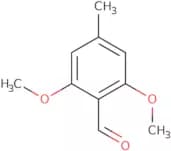
CAS:<p>2,6-Dimethoxy-4-methylbenzaldehyde (DMMB) is a useful chemical that is used as a building block in the synthesis of complex compounds. It has been shown to be an effective chemical intermediate and can be used in the synthesis of various products, such as pharmaceuticals and pesticides. DMMB can also be used to produce high quality research chemicals.</p>Fórmula:C10H12O3Pureza:Min. 95%Forma y color:PowderPeso molecular:180.2 g/mol5-Fluoro-2-hydroxybenzaldehyde
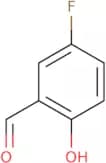
CAS:<p>5-Fluoro-2-hydroxy benzaldehyde is a hydrogen bonding compound that has been shown to be an acid complex. It reacts with copper to form a copper complex that can be detected by x-ray diffraction data. 5-Fluoro-2-hydroxybenzaldehyde also has the ability to react with hydroxyl groups, which allow for its use as a fluorescence probe. The presence of this compound in urine has been used to detect kidney disease and urinary tract infections. 5-Fluoro-2-hydroxybenzaldehyde is also thought to have antiinflammatory properties because it can inhibit kinase activity and may inhibit the production of inflammatory cytokines such as IL1β, IL6, and TNFα.</p>Fórmula:C7H5FO2Pureza:Min. 95%Forma y color:PowderPeso molecular:140.11 g/mol2,4-Difluoro-3-methylbenzaldehyde
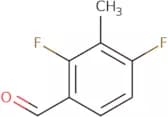
CAS:2,4-Difluoro-3-methylbenzaldehyde is a chemical compound that is used as a building block for the synthesis of other chemicals. It can be used as a research chemical or intermediate due to its versatility. 2,4-Difluoro-3-methylbenzaldehyde has a CAS number of 847502-88-9 and is classified as a speciality chemical with high quality. This compound may be useful in the synthesis of polymers and pharmaceuticals due to its ability to form covalent bonds with other molecules.Fórmula:C8H6F2OPureza:Min. 95%Forma y color:Clear LiquidPeso molecular:156.13 g/mol2-Fluoro-3-methylbenzaldehyde
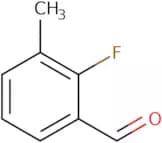
CAS:<p>2-Fluoro-3-methylbenzaldehyde is a chemical that can be used in the synthesis of other chemicals, such as pharmaceuticals. It is a versatile building block that can be used in the synthesis of complex compounds and scaffolds. The compound has been shown to react with amines to form ureas.</p>Fórmula:C8H7FOPureza:80%Peso molecular:138.14 g/molChloroacetaldehyde (40% aq.)
CAS:<p>Chloroacetaldehyde is a reactive compound that is found in wastewater. It can be used to remove other pollutants from the water. Chloroacetaldehyde has been shown to be toxic and may cause cancer, but it also has been used as a model system for studying energy metabolism. This substance is toxic because it reacts with cellular components such as proteins and DNA by cross-linking them. The cytosolic Ca2+ concentration increases when chloroacetaldehyde binds to cellular proteins, which affects cell physiology and the production of MMP-9.</p>Fórmula:ClCH2CHOPureza:Min. 95%Forma y color:Clear LiquidPeso molecular:78.5 g/moltrans-4-(Diethylamino)cinnamaldehyde
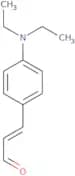
CAS:Trans-4-(Diethylamino)cinnamaldehyde is a molecule that has been systematically studied with several techniques, such as x-ray crystallography. It has been shown to be a fluorophore and can be used as a fluorescent probe. Trans-4-(Diethylamino)cinnamaldehyde can be used in the fluorescence method in which it reacts with other molecules and emits light. This reaction scheme is based on the principle of irradiation by UV light or visible light to produce an excited state. Fluorescence is detected at various wavelengths depending on the dye used. Trans-4-(Diethylamino)cinnamaldehyde also emits fluorescence when irradiated with ultraviolet light, which is often referred to as "violet" fluorescence. The wavelength of this emission is 365 nm and it can be detected using high yield techniques, such as fluorometers.Fórmula:C13H17NOPureza:Min. 95%Forma y color:PowderPeso molecular:203.28 g/mol6-Benzyloxyindole-3-carboxaldehyde
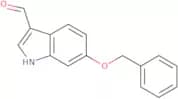
CAS:6-Benzyloxyindole-3-carboxaldehyde is a benzyl compound that is produced by the catalytic hydrogenolysis of benzyl alcohol. The debenzylation product of 6-benzyloxyindole-3-carboxaldehyde is known as benzene.Fórmula:C16H13NO2Pureza:Min. 95%Forma y color:PowderPeso molecular:251.28 g/mol4-Chloro-2-methylbenzaldehyde
CAS:4-Chloro-2-methylbenzaldehyde is a nucleophilic and electrophilic compound that has a carbonyl group. The vivo model of 4-Chloro-2-methylbenzaldehyde suggests that the methyl groups on the molecule are important for its anti-cancer activities. This compound also has anti-inflammatory properties, which may be due to its ability to inhibit prostaglandin synthesis. It is used in anti-cancer agents as well as in other applications such as catalysis and synthetic chemistry. 4-Chloro-2-methylbenzaldehyde is synthesized by first reacting benzaldehyde with sodium nitrite, followed by chlorination with phosphorus pentachloride and sodium hydroxide. The mechanistic details of this reaction have not been elucidated yet, but it is believed that the selectivity of this reaction may be due to the presence of aldehydes in the reactants. Further optimization of this reaction would involve changing theFórmula:C8H7ClOPureza:Min. 95%Forma y color:Clear LiquidPeso molecular:154.59 g/mol3-Bromo-4-hydroxybenzaldehyde
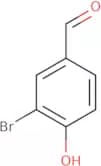
CAS:<p>3-Bromo-4-hydroxybenzaldehyde is a fluorescence probe that can be used to identify the presence of hydroxyl groups in organic solutions. It reacts with hydrochloric acid to form a green solution and a gas. 3-Bromo-4-hydroxybenzaldehyde has been used to study hydroxyl groups in human serum, plant physiology, and surfactant sodium dodecyl (SDS). This compound has shown potent inhibition against an enzyme called benzoyl peroxide reductase. 3-Bromo-4-hydroxybenzaldehyde is soluble in water, but not in ether. The molecular weight of this compound is 176.3 g/mol.</p>Fórmula:C7H5BrO2Pureza:Min. 95%Forma y color:PowderPeso molecular:201.02 g/mol3-Nitrosalicylaldehyde
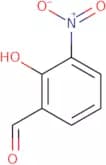
CAS:<p>3-Nitrosalicylaldehyde is an oxidizing agent that reacts with DNA in vitro to form DNA adducts. 3-Nitrosalicylaldehyde also has antioxidative properties, which can be demonstrated by its ability to inhibit the oxidation of low density lipoprotein (LDL) in vivo. This compound has been shown to activate the metalloproteinase MT2 receptor, which is involved in the regulation of blood pressure and heart function. 3-Nitrosalicylaldehyde is metabolized by hydrolysis and reduction to form a neutral product, which has been shown to have antidiabetic effects on mice.</p>Fórmula:C7H5NO4Pureza:Min. 95%Forma y color:PowderPeso molecular:167.12 g/mol3,5-Di-tert-butyl-2-hydroxy benzaldehyde
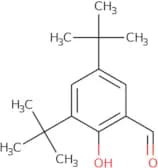
CAS:<p>3,5-Di-tert-butyl-2-hydroxy benzaldehyde is a molecule that has been shown to have inhibitory effects on cancer cells. It has been tested in vitro on carcinoma cell lines with promising results and shows the potential to be used as an anticancer agent. 3,5-Di-tert-butyl-2-hydroxy benzaldehyde inhibits the growth of cancer cells by binding to their DNA and preventing the synthesis of proteins. This drug is also effective against bacterial strains such as Escherichia coli, Salmonella typhimurium, Klebsiella pneumoniae, Pseudomonas aeruginosa, and Vibrio cholerae. 3,5-Di-tert-butyl-2-hydroxy benzaldehyde forms hydrogen bonds with nitrogen atoms that are present in the molecules of these bacteria. The intramolecular hydrogen bonding interactions between 3,5-di tert butyl 2 hydroxyben</p>Fórmula:C15H22O2Pureza:Min. 95%Forma y color:Off-White PowderPeso molecular:234.33 g/mol4-Iodobenzaldehyde
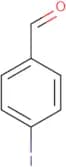
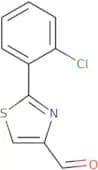
CAS:4-Iodobenzaldehyde is a chemical compound with the molecular formula C6H5IO. It is an aromatic compound that can be used in cancer therapy. 4-Iodobenzaldehyde reacts with trifluoroacetic acid to form an intramolecular hydrogen, which is detected using a low-energy monomer and high detection sensitivity. 4-Iodobenzaldehyde has two phenyl substituents and a serine protease functional group, which are required for its interaction with other molecules. The presence of these functional groups allows analytical methods to be used to identify 4-iodobenzaldehyde in various samples. Using analytical methods, it can be determined that 4-iodobenzaldehyde interacts with an acceptor molecule at the reaction vessel thermally or by irradiation.Fórmula:C7H5IOPureza:Min. 95%Forma y color:Yellow PowderPeso molecular:232.02 g/mol2-(2-Chlorophenyl)thiazole-4-carbaldehyde
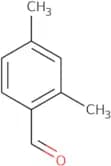
CAS:<p>Please enquire for more information about 2-(2-Chlorophenyl)thiazole-4-carbaldehyde including the price, delivery time and more detailed product information at the technical inquiry form on this page</p>Fórmula:C10H6ClNOSPureza:Min. 95%Forma y color:PowderPeso molecular:223.68 g/mol2,4-Dimethylbenzaldehyde
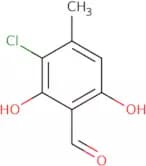
CAS:<p>2,4-Dimethylbenzaldehyde is used in the diagnosis of cancer. It reacts with acetaldehyde to form a compound that binds to hemoglobin and is excreted in the urine, leading to a diagnostic test for cancer. 2,4-Dimethylbenzaldehyde has been shown to be genotoxic in both in vitro and in vivo studies. This aromatic hydrocarbon has been shown to cause DNA strand breaks in the target cells through a reaction mechanism involving radical formation from acetaldehyde. In addition, 2,4-Dimethylbenzaldehyde has been shown to have genotoxic effects on mice exposed by inhalation or injection.</p>Fórmula:C9H10OPureza:Min. 90 Area-%Forma y color:Colorless Clear LiquidPeso molecular:134.18 g/mol3-Chloro-2,6-dihydroxy-4-methylbenzaldehyde
CAS:3-Chloro-2,6-dihydroxy-4-methylbenzaldehyde is a hydroxylated compound that is used in wastewater treatment. It can be found in many products including plastics and pesticides. 3-Chloro-2,6-dihydroxy-4-methylbenzaldehyde has been shown to inhibit the growth of bacteria such as Usnic Acid through its ability to react with hydrogen atoms on the bacterial cell wall and replace them with chlorine. This replacement halts the production of benzoate, which is essential for bacterial growth. The reaction mechanism has been detected using an electrochemical detector, chloroatranol.Fórmula:C8H7ClO3Pureza:Min. 95%Forma y color:Off-White PowderPeso molecular:186.59 g/mol1-Acetyl-3-indolecarboxaldehyde
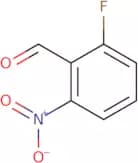
CAS:<p>1-Acetyl-3-indolecarboxaldehyde is a ligand that binds to the cannabinoid receptor 1 (CB1). It has been shown to bind to the CB1 receptor with high affinity and selectivity. In addition, it has been demonstrated to inhibit the proliferation of human breast cancer cells in vitro. The compound is used as a fluorescent probe for cb1 receptor binding. Data obtained from molecular modelling studies have suggested that the hydroxyl group might be involved in binding to the CB1 receptor. 1-Acetyl-3-indolecarboxaldehyde also binds carotenoids, which are molecules responsible for giving plants and other photosynthetic organisms their coloration. This compound can be found in many different plants, such as carrots and bananas, where it acts as an antioxidant.</p>Fórmula:C11H9NO2Pureza:Min. 95%Forma y color:PowderPeso molecular:187.19 g/mol2-Fluoro-6-nitrobenzaldehyde
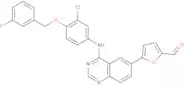
CAS:<p>2-Fluoro-6-nitrobenzaldehyde is an electron donor that reduces a range of electron acceptors including piperazine. This compound has been shown to have antitumor effects. 2-Fluoro-6-nitrobenzaldehyde has also been shown to inhibit the growth of cancer cells in vitro and in vivo. The mechanism of action is not yet known, but it is thought that 2-fluoro-6-nitrobenzaldehyde may be a potential chemotherapeutic agent for pancreatic cancer therapy.</p>Fórmula:C7H4FNO3Pureza:Min. 95%Forma y color:PowderPeso molecular:169.11 g/mol5-(4-((3-Chloro-4-((3-fluorobenzyl)oxy)phenyl)amino) quinazolin-6-yl)furan-2-carbaldehyde
CAS:<p>5-(4-((3-Chloro-4-((3-fluorobenzyl)oxy)phenyl)amino)quinazolin-6-yl)furan-2-carbaldehyde is a heterocyclic compound that has been used to study protein tyrosine kinase activity. This drug binds to the active site of the enzyme and inhibits its function by forming an irreversible covalent bond with the enzyme's reactive cysteine residue, which prevents the transfer of phosphate groups from ATP to the substrate (tyrosine).</p>Fórmula:C26H17ClFN3O3Pureza:Min. 95%Peso molecular:473.88 g/mol