Aldehídos
Los aldehídos son compuestos orgánicos que contienen un grupo carbonilo (C=O) unido al menos a un átomo de hidrógeno. Estos compuestos versátiles son fundamentales en diversas reacciones químicas, incluyendo oxidación, reducción y adición nucleofílica. Los aldehídos son building blocks esenciales en la síntesis de productos farmacéuticos, fragancias y polímeros. En CymitQuimica, ofrecemos una amplia selección de aldehídos de alta calidad para apoyar sus aplicaciones de investigación e industriales.
Se han encontrado 8573 productos de "Aldehídos"
Ordenar por
Pureza (%)
0
100
|
0
|
50
|
90
|
95
|
100
2-Benzyloxy-3-methoxybenzaldehyde
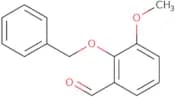
CAS:<p>2-Benzyloxy-3-methoxybenzaldehyde is an enantiopure compound that has been shown to have antiproliferative effects on cancer cells. It was also found to have a strong binding affinity for DNA and protein. The antiproliferative effects of 2-Benzyloxy-3-methoxybenzaldehyde were found to be due to its ability to bind to dna and inhibit the enzyme activity of pyrazine-2-carboxylic acid, leading to a decrease in the production of proteins vital for cell division. 2-Benzyloxy-3-methoxybenzaldehyde has been shown to have anticancer activity against colorectal cancer cells and may serve as a lead compound for future drug development.</p>Fórmula:C15H14O3Pureza:Min. 95%Peso molecular:242.27 g/mol3-Bromo-4-hydroxybenzaldehyde
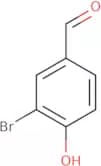
CAS:<p>3-Bromo-4-hydroxybenzaldehyde is a fluorescence probe that can be used to identify the presence of hydroxyl groups in organic solutions. It reacts with hydrochloric acid to form a green solution and a gas. 3-Bromo-4-hydroxybenzaldehyde has been used to study hydroxyl groups in human serum, plant physiology, and surfactant sodium dodecyl (SDS). This compound has shown potent inhibition against an enzyme called benzoyl peroxide reductase. 3-Bromo-4-hydroxybenzaldehyde is soluble in water, but not in ether. The molecular weight of this compound is 176.3 g/mol.</p>Fórmula:C7H5BrO2Pureza:Min. 95%Forma y color:PowderPeso molecular:201.02 g/mol3,5-Di-tert-butyl-2-hydroxy benzaldehyde
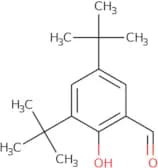
CAS:<p>3,5-Di-tert-butyl-2-hydroxy benzaldehyde is a molecule that has been shown to have inhibitory effects on cancer cells. It has been tested in vitro on carcinoma cell lines with promising results and shows the potential to be used as an anticancer agent. 3,5-Di-tert-butyl-2-hydroxy benzaldehyde inhibits the growth of cancer cells by binding to their DNA and preventing the synthesis of proteins. This drug is also effective against bacterial strains such as Escherichia coli, Salmonella typhimurium, Klebsiella pneumoniae, Pseudomonas aeruginosa, and Vibrio cholerae. 3,5-Di-tert-butyl-2-hydroxy benzaldehyde forms hydrogen bonds with nitrogen atoms that are present in the molecules of these bacteria. The intramolecular hydrogen bonding interactions between 3,5-di tert butyl 2 hydroxyben</p>Fórmula:C15H22O2Pureza:Min. 95%Forma y color:Off-White PowderPeso molecular:234.33 g/mol2-Hydroxy-6-(methoxymethoxy)benzaldehyde
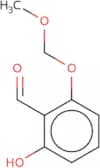
CAS:<p>2-Hydroxy-6-(methoxymethoxy)benzaldehyde is a chemical intermediate that can be used in the synthesis of a wide range of compounds. It is an aromatic compound which has two hydroxyl groups on the benzene ring. This product is a versatile building block, and is useful in the synthesis of complex compounds with high purity. 2-Hydroxy-6-(methoxymethoxy)benzaldehyde can be obtained as a white solid with a melting point of 57°C.</p>Fórmula:C9H10O4Pureza:Min. 95%Forma y color:Clear LiquidPeso molecular:182.17 g/mol2-(2-Chlorophenyl)thiazole-4-carbaldehyde
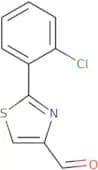
CAS:<p>Please enquire for more information about 2-(2-Chlorophenyl)thiazole-4-carbaldehyde including the price, delivery time and more detailed product information at the technical inquiry form on this page</p>Fórmula:C10H6ClNOSPureza:Min. 95%Forma y color:PowderPeso molecular:223.68 g/mol2,6-Dimethoxy-4-methylbenzaldehyde
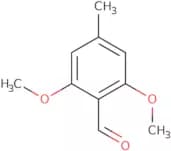
CAS:<p>2,6-Dimethoxy-4-methylbenzaldehyde (DMMB) is a useful chemical that is used as a building block in the synthesis of complex compounds. It has been shown to be an effective chemical intermediate and can be used in the synthesis of various products, such as pharmaceuticals and pesticides. DMMB can also be used to produce high quality research chemicals.</p>Fórmula:C10H12O3Pureza:Min. 95%Forma y color:PowderPeso molecular:180.2 g/mol2,6-Dichloro-3-nitrobenzaldehyde
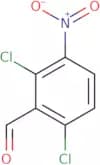
CAS:<p>2,6-Dichloro-3-nitrobenzaldehyde (DCNB) is an electrophilic bidentate ligand that reacts with chlorine to form chloroform. It is also a good ligand for many metal ions, such as copper and nickel. DCNB can catalyze the epoxidation of alkenes to form epoxides. DCNB has been used in the industrial production of chlorinated solvents and hydrocarbons. It is a very efficient reagent for formylation, which can be used to convert alcohols and amines into formyl groups or carboxylic acids. The DCN group is also an excellent leaving group, which makes it useful as a solvent in organic syntheses. Finally, DCNB reacts with chlorine atoms to produce chloride ions that are soluble in water and organic solvents.</p>Fórmula:C7H3Cl2NO3Pureza:Min. 95%Peso molecular:220.01 g/mol4-Iodobenzaldehyde
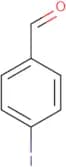
CAS:4-Iodobenzaldehyde is a chemical compound with the molecular formula C6H5IO. It is an aromatic compound that can be used in cancer therapy. 4-Iodobenzaldehyde reacts with trifluoroacetic acid to form an intramolecular hydrogen, which is detected using a low-energy monomer and high detection sensitivity. 4-Iodobenzaldehyde has two phenyl substituents and a serine protease functional group, which are required for its interaction with other molecules. The presence of these functional groups allows analytical methods to be used to identify 4-iodobenzaldehyde in various samples. Using analytical methods, it can be determined that 4-iodobenzaldehyde interacts with an acceptor molecule at the reaction vessel thermally or by irradiation.Fórmula:C7H5IOPureza:Min. 95%Forma y color:Yellow PowderPeso molecular:232.02 g/mol1-Acetyl-3-indolecarboxaldehyde
CAS:<p>1-Acetyl-3-indolecarboxaldehyde is a ligand that binds to the cannabinoid receptor 1 (CB1). It has been shown to bind to the CB1 receptor with high affinity and selectivity. In addition, it has been demonstrated to inhibit the proliferation of human breast cancer cells in vitro. The compound is used as a fluorescent probe for cb1 receptor binding. Data obtained from molecular modelling studies have suggested that the hydroxyl group might be involved in binding to the CB1 receptor. 1-Acetyl-3-indolecarboxaldehyde also binds carotenoids, which are molecules responsible for giving plants and other photosynthetic organisms their coloration. This compound can be found in many different plants, such as carrots and bananas, where it acts as an antioxidant.</p>Fórmula:C11H9NO2Pureza:Min. 95%Forma y color:PowderPeso molecular:187.19 g/mol3,4-Dihydroxy-5-methoxybenzaldehyde
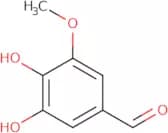
CAS:<p>3,4-Dihydroxy-5-methoxybenzaldehyde is a synthetic compound that has shown to have inhibitory effects on the replication of DNA and RNA. It also inhibits the growth of bacteria in culture by binding to the nucleic acid. The chemical structure of 3,4-Dihydroxy-5-methoxybenzaldehyde is similar to that of bisbenzylisoquinoline alkaloids, which are found in plants such as opium poppy. This similarity may explain its ability to inhibit bacterial growth. 3,4-Dihydroxy-5-methoxybenzaldehyde may be used as a drug candidate for treating bacterial infections.</p>Fórmula:C8H8O4Pureza:Min. 95%Forma y color:PowderPeso molecular:168.15 g/mol2-(4-Fluorophenyl)thiazole-4-carbaldehyde
CAS:<p>Please enquire for more information about 2-(4-Fluorophenyl)thiazole-4-carbaldehyde including the price, delivery time and more detailed product information at the technical inquiry form on this page</p>Fórmula:C10H6FNOSPureza:Min. 95%Forma y color:PowderPeso molecular:207.23 g/mol4-(Phenylethynyl)benzaldehyde
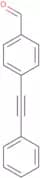
CAS:<p>4-(Phenylethynyl)benzaldehyde is a synthetic compound that belongs to the class of aldehydes. It is soluble in acetonitrile and can be synthesized by a cross-coupling reaction between two different organometallic reagents, such as N-phenyltrifluoroacetamide or N-phenylmaleimide. 4-(Phenylethynyl)benzaldehyde has been shown to have cytotoxic effects on cancer cells and can be used for the treatment of leukemia and Hodgkin's lymphoma. This chemical has fluorescence properties, which are enhanced by surface-enhanced Raman spectroscopy. 4-(Phenylethynyl)benzaldehyde also shows photophysical properties, such as an imine and fluorescent character, making it possible to use it in chemiluminescence reactions.</p>Fórmula:C15H10OPureza:Min. 95 Area-%Forma y color:Clear LiquidPeso molecular:206.24 g/mol2-Fluoro-6-nitrobenzaldehyde
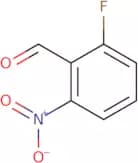
CAS:<p>2-Fluoro-6-nitrobenzaldehyde is an electron donor that reduces a range of electron acceptors including piperazine. This compound has been shown to have antitumor effects. 2-Fluoro-6-nitrobenzaldehyde has also been shown to inhibit the growth of cancer cells in vitro and in vivo. The mechanism of action is not yet known, but it is thought that 2-fluoro-6-nitrobenzaldehyde may be a potential chemotherapeutic agent for pancreatic cancer therapy.</p>Fórmula:C7H4FNO3Pureza:Min. 95%Forma y color:PowderPeso molecular:169.11 g/molPolydialdehyde starch (Polymeric dialdehyde)
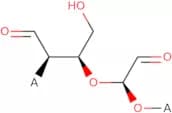
CAS:<p>Polydialdehyde starch is a cross-linking agent that is used to form hydrophobic polymers, which are prodrugs. It is a polymer of dialdehydes and can be used as an additive for restenosis prevention. Polydialdehyde starch has been shown to reduce platelet adhesion and aggregation in vitro and in vivo. The mechanism of action may be related to the ability of polydialdehyde starch to bind collagen and promote its degradation by hydrolysis. This also results in an increase in the rate of dilation of blood vessels, which may contribute to the antiplatelet effect. Polydialdehyde starch has been shown to be biodegradable, with a half-life of about two weeks in vivo after injection into rats.</p>Forma y color:White PowderPeso molecular:347.66Chamigrenal
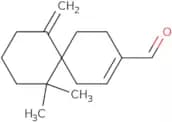
CAS:<p>Chamigrenal is a complex enzyme that is extracted from the fruit of the chamomile plant, which has been used for centuries in Ayurvedic medicine. Chamigrenal has been shown to have anti-inflammatory and anti-allergic activities. It also binds to G-protein coupled receptors, which may be due to its eluting property. Chamigrenal contains many chemical structures, including phenolic acids, flavonoids, terpenoids, and coumarins. The molecule has been shown to inhibit the growth of human cervical carcinoma cells by binding to a receptor called factor receptor.<br>DEFINITION: Chamigrenal is an extract from the fruit of the chamomile plant that has been used for centuries in Ayurvedic medicine as a treatment for inflammation and allergies. It has also been shown to bind to G-protein coupled receptors and inhibit human cervical carcinoma cells by binding to a receptor called factor receptor.</p>Fórmula:C15H22OPureza:Min. 98 Area-%Forma y color:PowderPeso molecular:218.33 g/molPrenalterol
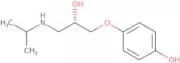
CAS:<p>Prenalterol is a drug that can be used to treat congestive heart failure and high blood pressure. It belongs to the class of 2-adrenergic receptor agonists, which are drugs that stimulate the sympathetic nervous system. Prenalterol has been shown to have a positive effect on the cardiovascular system by increasing cardiac output. This drug also has an anti-inflammatory effect, which may be due to its ability to inhibit protein synthesis genes in cells. Prenalterol has also been shown to reduce post-myocardial infarction remodeling by reducing myocardial fibrosis, although it does not affect the incidence of myocardial infarcts.</p>Fórmula:C12H19NO3Pureza:Min. 95%Forma y color:White PowderPeso molecular:225.28 g/molSalicylaldehyde azine
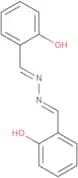
CAS:<p>Salicylaldehyde azine (SAZ) is a polymerized compound that has been shown to inhibit tyrosinase, an enzyme that catalyzes the oxidation of L-tyrosine to DOPA and dopaquinone. It can be used as a fluorescent probe for metal ions and has been used in the preparation of aluminium salts. The interaction of SAZ with protonated functional groups on tyrosinase leads to inhibition by blocking the active site. This inhibition is reversible and can be reversed by adding a reducing agent such as sodium dithionite.</p>Fórmula:C14H12N2O2Pureza:Min. 95%Forma y color:PowderPeso molecular:240.26 g/molUreaformaldehyde
CAS:<p>Ureaformaldehyde is a synthetic slow-release fertilizer that contains urea and formaldehyde. It has been shown to be highly active as a slow-release fertilizer in Langmuir adsorption isotherm studies. Ureaformaldehyde also has the ability to mineralize chloride and hydrogen bond to soil particles, increasing the availability of these ions for plant uptake. Ureaformaldehyde is also used in analytical methods such as chromatographic determination of fatty acids, which are an important component of animal and vegetable oils. !--</p>Fórmula:(CH4N2O•CH2O)xPureza:Min. 95%Forma y color:Clear LiquidPeso molecular:90.08 g/mol3-Fluoro-4-methoxybenzaldehyde
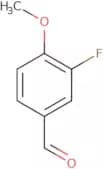
CAS:<p>3-Fluoro-4-methoxybenzaldehyde is a chemical compound that is used in the synthesis of natural products. It has been shown to have inhibitory properties against cancer cells, and has been synthesized as an analog of 3-fluoro-4-hydroxybenzaldehyde. The biological function of 3-fluoro-4-methoxybenzaldehyde is not yet known. Hydrochloric acid may be used to react with 3-fluoro-4-methoxybenzaldehyde to form a salt. This chemical also has anti-tumor effects and can be synthesized using cryogenic techniques.</p>Fórmula:C8H7FO2Pureza:Min. 95%Forma y color:Slightly Yellow PowderPeso molecular:154.14 g/mol2-Bromobenzaldehyde ethylene acetal
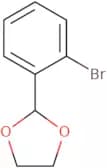
CAS:2-Bromobenzaldehyde ethylene acetal is a reactive intermediate that can be used to form allyl ethers. It is prepared by the Grignard reaction of 2-bromobenzaldehyde with an ethylene acetal. This molecule may be useful for the synthesis of dioxolanes and amines, as well as for other applications such as supramolecular chemistry and emulsions.Fórmula:C9H9BrO2Pureza:Min. 95%Peso molecular:229.07 g/mol