Aldehídos
Se han encontrado 8576 productos de "Aldehídos"
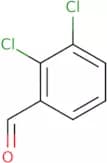
2,3-Dichlorobenzaldehyde
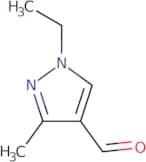
CAS:2,3-Dichlorobenzaldehyde (2,3-DBA) is an organic compound that is used as a synthetic intermediate in the preparation of other chemicals. It is prepared by reacting 2-chloroacetophenone with hydrochloric acid and sodium carbonate in a reaction vessel. The product can be purified through fractional distillation or crystallization. The optical properties of 2,3-DBA are determined by its dipole moment and the substituents attached to the methylene group. Molecular modeling studies have shown that felodipine can bind to 2,3-DBA through its active methylene group. The reaction products between sulfadiazine and 2,3-DBA are pyridinedicarboxylic acid and 3-chlorobenzaldehyde.Fórmula:C7H4Cl2OPureza:Min. 95%Forma y color:White PowderPeso molecular:175.01 g/mol1-Ethyl-3-methyl-1H-pyrazole-4-carbaldehyde
CAS:1-Ethyl-3-methyl-1H-pyrazole-4-carbaldehyde is a reactive intermediate that is used as a reagent in organic synthesis. It is also a useful scaffold for the synthesis of complex compounds, such as pharmaceuticals and agrochemicals. 1-Ethyl-3-methyl-1H-pyrazole-4-carbaldehyde has been used as an intermediate to synthesize the antihistamine drug terfenadine and the insecticide carbofuran. This chemical is manufactured by reacting ethyl pyruvate with anhydrous hydrazine.
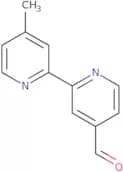
Fórmula:C7H10N2OPureza:Min. 95%Forma y color:Yellow PowderPeso molecular:138.17 g/mol4'-Methyl-2,2'-bipyridine-4-carboxaldehyde
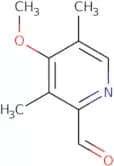
CAS:4'-Methyl-2,2'-bipyridine-4-carboxaldehyde is a heterocyclic compound that contains a nitro group. It has the chemical formula C8H6N2O and the molecular weight of 122.15 g/mol. This compound belongs to the class of formyl compounds and it is composed of two formyl groups and one hydrogen atom. The bipyridines are linked by a methylene bridge to form a six-membered ring. The compound can be used as an intermediate for the synthesis of other organic compounds such as pharmaceuticals, dyes, water repellents, pesticides, and herbicides.Fórmula:C12H10N2OPureza:Min. 95%Forma y color:PowderPeso molecular:198.22 g/mol4-Methoxy-3,5-dimethyl-2-pyridinecarboxaldehyde
CAS:4-Methoxy-3,5-dimethyl-2-pyridinecarboxaldehyde is a trifunctional molecule that has been shown to suppress the growth of cancer cells in mice. This compound is an inhibitor of acid synthesis and has also been shown to be an antirheumatic drug. 4-Methoxy-3,5-dimethyl-2-pyridinecarboxaldehyde inhibits the activity of three enzymes: synthetase, an enzyme that synthesizes fatty acids; 3-ketoacyl CoA synthase, which synthesizes ketones; and enoyl CoA reductase, which produces fatty acids. The long term efficacy of this molecule has not yet been studied in humans.Fórmula:C9H11NO2Pureza:Min. 95%Forma y color:Colourless LiquidPeso molecular:165.19 g/mol2-(4-Methoxyphenoxy)benzaldehyde
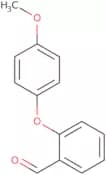
CAS:2-(4-Methoxyphenoxy)benzaldehyde is a fine chemical that is used as a versatile building block in the synthesis of complex compounds and research chemicals. 2-(4-Methoxyphenoxy)benzaldehyde is also a reagent that can be used to synthesize speciality chemicals, useful building blocks, and reaction components. This chemical may be used as an intermediate for the synthesis of high-quality pharmaceuticals or other useful scaffolds. It has CAS number 19434-36-7.
Fórmula:C14H12O3Pureza:Min. 95%Forma y color:White To Brown SolidPeso molecular:228.24 g/molα-Chloro-4-fluorobenzaldehyde oxime
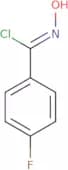
CAS:Alpha-Chloro-4-fluorobenzaldehyde oxime is a selenium compound that can be stabilized with heat resistance and structuring. It is used as an additive in the plating of alloys, thermoplastics, and rubber products. Alpha-Chloro-4-fluorobenzaldehyde oxime has been shown to have anti-oxidant effects, which may be due to its ability to stabilize free radicals.Fórmula:C7H5ClFNOPureza:Min. 95%Peso molecular:173.57 g/mol5-Bromo thiophene-2-aldehyde
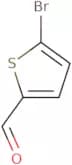
CAS:5-Bromo thiophene-2-aldehyde is a trifluoroacetic acid derivative used as an activatable probe for the study of biomolecular interactions. This compound has been shown to be biocompatible and has a low cytotoxicity. 5-Bromo thiophene-2-aldehyde binds to malonic acid in the presence of x-ray radiation and forms a complex that can be detected by electrochemical impedance spectroscopy. The structure of this complex was determined by x-ray crystal structures. This probe is also able to bind to nitrogen atoms in proteins, which can be used to diagnose cancer resistance through protease activity. 5-Bromo thiophene-2-aldehyde is isolated as its hydrochloride salt, which can be purified with a suzuki coupling reaction.Fórmula:C5H3BrOSPureza:Min. 95%Forma y color:Yellow PowderPeso molecular:191.05 g/mol2,6-Dibromobenzaldehyde
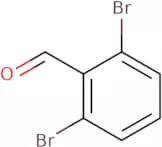
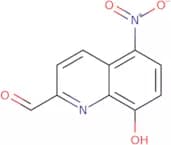
CAS:2,6-Dibromobenzaldehyde is an imidazole derivative that has been shown to be a potent inhibitor of tyrosine kinase. It has been shown to inhibit the replication of virus type-1 and is effective in the treatment of pain models. 2,6-Dibromobenzaldehyde also inhibits the activity of enzymes, such as phosphodiesterases and protein kinases. This compound has shown promising results in animal studies for the treatment of human immunodeficiency virus type 1 (HIV-1) infection. The pharmacokinetic properties of 2,6-dibromobenzaldehyde have been studied in rats and dogs with oral administration and found to be linear and rapid with high bioavailability.Fórmula:C7H4Br2OPureza:Min. 95%Forma y color:PowderPeso molecular:263.91 g/mol8-Hydroxy-5-nitroquinoline-2-carbaldehyde
CAS:8-Hydroxy-5-nitroquinoline-2-carbaldehyde is a high quality, versatile building block that can be used as a reaction intermediate or to synthesize heterocycles. It is also a useful scaffold for the synthesis of complex compounds. The CAS number of this chemical is 884497-63-6.Fórmula:C10H6N2O4Pureza:Min. 95%Forma y color:PowderPeso molecular:218.17 g/mol7-Isopropyl-1,4-dimethylazulene-3-carboxaldehyde
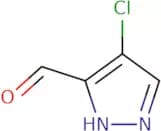
CAS:Fórmula:C16H18OPureza:>97.0%(GC)Forma y color:Gray to Dark purple to Black powder to crystalPeso molecular:226.324-Chloro-1H-pyrazole-3-carboxaldehyde
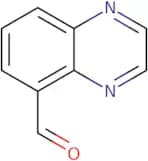
CAS:4-Chloro-1H-pyrazole-3-carboxaldehyde is a fine chemical that is used as a building block in research and development. The CAS number is 623570-54-7. This compound has been found to be useful in the synthesis of complex compounds and versatile scaffolds.Fórmula:C4H3ClN2OPureza:Min. 95%Forma y color:SolidPeso molecular:130.53 g/molQuinoxaline-5-carboxaldehyde
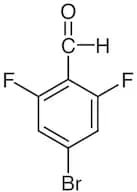
CAS:Quinoxaline-5-carboxaldehyde is a versatile building block and reagent for organic chemistry. It is a complex compound that can be used as a research chemical or as a speciality chemical, with high quality and a useful scaffold. This compound has been shown to be an intermediate in the synthesis of other compounds, such as quinoxaline-5-carboxylic acid.Fórmula:C9H6N2OPureza:Min. 95%Forma y color:Off-White PowderPeso molecular:158.16 g/mol4-Bromo-2,6-difluorobenzaldehyde
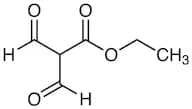
CAS:Fórmula:C7H3BrF2OPureza:>98.0%(GC)Forma y color:White to Light yellow to Light orange powder to crystalPeso molecular:221.00Ethyl Diformylacetate
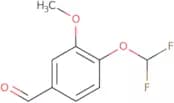
CAS:Fórmula:C6H8O4Pureza:>97.0%(T)Forma y color:Colorless to Light yellow to Light orange clear liquidPeso molecular:144.133-Methoxy-4-(difluoromethoxy)benzaldehyde
CAS:3-Methoxy-4-(difluoromethoxy)benzaldehyde is a chemical compound that has been found to have anti-tumor properties. It inhibits tumor cells by inducing cell apoptosis. 3-Methoxy-4-(difluoromethoxy)benzaldehyde induces apoptosis in human carcinoma cells, with optimal activity at doses of 10 micromolar and higher. This chemical can be used as an anti-tumor agent because it shows no genotoxic effects, and has high yield with a low toxicity profile. When this compound is exposed to UV radiation, the formation of reactive oxygen species (ROS) increases the rate of cell death. 3-Methoxy-4-(difluoromethoxy)benzaldehyde also has anti-inflammatory properties, which may be due to its ability to inhibit prostaglandin synthesis.Fórmula:C9H8F2O3Pureza:Min. 95%Forma y color:Colourless To Pale Yellow LiquidPeso molecular:202.15 g/mol3-Ethynylbenzaldehyde
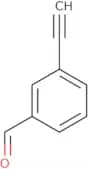
CAS:3-Ethynylbenzaldehyde is a tryptic, nitro compound that contains terminal alkynes and has functional groups. The functional theory of this compound suggests that it may be used as a chemosensor for the detection of acidic compounds. 3-Ethynylbenzaldehyde reacts with sodium trifluoroacetate to form an aldehyde, which is then oxidized to an acid by the addition of water. This acid can be detected using NMR spectroscopy. 3-Ethynylbenzaldehyde has been shown to react with sodium trifluoroacetate in solid form at room temperature and above. The resulting product is a yellow crystalline solid that can be identified by its UV spectrum.
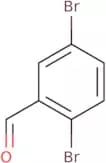
Fórmula:C9H6OPureza:Min. 95%Forma y color:PowderPeso molecular:130.14 g/mol2,5-Dibromobenzaldehyde
CAS:2,5-Dibromobenzaldehyde is a synthetic compound that has been shown to have a red fluorescent emission. It is also thermally stable and can be used in the synthesis of quinoline derivatives. 2,5-Dibromobenzaldehyde may be used as a potential fluorescent label for viologen or amines. This compound can undergo an intermolecular Diels-Alder reaction with diacetate to form a bicyclic system, which is important to the understanding of its interactions with other compounds.Fórmula:C7H4Br2OPureza:Min. 95%Forma y color:PowderPeso molecular:263.91 g/mol(3-tert-Butoxy)benzaldehyde
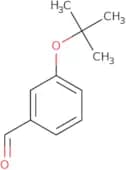
CAS:3-tert-Butoxybenzaldehyde is a versatile building block that can be used as an intermediate in the synthesis of various compounds. It has been shown to react with nucleophiles such as thiols, alcohols, and amines to form adducts that are useful for biological studies. 3-tert-Butoxybenzaldehyde is an important reagent for the synthesis of complex compounds, such as aromatic ketones or heterocycles. This chemical has a high quality and purity, which makes it an excellent research chemical.Fórmula:C11H14O2Pureza:Min. 95%Peso molecular:178.23 g/mol2,5-Dibromoterephthalaldehyde
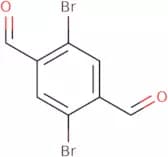
CAS:2,5-Dibromoterephthalaldehyde is a red fluorescent compound that has been shown to have potential as a cancer therapy. The compound is able to bind to the electron acceptor 2,5-dibromoterephthalate (DBT) and can be used in photocatalytic reactions. It has been shown that 2,5-dibromoterephthalaldehyde can cause high levels of cell death in cancer cells with low levels of toxicity to healthy cells. This property may be due to its ability to target cancerous cells by binding with their mitochondria. The compound is also fluorescent and emits light when excited with UV light. 2,5-Dibromoterephthalaldehyde has been shown to form structured metallacycles in the presence of copper ions. !--Fórmula:C8H4Br2O2Pureza:Min. 95%Forma y color:PowderPeso molecular:291.92 g/molThiophene-3-carboxaldehyde
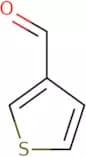
CAS:Thiophene-3-carboxaldehyde is an electron-rich, reactive chemical substance that can be used as a polymer film. It is a heterocyclic compound with a thiophene ring and a carbonyl group in the 3-position. Thiophene-3-carboxaldehyde is synthesized by reacting methyl ketones with glycol ethers. This reaction produces redox potential, malonic acid, and nmr spectra.Fórmula:C5H4OSPureza:Min. 95%Forma y color:Colorless Clear LiquidPeso molecular:112.15 g/mol