Aldehídos
Se han encontrado 8576 productos de "Aldehídos"
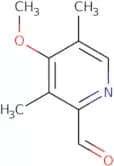
4-Methoxy-3,5-dimethyl-2-pyridinecarboxaldehyde
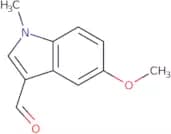
CAS:4-Methoxy-3,5-dimethyl-2-pyridinecarboxaldehyde is a trifunctional molecule that has been shown to suppress the growth of cancer cells in mice. This compound is an inhibitor of acid synthesis and has also been shown to be an antirheumatic drug. 4-Methoxy-3,5-dimethyl-2-pyridinecarboxaldehyde inhibits the activity of three enzymes: synthetase, an enzyme that synthesizes fatty acids; 3-ketoacyl CoA synthase, which synthesizes ketones; and enoyl CoA reductase, which produces fatty acids. The long term efficacy of this molecule has not yet been studied in humans.Fórmula:C9H11NO2Pureza:Min. 95%Forma y color:Colourless LiquidPeso molecular:165.19 g/mol5-Methoxy-1-methyl-1H-indole-3-carbaldehyde
CAS:5-Methoxy-1-methyl-1H-indole-3-carbaldehyde is a synthetic compound that has been shown to inhibit the growth of human tumour cells in vitro. This compound is a regioisomeric mixture of two enantiomers, with the (S) isomer being the more potent inhibitor. The (R) isomer was found to be less active against human tumour cells and may have an antimicrobial activity. 5-Methoxy-1-methyl-1H-indole-3-carbaldehyde has been shown to be bioreductive towards electron donors such as NADPH and glutathione. It also inhibits dt diaphorase and aerobic metabolism in human tumour cells.Fórmula:C11H11NO2Pureza:Min. 95%Forma y color:Off-White PowderPeso molecular:189.21 g/mol(E)-2-Hexadecenal
CAS:(E)-2-Hexadecenal is an asymmetric molecule that is a reactive and carcinogenic compound. It has been shown to induce c-Jun phosphorylation in the human carcinoma cell lines, leading to physiological changes. (E)-2-Hexadecenal has also been used to induce chemiluminescence in vitro, which can be used for analytical chemistry. It is made by a hydroxyl group on a fatty acid with a biofuel reaction. This molecule may also have pro-apoptotic properties due to its chemical biology and ability to affect mitochondrial membrane potentials.
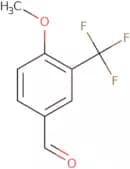
Fórmula:C16H30OPureza:Min. 95%Forma y color:PowderPeso molecular:238.41 g/mol4-Methoxy-3-(trifluoromethyl)benzaldehyde
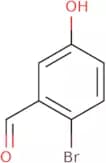
CAS:4-Methoxy-3-(trifluoromethyl)benzaldehyde is a fine chemical that can be used as a building block for pharmaceuticals and other organic compounds. It is also used in research for the synthesis of complex compounds. This chemical has been reported to be a useful intermediate or scaffold for organic syntheses. 4-Methoxy-3-(trifluoromethyl)benzaldehyde is soluble in water and ethanol, and insoluble in ether. It has a melting point of 140°C, boiling point of 249°C, density 1.096 g/cm³, and refractive index (20°C) 1.567.Fórmula:C9H7F3O2Pureza:Min. 95%Peso molecular:204.15 g/mol2-Bromo-5-hydroxybenzaldehyde
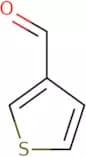
CAS:Intermediate in the synthesis of crisaborole AN2728Fórmula:C7H5BrO2Pureza:Min. 95%Forma y color:White PowderPeso molecular:201.02 g/molThiophene-3-carboxaldehyde
CAS:Thiophene-3-carboxaldehyde is an electron-rich, reactive chemical substance that can be used as a polymer film. It is a heterocyclic compound with a thiophene ring and a carbonyl group in the 3-position. Thiophene-3-carboxaldehyde is synthesized by reacting methyl ketones with glycol ethers. This reaction produces redox potential, malonic acid, and nmr spectra.Fórmula:C5H4OSPureza:Min. 95%Forma y color:Colorless Clear LiquidPeso molecular:112.15 g/mol3-Methoxy-4-(difluoromethoxy)benzaldehyde
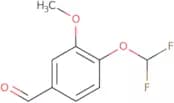
CAS:3-Methoxy-4-(difluoromethoxy)benzaldehyde is a chemical compound that has been found to have anti-tumor properties. It inhibits tumor cells by inducing cell apoptosis. 3-Methoxy-4-(difluoromethoxy)benzaldehyde induces apoptosis in human carcinoma cells, with optimal activity at doses of 10 micromolar and higher. This chemical can be used as an anti-tumor agent because it shows no genotoxic effects, and has high yield with a low toxicity profile. When this compound is exposed to UV radiation, the formation of reactive oxygen species (ROS) increases the rate of cell death. 3-Methoxy-4-(difluoromethoxy)benzaldehyde also has anti-inflammatory properties, which may be due to its ability to inhibit prostaglandin synthesis.Fórmula:C9H8F2O3Pureza:Min. 95%Forma y color:Colourless To Pale Yellow LiquidPeso molecular:202.15 g/mol5-Chloro-3-nitrosalicylaldehyde
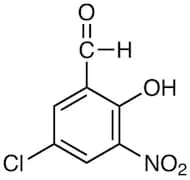
CAS:Fórmula:C7H4ClNO4Pureza:>98.0%(GC)(T)Forma y color:Light orange to Yellow to Green powder to crystalPeso molecular:201.567-Isopropyl-1,4-dimethylazulene-3-carboxaldehyde
CAS:Fórmula:C16H18OPureza:>97.0%(GC)Forma y color:Gray to Dark purple to Black powder to crystalPeso molecular:226.322-Methoxy-3-methylbenzaldehyde
CAS:2-Methoxy-3-methylbenzaldehyde is a natural product that belongs to the class of methoxymethyl. It has been shown to be synthesized by permethylation of methoxy, which is an important intermediate in the synthesis of many naturally occurring compounds such as terpenes and sterols. This compound exists in two enantiomers that can be separated chromatographically. The technique used for this separation is known as equivalence. The elution time for each enantiomer is different, and its spectroscopic properties are also different, making it possible to separate them by these means.Fórmula:C9H10O2Pureza:Min. 95%Forma y color:PowderPeso molecular:150.17 g/mol4'-Methyl-2,2'-bipyridine-4-carboxaldehyde
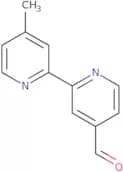
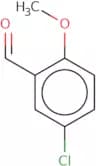
CAS:4'-Methyl-2,2'-bipyridine-4-carboxaldehyde is a heterocyclic compound that contains a nitro group. It has the chemical formula C8H6N2O and the molecular weight of 122.15 g/mol. This compound belongs to the class of formyl compounds and it is composed of two formyl groups and one hydrogen atom. The bipyridines are linked by a methylene bridge to form a six-membered ring. The compound can be used as an intermediate for the synthesis of other organic compounds such as pharmaceuticals, dyes, water repellents, pesticides, and herbicides.Fórmula:C12H10N2OPureza:Min. 95%Forma y color:PowderPeso molecular:198.22 g/mol5-Chloro-2-methoxybenzaldehyde
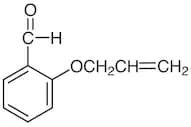
CAS:5-Chloro-2-methoxybenzaldehyde is a potent inhibitor of the bacterial enzyme acetylcholinesterase. It has been shown to have an interaction with biomolecules, such as chalcones, and can be used in the manufacture of antibacterial agents. 5-Chloro-2-methoxybenzaldehyde has been found to have potent inhibitory activity against organocatalytic aldehydes and atypical aldehydes and can be used as an active ingredient in the synthesis of novel compounds with antibacterial activity.Fórmula:C8H7ClO2Pureza:Min. 95%Forma y color:PowderPeso molecular:170.59 g/mol2-Allyloxybenzaldehyde
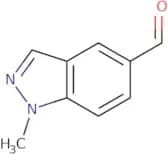
CAS:Fórmula:C10H10O2Pureza:>96.0%(GC)Forma y color:Colorless to Light yellow to Light orange clear liquidPeso molecular:162.191-Methyl-1H-indazole-5-carbaldehyde
CAS:1-Methyl-1H-indazole-5-carbaldehyde is a selective inhibitor of the enzyme lysine acetyltransferase (KAT). KAT inhibitors are a new class of compounds that have been shown to be effective in inhibiting the growth of acute myeloid leukaemia cells, with little effect on other cells. 1-Methyl-1H-indazole-5-carbaldehyde has potent inhibitory activity against human myeloid leukemia cells and does not affect the viability of normal human erythrocytes or peripheral blood mononuclear cells. This compound is reversible, meaning it can be turned off when it is no longer needed. 1-Methyl-1H-indazole-5-carbaldehyde has also been shown to inhibit maoA and thymidine phosphorylase in vitro.Fórmula:C9H8N2OPureza:Min. 95%Forma y color:PowderPeso molecular:160.17 g/mol6-Methoxy-1-methyl-1H-indole-3-carbaldehyde
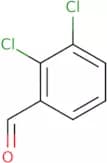
CAS:6-Methoxy-1-methyl-1H-indole-3-carbaldehyde is a high quality chemical that is used as a reagent, complex compound, useful intermediate, and speciality chemical. It is a fine chemical that has been shown to be useful as a building block in the synthesis of many other compounds. 6-Methoxy-1-methyl-1H-indole-3-carbaldehyde is also versatile and can be used in reactions involving nucleophilic substitution, reductive amination, and oxidative coupling.Fórmula:C11H11NO2Pureza:Min. 95%Forma y color:White PowderPeso molecular:189.21 g/mol2,3-Dichlorobenzaldehyde
CAS:2,3-Dichlorobenzaldehyde (2,3-DBA) is an organic compound that is used as a synthetic intermediate in the preparation of other chemicals. It is prepared by reacting 2-chloroacetophenone with hydrochloric acid and sodium carbonate in a reaction vessel. The product can be purified through fractional distillation or crystallization. The optical properties of 2,3-DBA are determined by its dipole moment and the substituents attached to the methylene group. Molecular modeling studies have shown that felodipine can bind to 2,3-DBA through its active methylene group. The reaction products between sulfadiazine and 2,3-DBA are pyridinedicarboxylic acid and 3-chlorobenzaldehyde.Fórmula:C7H4Cl2OPureza:Min. 95%Forma y color:White PowderPeso molecular:175.01 g/mol2,3-Dimethyl-1H-indole-5-carbaldehyde
CAS:2,3-Dimethyl-1H-indole-5-carbaldehyde is a high quality reagent that is used as a complex compound. It has been shown to be a useful intermediate and building block in the production of fine chemicals. 2,3-Dimethyl-1H-indole-5-carbaldehyde is also useful as a research chemical. This compound is versatile and can be used in reactions as an intermediate or building block. As a speciality chemical, it has various applications and is not limited to any specific area of research.Fórmula:C11H11NOPureza:Min. 95%Forma y color:PowderPeso molecular:173.21 g/molm-Anisaldehyde
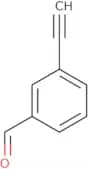
CAS:Fórmula:C8H8O2Pureza:>98.0%(GC)Forma y color:Colorless to Light orange to Yellow clear liquidPeso molecular:136.153-Ethynylbenzaldehyde
CAS:3-Ethynylbenzaldehyde is a tryptic, nitro compound that contains terminal alkynes and has functional groups. The functional theory of this compound suggests that it may be used as a chemosensor for the detection of acidic compounds. 3-Ethynylbenzaldehyde reacts with sodium trifluoroacetate to form an aldehyde, which is then oxidized to an acid by the addition of water. This acid can be detected using NMR spectroscopy. 3-Ethynylbenzaldehyde has been shown to react with sodium trifluoroacetate in solid form at room temperature and above. The resulting product is a yellow crystalline solid that can be identified by its UV spectrum.
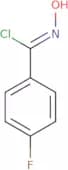
Fórmula:C9H6OPureza:Min. 95%Forma y color:PowderPeso molecular:130.14 g/molα-Chloro-4-fluorobenzaldehyde oxime
CAS:Alpha-Chloro-4-fluorobenzaldehyde oxime is a selenium compound that can be stabilized with heat resistance and structuring. It is used as an additive in the plating of alloys, thermoplastics, and rubber products. Alpha-Chloro-4-fluorobenzaldehyde oxime has been shown to have anti-oxidant effects, which may be due to its ability to stabilize free radicals.Fórmula:C7H5ClFNOPureza:Min. 95%Peso molecular:173.57 g/mol