Aldehídos
Los aldehídos son compuestos orgánicos que contienen un grupo carbonilo (C=O) unido al menos a un átomo de hidrógeno. Estos compuestos versátiles son fundamentales en diversas reacciones químicas, incluyendo oxidación, reducción y adición nucleofílica. Los aldehídos son building blocks esenciales en la síntesis de productos farmacéuticos, fragancias y polímeros. En CymitQuimica, ofrecemos una amplia selección de aldehídos de alta calidad para apoyar sus aplicaciones de investigación e industriales.
Se han encontrado 8573 productos de "Aldehídos"
Ordenar por
Pureza (%)
0
100
|
0
|
50
|
90
|
95
|
100
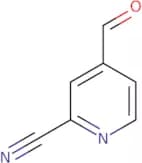
2-Cyanopyridine-4-carboxaldehyde
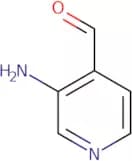
CAS:<p>Please enquire for more information about 2-Cyanopyridine-4-carboxaldehyde including the price, delivery time and more detailed product information at the technical inquiry form on this page</p>Fórmula:C7H4N2OPureza:Min. 95%Peso molecular:132.12 g/mol3-Aminopyridine-4-carboxaldehyde
CAS:3-Aminopyridine-4-carboxaldehyde (3APCA) is an acridone that is a colorless, crystalline solid. It has a molecular formula of C8H6N2O2 and a molecular weight of 174.14 g/mol. 3APCA can be synthesized by heating 2-pyridinecarboxylic acid with chloroacetyl chloride in the presence of pyridine as a solvent. The compound can be detected by nmr spectra, which are efficient methods for characterization of this chemical. The spectrum shows peaks at δ 8.22 ppm (1H), 7.61 ppm (1H), 6.99 ppm (2H), 5.87 ppm (1H), 4.06 ppm (2H). 3APCA has been shown to react with alkyl bromides to form carboxylic acids, which are shown by the peaks at δ 8.22 ppm andFórmula:C6H6N2OPureza:Min. 95%Peso molecular:122.12 g/molPropargylaldehyde diethyl acetal
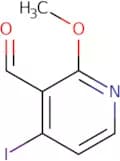
CAS:Propargylaldehyde diethyl acetal is a chemical compound that is used as an intermediate in the synthesis of other compounds. It is a white crystal or crystalline powder that is soluble in organic solvents such as ether, alcohols, and benzene. Propargylaldehyde diethyl acetal has been shown to be potent inhibitors of HSV-1, HSV-2, and HCMV. Furthermore, it has been reported that propargylaldehyde diethyl acetal inhibits the growth of cancer cells in vitro. In addition, propargylaldehyde diethyl acetal has been shown to inhibit the production of autoimmune diseases such as rheumatoid arthritis and multiple sclerosis.Fórmula:C7H12O2Pureza:Min. 95%Forma y color:Colorless Clear LiquidPeso molecular:128.17 g/mol4-Iodo-2-methoxypyridine-3-carboxaldehyde
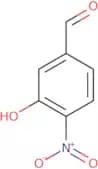
CAS:4-Iodo-2-methoxypyridine-3-carboxaldehyde is a disubstituted compound that has insulin-like properties. It inhibits the activity of the insulin receptor, which may contribute to its insulin-like growth factor effects. This inhibitor also targets the protein kinase, which is responsible for the response of cells to insulin. 4-Iodo-2-methoxypyridine 3 carboxaldehyde has been shown to inhibit IGF1R and malonate ion, and it may have potential as an oral treatment for diabetes.Fórmula:C7H6INO2Pureza:Min. 95%Peso molecular:263.03 g/mol3-Hydroxy-4-nitrobenzaldehyde
CAS:<p>3-Hydroxy-4-nitrobenzaldehyde is a ternary complex, which consists of three molecules that are bound to each other in a specific way. It has been observed in the nmr spectra and it has been proposed as a fluorescence probe for the detection of hydrogen bonds. 3-Hydroxy-4-nitrobenzaldehyde catalyzes the reaction by forming a covalent bond with the pbr322 dna, which is an important DNA molecule in bacteria. The enzyme mechanism is not fully understood, but it has been shown that it can bind to Toll-like receptor 4 (TLR4), which is an innate immune system protein. This binding event activates TLR4, leading to the inflammatory response. 3-Hydroxy-4-nitrobenzaldehyde has shown efficacy against microglia cells and animal experiments have shown that this compound may be useful for reducing pain after surgery or injury.</p>Fórmula:C7H5NO4Pureza:Min. 95%Forma y color:PowderPeso molecular:167.12 g/mol2-Bromo-6-hydroxybenzaldehyde
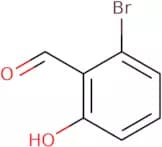
CAS:<p>2-Bromo-6-hydroxybenzaldehyde is a synthetic chemical that consists of a furan ring with an acetonitrile group. It has been shown to be a constant in cyclic electroreduction and is used as a biomolecular surfactant. 2-Bromo-6-hydroxybenzaldehyde has also been shown to react intramolecularly with the hydroxyl group on the benzene ring, which results in the formation of a dimer. This chemical can be produced by solvolysis or electroreduction.</p>Fórmula:C7H5BrO2Pureza:Min. 95%Forma y color:PowderPeso molecular:201.02 g/molFormaldehyde-2,4-dinitrophenylhydrazone
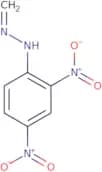
CAS:<p>Formaldehyde-2,4-dinitrophenylhydrazone (FDNH) is a chemical compound that inhibits the production of galacturonic acid. It is used as an analytical method to measure the concentration of galacturonic acid in biological samples. FDNH reacts with galacturonic acid to form a diazonium salt and a hydrazone derivative. The diazonium salt can be measured by liquid chromatography, while the hydrazone derivative can be measured by gas chromatography. This test has been used to measure the concentration of galacturonic acid in plants, pharmaceutical drugs, and reaction products.</p>Fórmula:C7H6N4O4Pureza:Min. 95%Peso molecular:210.15 g/mol3-(Methylthio)propionaldehyde
CAS:3-(Methylthio)propionaldehyde (MTPA) is a hydroxy methyl fatty acid that is used as an intermediate in the synthesis of ethyl decanoate. MTPA has been shown to be toxic at high doses, with death occurring in rats after a single oral dose of 30 mg/kg. The toxicity of MTPA may be due to its reactive nature and ability to form acrolein and malondialdehyde, which are known to have cytotoxic effects on cells. 3-(Methylthio)propionaldehyde can also inhibit microbial metabolism by inhibiting microbial growth and decreasing microbial activity. This inhibition is mediated by the inhibition of enzymes such as fatty acid synthase and acetyl-CoA carboxylase. 3-(Methylthio)propionaldehyde also inhibits the production of ATP in bacteria, leading to cell death.Fórmula:C4H8OSPureza:Min. 95%Forma y color:Clear LiquidPeso molecular:104.17 g/molTerephthaloyl chloride
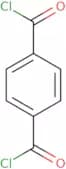
CAS:<p>Terephthalaldehyde chloride is a water-insoluble, white solid that is soluble in organic solvents. It forms a protective layer on metal surfaces and plastics, preventing corrosion and microbial growth. Terephthalaldehyde chloride has been shown to be effective against Escherichia coli, Klebsiella pneumoniae, Bacillus subtilis, Pseudomonas aeruginosa, Staphylococcus aureus, and Salmonella enterica. Terephthalaldehyde chloride's antimicrobial activity is attributed to its acid complex with phosphorus pentoxide and electrochemical impedance spectroscopy data indicate that it reacts with the anionic sites of bacterial cell walls. Terephthalaldehyde chloride does not react with human serum proteins or ester linkages; however, it has toxic effects on mice at high doses.</p>Fórmula:C8H4Cl2O2Pureza:Min. 95%Forma y color:PowderPeso molecular:203.02 g/mol1-Naphthalenylsulfonyl-Ile-Trp-aldehyde
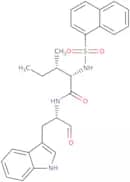
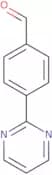
CAS:<p>1-Naphthalenylsulfonyl-Ile-Trp-aldehyde is a recombinant protein that has protease activity. It is a serine protease that cleaves proteins at the amino acid sequence Ser-Xaa-Gly or Ser-Xaa. The recombinant protein has been shown to have proteolytic activity and can be used in assays to measure the amount of β-catenin, collagen, and growth factor in cells. 1-Naphthalenylsulfonyl-Ile-Trp-aldehyde also binds to monoclonal antibodies and can be used as a neutralizing agent for these proteins. This recombinant protein also has been shown to inhibit the growth of lung fibroblasts.</p>Fórmula:C27H29N3O4SPureza:Min. 95%Forma y color:PowderPeso molecular:491.6 g/mol4-(Pyrimidin-2-yl)benzaldehyde
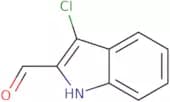
CAS:<p>Please enquire for more information about 4-(Pyrimidin-2-yl)benzaldehyde including the price, delivery time and more detailed product information at the technical inquiry form on this page</p>Fórmula:C11H8N2OPureza:Min. 95%Forma y color:PowderPeso molecular:184.19 g/mol3-Chloro-1H-indole-2-carbaldehyde
CAS:<p>3-Chloro-1H-indole-2-carbaldehyde is a bifunctional reagent that can be used to form amides. It reacts with primary and secondary amines, as well as dialkyl and methylene amines, to produce the corresponding chloro-, phenylhydrazine-, or nitrosoaminoureas. This reaction is intramolecular and yields the desired product in high yield. The reactant can also be used as a chloride source. 3-Chloro-1H-indole-2-carbaldehyde is manufactured by reacting phenylhydrazine with chloroacetic acid in an organic solvent at room temperature (25°C).</p>Fórmula:C9H6ClNOPureza:Min. 95%Peso molecular:179.6 g/mol4,4-difluorocyclohexane-1-carbaldehyde
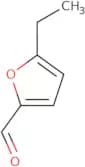
CAS:<p>Please enquire for more information about 4,4-difluorocyclohexane-1-carbaldehyde including the price, delivery time and more detailed product information at the technical inquiry form on this page</p>Fórmula:C7H10F2OPureza:Min. 95%Forma y color:Colorless PowderPeso molecular:148.15 g/mol5-Ethyl-2-furaldehyde
CAS:<p>Furfural is a five-carbon aldehyde produced by the hydrolysis of pentoses. It has been used as an industrial solvent, plasticizer, and fuel. Furfural is also used to produce butanol and biofuels. Furfural can be oxidized in the redox cycle to produce active oxygen species that are reactive with other biological molecules. Furfural is also used as an inhibitor of acetaldehyde formation in beer production. This molecule has two forms: the cis form (C3H4O) and the trans form (C3H3O). The cis form has a chemical structure of CH2=CH-CH2OH, whereas the trans form is CH=CH-CH2OH.</p>Fórmula:C7H8O2Pureza:Min. 95%Peso molecular:124.14 g/molFerrocenecarboxaldehyde
CAS:<p>Ferrocenecarboxaldehyde is a fatty acid with a ferrocene carboxylic acid group. It has been shown to have antimicrobial activity against bacteria, fungi, and yeast when it was mixed with nitric acid. Ferrocenecarboxaldehyde can be synthesized by reacting ferrocene with glycerol in the presence of sulfuric acid. The reaction mechanism of this synthesis is as follows: The structural analysis of ferrocenecarboxaldehyde has been studied using FT-IR spectroscopy and NMR spectroscopy. The chemical structure of ferrocenecarboxaldehyde is as follows: The asymmetric synthesis of ferrocenecarboxaldehyde is shown below:</p>Fórmula:C11H10FeOPureza:Min. 95%Forma y color:PowderPeso molecular:214.04 g/molPyridazine 3-carbaldehyde
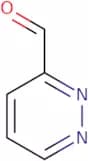
CAS:Pyridazine 3-carbaldehyde is a potential antiviral agent that has shown to be effective against herpes simplex virus type 1. It is a methylene compound that binds to the active site of the enzyme ribonucleotide reductase, which is required for DNA synthesis. This compound also exhibits synergistic effects with other antiviral agents and has cytotoxic properties. Pyridazine 3-carbaldehyde can be synthesized from pyridine-3-carboxaldehyde via a two-step process involving thermal decarboxylation followed by an oxidation reaction.Fórmula:C5H4N2OPureza:Min. 95%Peso molecular:108.1 g/mol3-(Trifluoromethyl)benzaldehyde
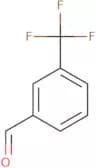
CAS:<p>3-(Trifluoromethyl)benzaldehyde is an organic compound that has the chemical formula C8H7FO. It is a trifunctional molecule with three phenolic hydroxyl groups, which makes it a good candidate for drug design. 3-(Trifluoromethyl)benzaldehyde can be synthesized by reacting an imine with a chiral acid chloride in the presence of a base and a catalytic amount of DMAP. The reaction yield is low, but this synthetic method is efficient. 3-(Trifluoromethyl)benzaldehyde has been shown to inhibit the growth of Mycobacterium avium, but not Mycobacterium tuberculosis or other bacteria such as Listeria monocytogenes and Escherichia coli. This might be due to its ability to inhibit protein synthesis by binding to ribosomes. This compound also possesses anti-inflammatory properties and inhibits leukemia Hl-</p>Fórmula:C8H5F3OPureza:Min. 95%Forma y color:Clear LiquidPeso molecular:174.12 g/mol2-Methylvaleraldehyde
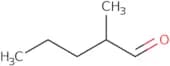
CAS:2-Methylvaleraldehyde is a colorless liquid with a pleasant odor. It is soluble in water and has an acidity of about 8.2%. The chemical formula for 2-methylvaleraldehyde is C6H12O2, and it has a molecular weight of 108.18 g/mol. 2-Methylvaleraldehyde can be obtained by the oxidation of cinnamic acid or by reduction of acetone with sodium borohydride or lithium aluminum hydride. 2-Methylvaleraldehyde can react with sodium carbonate or calcium carbonate to form sodium methoxyethoxide or calcium methoxyethoxide, respectively. The reaction intermediates are methyl ethyl ketone (MEK) and dimethyl ether (DME). These compounds are used in the synthesis of various other chemicals, including pentane, butadiene, and chloroprene. Pentane is a colorless liquid that has an odor threshold at 1Fórmula:C6H12OPureza:Min. 95%Peso molecular:100.16 g/mol10-Chloro-9-anthraldehyde
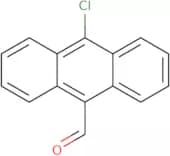
CAS:<p>10-Chloro-9-anthraldehyde is an antibacterial agent that exhibits activity against a wide variety of bacteria. It is the product of the photomodification of anthracene, which is activated by ultraviolet light to produce 10-chloro-9-anthraldehyde. The preliminary functional studies of this compound indicate that it may be used in coatings for polymers and textiles as well as in innovative applications such as fluorescence labeling and immunoassays. 10-Chloro-9-anthraldehyde also has a protonation site at the 9 position, making it useful for conjugation with biomolecules.</p>Fórmula:C15H9ClOPureza:Min. 95%Peso molecular:240.68 g/mol1,3-Dimethyl-1H-pyrazole-5-carbaldehyde
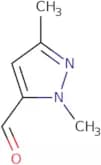
CAS:<p>Please enquire for more information about 1,3-Dimethyl-1H-pyrazole-5-carbaldehyde including the price, delivery time and more detailed product information at the technical inquiry form on this page</p>Fórmula:C6H8N2OPureza:Min. 95%Peso molecular:124.14 g/mol