Aldehídos
Los aldehídos son compuestos orgánicos que contienen un grupo carbonilo (C=O) unido al menos a un átomo de hidrógeno. Estos compuestos versátiles son fundamentales en diversas reacciones químicas, incluyendo oxidación, reducción y adición nucleofílica. Los aldehídos son building blocks esenciales en la síntesis de productos farmacéuticos, fragancias y polímeros. En CymitQuimica, ofrecemos una amplia selección de aldehídos de alta calidad para apoyar sus aplicaciones de investigación e industriales.
Se han encontrado 8573 productos de "Aldehídos"
Ordenar por
Pureza (%)
0
100
|
0
|
50
|
90
|
95
|
100
Ac-Tyr-Val-Ala-Asp-aldehyde (pseudo acid)
CAS:<p>Ac-Tyr-Val-Ala-Asp-aldehyde is a sesquiterpene lactone that has been shown to have anti-inflammatory properties. It inhibits the inflammatory response by inhibiting the production of pro-inflammatory cytokines and chemokines, such as IL1β, IL6, and TNFα. Ac-Tyr-Val-Ala-Asp-aldehyde also inhibits the activity of cyclooxygenase 2 (COX2) and lipoxygenase (LOX), which are enzymes that produce prostaglandins from arachidonic acid. Acetylsalicylic acid is an example of a drug with similar properties. Acetylsalicylic acid has been shown to inhibit the growth of cancer cells in tissue culture studies and in animal models. This compound may also be used to treat bowel disease, congestive heart failure, or other diseases that are characterized by increased apoptosis.</p>Fórmula:C23H32N4O8Pureza:Min. 95%Peso molecular:492.52 g/molCell-permeable Caspase-3 Inhibitor I trifluoroacetate salt
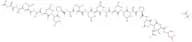
CAS:Please enquire for more information about Cell-permeable Caspase-3 Inhibitor I trifluoroacetate salt including the price, delivery time and more detailed product information at the technical inquiry form on this pageFórmula:C94H158N20O27Pureza:Min. 95%Peso molecular:2,000.38 g/mol3-Fluoro-2-hydroxybenzaldehyde
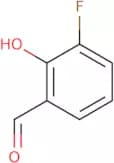
CAS:<p>3-Fluoro-2-hydroxybenzaldehyde is a colorless liquid with a sweet, aromatic odor. It has been shown to be an antibacterial agent against Gram positive bacteria and may have potential as a drug for the treatment of MRSA. 3-Fluoro-2-hydroxybenzaldehyde is used in the production of cellulose acetate and sodium sulfide. It is also used in the chemical reactions that form amines, hydroxyl groups, and chloride ions. It has been shown to inhibit mitochondrial respiration by chelating ring complexes in the respiratory chain. It also inhibits biological processes such as DNA synthesis, protein synthesis, and hydrogen bond formation.</p>Fórmula:C7H5FO2Pureza:Min. 95%Forma y color:PowderPeso molecular:140.11 g/mol3,5-Dibenzyloxybenzaldehyde
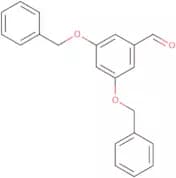
CAS:<p>3,5-Dibenzyloxybenzaldehyde is a molecule that has been shown to induce apoptosis in prostate cancer cells. It binds to the survivin protein and prevents its function. 3,5-Dibenzyloxybenzaldehyde also has anti-cancer properties due to its ability to inhibit the growth of cultured prostate cancer cells in vitro. This compound can be used as a photophysical probe for radiation studies or as a fatty acid monomer for metathesis reactions. The molecule is also active against cox-2 inhibitory activity and has been shown to have clinical efficacy in diazepine synthesis.</p>Fórmula:C21H18O3Pureza:Min. 95%Peso molecular:318.37 g/molAc-Trp-Glu-His-Asp-aldehyde (pseudo acid)
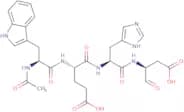
CAS:<p>Ac-Trp-Glu-His-Asp-aldehyde is a tetrapeptide that has been shown to inhibit the activity of caspases. Caspases are proteases that play an important role in cell death by inducing apoptosis and necrosis. The structure of the Ac-Trp-Glu-His-Asp-aldehyde was determined by X-ray crystallography, revealing a hydrophobic molecule with a pseudo acid residue. This compound binds to peptides and blocks the binding site for caspase substrates, which prevents their activation. Acetylation of this compound also increases its hydrophobicity, making it more likely to bind to other molecules such as proteins or lipids.</p>Fórmula:C28H33N7O9Pureza:Min. 95%Peso molecular:611.6 g/mol5-Bromo-2-(trifluoromethoxy)benzaldehyde
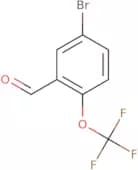
CAS:5-Bromo-2-(trifluoromethoxy)benzaldehyde is a chemical that is used as a reactant in organic chemistry. It can be used as a building block for the synthesis of complex compounds, or as an intermediate in the preparation of fine chemicals. 5-Bromo-2-(trifluoromethoxy)benzaldehyde is also useful in research and development. It has been used to synthesize pharmaceuticals, pesticides, and other organic compounds.Fórmula:C8H4BrF3O2Pureza:Min. 95%Forma y color:PowderPeso molecular:269.02 g/mol(S,S,S)-Enalapril maleate
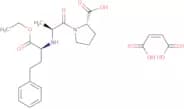
CAS:<p>Prodrug of ACE inhibitor MK-422</p>Fórmula:C24H32N2O9Pureza:Min. 95%Forma y color:White PowderPeso molecular:492.52 g/molAc-Leu-Val-Phe-aldehyde
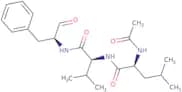
CAS:<p>Ac-Leu-Val-Phe-aldehyde is a synthetic compound that inhibits the catalytic activity of carboxyl enzymes. It binds to the catalytic site of the enzyme via a noncovalent interaction with residues on the polypeptide chain, thereby preventing the formation of an active complex with other cofactors such as metal ions, amino acids, and ATP. Ac-Leu-Val-Phe-aldehyde can be used in analytical chemistry for determination of carboxyl groups in organic compounds or for determining protein content in biological samples. Ac-Leu-Val-Phe-aldehyde has also been shown to bind to antibodies which are specific for carboxyl groups.</p>Fórmula:C22H33N3O4Pureza:Min. 95%Peso molecular:403.52 g/mol4-tert-Butoxybenzaldehyde
CAS:4-tert-Butoxybenzaldehyde is a colorless liquid that has a viscosity of 0.3 mm2/s at 25 °C. It can be synthesized by reacting pyridine with hydrochloric acid in the presence of a Grignard reagent. 4-tert-Butoxybenzaldehyde reacts with phenolic antioxidants to form an ester, which can be used as an industrial solvent. The crystal x-ray diffraction pattern of 4-tert-Butoxybenzaldehyde exhibits peaks at 2θ = 8.0, 11.5, and 18.5° corresponding to the (100), (200), and (220) planes, respectively. This chemical can also undergo reactions that lead to termination or transfer reactions, including diethyl ketomalonate formation with diethyl malonate in the presence of water as a solvent and potassium hydroxide as a catalyst for transfer reactions.END>Fórmula:C11H14O2Pureza:Min. 95%Forma y color:PowderPeso molecular:178.23 g/mol2-(Dimethylamino)acetaldehyde sulfite
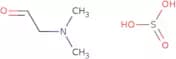
CAS:<p>2-(Dimethylamino)acetaldehyde sulfite is a white crystalline solid with a melting point of around 100°C. It is soluble in water and slightly soluble in organic solvents. 2-(Dimethylamino)acetaldehyde sulfite can be used as a reagent to prepare alkali solutions and acid hydrochlorides. It can also be used as an intermediate for the synthesis of methacrylic acid, methyl acetate, and other organic compounds. 2-(Dimethylamino)acetaldehyde sulfite can be synthesized using a high-yield synthetic method involving lithium, acidification, and an organic solvent.</p>Pureza:Min. 95%Cell-permeable Caspase-1 Inhibitor I trifluoroacetate salt
CAS:<p>Please enquire for more information about Cell-permeable Caspase-1 Inhibitor I trifluoroacetate salt including the price, delivery time and more detailed product information at the technical inquiry form on this page</p>Fórmula:C97H160N20O24Pureza:Min. 95%Peso molecular:1,990.43 g/molN-Boc-4-piperidineacetaldehyde
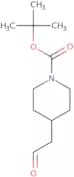
CAS:<p>N-Boc-4-piperidineacetaldehyde is a chiral, stable, and readily available aldehyde. It has been used in the synthesis of various biologically active molecules including imidazolidinones, which are important for their use as catalysts in organic chemistry. The synthesis of this molecule by the condensation of 4-piperidineacetic acid with acetaldehyde followed by reduction with sodium borohydride is an example of this type of reaction. N-Boc-4-piperidineacetaldehyde can be used to synthesize imines and linkers that are covalently bonded to the protein backbone. This molecule also has conformational stability and is not susceptible to oxidation or radiation damage.</p>Fórmula:C12H21NO3Pureza:Min. 95%Peso molecular:227.3 g/molBoc-Tyr(Bzl)-aldehyde
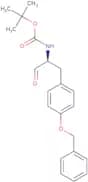
CAS:<p>Please enquire for more information about Boc-Tyr(Bzl)-aldehyde including the price, delivery time and more detailed product information at the technical inquiry form on this page</p>Fórmula:C21H25NO4Pureza:Min. 95%Peso molecular:355.43 g/moltrans-2-Hexenal
CAS:<p>Trans-2-hexenal is a natural compound that has been used as a model system for studying the toxicity of sodium salts. It is also used in studies on the enzyme activities of leaves and its carcinogenic potential. Trans-2-hexenal exhibits genotoxic effects, which may be due to its reaction with DNA or by inhibiting the polymerase chain reaction. In addition, this compound can inhibit enzymes involved in the synthesis of fatty acids, leading to cell death. Trans-2-hexenal is also found in plants and fruits such as apples, bananas, and pineapples.</p>Fórmula:C6H10OPureza:Min. 97 Area-%Forma y color:Clear LiquidPeso molecular:98.14 g/molAc-Asp-Glu-Val-Asp-aldehyde (pseudo acid)
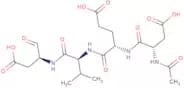
CAS:<p>Ac-Asp-Glu-Val-Asp-aldehyde (pseudo acid) is a pro-apoptotic protein that belongs to the group of pseudo acids. It is able to induce apoptosis. Ac-Asp-Glu-Val-Asp-aldehyde (pseudo acid) can induce neuronal death by activating caspases and apoptosis pathway, which are involved in the process of programmed cell death. This protein also has anti-inflammatory properties, which may be due to its ability to inhibit cyclase activity. Ac-Asp-Glu-Val-Asp (pseudo acid) has been shown to be present at physiological levels in the brain and heart, where it may play an important role in maintaining cell viability.</p>Fórmula:C20H30N4O11Pureza:Min. 95%Peso molecular:502.47 g/mol3-Bromo-5-chlorobenzaldehyde
CAS:3-Bromo-5-chlorobenzaldehyde is a fine chemical that is used as a building block in the synthesis of other chemicals. It is also a reagent and speciality chemical with high quality and versatility. 3-Bromo-5-chlorobenzaldehyde has been shown to be useful in the preparation of complex compounds, such as heterocyclic aromatic compounds, which are versatile scaffolds for drug discovery. 3-Bromo-5-chlorobenzaldehyde has a CAS No. 188813-05-0.Fórmula:C7H4BrClOPureza:Min. 95%Forma y color:PowderPeso molecular:219.46 g/molPropionaldehyde
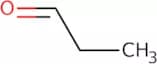
CAS:<p>Propionaldehyde is a simple aliphatic aldehyde that is used in the synthesis of other compounds. It can be synthesized by oxidizing propylene with an oxidation catalyst such as manganese dioxide or platinum metal under pressure. Propionaldehyde can also be formed by the direct oxidation of propanol using ferric chloride, but this reaction has been shown to produce a mixture of products. Propionaldehyde can be produced by the oxidation of acetaldehyde with hydrogen peroxide, which produces formaldehyde and acetone. In addition to its use as a chemical reagent, propionaldehyde has been used as an additive in nutrient solutions for experiments in plant physiology and microbiology.<br>The kinetic data for reactions involving propionaldehyde have been determined using methyl ethyl ketone (MEK) as the solvent and copper(II) sulfate pentahydrate as the catalyst. The redox potential for this molecule is -0.034 volts at pH 7,</p>Fórmula:C3H6OPureza:Min. 95%Forma y color:Colorless Clear LiquidPeso molecular:58.08 g/molMethoxyacetaldehyde diethyl acetal
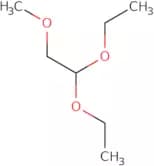
CAS:<p>Methoxyacetaldehyde diethyl acetal is a viscous liquid with a low vapor pressure. This substance is stable at high temperatures and has a high resistance to chemical interactions. It is also hydrophobic in nature. Methoxyacetaldehyde diethyl acetal has been shown to interact with the aminoglycoside antibiotics, erythromycin, streptomycin, and neomycin. The interaction of this substance with these antibiotics may be due to the fact that it has proton resonances similar to those of amino acids, as well as its ability to form hydrogen bonds with the antibiotic molecules. Methoxyacetaldehyde diethyl acetal also interacts with triethyl orthoformate, which can lead to the formation of an ester bond between them.</p>Fórmula:C7H16O3Pureza:Min. 95%Forma y color:Colorless Clear LiquidPeso molecular:148.2 g/molAc-Glu-Ser-Met-Asp-aldehyde (pseudo acid)
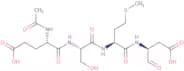
CAS:<p>Ac-Glu-Ser-Met-Asp-aldehyde is a molecule that is naturally produced by the human body. It has been shown to be an endogenous caspase activator, which may lead to apoptosis. Ac-Glu-Ser-Met-Asp-aldehyde can also bind to cholesterol and influence its synthesis, thus affecting the production of other proteins. This molecule has a protease activity and can cleave peptides at specific sites. The sequences of this molecule have been determined and it has been found that these sequences are similar to those found in other proteases such as serine proteases.</p>Fórmula:C19H30N4O10SPureza:Min. 95%Peso molecular:506.53 g/mol