Aldehídos
Los aldehídos son compuestos orgánicos que contienen un grupo carbonilo (C=O) unido al menos a un átomo de hidrógeno. Estos compuestos versátiles son fundamentales en diversas reacciones químicas, incluyendo oxidación, reducción y adición nucleofílica. Los aldehídos son building blocks esenciales en la síntesis de productos farmacéuticos, fragancias y polímeros. En CymitQuimica, ofrecemos una amplia selección de aldehídos de alta calidad para apoyar sus aplicaciones de investigación e industriales.
Se han encontrado 8573 productos de "Aldehídos"
Ordenar por
Pureza (%)
0
100
|
0
|
50
|
90
|
95
|
100
2-Oxocyclohexanecarbaldehyde
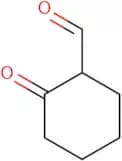
CAS:<p>2-Oxocyclohexanecarbaldehyde is a bifunctional carbonyl compound that reacts with amines to form carbinols. It can be used as a cheaper and more environmentally friendly alternative to the use of piperidine. 2-Oxocyclohexanecarbaldehyde also reacts with potassium hydride to form the corresponding ketones. The reaction of 2-oxocyclohexanecarbaldehyde with primary amines leads to isomeric products, depending on the position of substitution on the aromatic ring. This compound has been shown to react electrochemically in an asymmetric synthesis and has been used in the synthesis of morpholine, which is an important intermediate for pharmaceuticals, agrochemicals, and other chemical compounds.</p>Fórmula:C7H10O2Pureza:Min. 90%Forma y color:Clear LiquidPeso molecular:126.15 g/mol2,6-Dichlorobenzaldehyde
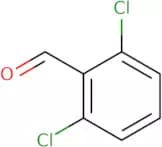
CAS:<p>2,6-Dichlorobenzaldehyde is a nucleophilic compound that has the ability to form hydrogen bonds. It reacts with phosphorus pentachloride to produce 2-chloro-4,6-dichlorobenzene. 2,6-Dichlorobenzaldehyde can be used in the synthesis of β-unsaturated ketones and anticancer drugs such as aziridines. It is also used as a precursor for coordination complexes. This compound is an efficient method for making nitrogen nucleophiles, which are important in chain reactions and the production of polymers. The 2,6-dichlorobenzaldehyde molecule contains two chiral centers that give rise to four stereoisomers. X-ray diffraction data shows that this molecule exists as a mixture of these four isomers.</p>Fórmula:C7H4Cl2OPureza:Min. 97.5%Forma y color:PowderPeso molecular:175.01 g/mol4-Chloro-2-methylbenzaldehyde
CAS:4-Chloro-2-methylbenzaldehyde is a nucleophilic and electrophilic compound that has a carbonyl group. The vivo model of 4-Chloro-2-methylbenzaldehyde suggests that the methyl groups on the molecule are important for its anti-cancer activities. This compound also has anti-inflammatory properties, which may be due to its ability to inhibit prostaglandin synthesis. It is used in anti-cancer agents as well as in other applications such as catalysis and synthetic chemistry. 4-Chloro-2-methylbenzaldehyde is synthesized by first reacting benzaldehyde with sodium nitrite, followed by chlorination with phosphorus pentachloride and sodium hydroxide. The mechanistic details of this reaction have not been elucidated yet, but it is believed that the selectivity of this reaction may be due to the presence of aldehydes in the reactants. Further optimization of this reaction would involve changing theFórmula:C8H7ClOPureza:Min. 95%Forma y color:Clear LiquidPeso molecular:154.59 g/mol2,4,6-Trimethoxybenzaldehyde
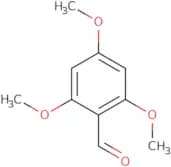
CAS:<p>2,4,6-Trimethoxybenzaldehyde is a chemical compound that is used as an intermediate in organic chemistry. It has been shown to have antiviral effects on influenza A virus by inhibiting the enzyme neuraminidase. This inhibition prevents the release of viruses from infected cells and thus prevents viral replication. 2,4,6-Trimethoxybenzaldehyde also inhibits the growth of cancer cells in vitro and has minimal toxicity to normal cells. This chemical has been shown to inhibit the reaction mechanism of proton pumps in mammalian cells, which may be due to its ability to inhibit p2y receptors or nitrogen atoms. 2,4,6-Trimethoxybenzaldehyde can also be used as a solvent for pharmaceutical preparations and as a reagent in x-ray diffraction data analysis.</p>Fórmula:C10H12O4Pureza:Min. 95%Forma y color:PowderPeso molecular:196.2 g/mol3-Hydroxy-2,2-dimethylpropanal
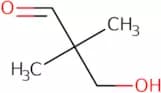
CAS:<p>3-Hydroxy-2,2-dimethylpropanal is a condensation product of formaldehyde and glycol. It is the simplest of the three aldehydes that are produced by this reaction. The catalyst for this reaction is usually dibutyltin oxide, which can be replaced with calcium chloride or sodium carbonate. 3-Hydroxy-2,2-dimethylpropanal reacts with neopentyl glycol to form a dimer and glycol ester. This reaction mechanism has been studied extensively using solution kinetics.</p>Fórmula:C5H10O2Pureza:(%) Min. 95%Forma y color:White PowderPeso molecular:102.13 g/mol2,5-Dimethylbenzaldehyde
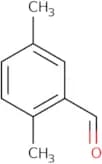
CAS:<p>2,5-Dimethylbenzaldehyde is a chemical that is used in the synthesis of various compounds. It has been shown to have anticancer and energy metabolism properties. 2,5-Dimethylbenzaldehyde can be used as an energy source in the mitochondria. This compound also prevents the formation of fatty acids by inhibiting the conversion of acetyl-CoA into malonyl-CoA. The phase transition temperature for 2,5-dimethylbenzaldehyde is approximately −20 °C. The reaction mechanism for this compound is not well understood, but it has been shown to react with piperonal to form 3,4-dimethylbenzyl alcohol and methyl ethyl ether, which are both carcinogenic compounds. Chemical ionization mass spectrometry experiments have shown that protonated 2,5-dimethylbenzaldehyde reacts with methane gas to form methyl ethane and hydrogen gas. Thermodynamic data suggest that 2,5-dimethyl</p>Fórmula:C9H10OPureza:Min. 98.0 Area-%Forma y color:Slightly Yellow Clear LiquidPeso molecular:134.18 g/mol6-Bromoveratraldehyde
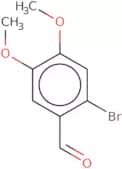
CAS:6-Bromoveratraldehyde (6BrA) is a synthetic compound that has been shown to be an effective agent for inducing apoptosis in leukemia cells. It is an efficient method for synthesizing the compound and has been used as a model study for biphenyl and naphthalene. 6BrA induces cell death by topoisomerase-mediated DNA cleavage, which results in chromosomal fragmentation and high levels of reactive oxygen species in the cell.Fórmula:C9H9BrO3Pureza:Min. 95%Forma y color:White PowderPeso molecular:245.07 g/mol2-Nitro-4,5-methylenedioxybenzaldehyde
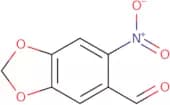
CAS:<p>2-Nitro-4,5-methylenedioxybenzaldehyde (2NMB) is a molecule with a molecular weight of 188.24, an empirical formula of C8H8NO2 and a chemical structure consisting of a benzene ring attached to two nitro groups. 2NMB has been shown to bind to the dopamine β-hydroxylase enzyme in human serum and inhibit the production of dopa, which leads to a decrease in dopamine levels. It also inhibits the growth of staphylococcus, cryptococcus neoformans, and typhimurium. 2NMB also has been used as radiotracers for gyrase activity and can be used for asymmetric synthesis due to its piperonal group. The uptake of 2NMB by cells is dependent on its nucleophilic properties.</p>Fórmula:C8H5NO5Pureza:Min. 98%Forma y color:PowderPeso molecular:195.13 g/mol4-Aminobenzaldehyde
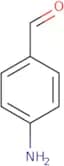
CAS:4-Aminobenzaldehyde is a molecule that belongs to the class of aromatic compounds. It has a crystalline structure and reacts with acylating agents to form amides. 4-Aminobenzaldehyde has been used for the preparation of diazonium salts, which are reactive intermediates in organic synthesis that can be used as a nucleophile. This compound has been shown to react with sodium nitrate to form an electrochemical data, and it has also been used as a control experiment for nmr spectra.Fórmula:C7H7NOPureza:Min. 98 Area-%Forma y color:PowderPeso molecular:121.14 g/mol2,3,4-Trimethoxy-6-methylbenzaldehyde
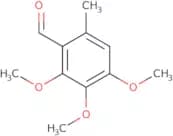
CAS:2,3,4-Trimethoxy-6-methylbenzaldehyde is a synthetic coumarin with antibacterial activity. It is synthesized by the condensation of 3-hydroxyacetophenone and benzaldehyde. 2,3,4-Trimethoxy-6-methylbenzaldehyde has been shown to have antibacterial activity against both Gram-positive and Gram-negative bacteria. This molecule has also been shown to inhibit the growth of Gram negative bacteria in the presence of hydrogen peroxide. The crystal structure of this molecule was determined by XRD analysis and shows that it contains a dihedral angle of about 155°.Fórmula:C11H14O4Pureza:Min. 95%Peso molecular:210.23 g/mol2-(2-Bromoethyl)benzaldehyde
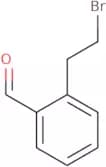
CAS:<p>2-(2-Bromoethyl)benzaldehyde is an organic compound that is used in the synthesis of many other compounds. It is produced by the acetylation of 2-bromoethanol with acetic anhydride and hydrochloric acid. This reaction mechanism starts with the formation of a carbocation from the protonated bromine and ethylene, followed by nucleophilic attack by the acetate anion to form a tertiary alcohol. The final step involves elimination of bromine to give 2-(2-bromoethyl)benzaldehyde. Techniques such as basic hydrolysis or chiral resolution can be used to produce optically pure 2-(2-bromoethyl)benzaldehyde.</p>Fórmula:C9H9BrOPureza:(%) Min. 80%Forma y color:Clear LiquidPeso molecular:213.07 g/mol4-Diethylamino-2-methoxybenzaldehyde
CAS:<p>4-Diethylamino-2-methoxybenzaldehyde (4DMMB) is a protonated molecule that is able to penetrate the mitochondrial membrane due to its low charge. Once inside, 4DMMB can be reduced by electron transfer from the mitochondria's membrane potential. This reduction leads to an increase in the mitochondrial membrane potential and subsequent photophysical emissions. The introduction of 4DMMB has been shown to cause mitochondrial membrane potential changes in cells, which may lead to pathophysiologic conditions such as cancer.</p>Fórmula:C12H17NO2Pureza:Min. 95%Forma y color:PowderPeso molecular:207.27 g/mol6-Methoxy-2-naphthaldehyde
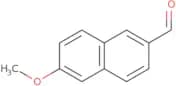
CAS:6-Methoxy-2-naphthaldehyde is a nonsteroidal antiinflammatory drug that belongs to the class of naphthalenes. It inhibits the formation of inflammatory prostaglandins, which are mediators of pain and inflammation. 6-Methoxy-2-naphthaldehyde has been shown to have cytotoxic effects on cancer cells and in vitro studies have shown that it can induce cell lysis. It has also been shown to be a potent fluorescence probe for use in biological applications. This compound binds to human serum proteins by hydrogen bonding interactions, which may affect its pharmacokinetic properties. In addition, this compound has been shown to inhibit the activity of detoxification enzymes such as CYP 2C9 and 2D6 at high concentrations, which may lead to unwanted side effects such as nausea or vomiting. The molecular docking analysis of 6-Methoxy-2-naphthaldehyde with the active site of human liver alcohol dehydrogenFórmula:C12H10O2Pureza:Min. 98 Area-%Forma y color:PowderPeso molecular:186.21 g/mol2-Hydroxy-4-nitrobenzaldehyde
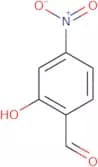
CAS:<p>2-Hydroxy-4-nitrobenzaldehyde is a molecule that reacts with kinase receptors in cancer cells and causes oxidative carbonylation. It has been shown to react with chloride, salicylaldehyde and dobutamine to form a fluorescent compound, which can be used as a probe for fluorescence studies. The fluorescence properties of 2-hydroxy-4-nitrobenzaldehyde have also been exploited for the development of pyrazoles as potential anti-cancer agents.</p>Fórmula:C7H5NO4Pureza:Min. 98 Area-%Forma y color:PowderPeso molecular:167.12 g/molEnalaprilat dihydrate
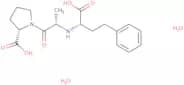
CAS:<p>Enalaprilat is an angiotensin-converting enzyme (ACE) inhibitor that prevents the formation of angiotensin II, a potent vasoconstrictor. It is used to treat high blood pressure and congestive heart failure. Enalaprilat is metabolized to enalapril, which has been found to act as an active inhibitor of DNA polymerase. This drug is also capable of inhibiting the synthesis of other proteins, such as those involved in protein transport and cell wall biogenesis.</p>Fórmula:C18H28N2O7Pureza:Min. 98 Area-%Forma y color:PowderPeso molecular:384.42 g/mol4-(4-Ethylphenyl)benzaldehyde
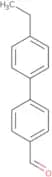
CAS:<p>4-(4-Ethylphenyl)benzaldehyde is a high quality, reagent, complex compound. CAS No. 101002-44-2. It is a useful intermediate and fine chemical that can be used as a versatile building block for the synthesis of speciality chemicals such as research chemicals and reaction components. This chemical is an excellent starting material for the synthesis of useful scaffolds and useful building blocks.</p>Fórmula:C15H14OPureza:Min. 95%Forma y color:SolidPeso molecular:210.27 g/mol2-Nitroterephthalaldehyde
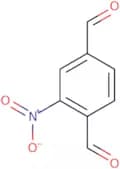
CAS:<p>2-Nitroterephthalaldehyde is a chiral molecule that can be used in the supramolecular synthesis of macrocycles. This molecule has been shown to catalyze the formation of imines, which are important for the synthesis of macrocycles. The kinetic and thermodynamic properties of 2-Nitroterephthalaldehyde have been studied and found to be favorable for this type of reaction.</p>Fórmula:C8H5NO4Pureza:Min. 95%Forma y color:PowderPeso molecular:179.13 g/mol2-Chloro-4-hydroxybenzaldehyde
CAS:2-Chloro-4-hydroxybenzaldehyde is a potent competitive inhibitor of serine proteases, including thrombin. It also has an anticoagulant effect and can be used as an anti-cancer agent. 2-Chloro-4-hydroxybenzaldehyde has been shown to have a strong affinity for the progesterone receptor, which is a protein that regulates the activity of progesterone in cells. 2-Chloro-4-hydroxybenzaldehyde also binds to the formyl group of phenols and quinones, which leads to its use as an antioxidant in various applications. This compound is found in environmental pollution, where it can chelate metal ions such as chloride and lead.Fórmula:C7H5ClO2Pureza:Min. 95%Forma y color:PowderPeso molecular:156.57 g/mol3-Nitrosalicylaldehyde
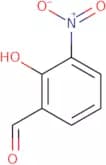
CAS:<p>3-Nitrosalicylaldehyde is an oxidizing agent that reacts with DNA in vitro to form DNA adducts. 3-Nitrosalicylaldehyde also has antioxidative properties, which can be demonstrated by its ability to inhibit the oxidation of low density lipoprotein (LDL) in vivo. This compound has been shown to activate the metalloproteinase MT2 receptor, which is involved in the regulation of blood pressure and heart function. 3-Nitrosalicylaldehyde is metabolized by hydrolysis and reduction to form a neutral product, which has been shown to have antidiabetic effects on mice.</p>Fórmula:C7H5NO4Pureza:Min. 95%Forma y color:PowderPeso molecular:167.12 g/mol3-Methoxy-4-methylbenzaldehyde
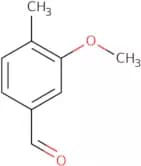
CAS:<p>3-Methoxy-4-methylbenzaldehyde is a chemical compound that belongs to the class of phenylpropanoids. It has been shown to have a variety of uses, including as a drug substance and in natural products. 3-Methoxy-4-methylbenzaldehyde can be used for labeling, mass spectrometric detection, physicochemical techniques, and chromatographic science. The compound can be detected using electron ionization, mass spectrometric detection, or chromatographic science. Isomers of this compound are often difficult to identify due to the presence of other similar compounds.</p>Fórmula:C9H10O2Pureza:Min. 95%Forma y color:PowderPeso molecular:150.17 g/mol