Aldehídos
Los aldehídos son compuestos orgánicos que contienen un grupo carbonilo (C=O) unido al menos a un átomo de hidrógeno. Estos compuestos versátiles son fundamentales en diversas reacciones químicas, incluyendo oxidación, reducción y adición nucleofílica. Los aldehídos son building blocks esenciales en la síntesis de productos farmacéuticos, fragancias y polímeros. En CymitQuimica, ofrecemos una amplia selección de aldehídos de alta calidad para apoyar sus aplicaciones de investigación e industriales.
Se han encontrado 8573 productos de "Aldehídos"
Ordenar por
Pureza (%)
0
100
|
0
|
50
|
90
|
95
|
100
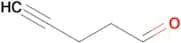
PENT-4-YNAL (IN DCM 30% W/W)
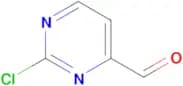
CAS:Pureza:90.0%Forma y color:Liquid, Yellow to Brown LiquidPeso molecular:82.101997375488282-CHLOROPYRIMIDINE-4-CARBALDEHYDE
CAS:Fórmula:C5H3ClN2OPureza:95.0%Forma y color:Liquid, No data available.Peso molecular:142.54Tert-Butyl 4-(2-oxoethyl)bicyclo[2.2.1]heptane-1-carboxylate
CAS:Pureza:98%Peso molecular:238.326995849609381-(4-Fluorophenyl)-3-(2,3-dihydrobenzo[b][1,4]dioxin-6-yl)-1H-pyrazole-4-carbaldehyde
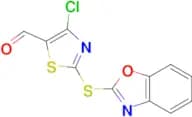
CAS:Peso molecular:324.31100463867194-Chloro-2-(2-benzoxazolylthio)-5-thiazolecarboxaldehyde
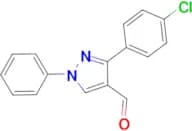
CAS:Pureza:95.0%Forma y color:SolidPeso molecular:296.7399902343753-(4-CHLOROPHENYL)-1-PHENYL-1H-PYRAZOLE-4-CARBALDEHYDE
CAS:Pureza:95.0%Peso molecular:282.73001098632811-Chloro-2-formyl-3-methylbenzo[4,5]imidazo[1,2-a]pyridine-4-carbonitrile
CAS:Pureza:98%Forma y color:SolidPeso molecular:269.69000244140625Dibenzo[b,d]thiophene-4-carbaldehyde
CAS:Pureza:95.0%Forma y color:SolidPeso molecular:212.270004272460944-[(1,1-dioxido-1,2-benzisothiazol-3-yl)oxy]benzaldehyde
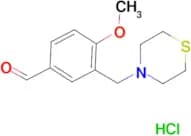
CAS:Pureza:95.0%Peso molecular:287.29000854492194-Methoxy-3-thiomorpholin-4-ylmethylbenzaldehydehydrochloride
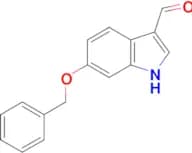
CAS:Fórmula:C13H18ClNO2SPureza:98%Forma y color:SolidPeso molecular:287.86-Benzyloxyindole-3-carbaldehyde
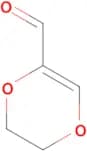
CAS:Pureza:95.0%Forma y color:SolidPeso molecular:251.285003662109385,6-dihydro-1,4-dioxine-2-carbaldehyde
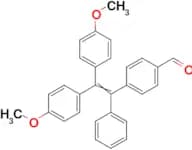
CAS:Pureza:95.0%Forma y color:Solid, CrystallinePeso molecular:114.09999847412114-(2,2-Bis(4-methoxyphenyl)-1-phenylvinyl)benzaldehyde
CAS:Pureza:98%Peso molecular:420.507995605468755-Bromo-2-thiophenecarboxaldehyde
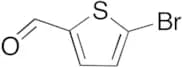
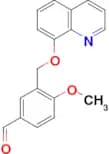
CAS:Producto controlado<p>Applications 5-Bromo-2-thiophenecarboxaldehyde is used in biological studies as anti-inflammatory and anti-tumor activity of the marine mangrove Rhizophora apiculata.<br>References Prabhu, V.V., et al.: J. Immunotoxicol., 9, 341 (2012);<br></p>Fórmula:C5H3BrOSForma y color:NeatPeso molecular:191.052-(4-Fluoro-phenyl)-benzo[d]imidazo[2,1-b]thiazole-3-carbaldehyde
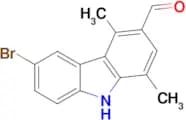
CAS:Peso molecular:296.320007324218755'-Acetyl-2'-chloro-3-methyl-[1,1'-biphenyl]-4-carbaldehyde
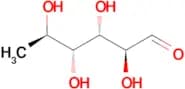
CAS:Pureza:98%Peso molecular:272.7300109863281(E)-3-[3-(4-Fluorophenyl)-1-isopropyl-1H-indol-2-yl]-propenal
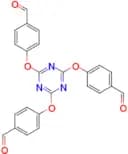
CAS:Pureza:97.0%Forma y color:SolidPeso molecular:307.36801147460944,4',4''-((1,3,5-TRIAZINE-2,4,6-TRIYL)TRIS(OXY))TRIBENZALDEHYDE
CAS:Pureza:95%Peso molecular:441.39898681640625Ref: 10-F852142
1g43,00€5g148,00€10g273,00€25g665,00€50g1.158,00€100g2.301,00€100mgA consultar250mgA consultar5-Trifluoromethyl-benzo[b]thiophene-2-carbaldehyde
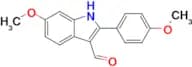
CAS:Fórmula:C10H5F3OSPureza:95.0%Forma y color:SolidPeso molecular:230.26-Methoxy-2-(4-methoxyphenyl)-1H-indole-3-carbaldehyde
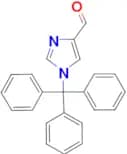
CAS:Pureza:97%Peso molecular:281.31100463867191-Tritylimidazole-4-carboxaldehyde
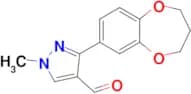
CAS:Pureza:95.0%Forma y color:Solid, White to reddish yellow powderPeso molecular:338.41000366210943-(3,4-Dihydro-2H-1,5-benzodioxepin-7-yl)-1-methyl-1H-pyrazole-4-carboxaldehyde
CAS:Pureza:98%Peso molecular:258.27700805664062-[1-Methyl-5-(trifluoromethyl)pyrazol-3-yl]-thiophene-5-carboxaldehyde
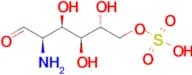
CAS:Fórmula:C10H7F3N2OSForma y color:SolidPeso molecular:260.23(2R,3S,4R,5R)-5-Amino-2,3,4-trihydroxy-6-oxohexyl hydrogen sulfate
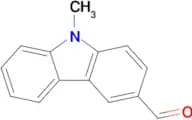
CAS:Pureza:95.0%Peso molecular:259.23001098632819-Methyl-9H-carbazole-3-carboxaldehyde
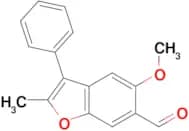
CAS:Pureza:95.0%Forma y color:SolidPeso molecular:209.24800109863285-methoxy-2-methyl-3-phenyl-1-benzofuran-6-carbaldehyde
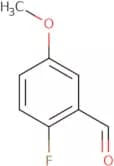
CAS:Pureza:95.0%Forma y color:Solid, Yellow powderPeso molecular:266.29598999023442-fluoro-5-methoxybenzaldehyde
CAS:<p>2-fluoro-5-methoxybenzaldehyde is an asymmetric synthesis that has been shown to inhibit the growth of cancer cells by inhibiting a protein called MT2. 2-Fluoro-5-methoxybenzaldehyde is a nucleophilic compound and reacts with the electrophilic carbon in the enolate to form a sulfoxide, which can be hydrolyzed by acid. This reaction inhibits cancer cell growth as it prevents cellular metabolism and amino acid biosynthesis.</p>Fórmula:C8H7FO2Pureza:Min. 95%Peso molecular:154.14 g/molTerephthaldicarboxaldehyde
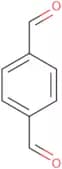
CAS:<p>Terephthaldicarboxaldehyde is a white crystalline solid that has been shown to be soluble in hydrogen fluoride, water vapor, and sodium salts. It is also insoluble in water. Langmuir adsorption isotherm experiments have shown that the solubility of terephthaldicarboxaldehyde increases with increasing concentration of chitosan polymer. Terephthaldicarboxaldehyde has been used as an analytical method for p-hydroxybenzoic acid (PHBA) and terephthalic acid (TPA). It can also be used as a fluorescent probe to detect the presence of these compounds in aqueous solutions.</p>Fórmula:C8H6O2Pureza:Min. 95%Forma y color:PowderPeso molecular:134.13 g/mol2,6-Dihydroxybenzaldehyde
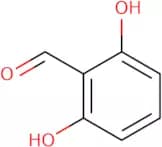
CAS:<p>2,6-Dihydroxybenzaldehyde is a chemical compound that has been used as an intermediate in the synthesis of other chemicals. It is also used as a precursor for benzaldehyde and benzoic acid. 2,6-Dihydroxybenzaldehyde can be synthesized by reacting sodium carbonate with pluronic F127 in the presence of cationic surfactant. The surface methodology used in this process involves the use of hydrophobic molecules to form micelles and liposomes on the surface of the electrode. The interaction between these micelles and liposomes is pH dependent. This reaction causes an increase in hydrogen ions, which leads to an increase in conductivity at acidic pH values. Electrochemical impedance spectroscopy (EIS) results show that 2,6-dihydroxybenzaldehyde reacts with high concentrations of salt and water vapor. FTIR spectroscopy shows that it has two hydroxyl groups and one double</p>Fórmula:C7H6O3Pureza:Min. 95%Forma y color:PowderPeso molecular:138.12 g/mol4-Bromo-3,5-dimethylbenzaldehyde
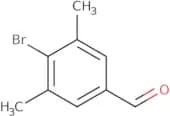
CAS:4-Bromo-3,5-dimethylbenzaldehyde is an organic compound that contains a benzene ring with a bromine atom in the 4 position. It is used as a reagent and intermediate in organic synthesis. The compound can be converted to radical cations by reaction with electron-deficient alkylating agents such as methyl iodide or trimethylsilyl chloride. Radical cations are classified as reactive intermediates and have been shown to react with other organic compounds to form new products.Fórmula:C9H9BrOPureza:Min. 95%Peso molecular:213.07 g/mol4-(Trifluoromethoxy)benzaldehyde
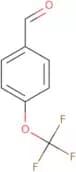
CAS:4-(Trifluoromethoxy)benzaldehyde is a chemical compound that is a substrate for tyrosinase and an inhibitor of the enzyme. It is also an anticancer compound that can be used to inhibit tumor growth by inhibiting protein synthesis. 4-(Trifluoromethoxy)benzaldehyde has been shown to have potent tyrosinase inhibition activity in vitro and in vivo, as well as binding activities with the CB2 receptor. This chemical has also been shown to inhibit virus replication, including HIV-1, and tuberculosis. 4-(Trifluoromethoxy)benzaldehyde can be used in assays to measure the potency of other compounds that are involved in tyrosinase activity or have anti-cancer properties. 4-(Trifluoromethoxy)benzaldehyde specifically binds to residues in the kinase domain of the enzyme tyrosinase, which is responsible for catalysis and regulation of this enzyme.Fórmula:C8H5F3O2Pureza:Min. 95%Forma y color:Colorless Clear LiquidPeso molecular:190.12 g/mol4-n-Propylbenzaldehyde
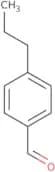
CAS:<p>4-n-Propylbenzaldehyde is a chemical compound that belongs to the group of aromatic aldehydes. It is used in the production of other chemicals, such as pharmaceuticals and fragrances. 4-n-Propylbenzaldehyde has been shown to be genotoxic, causing DNA damage and mutating genes. This chemical also has an inhibitory effect on cancer cells, which may be due to its ability to interfere with histone deacetylase activity. The genotoxic potential of this substance is considered low based on its lack of genotoxicity in vitro and in vivo. This compound does not have any structural formula for the corresponding metal complex.</p>Fórmula:C10H12OPureza:Min. 98 Area-%Forma y color:Colorless Clear LiquidPeso molecular:148.2 g/mol3-Fluoropyridine-4-carboxaldehyde
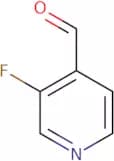
CAS:<p>3-Fluoropyridine-4-carboxaldehyde is a reactivator that can be used in the treatment of bladder cancer. It binds to pyridinium and oxime derivatives, which are present in proteins, to form a reactive intermediate. This intermediate reacts with aldehyde groups on hemoglobin, restoring the oxygen binding capacity of hemoglobin to levels seen in healthy individuals. 3-Fluoropyridine-4-carboxaldehyde has been shown to have anticancer activity against bladder cancer cells and also has potential use as an additive for the treatment of red blood cells.</p>Fórmula:C6H4FNOPureza:Min. 95%Forma y color:Colorless Yellow Clear LiquidPeso molecular:125.1 g/molD-(+)-Glyceraldehyde
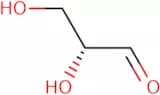
CAS:<p>D-Glyceraldehyde is sold by active weight in solution</p>Fórmula:C3H6O3Pureza:85%MinForma y color:Colorless Clear Viscous LiquidPeso molecular:90.08 g/mol3-Hydroxy-2-iodobenzaldehyde
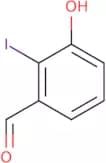
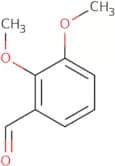
CAS:<p>3-Hydroxy-2-iodobenzaldehyde is a heterocyclic compound that is synthesized from an acetoacetic ester. It is a photochemical precursor to many organic compounds, such as phenanthrene. The synthesis of 3-hydroxy-2-iodobenzaldehyde can be achieved by reacting acetoacetic acid with iodine and sodium nitrite in the presence of a base. This reaction yields 2-iodobenzoic acid in addition to the desired product. 3-Hydroxy-2-iodobenzaldehyde has been studied for its use in the preparation of natural products and research advances.</p>Fórmula:C7H5IO2Pureza:Min. 95%Forma y color:PowderPeso molecular:248.02 g/mol2,3-Dimethoxybenzaldehyde
CAS:<p>2,3-Dimethoxybenzaldehyde is a chemical substance that binds to its ligands by hydrogen bonding and van der Waals forces. It is used in the synthesis of diethyl succinate. 2,3-Dimethoxybenzaldehyde has been shown to inhibit the growth of squamous carcinoma cells. The conversion of 2,3-dimethoxybenzaldehyde into benzoquinone is catalyzed by glucose oxidase and peroxidase. This oxidation process results in a loss of two electrons and one proton from the molecule, changing it from a phenol to an aromatic hydrocarbon.</p>Fórmula:C9H10O3Pureza:Min. 95%Forma y color:PowderPeso molecular:166.17 g/mol

![Tert-Butyl 4-(2-oxoethyl)bicyclo[2.2.1]heptane-1-carboxylate](/_next/image/?url=https%3A%2Fstatic.cymitquimica.com%2Fproducts%2F10%2Fthumb-webp%2FF786388.webp&w=3840&q=75)
![1-(4-Fluorophenyl)-3-(2,3-dihydrobenzo[b][1,4]dioxin-6-yl)-1H-pyrazole-4-carbaldehyde](/_next/image/?url=https%3A%2Fstatic.cymitquimica.com%2Fproducts%2F10%2Fthumb-webp%2FF493980.webp&w=3840&q=75)
![1-Chloro-2-formyl-3-methylbenzo[4,5]imidazo[1,2-a]pyridine-4-carbonitrile](/_next/image/?url=https%3A%2Fstatic.cymitquimica.com%2Fproducts%2F10%2Fthumb-webp%2FF754651.webp&w=3840&q=75)
![Dibenzo[b,d]thiophene-4-carbaldehyde](/_next/image/?url=https%3A%2Fstatic.cymitquimica.com%2Fproducts%2F10%2Fthumb-webp%2FF308548.webp&w=3840&q=75)
![4-[(1,1-dioxido-1,2-benzisothiazol-3-yl)oxy]benzaldehyde](/_next/image/?url=https%3A%2Fstatic.cymitquimica.com%2Fproducts%2F10%2Fthumb-webp%2FF314896.webp&w=3840&q=75)

![7-Chloro-benzo[d]imidazo[2,1-b]thiazole-2-carbaldehyde](/_next/image/?url=https%3A%2Fstatic.cymitquimica.com%2Fproducts%2F10%2Fthumb-webp%2FF475660.webp&w=3840&q=75)

![2-(4-Fluoro-phenyl)-benzo[d]imidazo[2,1-b]thiazole-3-carbaldehyde](/_next/image/?url=https%3A%2Fstatic.cymitquimica.com%2Fproducts%2F10%2Fthumb-webp%2FF015732.webp&w=3840&q=75)
![5'-Acetyl-2'-chloro-3-methyl-[1,1'-biphenyl]-4-carbaldehyde](/_next/image/?url=https%3A%2Fstatic.cymitquimica.com%2Fproducts%2F10%2Fthumb-webp%2FF628195.webp&w=3840&q=75)
![(E)-3-[3-(4-Fluorophenyl)-1-isopropyl-1H-indol-2-yl]-propenal](/_next/image/?url=https%3A%2Fstatic.cymitquimica.com%2Fproducts%2F10%2Fthumb-webp%2FF036562.webp&w=3840&q=75)
![[2,2':5',2''-Terthiophene]-5,5''-dicarbaldehyde](/_next/image/?url=https%3A%2Fstatic.cymitquimica.com%2Fproducts%2F10%2Fthumb-webp%2FF721325.webp&w=3840&q=75)
![5-Trifluoromethyl-benzo[b]thiophene-2-carbaldehyde](/_next/image/?url=https%3A%2Fstatic.cymitquimica.com%2Fproducts%2F10%2Fthumb-webp%2FF316951.webp&w=3840&q=75)
![6-Bromo-2-p-tolyl-imidazo[1,2-a]pyridine-3-carboxaldehyde](/_next/image/?url=https%3A%2Fstatic.cymitquimica.com%2Fproducts%2F10%2Fthumb-webp%2FF015735.webp&w=3840&q=75)
![2-[1-Methyl-5-(trifluoromethyl)pyrazol-3-yl]-thiophene-5-carboxaldehyde](/_next/image/?url=https%3A%2Fstatic.cymitquimica.com%2Fproducts%2F10%2Fthumb-webp%2FF008394.webp&w=3840&q=75)