Aldehídos
Los aldehídos son compuestos orgánicos que contienen un grupo carbonilo (C=O) unido al menos a un átomo de hidrógeno. Estos compuestos versátiles son fundamentales en diversas reacciones químicas, incluyendo oxidación, reducción y adición nucleofílica. Los aldehídos son building blocks esenciales en la síntesis de productos farmacéuticos, fragancias y polímeros. En CymitQuimica, ofrecemos una amplia selección de aldehídos de alta calidad para apoyar sus aplicaciones de investigación e industriales.
Se han encontrado 8573 productos de "Aldehídos"
Ordenar por
Pureza (%)
0
100
|
0
|
50
|
90
|
95
|
100
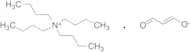
N,N,N-Tributyl-1-butanaminium Salt with (E)-3-Hydroxy-2-propenal
CAS:Producto controlado<p>Applications N,N,N-Tributyl-1-butanaminium Salt with (E)-3-Hydroxy-2-propenal is a useful reagent for preparation of crystalline (±)-fecapentaene.<br> Not a dangerous good if item is equal to or less than 1g/ml and there is less than 100g/ml in the package<br>References Pfaendler, H., et al.: J. Am. Chem. Soc., 108, 1338 (1986);<br></p>Fórmula:C16H36N•CH3O2Forma y color:Off-WhitePeso molecular:242.46 + 71.06(E,E)-5-[4-(Diethylamino)phenyl]penta-2,4-dienal
CAS:Producto controlado<p>Stability Light Sensitive<br>Applications (E,E)-5-[4-(Diethylamino)phenyl]penta-2,4-dienal is used in polymerization process.<br>References Innocenzi, P., et al.: J. Mater Chem., 15, 3821 (2005), Cai, Y., et al.: Polymer, 2006, 47, 6560 (2006),<br></p>Fórmula:C15H19NOForma y color:NeatPeso molecular:229.322,4,4-Trimethyl-2-pentenal
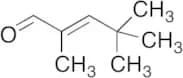
CAS:Producto controladoFórmula:C8H14OForma y color:NeatPeso molecular:126.23-(2,4-Dihydroxyphenyl)-2-propenal
CAS:Producto controladoFórmula:C9H8O3Forma y color:NeatPeso molecular:164.165-Bromo-2-furaldehyde
CAS:<p>5-Bromo-2-furaldehyde is a chemical compound that belongs to the class of heterocycles. It is used in industry as a precursor for the synthesis of other organic compounds. 5-Bromo-2-furaldehyde has been shown to have anti-inflammatory properties, which may be due to its ability to inhibit prostaglandin synthesis. The use of this chemical has been linked with autoimmune diseases and cancer development in animal models. 5-Bromo-2-furaldehyde is an environmental pollutant that can enter the body by ingestion or inhalation, and it can cause irritation of the skin, eyes, nose, throat, and lungs. This chemical is also known as amide or suzuki coupling reaction (SCR).</p>Fórmula:C5H3BrO2Pureza:Min. 98%Forma y color:Off-White To Yellow To Light Brown SolidPeso molecular:174.98 g/mol4-(Pyrimidin-2-yl)benzaldehyde
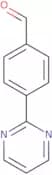
CAS:<p>Please enquire for more information about 4-(Pyrimidin-2-yl)benzaldehyde including the price, delivery time and more detailed product information at the technical inquiry form on this page</p>Fórmula:C11H8N2OPureza:Min. 95%Forma y color:PowderPeso molecular:184.19 g/mol6-Chloro-1,3-dimethyl-1H-pyrazolo[3,4-b]pyridine-5-carboxaldehyde
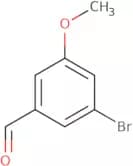
CAS:<p>Please enquire for more information about 6-Chloro-1,3-dimethyl-1H-pyrazolo[3,4-b]pyridine-5-carboxaldehyde including the price, delivery time and more detailed product information at the technical inquiry form on this page</p>Fórmula:C9H8ClN3OPureza:Min. 95%Peso molecular:209.63 g/mol5-Bromo-3-methoxybenzaldehyde
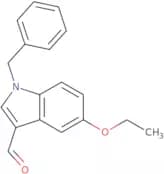
CAS:5-Bromo-3-methoxybenzaldehyde is a type of growth factor that is synthesized by cancer cells. It has been shown to have anticancer activity when used in conjunction with other drugs. 5-Bromo-3-methoxybenzaldehyde has been shown to inhibit tumor growth in mice, which may be due to its ability to prevent the activation of PD-L1. This compound interacts with a tetranuclear ligand and can be activated by light.Fórmula:C8H7BrO2Pureza:Min. 95%Forma y color:PowderPeso molecular:215.04 g/mol1-Benzyl-5-ethoxy-1H-indole-3-carbaldehyde
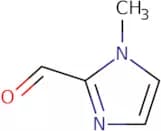
CAS:Producto controlado<p>Please enquire for more information about 1-Benzyl-5-ethoxy-1H-indole-3-carbaldehyde including the price, delivery time and more detailed product information at the technical inquiry form on this page</p>Fórmula:C18H17NO2Pureza:Min. 95%Peso molecular:279.33 g/mol1-Methyl-2-imidazolecarboxaldehyde
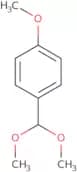
CAS:1-Methyl-2-imidazolecarboxaldehyde is a compound that has been studied for its redox potential, which is the measure of the tendency of a molecule to gain or lose electrons. 1-Methyl-2-imidazolecarboxaldehyde has shown to be an excellent candidate as an electrochemical probe. The molecule has also been shown to bind chloride ions in water, forming a tetradentate chelate ring. This type of chelate ring is formed between two nitrogen atoms and four oxygen atoms from the water molecule. The compound forms hydrogen bonds with other molecules in its vicinity, including hepg2 cells and chloride ions.Fórmula:C5H6N2OPureza:Min. 95%Forma y color:White To Yellow To Orange Solid Or Liquid (May Vary)Peso molecular:110.11 g/molp-Anisaldehyde dimethyl acetal
CAS:<p>p-Anisaldehyde dimethyl acetal is a broad-spectrum antimicrobial that can be synthesized from anisaldehyde and dimethoxyacetal. It has been shown to have anticancer properties in vitro. p-Anisaldehyde dimethyl acetal has also been shown to inhibit the growth of HL60 cells, which are specialized white blood cells. This compound was found to increase neuronal death and induce cachexia in mice. The molecular weight of p-Anisaldehyde dimethyl acetal is 244.24 g/mol, with a melting point of -14 °C and a boiling point of 156 °C. The molecule contains one asymmetric center, one hydrogen bond, one non-bonding electron pair, and no double bonds. This compound has acidic properties and it reacts with vitamin D3 in a cationic polymerization process at alkaline pH levels.</p>Fórmula:C10H14O3Pureza:Min. 95%Forma y color:Colourless To Pale Yellow Clear LiquidPeso molecular:182.22 g/mol4-Iodo-2-methoxypyridine-3-carboxaldehyde
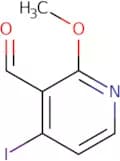
CAS:4-Iodo-2-methoxypyridine-3-carboxaldehyde is a disubstituted compound that has insulin-like properties. It inhibits the activity of the insulin receptor, which may contribute to its insulin-like growth factor effects. This inhibitor also targets the protein kinase, which is responsible for the response of cells to insulin. 4-Iodo-2-methoxypyridine 3 carboxaldehyde has been shown to inhibit IGF1R and malonate ion, and it may have potential as an oral treatment for diabetes.Fórmula:C7H6INO2Pureza:Min. 95%Peso molecular:263.03 g/mol4-tert-Butylbenzaldehyde
CAS:<p>4-tert-Butylbenzaldehyde is an organic compound with the molecular formula CH3COCH2C6H5. It is a viscous liquid that is insoluble in water and has a boiling point of 146 °C. 4-tert-Butylbenzaldehyde reacts with cationic surfactants to form polymeric micelles, which are spherical structures composed of many small spherical subunits. These polymeric micelles are used as model systems for studying the properties of surfactant aggregates in solution. The reaction mechanism for this polymerization process involves the oxidation of 4-tert-butylbenzaldehyde by hydrogen peroxide and the subsequent condensation of 4-tert-butylbenzoic acid with malonic acid or other cinnamic acid derivatives to form the corresponding esters. The oxidized product, 4-tert-butylbenzoic acid, can be regenerated by boiling a mixture containing it</p>Fórmula:C11H14OPureza:Min. 96.5%Forma y color:Colorless Clear LiquidPeso molecular:162.23 g/mol1,2,4,5-Tetramethyl-1H-pyrrole-3-carbaldehyde
CAS:<p>Please enquire for more information about 1,2,4,5-Tetramethyl-1H-pyrrole-3-carbaldehyde including the price, delivery time and more detailed product information at the technical inquiry form on this page</p>Fórmula:C9H13NOPureza:Min. 95%Peso molecular:151.21 g/mol1,3-Dimethyl-1H-pyrazole-5-carbaldehyde
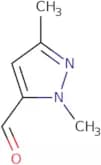
CAS:<p>Please enquire for more information about 1,3-Dimethyl-1H-pyrazole-5-carbaldehyde including the price, delivery time and more detailed product information at the technical inquiry form on this page</p>Fórmula:C6H8N2OPureza:Min. 95%Peso molecular:124.14 g/molDexamethasone-δ17,20 21-aldehyde
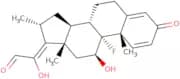
CAS:Producto controlado<p>Please enquire for more information about Dexamethasone-δ17,20 21-aldehyde including the price, delivery time and more detailed product information at the technical inquiry form on this page</p>Fórmula:C22H27FO4Pureza:Min. 95%Forma y color:PowderPeso molecular:374.45 g/molButyraldehyde
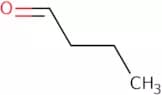
CAS:Butyraldehyde is a colorless to yellowish liquid with a strong, pungent odor. It is soluble in water and has an acidic pH of 2.6-3.0. Butyraldehyde is used as a chemical intermediate for the production of polyvinyl acetate and can be made by reacting acetic acid with butanol or butyl acetate. This chemical reacts with human serum albumin at low concentrations and may have biological properties such as catalyzing the conversion of picolinic acid to nicotinic acid, which aids in the prevention against infectious diseases. Butyraldehyde also has synergistic effects when used with picolinic acid, increasing its effectiveness in combating infection.Fórmula:C4H8OPureza:Min. 95%Forma y color:Clear LiquidPeso molecular:72.11 g/mol4-Bromofuran-2-carbaldehyde
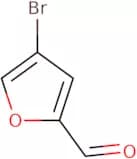
CAS:<p>4-Bromofuran-2-carbaldehyde is a synthetic compound that has been shown to have antioxidant properties. It contains an electron-donating carbonyl group and an electron-withdrawing bromine atom. 4-Bromofuran-2-carbaldehyde is useful in the treatment of endophytic fungi infections, as it inhibits the synthesis of ergosterol, which is an important component of the fungal cell membrane. The molecule's conformational properties are also important for its biological activity, as they enable it to act as a chiral ligand by binding to proteins in a way that will inhibit their function. In addition, 4-bromofuran-2-carbaldehyde has been shown to be effective against cancer cells in vitro, particularly against MMCF7 cells. This may be due to its ability to bind to DNA and prevent transcription or replication of DNA strands.</p>Fórmula:C5H3BrO2Pureza:Min. 95%Peso molecular:174.98 g/mol2-O-Tolyl-thiazole-4-carbaldehyde
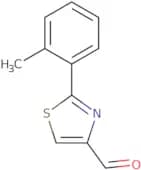
CAS:<p>Please enquire for more information about 2-O-Tolyl-thiazole-4-carbaldehyde including the price, delivery time and more detailed product information at the technical inquiry form on this page</p>Fórmula:C11H9NOSPureza:Min. 95%Peso molecular:203.26 g/mol10-Chloro-9-anthraldehyde
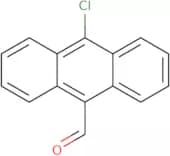
CAS:<p>10-Chloro-9-anthraldehyde is an antibacterial agent that exhibits activity against a wide variety of bacteria. It is the product of the photomodification of anthracene, which is activated by ultraviolet light to produce 10-chloro-9-anthraldehyde. The preliminary functional studies of this compound indicate that it may be used in coatings for polymers and textiles as well as in innovative applications such as fluorescence labeling and immunoassays. 10-Chloro-9-anthraldehyde also has a protonation site at the 9 position, making it useful for conjugation with biomolecules.</p>Fórmula:C15H9ClOPureza:Min. 95%Peso molecular:240.68 g/mol

![(E,E)-5-[4-(Diethylamino)phenyl]penta-2,4-dienal](/_next/image/?url=https%3A%2Fstatic.cymitquimica.com%2Fproducts%2FTR%2Fthumb-webp%2FD443665.webp&w=3840&q=75)


![6-Chloro-1,3-dimethyl-1H-pyrazolo[3,4-b]pyridine-5-carboxaldehyde](/_next/image/?url=https%3A%2Fstatic.cymitquimica.com%2Fproducts%2F3D%2Fthumb-webp%2FFC30642.webp&w=3840&q=75)