Aldehídos
Los aldehídos son compuestos orgánicos que contienen un grupo carbonilo (C=O) unido al menos a un átomo de hidrógeno. Estos compuestos versátiles son fundamentales en diversas reacciones químicas, incluyendo oxidación, reducción y adición nucleofílica. Los aldehídos son building blocks esenciales en la síntesis de productos farmacéuticos, fragancias y polímeros. En CymitQuimica, ofrecemos una amplia selección de aldehídos de alta calidad para apoyar sus aplicaciones de investigación e industriales.
Se han encontrado 8573 productos de "Aldehídos"
Ordenar por
Pureza (%)
0
100
|
0
|
50
|
90
|
95
|
100
10-Chloro-9-anthraldehyde
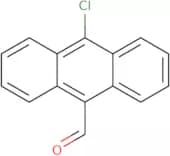
CAS:<p>10-Chloro-9-anthraldehyde is an antibacterial agent that exhibits activity against a wide variety of bacteria. It is the product of the photomodification of anthracene, which is activated by ultraviolet light to produce 10-chloro-9-anthraldehyde. The preliminary functional studies of this compound indicate that it may be used in coatings for polymers and textiles as well as in innovative applications such as fluorescence labeling and immunoassays. 10-Chloro-9-anthraldehyde also has a protonation site at the 9 position, making it useful for conjugation with biomolecules.</p>Fórmula:C15H9ClOPureza:Min. 95%Peso molecular:240.68 g/mol1,3-Dimethyl-1H-pyrazole-5-carbaldehyde
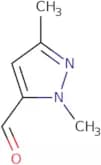
CAS:<p>Please enquire for more information about 1,3-Dimethyl-1H-pyrazole-5-carbaldehyde including the price, delivery time and more detailed product information at the technical inquiry form on this page</p>Fórmula:C6H8N2OPureza:Min. 95%Peso molecular:124.14 g/mol5-Bromo-2-furaldehyde
CAS:<p>5-Bromo-2-furaldehyde is a chemical compound that belongs to the class of heterocycles. It is used in industry as a precursor for the synthesis of other organic compounds. 5-Bromo-2-furaldehyde has been shown to have anti-inflammatory properties, which may be due to its ability to inhibit prostaglandin synthesis. The use of this chemical has been linked with autoimmune diseases and cancer development in animal models. 5-Bromo-2-furaldehyde is an environmental pollutant that can enter the body by ingestion or inhalation, and it can cause irritation of the skin, eyes, nose, throat, and lungs. This chemical is also known as amide or suzuki coupling reaction (SCR).</p>Fórmula:C5H3BrO2Pureza:Min. 98%Forma y color:Off-White To Yellow To Light Brown SolidPeso molecular:174.98 g/mol6-Chloro-1,3-dimethyl-1H-pyrazolo[3,4-b]pyridine-5-carboxaldehyde
CAS:<p>Please enquire for more information about 6-Chloro-1,3-dimethyl-1H-pyrazolo[3,4-b]pyridine-5-carboxaldehyde including the price, delivery time and more detailed product information at the technical inquiry form on this page</p>Fórmula:C9H8ClN3OPureza:Min. 95%Peso molecular:209.63 g/mol3,4-Dichlorobenzaldehyde
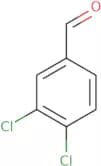
CAS:3,4-Dichlorobenzaldehyde is a monosubstituted aromatic organic compound with inhibitory effects. 3,4-Dichlorobenzaldehyde has shown significant antifungal activity against Candida albicans and Saccharomyces cerevisiae. It also inhibits the growth of certain cancer cells in cell culture studies. 3,4-Dichlorobenzaldehyde has been found to have anti-inflammatory properties and would be effective in treating inflammatory diseases such as asthma or arthritis. This compound has been shown to have significant effects on energy metabolism and fatty acid synthesis by inhibiting enzymes that are involved in these processes. 3,4-Dichlorobenzaldehyde can also be used to treat metabolic disorders such as diabetes mellitus type II and hyperlipidemia by inhibiting enzymes that are involved in these processes.Fórmula:C7H4Cl2OPureza:Min. 95%Forma y color:White To Off-White SolidPeso molecular:175.01 g/molPyridine-3-carboxaldehyde
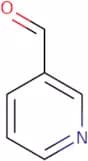
CAS:<p>Pyridine-3-carboxaldehyde is a heterocyclic compound that is structurally related to nicotinic acid and picolinic acid. It has been shown to have anti-tumor activity, with hl-60 cells as the model system. Pyridine-3-carboxaldehyde has also been shown to be toxic to bacteria in biological studies. The chemical stability of this compound was studied by Langmuir adsorption isotherm and electrochemical impedance spectroscopy. It was found that pyridine-3-carboxaldehyde is stable at a pH range of 7 to 8 and at temperatures up to 60 degrees Celsius.</p>Fórmula:C6H5NOPureza:Min. 95%Forma y color:Clear LiquidPeso molecular:107.11 g/molTrans-2-nonenal
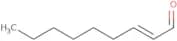
CAS:<p>Trans-2-nonenal is a monoclonal antibody that recognizes the physiological function of cardiac and rat liver microsomes. It has been shown to inhibit enzyme activities in both cell lines. Trans-2-nonenal has also been shown to protect against ischemia/reperfusion injury in rats by reducing the release of intracellular Ca2+ and ATP levels. Trans-2-nonenal is genotoxic and induces oxidative injury, which may be due to its ability to react with caproic acid to form reactive oxygen species.</p>Fórmula:C9H16OPureza:Min. 95%Peso molecular:140.22 g/molTetrafluoroterephthaldehyde
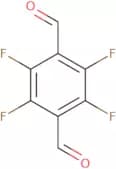
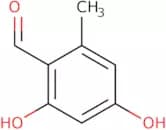
CAS:<p>Tetrafluoroterephthaldehyde (TFPA) is a reactive aldehyde that can be synthesized in the laboratory by the reaction of trifluoromethanesulfonic acid with an aromatic hydrocarbon or ester compound. TFPA has been used to study the synthesis of supramolecular assemblies and supramolecular chemistry. The radiation-induced formation of TFPA is a useful method for the synthesis of polymers, and the thermal expansion of TFPA is high enough to be used as a thermometer. TFPA has shown chemical stability in both acidic and alkaline media, as well as resistance to radiation and oxidation. TFPA also has a high boiling point, making it useful for desolvation during gas chromatography experiments.</p>Fórmula:C8H2F4O2Pureza:Min. 95%Forma y color:PowderPeso molecular:206.09 g/mol2,4-Dihydroxy-6-methylbenzaldehyde
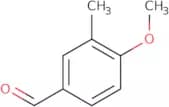
CAS:<p>2,4-Dihydroxy-6-methylbenzaldehyde is a chemical that is found naturally in a variety of plants. It has been shown to have immunomodulatory and anti-inflammatory effects in vitro and in vivo. 2,4-Dihydroxy-6-methylbenzaldehyde has been shown to reduce the production of inflammatory molecules such as tumor necrosis factor alpha (TNFα) and interleukin 12 (IL-12) by inhibiting the activation of microglia cells. This compound also inhibits LPS induced inflammatory response in human carcinoma cells. 2,4-Dihydroxy-6 methylbenzaldehyde is currently undergoing clinical trials for its potential use in regenerative medicine.</p>Fórmula:C8H8O3Pureza:Min. 95%Peso molecular:152.15 g/mol3-Methyl-p-anizaldehyde
CAS:<p>3-Methyl-p-anizaldehyde is a vanillyl alcohol, which is a natural compound that can be found in vanilla beans. It has been used in the synthesis of vanillic acid and lactams. 3-Methyl-p-anizaldehyde has been shown to react with alkyl halides to form alkylated products. These reactions are catalyzed by an enzyme called alcohol dehydrogenase. This enzyme binds to the hydroxyl group on the 3 position of the vanillin molecule, which is then oxidized to form a functional group called an acetate ester. The reaction occurs at low temperatures and can result in optical activity if it produces a chiral product. 3-Methyl-p-anizaldehyde also reacts with ecteinascidins, which are marine natural products that have potent cytotoxic properties against cancer cells.</p>Fórmula:C9H10O2Pureza:Min. 95%Peso molecular:150.17 g/mol3-(Chloromethyl)-4-methoxybenzaldehyde
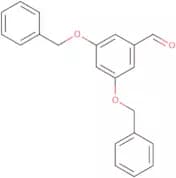
CAS:<p>3-(Chloromethyl)-4-methoxybenzaldehyde is a natural product that can be extracted from the rhizomes of the plant. It has been shown to have antibacterial activity in laboratory experiments and has been used in traditional medicine for the treatment of fungus infections. 3-(Chloromethyl)-4-methoxybenzaldehyde is an imidazolylmethyl derivative with a hexane structure. It reacts with hydrochloric acid to form a molecule called chloromethylation, which is also known as an esterification reaction. Piperazine acts as a catalyst in this reaction, increasing its scalability and making it suitable for large-scale production. The compound exhibits radical scavenging activity, which may be due to its ability to donate electrons or hydrogen atoms to free radicals.</p>Fórmula:C9H9CIO2Pureza:Min. 95%Peso molecular:288.08 g/mol3,5-Dibenzyloxybenzaldehyde
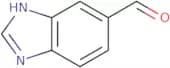
CAS:<p>3,5-Dibenzyloxybenzaldehyde is a molecule that has been shown to induce apoptosis in prostate cancer cells. It binds to the survivin protein and prevents its function. 3,5-Dibenzyloxybenzaldehyde also has anti-cancer properties due to its ability to inhibit the growth of cultured prostate cancer cells in vitro. This compound can be used as a photophysical probe for radiation studies or as a fatty acid monomer for metathesis reactions. The molecule is also active against cox-2 inhibitory activity and has been shown to have clinical efficacy in diazepine synthesis.</p>Fórmula:C21H18O3Pureza:Min. 95%Peso molecular:318.37 g/molBenzimidazole-5-aldehyde
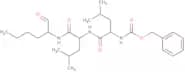
CAS:<p>Please enquire for more information about Benzimidazole-5-aldehyde including the price, delivery time and more detailed product information at the technical inquiry form on this page</p>Fórmula:C8H6N2OPureza:Min. 95%Forma y color:PowderPeso molecular:146.15 g/molZ-Leu-Leu-Nle-aldehyde
CAS:<p>Z-Leu-Leu-Nle (ZLL) is a small molecule that selectively inhibits the activity of the aspartyl protease, BACE1, which is an enzyme that cleaves amyloid precursor protein (APP) to produce amyloid beta peptides. The inhibition of this enzyme has been shown to be effective in preventing or delaying the onset of Alzheimer's disease. ZLL also inhibits estrogen receptor alpha and has antiestrogenic effects in breast cancer cells. This compound induces apoptosis by binding to apoptotic proteins, such as tumor necrosis factor receptor 1, Fas ligand, and TRAIL receptors. It also inhibits cell growth and induces chemoresistance in breast cancer cells.</p>Fórmula:C26H41N3O5Pureza:Min. 95%Peso molecular:475.62 g/mol5-(2-Bromo-acetyl)-2-hydroxy-benzaldehyde
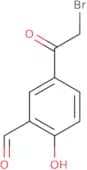
CAS:<p>5-Bromo-2-hydroxybenzaldehyde is an organic compound with a chemical formula of CHBrO. It is a white solid that is soluble in water, ethanol, and acetone. The synthesis of 5-bromo-2-hydroxybenzaldehyde has been achieved by the acylation reaction of benzaldehyde with bromide ion. The selectivity for this reaction can be increased by using sodium borohydride as a reducing agent instead of lithium aluminum hydride. This method can be applied to the synthesis of salmeterol, which is used as a medicine in the treatment of asthma.</p>Fórmula:C9H7BrO3Pureza:Min. 95%Peso molecular:243.05 g/mol4-tert-Butoxybenzaldehyde
CAS:<p>4-tert-Butoxybenzaldehyde is a colorless liquid that has a viscosity of 0.3 mm2/s at 25 °C. It can be synthesized by reacting pyridine with hydrochloric acid in the presence of a Grignard reagent. 4-tert-Butoxybenzaldehyde reacts with phenolic antioxidants to form an ester, which can be used as an industrial solvent. The crystal x-ray diffraction pattern of 4-tert-Butoxybenzaldehyde exhibits peaks at 2θ = 8.0, 11.5, and 18.5° corresponding to the (100), (200), and (220) planes, respectively. This chemical can also undergo reactions that lead to termination or transfer reactions, including diethyl ketomalonate formation with diethyl malonate in the presence of water as a solvent and potassium hydroxide as a catalyst for transfer reactions.END></p>Fórmula:C11H14O2Pureza:Min. 95%Forma y color:PowderPeso molecular:178.23 g/molPhenylpropargylaldehyde
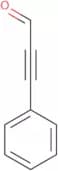
CAS:<p>Phenylpropargylaldehyde is an organic compound that is a chiral molecule, which means it has two enantiomers. It was first synthesized in 1964 by R.B. Woodward and T.W. Rittenberg at the University of Chicago, and is used as a chemical intermediate in the synthesis of other compounds with biological activity such as matrix metalloproteinase inhibitors, for example marimastat. Phenylpropargylaldehyde can be prepared from malonic acid and phenylboronic acid in a reaction mechanism that involves nucleophilic substitutions, carbonyl group activation and hydrogen bonding to lysine residues on proteins. The asymmetric synthesis of this compound has been shown to suppress genes associated with metabolic disorders such as diabetes mellitus type 2, fatty acid metabolism disorders and endocrine disorders (e.g., thyroid). It also has adjuvant therapeutic properties in cancer treatment, especially when combined with synthetic fatty acids such as oleic acid or ar</p>Pureza:Min. 95%2-Amino-4-fluorobenzaldehyde
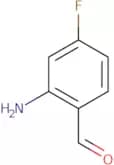
CAS:<p>2-Amino-4-fluorobenzaldehyde is a plant growth regulator that has been shown to be effective at increasing the yield of flowers and fruit crops. It is used as an intermediate in the synthesis of agrochemicals, such as 2-aminobenzaldehyde and anthranilic acid. The biosynthesis of 2-amino-4-fluorobenzaldehyde starts from methanol and intermediates such as anthranilic acid, aminoaldehydes, or alcohols. It can also be produced by oxidative coupling of 2-aminobenzaldehyde with phenylacetone in the presence of sodium hydroxide. 2-Amino-4-fluorobenzaldehyde has been shown to be more efficient than other plant growth regulators such as robinia or aminocyclopentane carboxylic acid (ACC).</p>Fórmula:C7H6FNOPureza:Min. 95%Forma y color:SolidPeso molecular:139.13 g/mol2-Chloro-3-methoxybenzaldehyde
CAS:<p>Please enquire for more information about 2-Chloro-3-methoxybenzaldehyde including the price, delivery time and more detailed product information at the technical inquiry form on this page</p>Fórmula:C8H7ClO2Pureza:Min. 95%Peso molecular:170.59 g/molCell-permeable Caspase-3 Inhibitor I trifluoroacetate salt
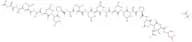
CAS:Please enquire for more information about Cell-permeable Caspase-3 Inhibitor I trifluoroacetate salt including the price, delivery time and more detailed product information at the technical inquiry form on this pageFórmula:C94H158N20O27Pureza:Min. 95%Peso molecular:2,000.38 g/mol


![6-Chloro-1,3-dimethyl-1H-pyrazolo[3,4-b]pyridine-5-carboxaldehyde](/_next/image/?url=https%3A%2Fstatic.cymitquimica.com%2Fproducts%2F3D%2Fthumb-webp%2FFC30642.webp&w=3840&q=75)