Quinonas
Las quinonas son compuestos aromáticos caracterizados por un anillo de seis miembros con dos sustituciones de cetona. Estos compuestos desempeñan roles críticos en procesos biológicos, como el transporte de electrones, y se utilizan en la síntesis de colorantes, productos farmacéuticos y agroquímicos. Las quinonas exhiben propiedades redox únicas, lo que las hace valiosas en diversas aplicaciones. En CymitQuimica, ofrecemos una amplia gama de quinonas de alta calidad para apoyar sus investigaciones y proyectos industriales.
Se han encontrado 252 productos de "Quinonas"
Ordenar por
Pureza (%)
0
100
|
0
|
50
|
90
|
95
|
100
Bisvismiaquinone
CAS:<p>Bisvismiaquinone is a novel compound, which is a bioactive quinone derived from natural sources, specifically isolated from certain plant species. This compound is characterized by its distinct molecular structure, which contributes to its unique pharmacological properties. The mode of action of bisvismiaquinone involves the modulation of biochemical pathways, potentially including oxidative stress mechanisms, signaling pathways, or enzyme inhibition, making it of particular interest for therapeutic exploration.</p>Fórmula:C42H42O7Pureza:Min. 95%Peso molecular:658.78 g/mol1,8-Dimethoxyanthraquinone
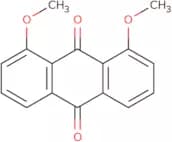
CAS:<p>1,8-Dimethoxyanthraquinone is an anthraquinone derivative, which is synthesized through methylation of anthraquinone precursors. It acts as a chemical intermediate, featuring a conjugated structure that facilitates electron transfer processes. The presence of methoxy groups enhances its reactivity, making it useful in various organic synthesis reactions.</p>Fórmula:C16H12O4Pureza:Min. 95%Peso molecular:268.26 g/molSennidine A
CAS:<p>Sennidine A is a naturally derived compound, specifically a type of anthraquinone glycoside. This compound is sourced from the senna plant, Senna alexandrina, which is widely known for its potent laxative properties. Sennidine A functions by stimulating peristalsis, the process of rhythmic contractions in the intestinal muscles, through activation of the intestinal mucosa. This action increases the motility of the bowel, thereby facilitating the movement of stool through the digestive tract.</p>Pureza:Min. 95%3-Geranyloxy-6-methyl-1,8-dihydroxyanthraquinone
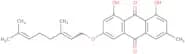
<p>3-Geranyloxy-6-methyl-1,8-dihydroxyanthraquinone is a natural anthraquinone compound, which is derived from certain plant species, notably those in the families Rubiaceae and Fabaceae. These compounds are often isolated through sophisticated extraction techniques that target bioactive substances present in botanical sources.</p>Pureza:Min. 95%3-Geranyloxyemodin
CAS:<p>3-Geranyloxyemodin is a bioactive compound, specifically a naturally occurring anthraquinone derivative. It is isolated from various plant sources, such as Aloe species and other traditional medicinal plants. Its mode of action involves the modulation of key cellular pathways, including the inhibition of certain enzymes and the induction of apoptosis through mitochondrial pathways. This compound has been shown to interfere with cell proliferation and exhibit anti-inflammatory properties.</p>Fórmula:C25H26O5Pureza:Min. 95%Forma y color:PowderPeso molecular:406.50 g/mol2,6-Dimethoxy-1,4-benzoquinone
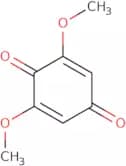
CAS:<p>2,6-Dimethoxy-1,4-benzoquinone is an organic compound recognized as a quinone, which is a class of cyclic organic compounds derived from aromatic compounds and known for their redox activity. This compound is naturally sourced from various plant species, including the roots and bark of medicinal plants, where it often plays a role in the plant's defense mechanisms.</p>Fórmula:C8H8O4Pureza:Min. 95%Forma y color:PowderPeso molecular:168.15 g/molVismin
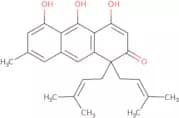
CAS:<p>Please enquire for more information about Vismin including the price, delivery time and more detailed product information at the technical inquiry form on this page</p>Fórmula:C25H28O4Pureza:Min. 95%Peso molecular:392.49 g/mol5-Hydroxyprimin
<p>5-Hydroxyprimin is a synthesized chemical compound, classified as a neurotransmitter modulator, which is derived from a series of complex organic synthesis processes. Its mode of action involves the modulation of monoamine neurotransmitter pathways, primarily affecting serotonin and dopamine receptors in the central nervous system. Through this interaction, 5-Hydroxyprimin is thought to influence neural signaling and has potential implications for neurological research.</p>Pureza:Min. 95%Sakyomicin D
CAS:<p>Sakyomicin D is a benzoquinone antibiotic with activity against Gram-positive bacteria.</p>Fórmula:C19H18O8Forma y color:SolidPeso molecular:374.341Seitomycin
CAS:<p>Seitomycin is an anthraquinone antibiotic. It exhibits moderate activity against Gram-positive bacteria, such as Staphylococcus aureus and Bacillus subtilis, as well as Gram-negative bacteria like Escherichia coli and Streptomyces viridochromogenes.</p>Fórmula:C20H18O6Forma y color:SolidPeso molecular:354.353Baumycin B1
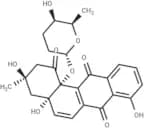
CAS:<p>Baumycin B1 is an antitumor antibiotic (antibiotic).</p>Fórmula:C34H41NO14Forma y color:SolidPeso molecular:687.688Neobulgarone D
CAS:<p>Neobulgarone D is an anthraquinone derivative from the ascomycete fungus Neobulgaria pura HA A07-97. It inhibits the formation of appressoria in the rice blast fungus and exhibits mild cytotoxicity with no antifungal, antibacterial, or phytotoxic activity.</p>Fórmula:C32H25ClO8Peso molecular:572.99Laccaridione A
CAS:Laccaridione A can inhibit the activity of anti-serine proteases. The IC50 values of Laccaridione A for inhibiting trypsin, papain, thermolysin, collagenase, and zinc proteases are 14.7 μg/mL, 2.5 μg/mL, 18.8 μg/mL, 7.2 μg/mL, and 18.2 μg/mL, respectively.Fórmula:C22H24O6Forma y color:SolidPeso molecular:384.422Laccaridione B
CAS:Laccaridione B inhibits the activity of serine proteases. It exhibits inhibitory effects on trypsin, papain, thermolysin, collagenase, and zinc metalloprotease with IC50 values of 10.9 μg/mL, 5.1 μg/mL, 8.4 μg/mL, 5.7 μg/mL, and 3.0 μg/mL, respectively. Additionally, Laccaridione B shows significant antiproliferative activity against L-929, K-562, and HeLa cells, with IC50 values of 2.4 μg/mL, 1.8 μg/mL, and 13.9 μg/mL, respectively.Fórmula:C23H26O6Forma y color:SolidPeso molecular:398.4494-Deoxybostrycin
CAS:4-Deoxybostrycin exhibits activity against Bacillus subtilis.Fórmula:C16H16O7Forma y color:SolidPeso molecular:320.294Sakyomicin C
CAS:<p>Sakyomicin C is a benzoquinone antibiotic. It exhibits activity against Gram-positive bacteria and mycobacteria.</p>Fórmula:C25H26O9Forma y color:SolidPeso molecular:470.469Fibrostatin D
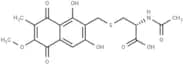
CAS:<p>Fibrostatin D is a compound found in Streptomyces species known for its activity as a proline hydroxylase (proline hydroxylase).</p>Fórmula:C18H19NO8SForma y color:SolidPeso molecular:409.41Sakyomicin B
CAS:<p>Sakyomicin B is a benzoquinone antibiotic that exhibits activity against Gram-positive bacteria and mycobacteria.</p>Fórmula:C19H16O8Forma y color:SolidPeso molecular:372.326Aklaviketone
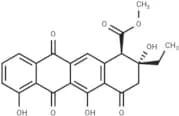
CAS:<p>Aklaviketone is a bacterial metabolite identified in the Streptomyces galilaeus S 383 strain. It plays a role in the biosynthesis pathway of anthracycline antibiotics.</p>Fórmula:C22H18O8Forma y color:SolidPeso molecular:410.374Ochracenomicin C
CAS:<p>Ochracenomicin C is produced by the bacterium Amicolatopsis sp. MJ 950-891 and exhibits weak antibacterial activity.</p>Fórmula:C19H20O5Forma y color:SolidPeso molecular:328.36