Bencenos
Subcategorías de "Bencenos"
- Benzamidas(62 productos)
- Ácidos benzoicos(5.475 productos)
- Alcoholes bencílicos(1.457 productos)
- Bencenos halogenados(33.965 productos)
- Fenoles(2.663 productos)
Se han encontrado 11888 productos de "Bencenos"
1-[Bis(4-cyanophenyl)methyl]-1,2,4-triazole
CAS:Pureza:97.0%Forma y color:SolidPeso molecular:285.30999755859375Methyl 1-((2'-cyano-[1,1'-biphenyl]-4-yl)methyl)-2-ethoxy-1H-benzo[d]imidazole-7-carboxylate
CAS:Pureza:97%Peso molecular:411.460998535156255-Amino-2-{[3-(trifluoromethyl)phenyl]sulfanyl}benzonitrile
CAS:Fórmula:C14H9F3N2SPureza:95.0%Forma y color:SolidPeso molecular:294.3Ethyl 2-(((2'-cyano-[1,1'-biphenyl]-4-yl)methyl)amino)-3-nitrobenzoate
CAS:Pureza:98%Peso molecular:401.4219970703125Ref: 10-F438246
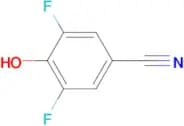
1gA consultar2gA consultar5gA consultar100mgA consultar250mgA consultar500mgA consultar3,5-Difluoro-4-hydroxybenzonitrile
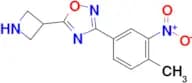
CAS:Fórmula:C7H3F2NOPureza:97%Forma y color:SolidPeso molecular:155.1045-(Azetidin-3-yl)-3-(4-methyl-3-nitrophenyl)-1,2,4-oxadiazole
CAS:Pureza:97%Peso molecular:260.25299072265625(2E)-1-{[1,1'-biphenyl]-4-yl}-3-(3-nitrophenyl)prop-2-en-1-one
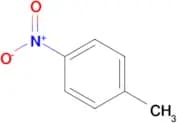
CAS:Pureza:95.0%Peso molecular:329.35501098632814-Nitrobenzoic acid
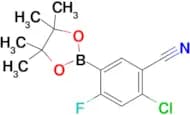
CAS:Fórmula:C7H5NO4Pureza:98%Forma y color:Solid, Light yellow crystallinePeso molecular:167.122-Chloro-4-fluoro-5-(4,4,5,5-tetramethyl-1,3,2-dioxaborolan-2-yl)benzonitrile
CAS:Fórmula:C13H14BClFNO2Pureza:95.0%Forma y color:SolidPeso molecular:281.52Ref: 10-F506064
1gA consultar2gA consultar5gA consultar100mgA consultar250mgA consultar500mgA consultar2-[3-(4-nitrophenyl)-1-phenyl-1h-pyrazol-4-yl]acetic acid
CAS:Pureza:97%Peso molecular:323.3080139160156(2E)-3-[4-(benzyloxy)phenyl]-1-(4-nitrophenyl)prop-2-en-1-one
CAS:Pureza:95.0%Peso molecular:359.3810119628906(Z)-N-(1-Chloro-1-(2-cyanophenyl)-3-oxo-3-(piperidin-1-yl)prop-1-en-2-yl)benzamide
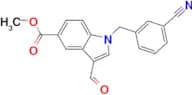
CAS:Pureza:95.0%Peso molecular:393.86999511718751-(3-Cyano-benzyl)-3-formyl-1H-indole-5-carboxylic acid methyl ester
CAS:Pureza:97.0%Peso molecular:318.33200073242194,4'-((4H-1,2,4-Triazol-4-yl)methylene)dibenzonitrile
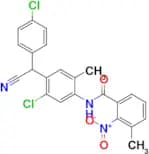
CAS:Pureza:95.0%Forma y color:Liquid, No data available.Peso molecular:285.30999755859375N-(5-chloro-4-((4-chlorophenyl)(cyano)methyl)-2-methylphenyl)-3-methyl-2-nitrobenzamide
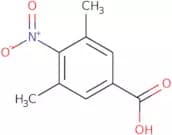
CAS:Pureza:98%Peso molecular:454.309997558593753,5-Dimethyl-4-nitrobenzoic acid
CAS:3,5-Dimethyl-4-nitrobenzoic acid is a synthetic compound that has been used in the synthesis of other organic compounds. It is not currently used as a drug, but it has been shown to inhibit the growth of bacteria in vitro. The mechanism of action for this compound is unclear. 3,5-Dimethyl-4-nitrobenzoic acid has been shown to be active against the bacterium Typhimurium and may inhibit bacterial growth by being metabolised into nitrite or nitrate ions. This chemical can also be converted into a reactive intermediate that reacts with oxygen to form superoxide anion radicals, which are known to have antibacterial effects.Fórmula:C9H9NO4Pureza:Min. 95%Forma y color:PowderPeso molecular:195.17 g/molSalicylic acid
CAS:Salicylic acid is a weak organic acid that is used as a plant hormone. It has been shown to have enzyme activities that may be involved in the regulation of glycol ether metabolism, photosynthetic activity, p-hydroxybenzoic acid biosynthesis and nutrient solution. Salicylic acid also inhibits nitrite ion production by reacting with acetylsalicylic, which is an inhibitor of the enzyme nitric oxide synthase. Salicylic acid may inhibit transcriptional regulation by steric interactions with DNA or by binding to regulatory proteins. The structural analysis of salicylic acid shows an intramolecular hydrogen bond between the hydroxyl group and carbonyl group which could lead to enzyme inhibition.Fórmula:C7H6O3Pureza:Min. 95%Forma y color:White Off-White PowderPeso molecular:138.12 g/mol5-Fluoroanthranilic acid
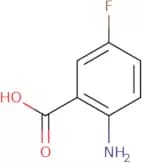
CAS:5-Fluoroanthranilic acid is a synthetic compound that belongs to the class of anthranilic acid derivatives. It inhibits the growth of bacteria by reacting with the hydroxyl group on the bacterial cell wall and binding to its target, which is a cellular component found in Gram-positive bacteria. The molecular modeling and gene analysis have shown that this compound has an optimal reaction at pH 8.5, which is not in accordance with the natural environment of bacteria. 5-Fluoroanthranilic acid has been shown to have anticancer activity against wild-type cells but not against resistant mutants.Fórmula:C7H6FNO2Pureza:Min. 95%Forma y color:PowderPeso molecular:155.13 g/mol4-Chloro-3,5-dinitrobenzonitrile
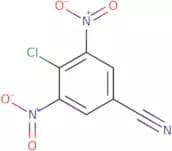
CAS:4-Chloro-3,5-dinitrobenzonitrile is a mesomeric compound that has four amines and one nitro group. It is a dipole with chloride as the negative end and amine as the positive end. The reaction mechanism of this chemical is nucleophilic substitution. 4-Chloro-3,5-dinitrobenzonitrile reacts with an organic solvent to form a buffer. A buffer is an ionized solution that resists changes in pH when acid or base are added to it. This chemical also reacts with thionyl chloride to form hydrochloric acid, which can be used to leishmania parasites. 4-Chloro-3,5-dinitrobenzonitrile also reacts with an anion such as ClO4− or NO2− to form a salt such as chlorate or nitrate respectively.Fórmula:C7H2ClN3O4Pureza:Min. 95%Forma y color:PowderPeso molecular:227.56 g/mol3-Dimethylaminobenzoic acid
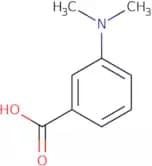
CAS:3-Dimethylaminobenzoic acid is a bacterial enzyme that belongs to the group of p2 carboxylates. It is a non-specific esterase that has been shown to hydrolyze 3-ethylbenzthiazoline-6-sulfonic acid, which is an indicator of root formation. The enzyme activity of 3-dimethylaminobenzoic acid has been demonstrated in kinetic data and redox potential measurements. 3DMBB is found in plants and can be used for the determination of dry weight, as it can hydrolyze triticum aestivum urine samples or cholesterol esters. This enzyme also has catalase activity and can be used in the determination of catalase activity in biological fluids such as urine samples or blood serum.Fórmula:C9H11NO2Pureza:Min. 95%Forma y color:Off-White PowderPeso molecular:165.19 g/mol5-Methoxy-2-nitrobenzoic acid
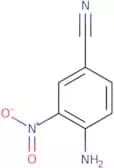
CAS:5-Methoxy-2-nitrobenzoic acid is a compound that has been shown to have antiinflammatory properties. It has been found to inhibit the production of inflammatory mediators such as leukotrienes and prostaglandins. 5-Methoxy-2-nitrobenzoic acid also inhibits certain enzymes, such as cyclooxygenase and lipoxygenase, which are involved in the biosynthesis of these mediators. 5-Methoxy-2-nitrobenzoic acid may be useful in the treatment of inflammatory diseases such as arthritis or asthma. This drug can also be used for chemoprevention against cancer. The drug has been shown to inhibit the growth of tumor cells in vivo by oral administration. This is due to its ability to inhibit DNA synthesis and protein synthesis in cells by binding with DNA and inhibiting RNA synthesis through inhibition of ribonucleotide reductase.Fórmula:C8H7NO5Pureza:90%Forma y color:PowderPeso molecular:197.14 g/mol4-Amino-3-nitrobenzonitrile
CAS:4-Amino-3-nitrobenzonitrile is an organic compound that is used as a precursor in the synthesis of drugs to treat infectious diseases. 4-Amino-3-nitrobenzonitrile has been shown to have potent activity against Leishmania species, including L. major and L. braziliensis. It binds to sulfoxides by a nitro group and forms a covalent bond with the sulfoxide. This results in the formation of an intramolecular hydrogen bond between the nitro group and the sulfoxide, which prevents it from forming hydrogen bonds with other molecules. Gel permeation chromatography can be used for analytical determination of this drug. 4-Amino-3-nitrobenzonitrile has also been studied using chemosensors and in vivo studies, showing that it can be used to inhibit protozoa such as Giardia lamblia, Entamoeba histolyt
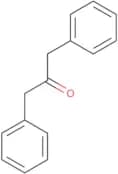
Fórmula:C7H5N3O2Pureza:Min. 98%Forma y color:PowderPeso molecular:163.13 g/mol1,3-Diphenylacetone
CAS:1,3-Diphenylacetone is a redox potential polymer that is soluble in organic solvents and is used as a film-forming polymer. It has been shown to have some intramolecular hydrogen bonding between the ketone and the nitrogen atoms, which can be seen in its chemical structure. The FTIR spectra of this compound show that it has a hydroxyl group and gives off water vapor when heated. 1,3-Diphenylacetone is an excellent solvent for detergents because it does not corrode metals or rubber. This molecule also has a basic structure due to its benzyl groups.Fórmula:C15H14OPureza:Min. 95%Forma y color:PowderPeso molecular:210.28 g/mol2-Amino-5-iodobenzoic acid
CAS:2-Amino-5-iodobenzoic acid (5-AIBA) is a chemical compound with a molecular weight of 152.14 g/mol. It belongs to the group of anthranilic compounds, and has antiinflammatory activity. 5-AIBA also inhibits cancer cell proliferation in vitro and in vivo by inhibiting the synthesis of DNA, RNA, and proteins. The reaction solution for the palladium-catalyzed coupling of 5-AIBA with 2-(N,N′-dimethylcarbamoyl)phenyl boronic acid was found to be stable at room temperature for 24 hours. The inhibitory activity of 5-AIBA against MCL1 protein was potent, as it inhibited MCL1 protein expression by 90%. Molecular modeling studies showed that 5-AIBA binds to the amide region on the ATP binding site in MCL1 protein (mcf7). Carbonyl groups are present on both sides of the am
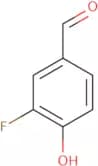
Fórmula:C7H6INO2Pureza:Min. 98 Area-%Forma y color:PowderPeso molecular:263.03 g/mol3-Fluoro-4-hydroxybenzaldehyde
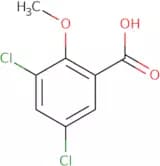
CAS:3-Fluoro-4-hydroxybenzaldehyde is a hydroxyl group with an activation energy of 87.7 kJ/mol. The molecule can be synthesized by the reaction of salicylaldehyde and 3,4-dihydroxybenzaldehyde in the presence of an organic solvent such as chloroform or methylene chloride. This compound has been shown to cause cell death in ht-29 cells and cancer cell lines, as well as human ovarian carcinoma cells. It causes apoptosis by inhibiting mitochondrial membrane potential, which leads to decreased intracellular ATP levels. 3-Fluoro-4-hydroxybenzaldehyde is most commonly used in molecular modeling studies to represent the hydroxyl group due to its simplicity in comparison to other hydroxyl groups like methanol or ethanol.Fórmula:C7H5FO2Pureza:90%Forma y color:White PowderPeso molecular:140.11 g/mol3,5-Dichloro-2-methoxybenzoic acid
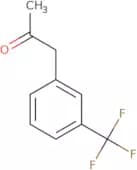
CAS:3,5-Dichloro-2-methoxybenzoic acid (3,5-DMB) is a diphenyl ether with a pharmacokinetic half-life of about 3 hours. It has two isomers: the cis and trans forms. The cis isomer is more active than the trans form. The cis isomer has been shown to be effective in treatments for amine oxidase inhibitors and short-chain fatty acids. It also has growth regulator properties that are used in treatments for psoriasis and acne. 3,5-DMB inhibits bacterial growth by binding to the enzyme dioxygenase, which catalyzes the conversion of 4-hydroxybenzoic acid into 4-hydroxyphenylpyruvic acid; this prevents the production of catecholamines and subsequent cell proliferation. This drug binds to apical membranes in the intestine by attaching to sulfhydryl groups on proteins involved in transport processes, preventing uptakeFórmula:C8H6Cl2O3Pureza:Min. 95%Forma y color:White PowderPeso molecular:221.04 g/mol3-(Trifluoromethyl)phenylacetone
CAS:3-(Trifluoromethyl)phenylacetone is a chiral iminium-type organocatalyst that is used in asymmetric organic reactions. This compound has been shown to be effective for the synthesis of chiral amines and hydroxyl groups, as well as biotransformations. 3-(Trifluoromethyl)phenylacetone binds to substrates through hydrogen bonding, steric interactions, and electrostatic interactions. It also has a high affinity for hydroxides and isosteres. 3-(Trifluoromethyl)phenylacetone can be used as an alternative to L-proline in certain biotransformations because it binds more tightly to the enzyme than L-proline does.
Fórmula:C10H9F3OPureza:Min. 95%Forma y color:Clear LiquidPeso molecular:202.17 g/mol2-Chloro-6-fluorobenzaldehyde
CAS:2-Chloro-6-fluorobenzaldehyde is an impurity that can be found in wastewater. It has been shown to be a reactive intermediate for the synthesis of streptochlorin, which is a natural product with potential antibiotic activity. 2-Chloro-6-fluorobenzaldehyde is produced by the reaction of chlorine and anhydrous sodium, with acid as catalyst. The molecule has two fluorine atoms and one chloride atom. This compound can also be used in the treatment of waste water due to its ability to react with hydroxyl ions and chloride ions in the presence of hydrogen chloride or hydrochloric acid. The pain model was evaluated using nmr spectra and optical properties.Fórmula:C7H4ClFOPureza:Min. 95%Forma y color:White PowderPeso molecular:158.56 g/mol
![1-[Bis(4-cyanophenyl)methyl]-1,2,4-triazole](/_next/image/?url=https%3A%2Fstatic.cymitquimica.com%2Fproducts%2F10%2Fthumb-webp%2FF036495.webp&w=3840&q=75)

![Methyl 1-((2'-cyano-[1,1'-biphenyl]-4-yl)methyl)-2-ethoxy-1H-benzo[d]imidazole-7-carboxylate](/_next/image/?url=https%3A%2Fstatic.cymitquimica.com%2Fproducts%2F10%2Fthumb-webp%2FF689582.webp&w=3840&q=75)
![5-Amino-2-{[3-(trifluoromethyl)phenyl]sulfanyl}benzonitrile](/_next/image/?url=https%3A%2Fstatic.cymitquimica.com%2Fproducts%2F10%2Fthumb-webp%2FF010006.webp&w=3840&q=75)
![Ethyl 2-(((2'-cyano-[1,1'-biphenyl]-4-yl)methyl)amino)-3-nitrobenzoate](/_next/image/?url=https%3A%2Fstatic.cymitquimica.com%2Fproducts%2F10%2Fthumb-webp%2FF768958.webp&w=3840&q=75)

![(2E)-1-{[1,1'-biphenyl]-4-yl}-3-(3-nitrophenyl)prop-2-en-1-one](/_next/image/?url=https%3A%2Fstatic.cymitquimica.com%2Fproducts%2F10%2Fthumb-webp%2FF524228.webp&w=3840&q=75)


![2-[3-(4-nitrophenyl)-1-phenyl-1h-pyrazol-4-yl]acetic acid](/_next/image/?url=https%3A%2Fstatic.cymitquimica.com%2Fproducts%2F10%2Fthumb-webp%2FF652524.webp&w=3840&q=75)
![2-(2-Nitrophenyl)dibenzo[b,d]furan](/_next/image/?url=https%3A%2Fstatic.cymitquimica.com%2Fproducts%2F10%2Fthumb-webp%2FF614443.webp&w=3840&q=75)
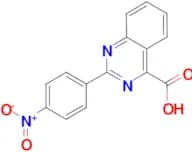
![(2E)-3-[4-(benzyloxy)phenyl]-1-(4-nitrophenyl)prop-2-en-1-one](/_next/image/?url=https%3A%2Fstatic.cymitquimica.com%2Fproducts%2F10%2Fthumb-webp%2FF523639.webp&w=3840&q=75)


![4-(Benzo[d]thiazol-2-yl)benzonitrile](/_next/image/?url=https%3A%2Fstatic.cymitquimica.com%2Fproducts%2F10%2Fthumb-webp%2FF720830.webp&w=3840&q=75)
![4-(7-chloroimidazo[1,2-a]pyridin-2-yl)benzonitrile](/_next/image/?url=https%3A%2Fstatic.cymitquimica.com%2Fproducts%2F10%2Fthumb-webp%2FF517936.webp&w=3840&q=75)