Ácidos benzoicos
Los ácidos benzoicos son ácidos carboxílicos aromáticos con la fórmula molecular C7H6O2, caracterizados por un anillo bencénico unido a un grupo carboxilo (-COOH). Estos compuestos se utilizan ampliamente como conservantes, intermediarios en la síntesis orgánica y en la producción de diversos productos químicos, incluidos colorantes y fragancias. Los ácidos benzoicos también son importantes en las industrias alimentaria y farmacéutica. En CymitQuimica, ofrecemos una gama diversa de ácidos benzoicos de alta calidad para apoyar sus necesidades de investigación e industriales.
Se han encontrado 5472 productos de "Ácidos benzoicos"
Ordenar por
Pureza (%)
0
100
|
0
|
50
|
90
|
95
|
100
3-Nitrobenzoic acid methyl ester
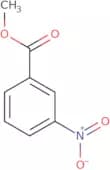
CAS:3-Nitrobenzoic acid methyl ester is an organic compound that contains a hydroxyl group and a nitro group. It can be synthesized by the reaction of 3-nitrophenol and methanol in a solvent such as water or ethanol. The nitro group is important for the solvating power of this molecule, which has been shown to have approximations with other molecules. 3-Nitrobenzoic acid methyl ester is found in two different forms: the cis form and the trans form, which differ in the orientation of their nitro groups. The cis form is more stable than the trans form because it has a dipole moment. The vibrational frequencies are also higher for the cis form than for its trans counterpart. 3-Nitrobenzoic acid methyl ester has been shown to react with nintedanib, which is used to treat cancer, and inhibit kinetics. The kinetic data obtained from this study canFórmula:C8H7NO4Pureza:(Gc) Min. 98%Forma y color:PowderPeso molecular:181.15 g/mol2-Chloro-4-methoxybenzoic acid methyl ester
CAS:2-Chloro-4-methoxybenzoic acid methyl ester is a reagent that can be used in the preparation of various compounds. It is also a versatile building block for the synthesis of complex compounds, such as pharmaceuticals and agrochemicals. This chemical is often used as an intermediate or building block in the preparation of pharmaceuticals and agrochemicals. 2-Chloro-4-methoxybenzoic acid methyl ester has been shown to be a useful scaffold for the synthesis of drugs with high quality and low cost.Fórmula:C9H9ClO3Pureza:Min. 95%Forma y color:PowderPeso molecular:200.62 g/molMethyl 4-acetamido-2-methoxybenzoate
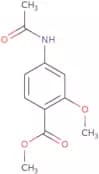
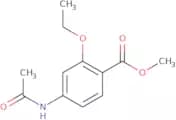
CAS:Methyl 4-acetamido-2-methoxybenzoate is a chemical compound that belongs to the group of heterocycles. It is a precursor to the imidazopyridine, imidazopyrazine and thiazolopyridine classes of drugs. The protonation of methyl 4-acetamido-2-methoxybenzoate has been shown experimentally to be an important factor in its biological activity, especially for its binding affinity for DNA. Methyl 4-acetamido-2-methoxybenzoate has been used as an inotropic agent and as an atypical antipsychotic drug.Fórmula:C11H13NO4Pureza:Min. 95%Forma y color:PowderPeso molecular:223.23 g/mol3,4-Dihydroxybenzoic acid ethyl ester
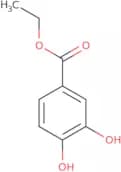
CAS:<p>3,4-Dihydroxybenzoic acid ethyl ester (3,4-DHBA) is a phenolic compound that is used in the treatment of hepatic steatosis. 3,4-DHBA has been shown to be effective in inhibiting autophagy and may also be useful in the treatment of her2+ breast cancer. This drug has antioxidative properties and may also have a protective effect against myocardial infarct. 3,4-DHBA binds to iron ions and prevents their oxidation, thereby preventing oxidative stress. It has been shown to have low potency due to its short half-life in vivo. 3,4-DHBA can inhibit the mitochondrial membrane potential and lead to apoptosis of primary cells and tissue culture cells.</p>Fórmula:C9H10O4Pureza:Min. 95%Forma y color:White PowderPeso molecular:182.17 g/mol4-Chloro-3-hydroxybenzoic acid
CAS:<p>4-Chloro-3-hydroxybenzoic acid (4-CHB) is a reactive compound that can be used for the detection of bacteria. 4-CHB reacts with peroxyl radicals in solution to form a chlorobenzoic acid derivative, which emits light when excited by radiation. 4-CHB is also capable of dehalogenating chlorobenzene, and can be used as a bioluminescent probe for the detection of bacteria. The reactions are efficient at low concentrations and are detectable with an ultraviolet or visible spectrophotometer.</p>Fórmula:C7H5ClO3Pureza:Min. 95%Forma y color:PowderPeso molecular:172.57 g/mol2-Benzoylbenzoic acid
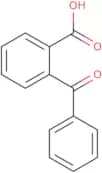
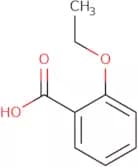
CAS:<p>2-Benzoylbenzoic acid is an organic compound with the chemical formula C6H5CO2. It is a white solid that is soluble in water, ethanol, and ether. 2-Benzoylbenzoic acid is stable at room temperature, but decomposes when heated to above 200°C. This compound can be used as a catalyst for the synthesis of polymers.<br>2-Benzoylbenzoic acid is used as a raw material for the production of ferrocenecarboxylic acid and ethylene diamine. The activity index of 2-benzoylbenzoic acid was found to be high (0.7) when it was tested against Streptococcus mutans and Staphylococcus aureus.</p>Fórmula:C14H10O3Pureza:Min. 95%Forma y color:White PowderPeso molecular:226.23 g/mol2-Ethoxybenzoic acid
CAS:<p>Component in some dental cements</p>Fórmula:C9H10O3Pureza:Min. 99.0 Area-%Forma y color:Colorless Clear LiquidPeso molecular:166.17 g/moln-Pentyl 4-hydroxybenzoate
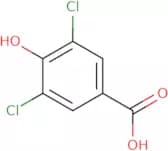
CAS:<p>n-Pentyl 4-hydroxybenzoate is a preservative that inhibits the growth of microorganisms. It is used in products such as cosmetics, pharmaceuticals, and food to prevent spoilage. The antimicrobial activity of n-pentyl 4-hydroxybenzoate has been shown to be due to p-hydroxybenzoic acid, which binds to bacterial cell walls. This binding prevents the formation of an antibiotic-inhibitor complex with the enzyme cell wall synthesis that is required for cell wall biosynthesis, inhibiting protein synthesis and cell division. n-Pentyl 4-hydroxybenzoate has also been shown to inhibit bacterial growth in vitro and in vivo in rats by interfering with protein synthesis in rat liver microsomes.</p>Fórmula:C12H16O3Pureza:Min. 95%Forma y color:Off-White PowderPeso molecular:208.25 g/mol3,5-Dichloro-4-hydroxybenzoic acid
CAS:3,5-Dichloro-4-hydroxybenzoic acid is a phenolic acid that can be found in aromatic hydrocarbons. It has been shown to have antiallergic properties and has been used as an extract to treat acute toxicities. 3,5-Dichloro-4-hydroxybenzoic acid has also been shown to inhibit the production of p-hydroxybenzoic acid by rat liver microsomes. This compound may be useful in treating high blood pressure and vascular disease. It may also be used as a natural remedy for arthritis, as it has shown antiinflammatory effects. In addition, this compound can inhibit the growth of cancer cells and stimulate the immune system by binding to monoclonal antibodies that are specific for acidic pH.Fórmula:C7H4Cl2O3Pureza:Min. 95%Forma y color:PowderPeso molecular:207.01 g/mol3,5-Diiodo-4-hydroxybenzoic acid
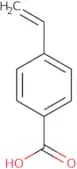
CAS:3,5-Diiodo-4-hydroxybenzoic acid (3,5 DIBA) is an aminotriazole that inhibits the growth of a wide range of bacteria. 3,5 DIBA inhibits the transport of catechol and 2,6-dichlorobenzoic acid into cells. This inhibition leads to decreased levels of catechol-O-methyltransferase activity and increased levels of lysine decarboxylase activity. The combination of these two reactions causes a decrease in lysine production. Lysine is important for cell division and protein synthesis in bacteria. 3,5 DIBA also inhibits root formation in plants and has been shown to inhibit the uptake of nutrients by plant roots. Also known as: Dibenzoylmethane; 1,2-Benzenediamine, 3-[(2,6-dichlorophenyl)imino]-, diiodide;Fórmula:C7H4I2O3Pureza:Min 97%Forma y color:PowderPeso molecular:389.91 g/mol4-Vinylbenzoic acid
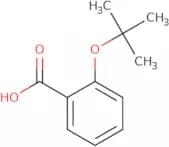
CAS:<p>4-Vinylbenzoic acid is a water-insoluble polymer that has been shown to have bacteriostatic and fungistatic properties. 4-Vinylbenzoic acid inhibits bacterial growth by binding to the enzyme diphenolase, which is involved in the synthesis of cell wall precursors. This polymer also binds to cationic surfactants and is soluble in organic solvents such as ethanol and acetone. The mechanism of inhibition of fungal growth is not known, but it may be due to hydrogen bonding interactions with the cell membrane.<br>4-Vinylbenzoic acid has been shown to be effective against human serum, although it does not inhibit bacterial growth in this medium.</p>Fórmula:C9H8O2Pureza:Min. 95%Forma y color:White PowderPeso molecular:148.16 g/mol2-tert-Butoxybenzoic acid
CAS:2-tert-Butoxybenzoic acid is a versatile chemical that can be used as a reagent, a speciality chemical, or as an intermediate in the synthesis of other compounds. It is typically used in organic chemistry for the preparation of esters, amides, and nitriles. 2-tert-Butoxybenzoic acid is also useful as a building block for complex molecules. This compound has been shown to react with alcohols to form esters, with amines to form amides, and with nitro groups to form nitriles.Fórmula:C11H14O3Pureza:Min. 95%Forma y color:PowderPeso molecular:194.23 g/molMethyl 4-hydroxy-2-methylbenzoate
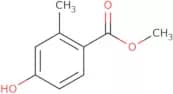
CAS:Methyl 4-hydroxy-2-methylbenzoate is a chromophore. It has demonstrated antioxidant and anti-oxidative properties in a number of assays, including 3-ethylbenzothiazoline-6-sulfonic acid (EBT) assay, naphthalene oxidation assay, and electrocyclic test. Methyl 4-hydroxy-2-methylbenzoate has been shown to be bioactive with respect to steroids and lignans. This compound has also been used as a tyrosinase inhibitor in neocarzinostatin (NCS) synthesis. Methyl 4-hydroxy-2-methylbenzoate is found in the extract of the leaves of Ligustrum lucidum.Fórmula:C9H10O3Pureza:Min. 95%Forma y color:White PowderPeso molecular:166.17 g/molEthopabate - Technical
CAS:Ethopabate is a salt of ethopropazine and sodium carbonate. It is used in pharmaceutical preparations as an antiparasitic agent. The chemical composition of the salt is CHNO, with one hydrogen bond between the ethopropazine and sodium carbonate. Ethopabate has been shown to be active against amprolium-resistant coccidia in human serum, as well as being an analytical reagent for detecting monoclonal antibodies. This chemical can be used to prepare a polymeric matrix for use in fluorescence detection or for antimicrobial agents. Hydrochloric acid and UV light are used to synthesize this compound.Fórmula:C12H15NO4Pureza:Min. 95%Forma y color:White PowderPeso molecular:237.25 g/molo-Sulfobenzoic acid anhydride
CAS:<p>Please enquire for more information about o-Sulfobenzoic acid anhydride including the price, delivery time and more detailed product information at the technical inquiry form on this page</p>Fórmula:C7H4O4SPeso molecular:184.17 g/molRef: 3D-S-9350
1kgA consultar5kgA consultar10kgA consultar500gA consultar2500gA consultar-Unit-kgkgA consultar4-Hydroxy-3,5-dimethylbenzoic acid
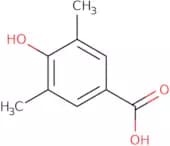
CAS:4-Hydroxy-3,5-dimethylbenzoic acid (4HDMBA) is an antimicrobial agent that inhibits bacterial cell growth by binding to the GyrA subunit of DNA gyrase. It is a potent inhibitor of the GyrA subunit, with activity against both mutant and wild type strains. 4HDMBA also has anticancer activity in vitro and in vivo studies have shown that it can inhibit the growth of cells from human cancer cell lines. 4HDMBA is synthesized by reacting amide with chloroacetyl chloride. The carboxylate group on 4HDMBA can be transformed into a hydroxyl group by reaction with sodium hydroxide. The chemical structure of 4HDMBA includes a hydroxy group, a chlorine atom, and a hydroxyl group.Fórmula:C9H10O3Pureza:Min. 95%Forma y color:PowderPeso molecular:166.17 g/mol2-Ethoxy-4-nitrobenzoic acid
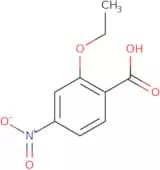
CAS:<p>2-Ethoxy-4-nitrobenzoic acid is a nitrobenzoyl compound that is used as an anticoccidial drug. It has shown to be effective against coccidiosis in poultry. 2-Ethoxy-4-nitrobenzoic acid binds to the aminobenzoate moiety of the enzyme glutamic acid decarboxylase, thereby inhibiting its activity. This inhibits the production of lactic acid and leads to cell death by lack of energy. Amprolium is a coccidiostat that inhibits the synthesis of beta-alanine in cells, which leads to inhibition of protein synthesis and cell death.</p>Fórmula:C9H9NO5Pureza:Min. 95%Forma y color:PowderPeso molecular:211.17 g/mol2,4-Diaminobenzoic acid dihydrochloride
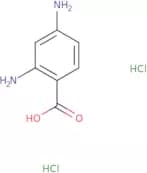
CAS:2,4-Diaminobenzoic acid dihydrochloride is a versatile building block for complex compounds. This compound can be used as a research chemical and is also a reagent and speciality chemical. 2,4-Diaminobenzoic acid dihydrochloride has been used in the synthesis of many useful compounds, including pharmaceuticals and agrochemicals. It is also an intermediate in the synthesis of some pharmaceuticals and agrochemicals. 2,4-Diaminobenzoic acid dihydrochloride can be used as a scaffold to produce new molecules that are potentially useful as drugs or other chemicals.Fórmula:C7H8N2O2•(HCL)2Pureza:Min. 95%Forma y color:Off-White PowderPeso molecular:225.07 g/molMethyl 2-methoxybenzoate
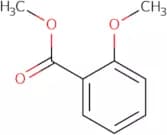
CAS:Methyl 2-methoxybenzoate is a synthetic chemical that is used in the treatment of wastewater. It inhibits the activity of enzymes such as fatty acid synthase, which are involved in the synthesis of long-chain fatty acids. Methyl 2-methoxybenzoate has been found to be an efficient method for the synthesis of prenyl compounds. This product is also an active methylene and hydrogen bond donor, and it can form products with carboxylic acid conjugates through acid catalysis. Methyl 2-methoxybenzoate has been used as a reagent for analytical chemistry, including gas chromatography and liquid chromatography.Fórmula:C9H10O3Pureza:Min. 95%Forma y color:Colorless Clear LiquidPeso molecular:166.17 g/mol2-Chloro-6-fluorobenzoic acid
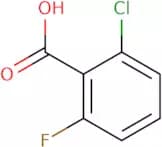
CAS:2-Chloro-6-fluorobenzoic acid is an aromatic compound that is used as a solvent in the production of pharmaceuticals, plastics, and dyes. The 2-chloro-6-fluorobenzoic acid molecule has an electron rich ring structure that can undergo nucleophilic attack by a nucleophile such as hydrogen chloride or hydrochloric acid. It also has a high affinity for water molecules, which may be attributed to its aromatic hydrocarbon structure. This allows 2-chloro-6-fluorobenzoic acid to act as a good solvent for many organic compounds. This chemical is classified as a possible human carcinogen and is toxic to the liver cells.Fórmula:C7H4ClFO2Pureza:Min. 95%Forma y color:PowderPeso molecular:174.56 g/mol